
GPS Fleet Tracking & Telematics
Telematics Data Security Measures: What Fleets Should Ask For
The key telematics data security measures: encryption in transit and at rest, tight control of cloud access and a written incident plan. What to ask.

Which Data Security Measures Matter Most for Telematics?
The data security measures that matter most for fleet telematics are encryption of data in transit and at rest, strict control over who can reach the provider's cloud infrastructure, and a written incident response process. They matter because the risk is real and publicly documented. In July 2026, a hacker advertised what they said was live GPS tracking data for thousands of customer organizations, taken from the production systems of a large telematics provider in Australia and New Zealand. The company had not confirmed the claim when it was first reported, but it shows that live fleet location data is a target.
Other incidents point the same way. Upstream Security documented 494 automotive and smart mobility cyber incidents in 2025. Ransom-related incidents more than doubled compared with 2024 and made up 44% of the total, and 67% stemmed from telematics and cloud systems.
What Do Attackers Target?
GPS spoofing is one of the more disruptive methods. An attacker feeds a device counterfeit or replayed satellite signals so it reports a false location, which can hide a stolen load's real position or disguise where a vehicle went. Jamming is a related attack that blocks the signals instead. SIM swapping is another common route: the attacker remotely clones or swaps the SIM identity a telematics device uses to communicate, then intercepts or redirects the data the device should be sending to the platform.
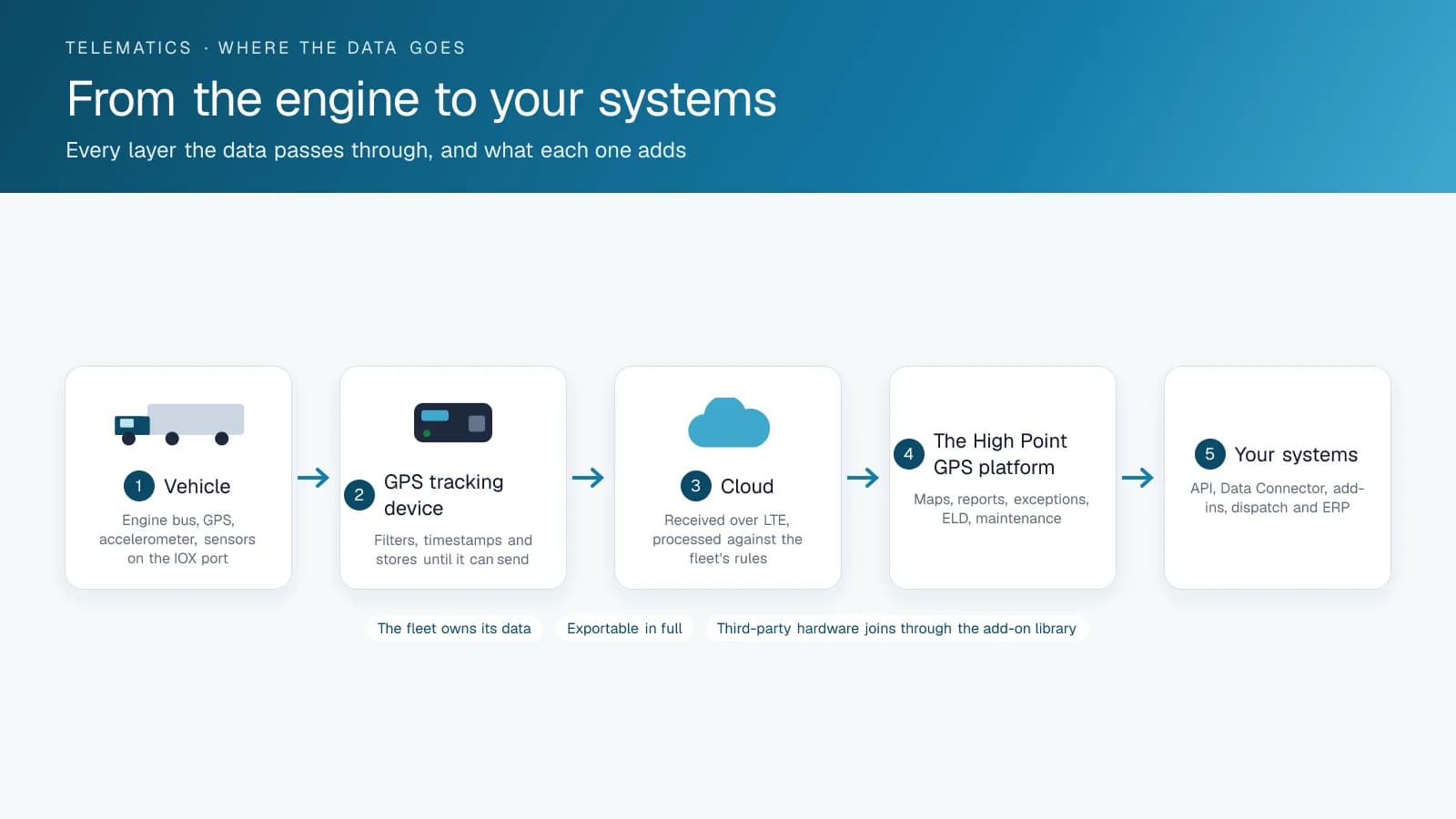
In the Upstream data, the exposure point was usually the cloud and telematics infrastructure: the servers, APIs and data pipelines a platform runs behind the scenes. The physical GPS unit bolted into the vehicle was rarely the weak spot. When you assess security risk, look hard at that infrastructure layer, and treat tamper-resistant hardware as only part of the picture.
What Security Measures Should You Ask a Telematics Provider For?
Since the exposure concentrates in cloud and data-pipeline infrastructure, ask your telematics provider about that layer. How is data encrypted in transit and at rest? Who has access to the underlying infrastructure? What is the incident response process if something goes wrong? A vendor that answers those questions specifically, without falling back on a generic "we take security seriously" line, gives you something you can evaluate.
Public-sector and regulated fleets have even more at stake, because a data exposure there becomes a compliance and public-trust problem on top of the operational one. Ask before you sign. After an incident, the answers no longer change your decision.
Questions for the Provider, and Good Answers
Put these questions in writing before signing. The right column shows what a meaningful answer looks like.
| Question | A good answer looks like |
|---|---|
| How is data encrypted in transit and at rest? | TLS from device to cloud; encryption at rest with named key management; no plaintext GPS in logs |
| Who can access production data? | A named small group, with access logged and reviewed; support access scoped and time-limited |
| Where is the data hosted? | Named regions; a Canadian option for fleets that need residency |
| What independent audits exist? | SOC 2 or ISO 27001 reports available under NDA, with dates |
| How are devices authenticated? | Per-device credentials; firmware signed and updated over the air |
| What happens in a breach? | A written incident-response plan with customer notification timelines |
| Can we export and delete our data? | Full export through the API at any time; deletion on request after termination |
Frequently asked questions
Has fleet telematics data been breached before?
Yes. Upstream Security counted 494 automotive and smart mobility cyber incidents in 2025, and 67% stemmed from telematics and cloud systems. In July 2026, a hacker also advertised live GPS data said to come from a large telematics provider in Australia and New Zealand, a claim the company had not confirmed when first reported.
What is GPS spoofing?
GPS spoofing means feeding a tracking device counterfeit or replayed satellite signals so it reports a false location. Thieves can use it to disguise where a vehicle or a stolen load is, so the platform shows a position that doesn't match reality. Jamming is different: it blocks the signals rather than faking them.
Is telematics data security mostly a hardware or a software risk?
It is mainly a cloud and infrastructure risk. Documented incidents show attacks concentrating on the servers, APIs and data pipelines behind a platform, not on the physical GPS device installed in the vehicle. That is why your security questions for a provider should focus on how it runs and protects that infrastructure.
What should a fleet ask a telematics provider about data security?
Ask how data is encrypted in transit and at rest, who has access to the underlying infrastructure, and what the incident response process looks like if a breach occurs. Specific answers to those questions tell you far more than a general security claim, so get them in writing before you sign.
Sources
Related solutions & products
Related terms
Continue reading
Get a free quote
- Over 500 fleets
- Since 2013
- 4.9 on Google (19 reviews)
What are you looking for?
Prefer to talk?Call 1-800-613-6323[email protected]