
Video Safety & Dash Cams
Do Dash Cams Lower Insurance? How Fleets Get the Discount
Do dash cams lower insurance? For fleets, yes, but insurers rarely apply a dash cam discount on their own. Ask your broker what a camera program earns.
Do Dash Cams Lower Insurance? How Fleets Get the Discount
Yes, dash cams can lower insurance premiums for a fleet, but you have to ask for the discount. Insurers do give real credits for cameras, and in our experience with fleets across Canada and the United States they can be worth having. They are not automatic. Most commercial insurers do not publish a fixed 'install cameras, get X percent off' credit on their rate sheet, and almost none will apply one because you happened to buy cameras. An underwriter can extend the credit when a fleet asks for it and can show what the program is. So the most useful advice here is also the plainest: call your broker or insurer and ask what a camera and telematics program is worth on your policy. The answer depends on the insurer, the region and your own loss history, which is why nobody can quote you a number here and why asking beats guessing.
Ask it specifically. 'Do you give a dash cam discount' invites a no. Ask instead what credit is available for forward and driver-facing cameras with AI event detection, whether you qualify for a telematics or usage-based program, and what evidence of a coaching program the underwriter wants to see. Bring the package described at the end of this article. Fleets that ask this way get a different answer from fleets that mention cameras in passing.
The second saving is larger, and it arrives whether or not you get a credit at binding. Cameras exonerate drivers in disputed claims, cut the severity of the claims that do happen, and improve the loss history your premium is priced on at renewal. That effect compounds year over year. The discount is worth asking for, but the loss run is what moves your rate over time.
Exoneration: The Biggest Lever on Your Premium
In a crash between a truck and a car, the truck often gets blamed first because it is the bigger vehicle, yet FMCSA's Large Truck Crash Causation Study assigned the critical reason to the passenger vehicle in more than half of the two-vehicle truck and passenger-vehicle crashes it examined. Forward-facing footage that shows the other party caused the crash turns a claim your fleet would have paid into one it does not. Each flipped or defended claim stays off your loss run, and the loss run is what an underwriter reads when setting your renewal price. Over a few years, a cleaner loss history puts some of the strongest downward pressure on a commercial premium.
Footage also shortens a claim's life. A disputed accident that would drag on while each side's story competes often settles quickly once clear video exists. Faster resolution means lower legal and adjustment costs, and those feed back into the numbers that set your rate.
Preventing Crashes Before They Become Claims
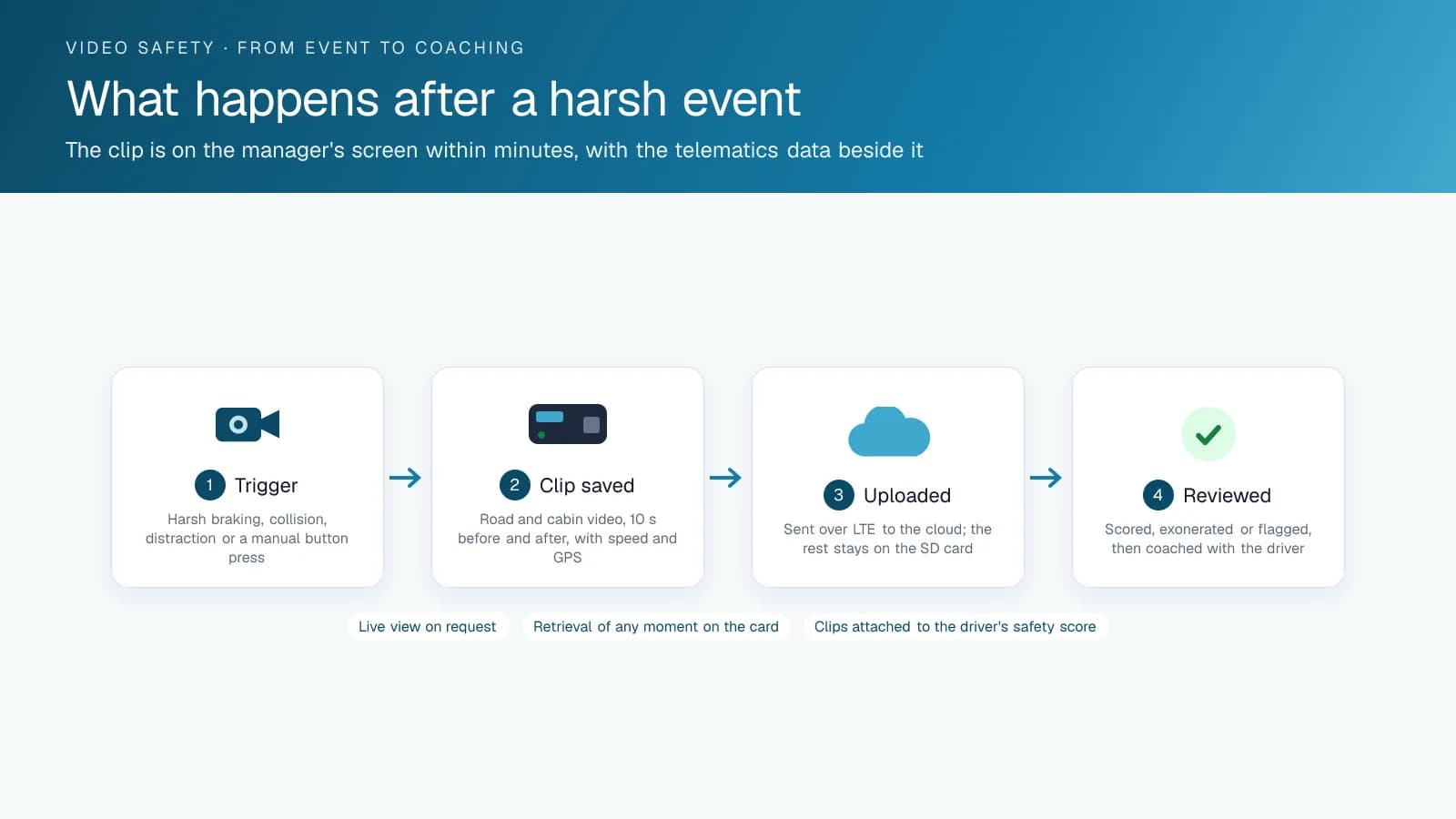
Prevention is the other lever. AI driver-facing cameras flag the behaviours that come before crashes, such as following too closely, distraction and phone use. Paired with coaching, that reduces how often risky events happen: in an FMCSA-funded study by the Virginia Tech Transportation Institute, video monitoring combined with coaching significantly cut the rate of recorded safety events at both carriers studied. Insurers reward fewer and smaller claims because those lower their payouts. A camera program that visibly cuts risky driving builds the safety record that justifies a better rate.
For that reason, the strongest case for cameras is the total cost of collisions, and the premium is only one part of it. Deductibles, downtime, repairs and the drivers you keep because footage protected them all move in the same direction as the premium.
Do Insurers Price Directly on Telematics Data?
Some insurers price directly on data through usage-based or telematics-based programs: the fleet shares driving and safety data, and the premium reflects the risk that data shows. Availability and structure vary a lot by insurer and region, and these programs use telematics and driver-behaviour data more often than camera footage. Still, they are the closest thing to a direct link between data and price. If a lower premium is your goal, ask your broker whether your insurer runs such a program and what data qualifies.
In practice, treat cameras and telematics as tools that build a documented safety record, then bring that record to renewal on purpose. An underwriter looking at a fleet with falling incident rates and video-defended claims has a concrete reason to price it better. That puts you in a stronger position than hoping the hardware triggers a discount by itself.
How to Bring Your Safety Record to Renewal
The premium moves when the underwriter has a reason, and you can assemble that reason from the platform in an afternoon. Sixty days before renewal, export three things. First, the loss run with each claim annotated: which ones you defended with video, which closed early because footage existed, and the amounts involved. Second, the safety trend: events per hundred kilometres by month for the past year, fleet-wide, with a paragraph describing the coaching program. Third, the program itself: the camera policy drivers signed, the weekly review routine and the training assigned from events. Send it through the broker with a one-page cover note that states the ask plainly, such as a rate held flat or a lower deductible. Underwriters price risk on evidence and rarely see a package like this, so a fleet that provides one gets treated differently from one that only says it has cameras. High Point GPS prepares the export for fleets across Canada and the United States ahead of renewal on request.
Frequently asked questions
Do insurers give a dash cam insurance discount?
Many do, and the discount can be meaningful, but insurers almost never apply it automatically. Ask your broker or insurer what credit a camera and telematics program earns on your policy, and be ready to show the program: the cameras installed, the coaching routine and your recent loss history. The amount varies by insurer, region and fleet, so put the question to yours.
How do dash cams reduce what a fleet pays?
In two ways. The first is a credit negotiated with the insurer at binding or renewal, which you have to ask for. The second is a cleaner loss run over time: forward-facing footage defends or flips claims the fleet would otherwise pay, keeping them off the record underwriters price on, while coaching on camera events cuts how often risky driving happens.
Are there insurers that price directly on telematics data?
Yes. Some insurers run usage-based or telematics-based programs where sharing driving and safety data can influence the premium. Availability and structure vary a lot by insurer and region, and these programs lean on telematics data more than camera footage. Ask your broker which programs exist and what data qualifies.
Is the insurance premium the only cost cameras affect?
No, and it is often not the largest. Cameras also reduce deductibles paid, downtime, repair costs and legal expense on disputed claims. The total cost of collisions moves in the same direction as the premium, usually by more, which makes it the better measure of what a camera program is worth.
Sources
Related solutions & products
Continue reading
- Dash Cams & AI Video Safety overview →
- 4G Fleet Dash Cams as Driver Monitoring Cameras: How Behaviour Events Reach the Manager →
- Best Dash Cam for Fleets: Features to Look For Beyond Consumer Models →
- Driver Safety Course for Fleets: What It Costs and Which Kind Changes Behaviour →
- What Is a Driver Safety Program? How Fleets Build One That Works →
- More in Video Safety & Dash Cams →
Get a free quote
- Over 500 fleets
- Since 2013
- 4.9 on Google (19 reviews)
What are you looking for?
Prefer to talk?Call 1-800-613-6323[email protected]