Resources
AI dash cams, driver coaching, and using video to resolve disputes and claims.
Video Safety & Dash Cams
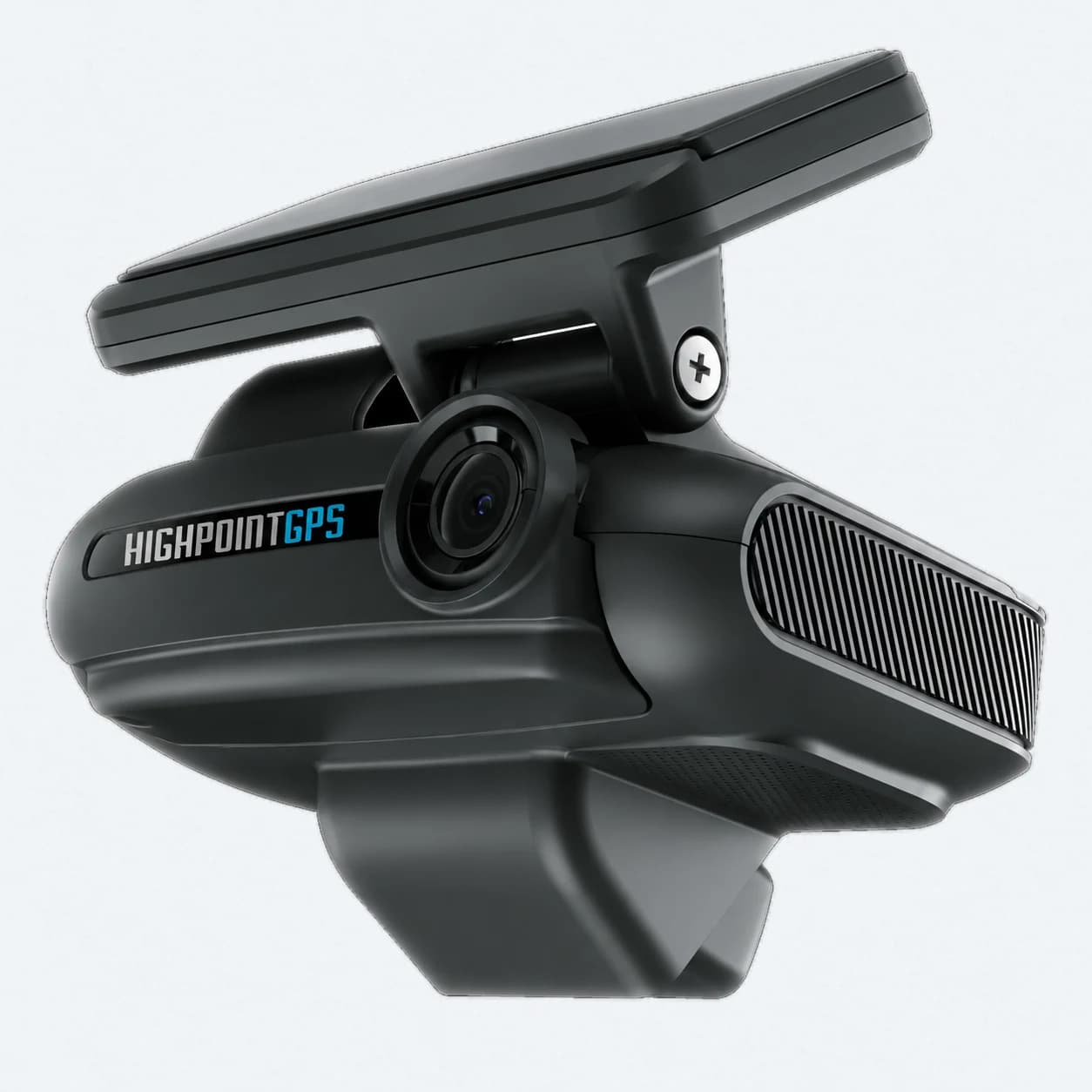
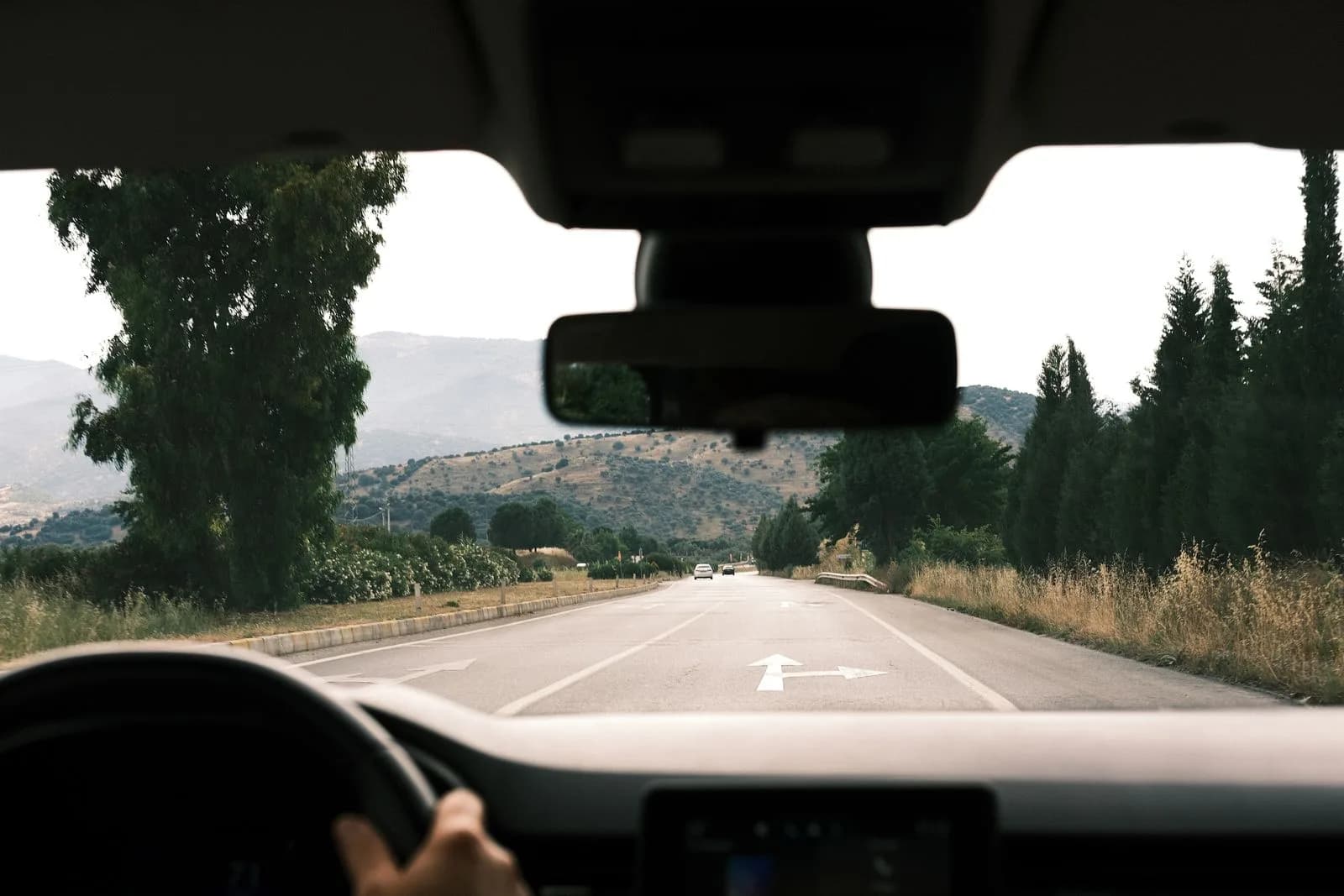
A fleet dash cam records the road, and often the cab, across many vehicles while AI flags the risky moments. How it works and which setup fits your fleet.
A dash cam with GPS tracking pairs video with speed and location: GPS shows where and how fast, the clip shows what happened. Why fleets run both together.
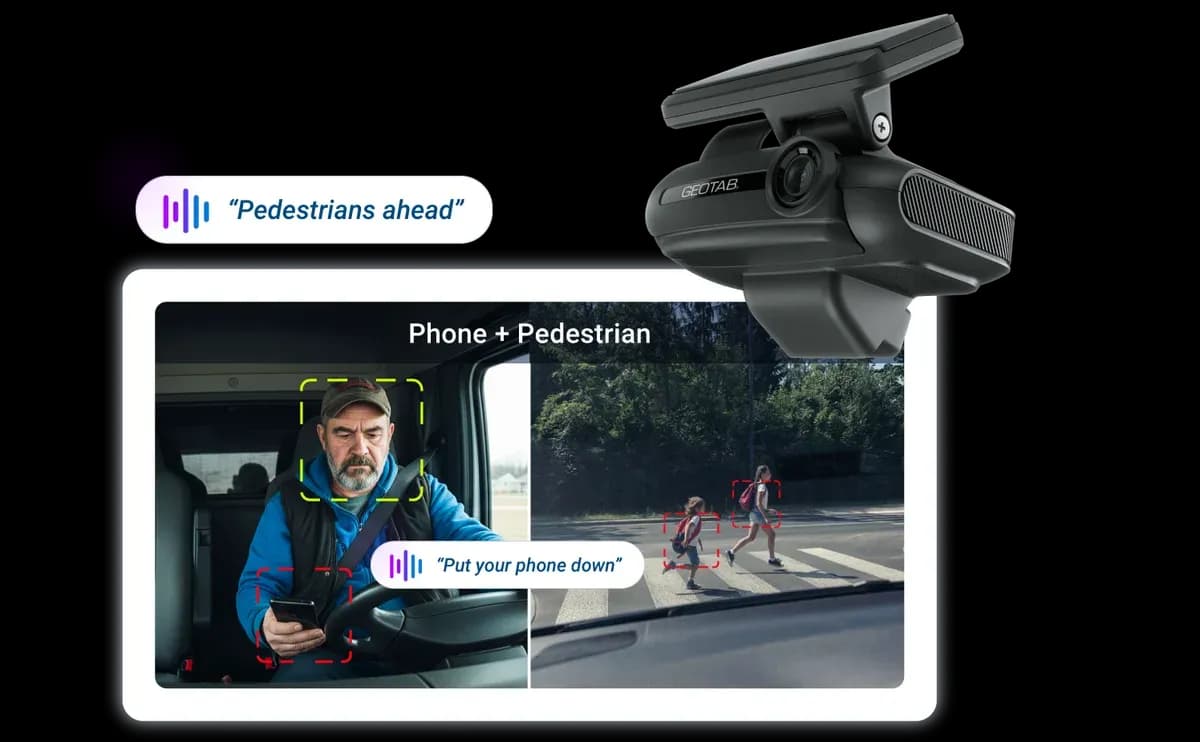
AI dash cam alerts flag specific risks such as harsh braking, tailgating and phone use. What each alert measures, and how to tune it for driver coaching.
Insurers settle claims faster when footage comes with speed, location and time. What to send the adjuster and how to save clips before they loop over.
Telematics insurance prices your fleet's real driving data on top of claims history. See what fleet safety data insurers review and how to bring it up.
Fleet dash cam cost depends on camera count, AI detection and how footage is stored. See what drives fleet camera pricing at each camera setup.
Can a GPS tracker record audio? The fleet tracking device can't: no microphone or camera, only location, speed and engine data. Audio needs a dash cam.
Dash cams are legal across Canada and the US. The laws differ on windshield mounting and audio consent, and fleets should tell drivers about camera policy.
Do dash cams lower insurance? For fleets, yes, but insurers rarely apply a dash cam discount on their own. Ask your broker what a camera program earns.
The best dash cam for fleets uploads event clips over cellular, tags them to telematics events and controls privacy. The features to check, in order.
AI dash cams for fleets need a cellular connection, not Wi-Fi, plus a dash cam subscription. What the fee pays for and what records without internet.
Fleet dash cam installation goes wrong in five ways: a badly aimed lens, switched power, a loose mount, no telematics link, wrong time. How to check each.
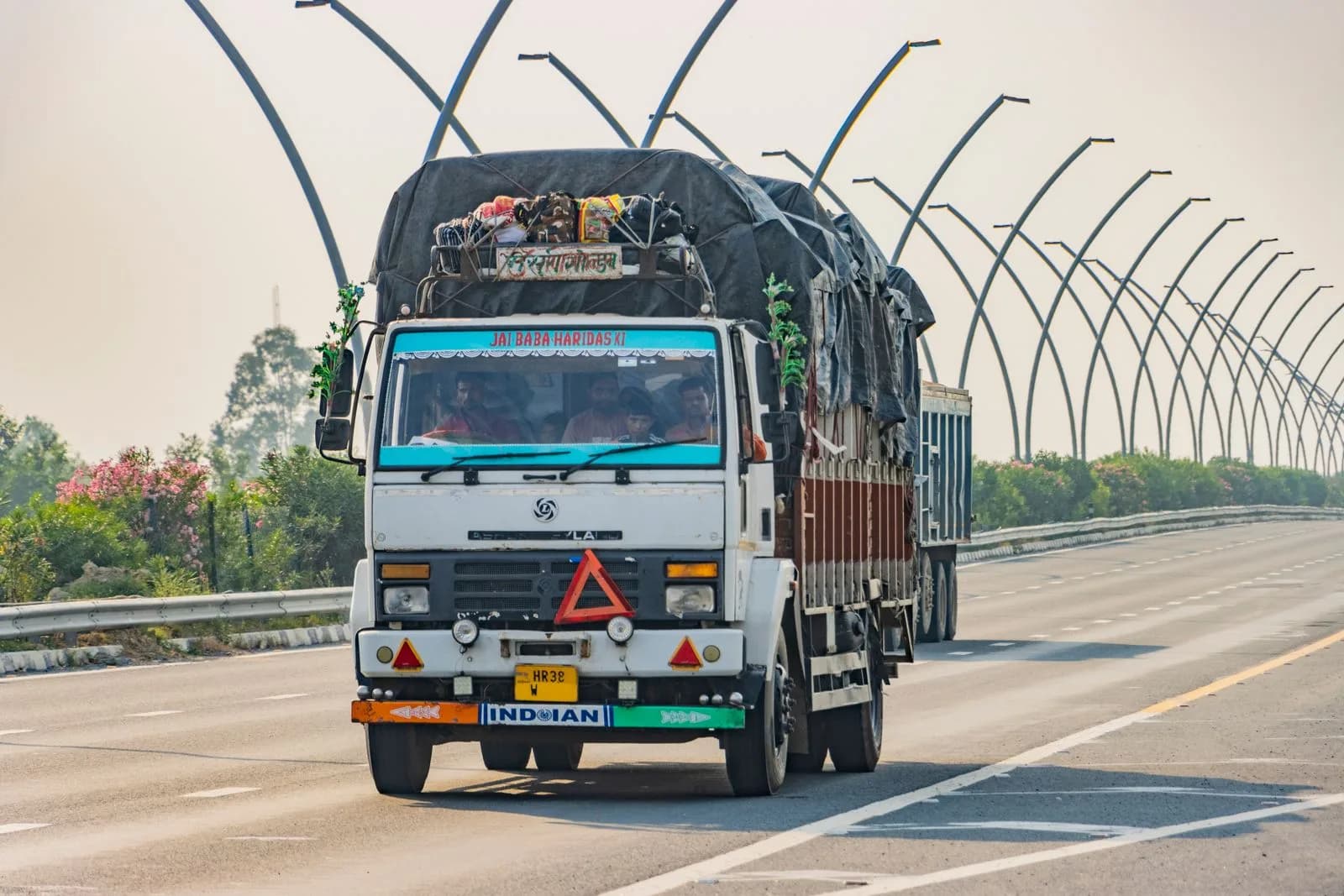
Dash cams for trucking fleets need side and rear lenses, event upload, a driver-facing policy and footage that holds up in a claim.
Video telematics ties each dash cam clip to a GPS tracking event, tagged with vehicle, driver and speed. How the camera connects and what triggers video.
A driver safety program is a fleet's written policy, training, driver behaviour tracking and coaching to cut collisions. What to include, why most fail.
Fleet driver safety training needs both: training software teaches the rules, and telematics coaching fixes what a driver did on Tuesday at 3 p.m.
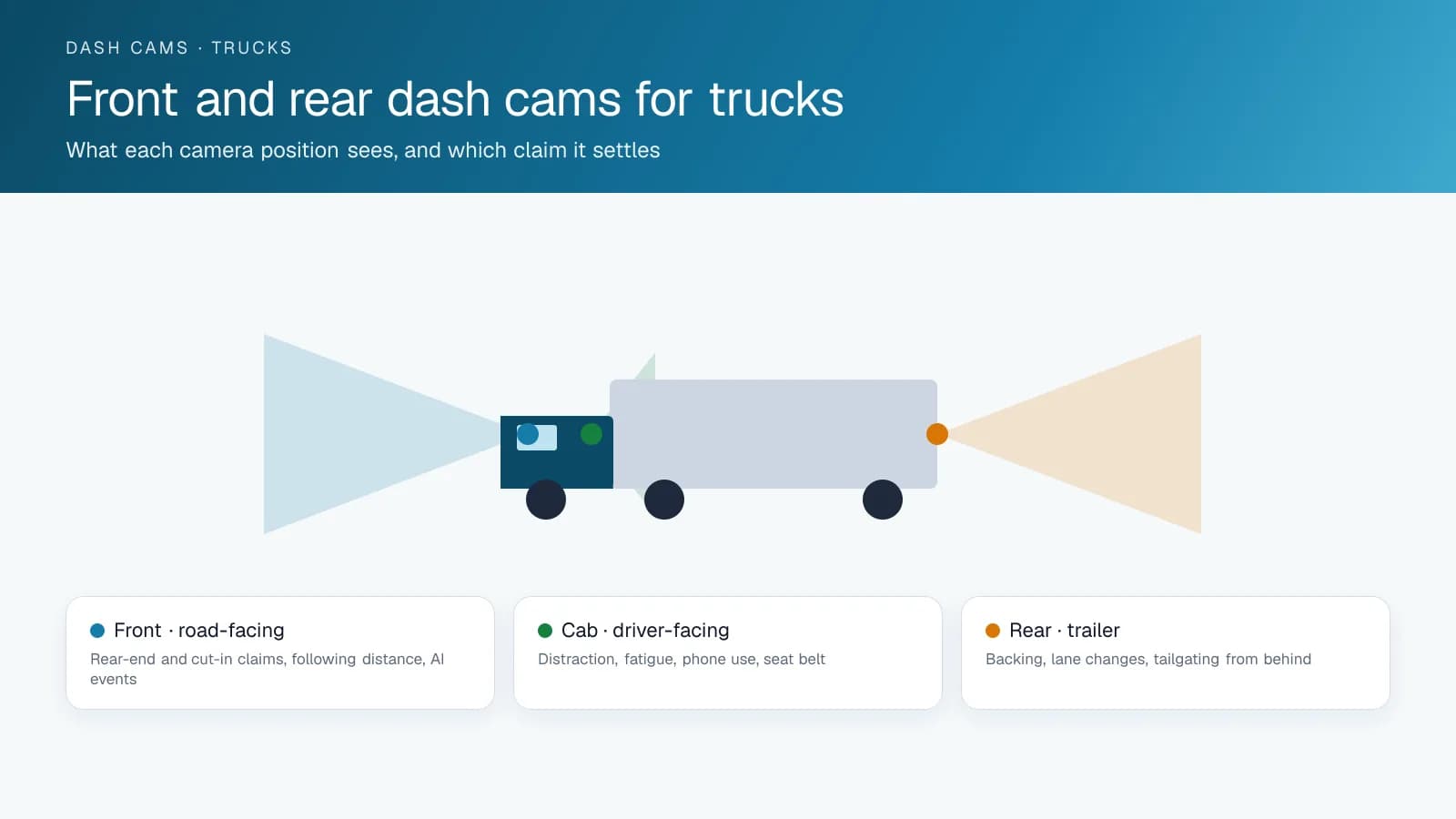
A dash cam for trucks starts with the front road camera, then adds driver-facing, rear and side views. What each records and which mix fits your trucks.
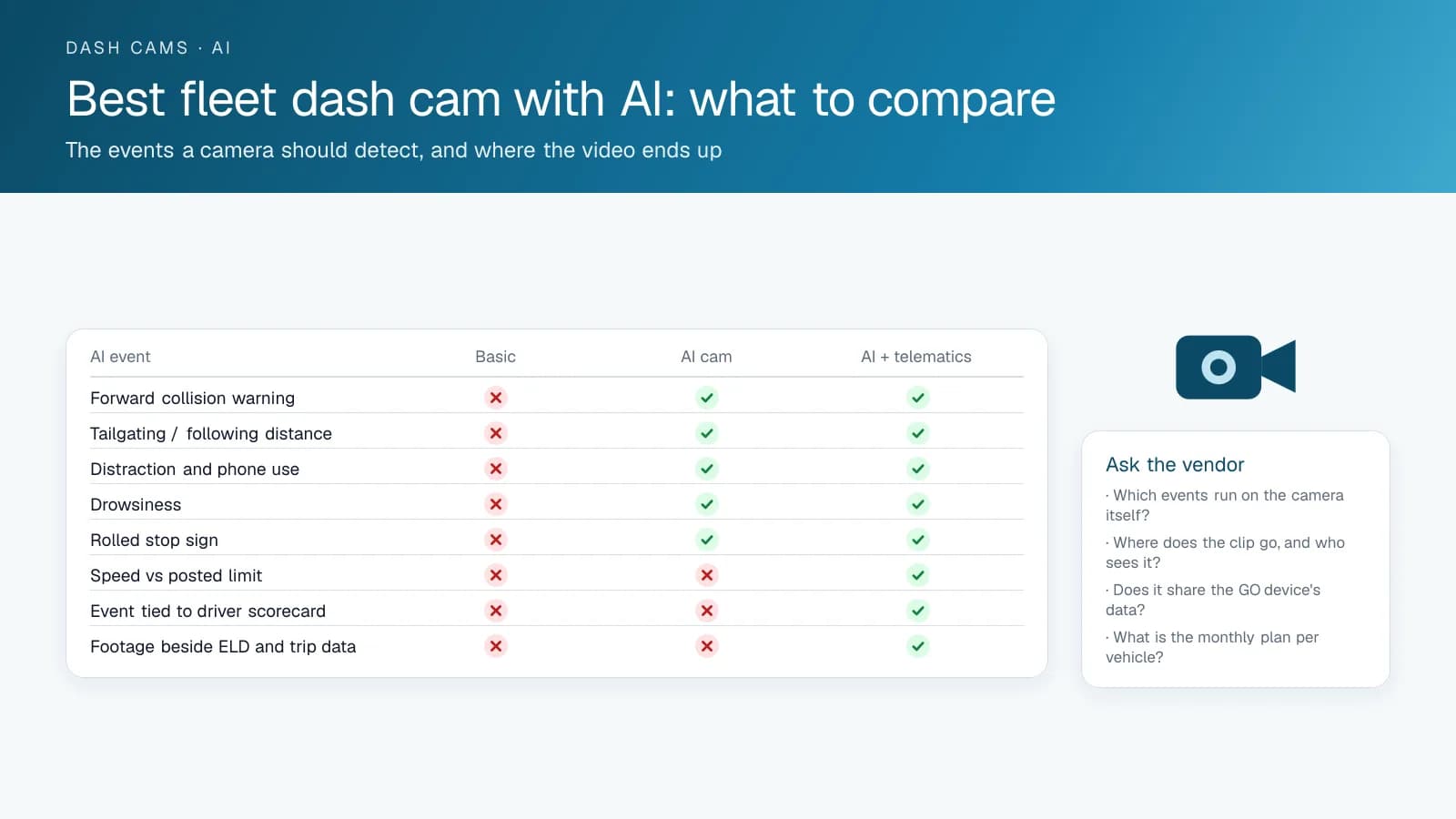
The best AI dash cam for fleets detects the events behind your collisions, alerts drivers in the cab and shares data with your telematics. What to compare.
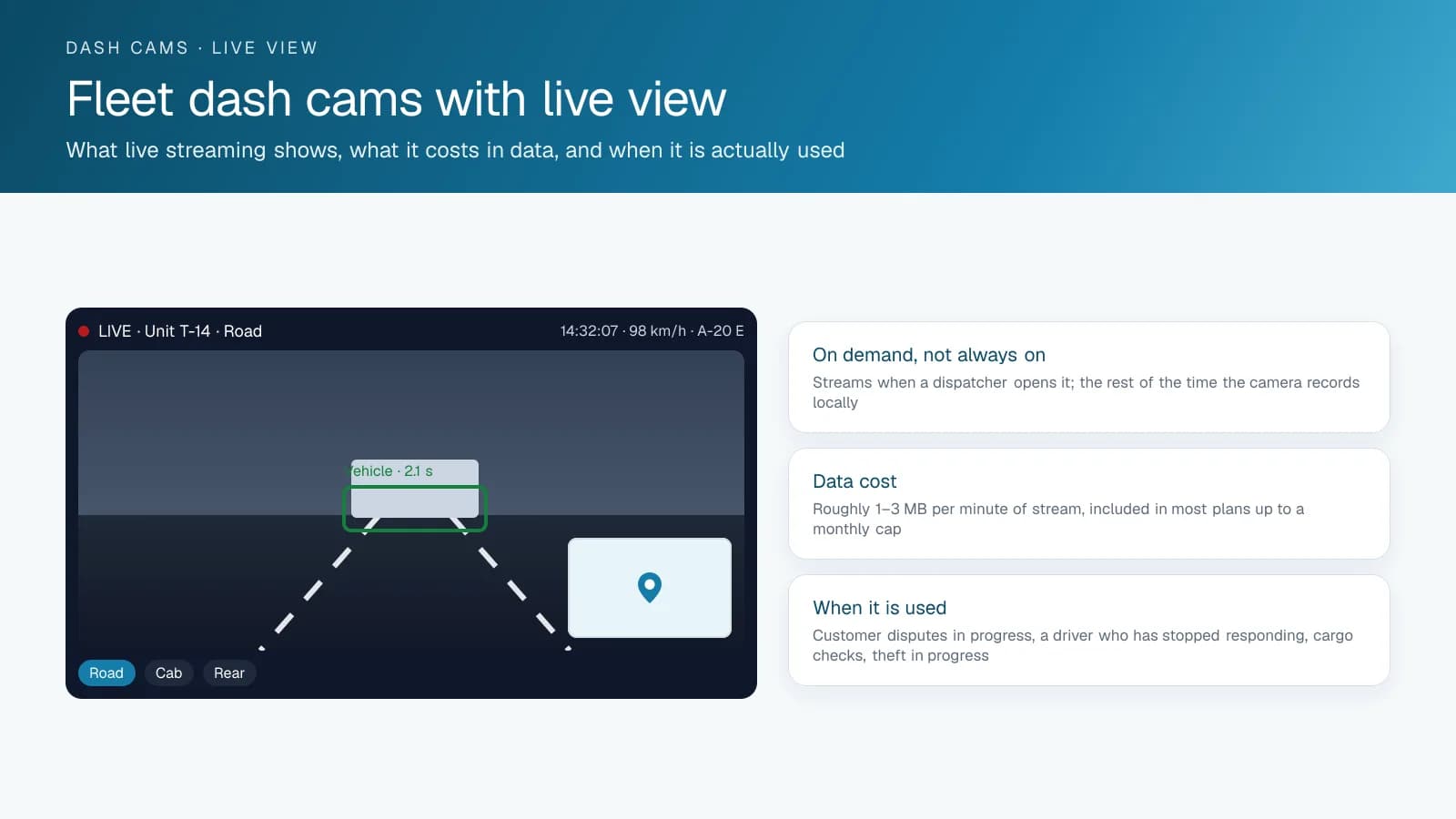
A dash cam with live view streams the camera on demand. What the live stream shows, what it costs in data, and the few situations where fleets use it.
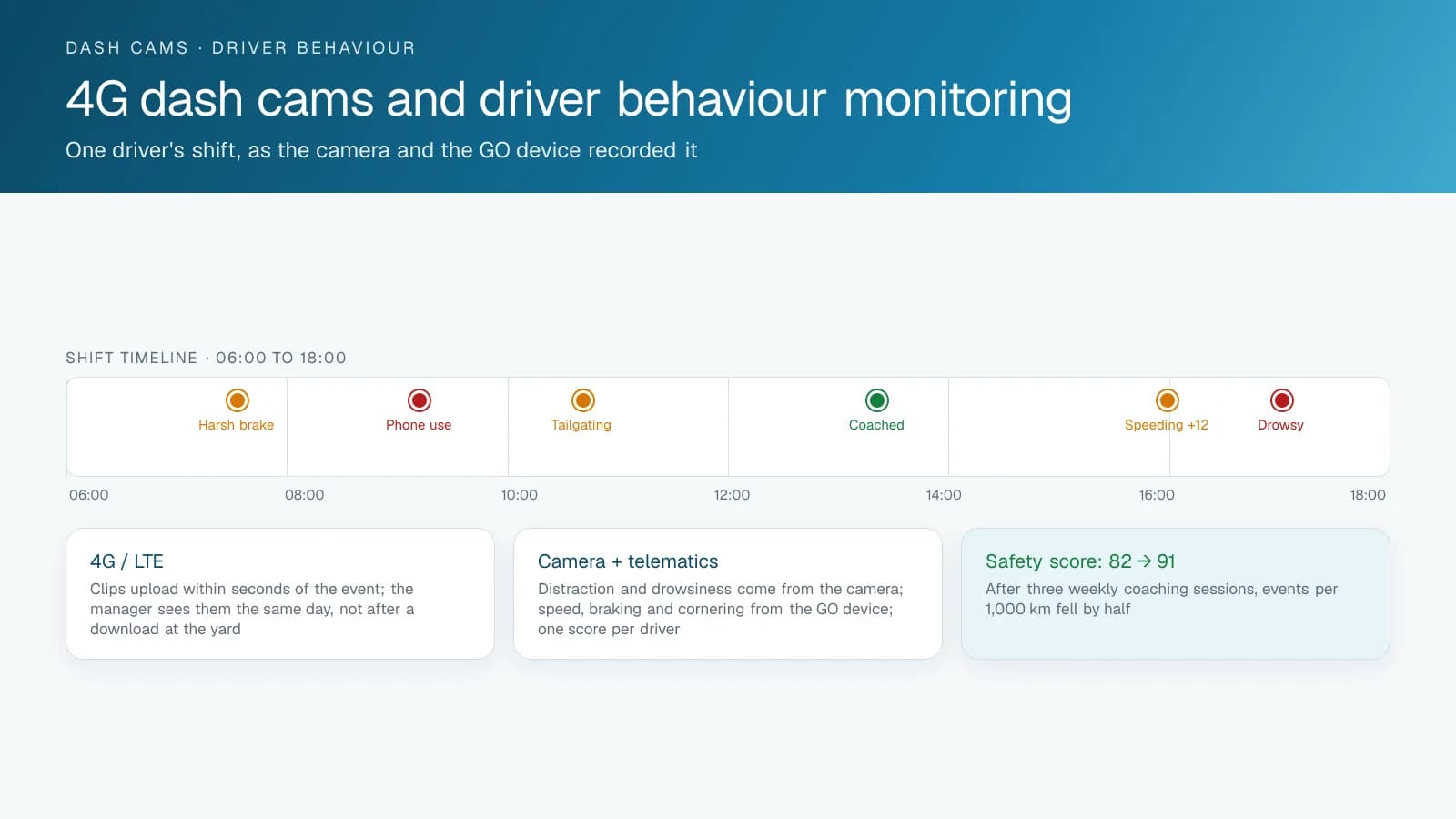
A 4G driver monitoring camera uploads each behaviour event within seconds, so managers coach the same day. See a full shift, the scoring and how to run it.
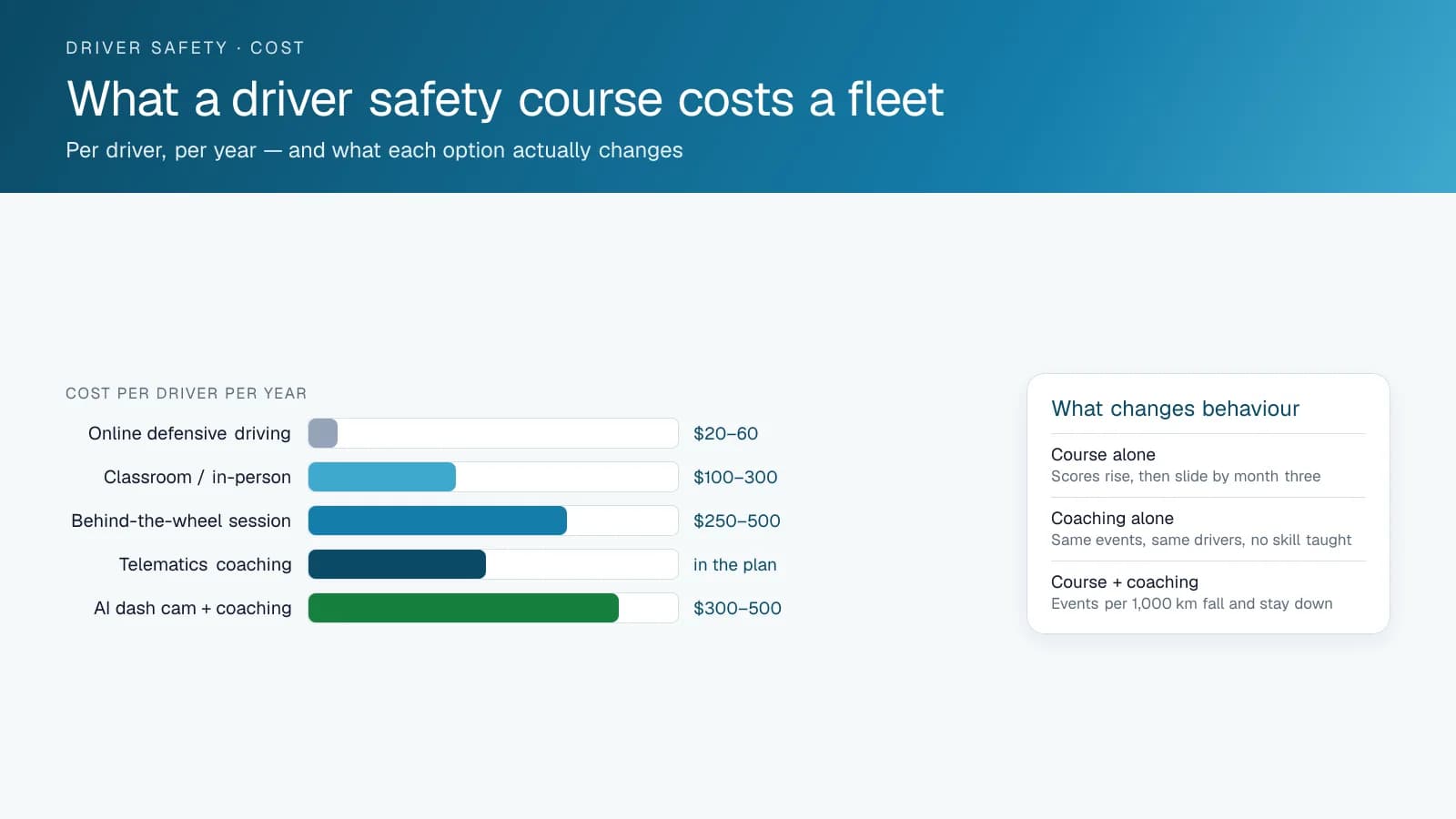
A driver safety course costs a fleet least online and most behind the wheel. Which kind changes behaviour, and how to assign it to the drivers who need it.
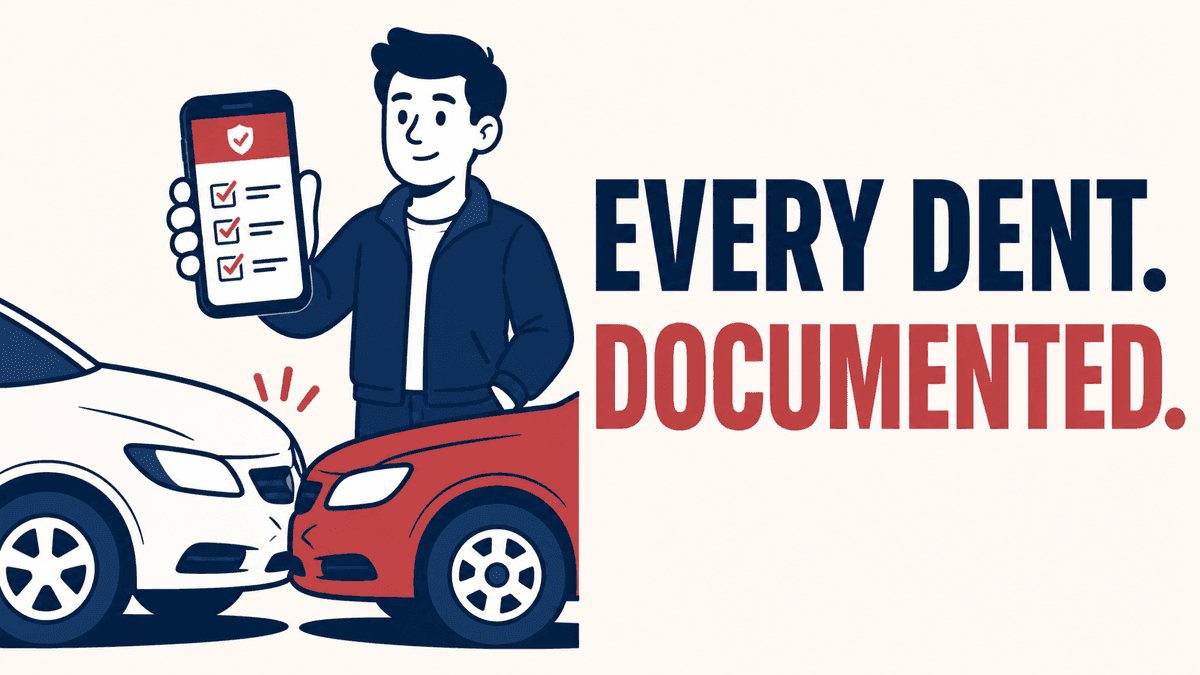
GeoX is an accident report app add-in: your driver documents a collision on scene (photos, location, other party) and it is filed with trip data.
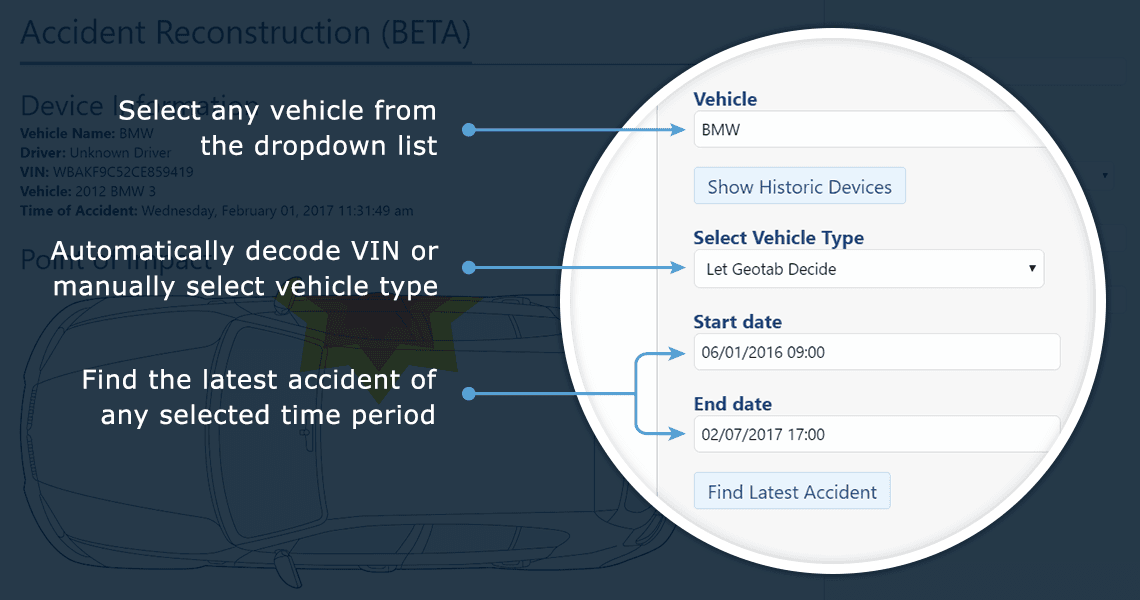
Collision reconstruction turns a GPS tracker's accelerometer record into an accident report on speed, braking and impact that insurers can read.
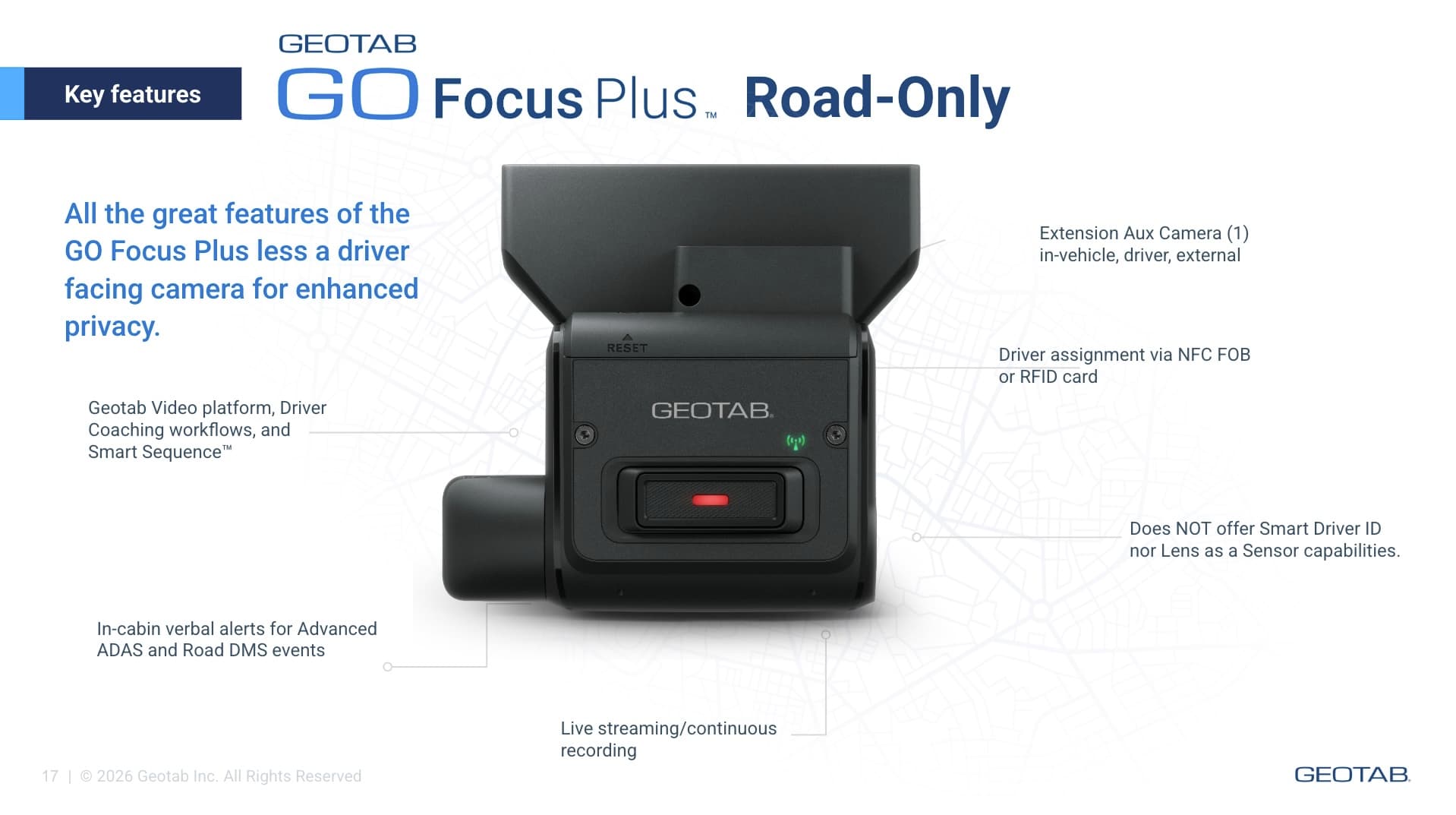
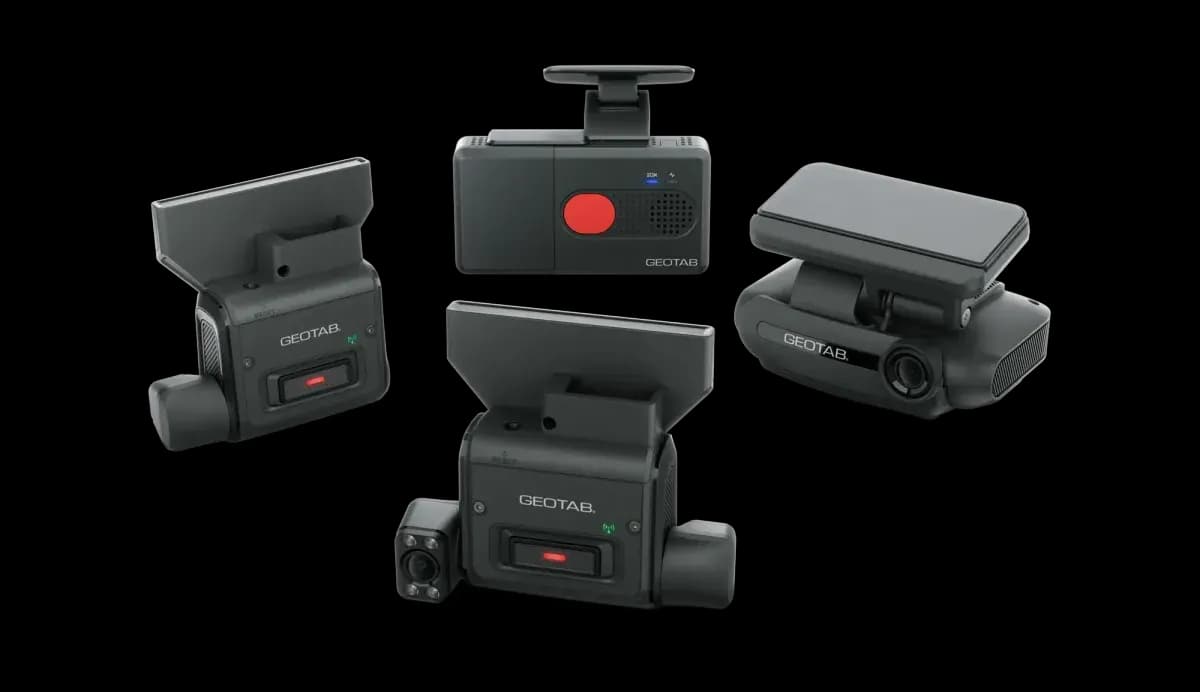
A dual dash cam with GPS films the road and the driver and ties each event to location and speed. How the GO Focus Plus detects, coaches and reports.
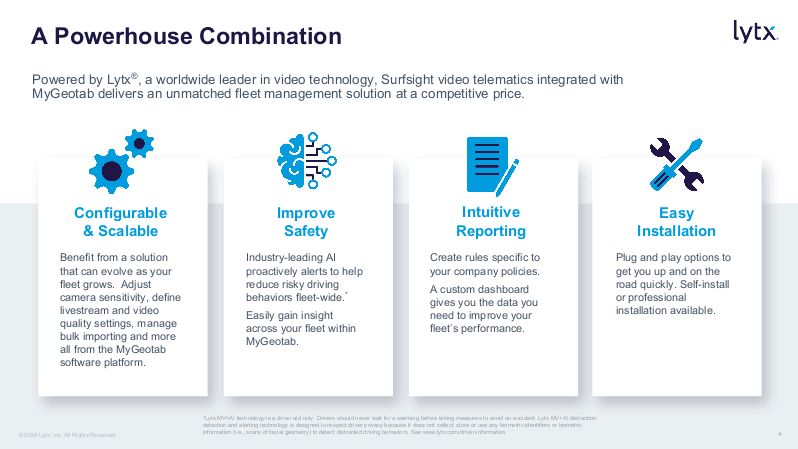
The Surfsight AI-12 camera from Lytx is a dual-facing AI dash cam for the High Point GPS platform. See what it flags, how events arrive, who picks it.
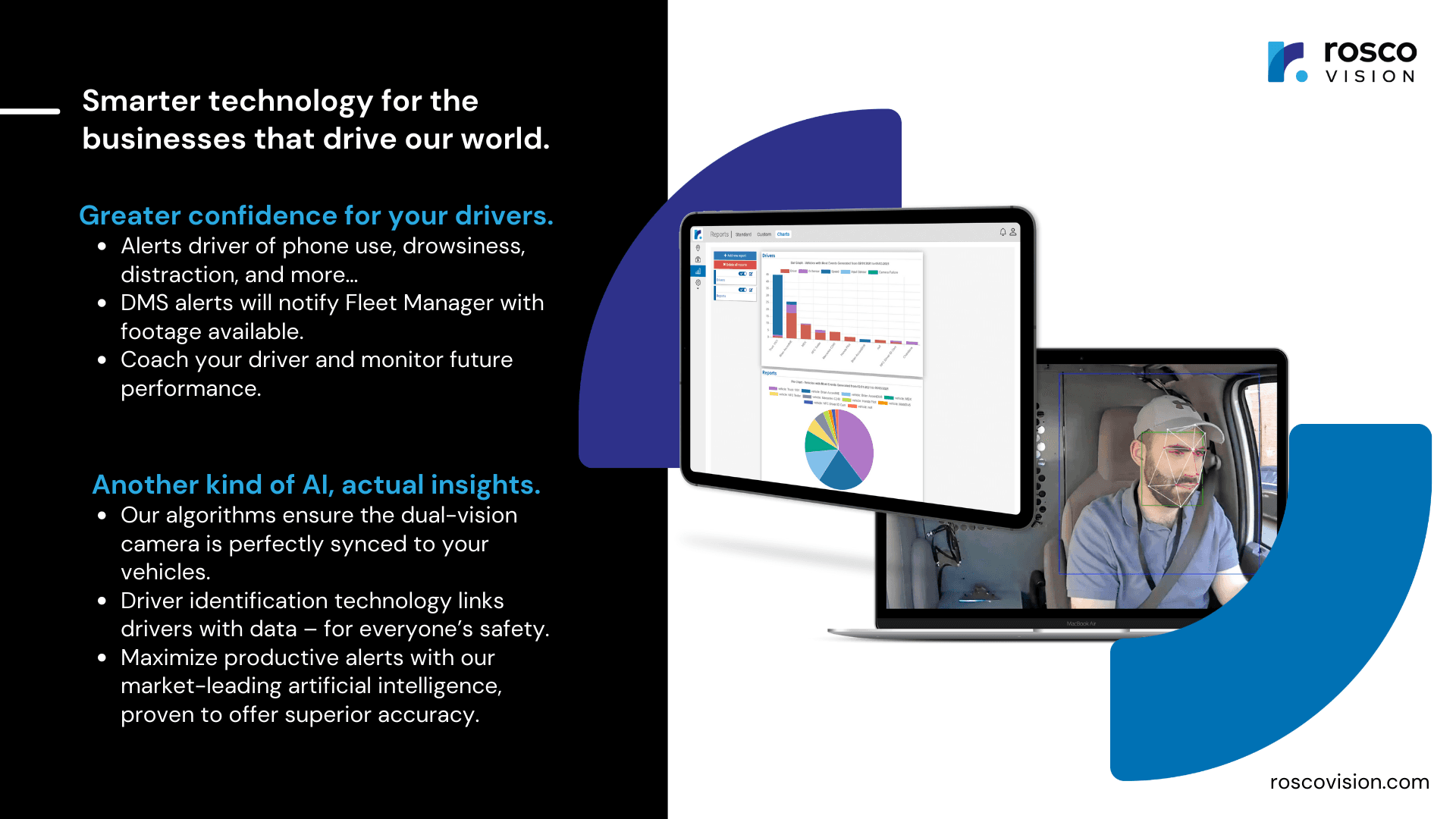
The Rosco DV6 dash cam is a dual-camera HD recorder from Rosco Vision with AI alerts and a native High Point GPS link, built for bus and truck fleets.
ADAS stands for advanced driver assistance systems, from collision warning to emergency braking. See how built-in and dash cam ADAS differ for fleets.
Driver-facing cameras and Quebec Law 25: a fleet must justify the camera, tell drivers, limit who sees footage and how long it is kept. With a checklist.
Samsara, Motive, Lytx, Netradyne and Geotab GO Focus fleet dash cams compared on camera views, side cameras, AI alerts and privacy, from vendor sites.
Side cameras for trucks cover the blind spots mirrors miss in lane changes, right turns and backing. What the research shows and how to plan the cameras.