
Video Safety & Dash Cams
Does the GPS Tracking Device Record Audio or Video? What It Actually Captures
The GPS tracking device has no microphone and no camera. It records location, speed, and engine data, not audio or video. Here's exactly what's captured, and what a camera adds.
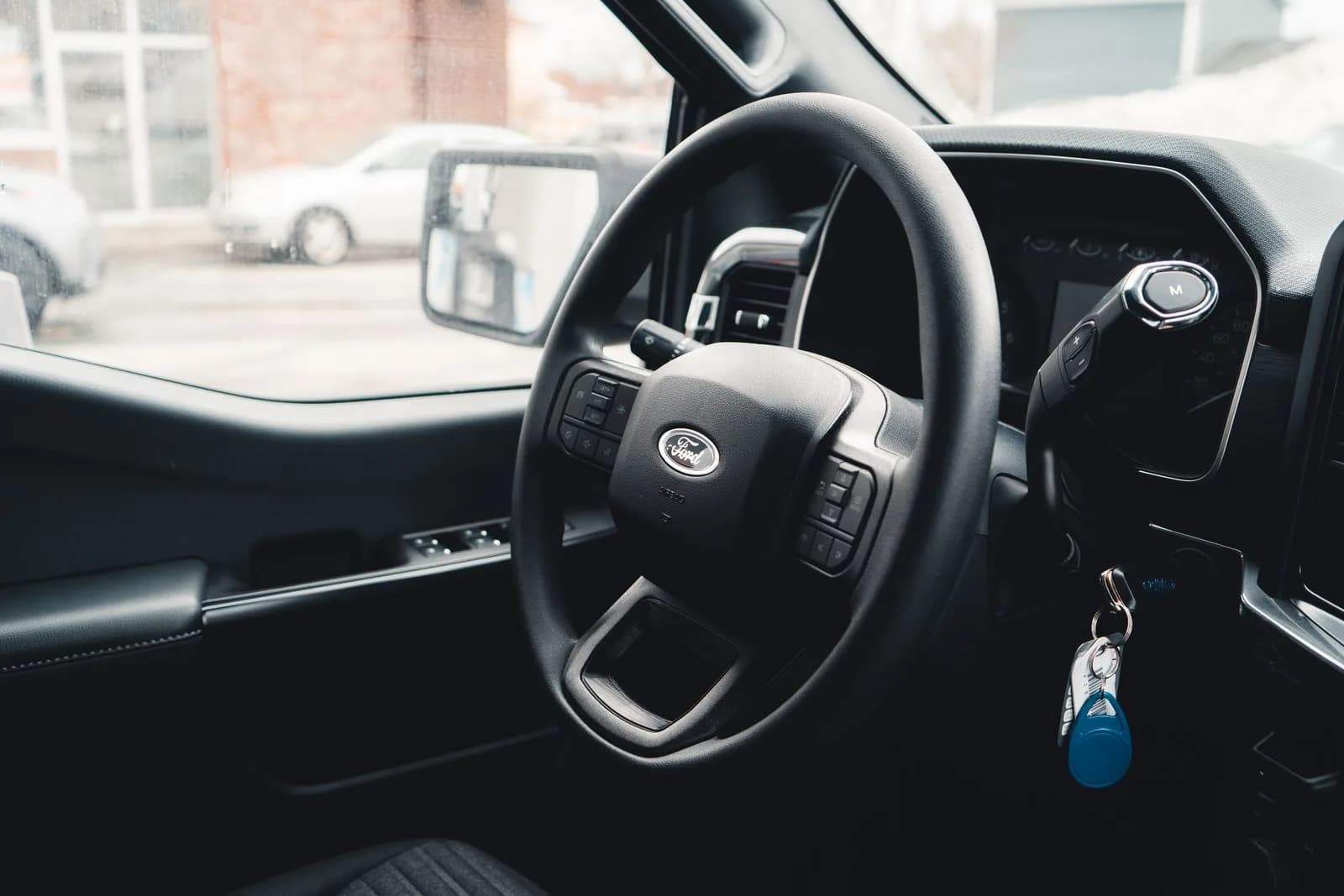
The GPS Tracking Device Has No Microphone and No Camera
On its own, a GPS tracking device cannot record audio or video, because it has neither a microphone nor a camera. It is a telematics device that plugs into the vehicle's diagnostic port and records location, speed, engine data, and driver behavior events like harsh braking or rapid acceleration. If your fleet runs the GPS tracking device and nothing else, there is no in-cab audio or video being captured at all, only the vehicle and trip data.
This matters because "is the company listening to me" is one of the first questions drivers ask when a tracking device shows up in the cab. With the GPS tracking device alone, the honest answer is no: there is no audio stream to listen to and no video to watch. What the device sees is where the vehicle went, how fast, and how it was driven.
Audio and Video Only Exist If You Add a Camera
Video, and any audio, only enters the picture when a fleet adds a separate dash cam alongside the GPS tracking device. Road-facing cameras capture the view out the windshield; driver-facing cameras add a view of the cab, typically to detect distraction or drowsiness with AI. On cameras that support in-cab audio, recording is a configurable setting a fleet can turn on or off, and many fleets disable it or limit clips to short windows around a safety event rather than continuous recording.
So the capability ladder is straightforward. GPS tracking device only: vehicle and trip data, no audio or video. GPS tracking device plus road-facing camera: adds forward video. GPS tracking device plus dual-facing camera: adds an in-cab view, with audio as an optional setting. A fleet chooses where on that ladder it wants to be, and drivers should be told clearly which tier their vehicle is on.
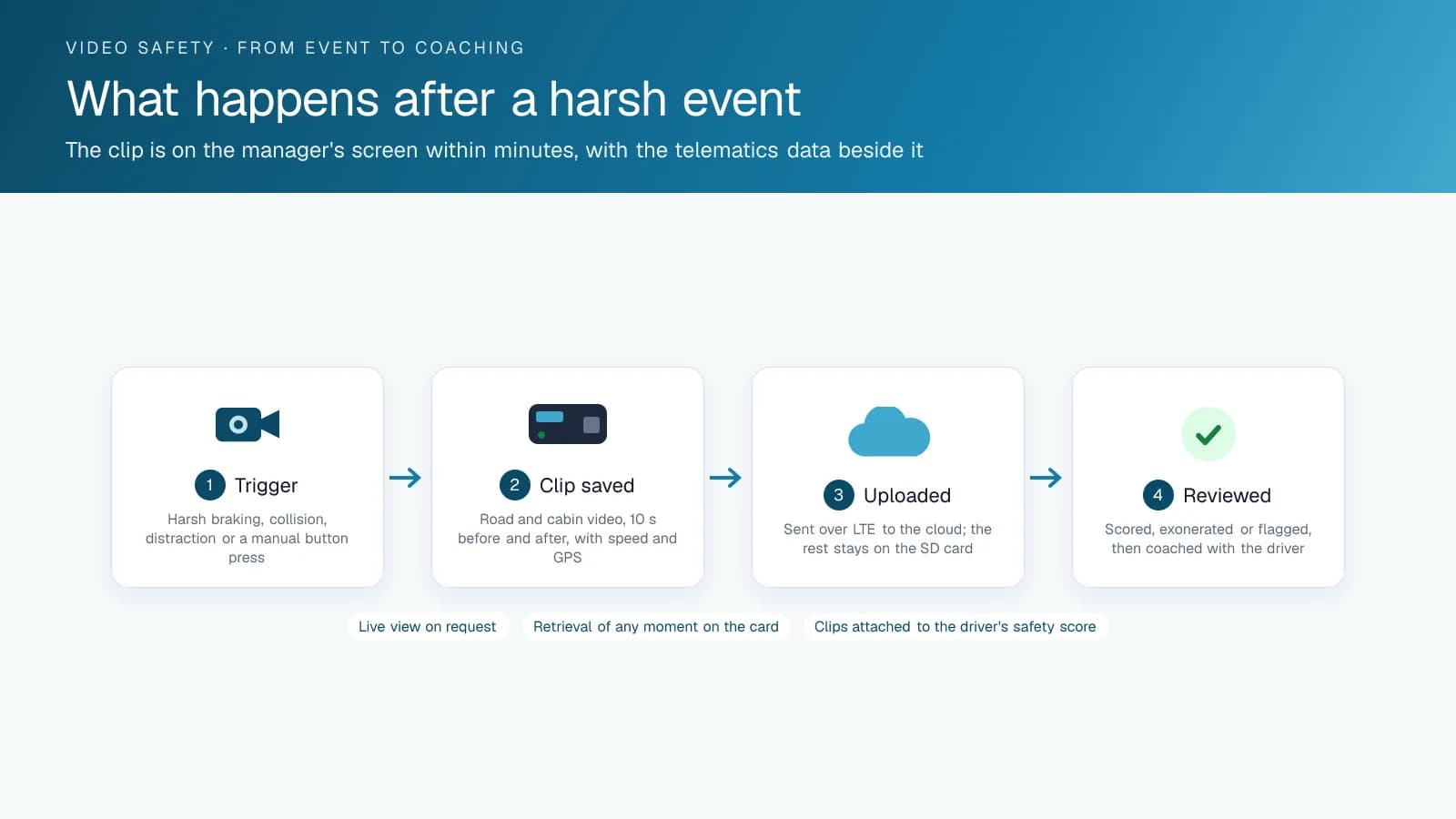
What Cameras Capture, and Why Fleets Add Them
When a fleet does add cameras, the point is usually protection rather than surveillance. Forward-facing footage is what exonerates a driver who gets blamed for a collision they didn't cause, and AI driver-facing detection is aimed at catching the specific risky moments, phone use, eyes off the road, that lead to crashes, not at watching a driver for its own sake. The best programs pair cameras with a clear policy: what's recorded, when, who can view it, and how long it's kept.
If your fleet wants the safety and liability benefits of video without continuous in-cab recording, that's a normal and common configuration. Event-based clips, road-facing-only setups, and disabled audio are all standard options. The right answer depends on your risk exposure and your drivers, and it should be a deliberate choice you communicate, not a default nobody explained.
The Capability Ladder, Listed
What is and is not captured at each configuration, so a fleet can tell drivers exactly which tier their vehicle is on.
| Configuration | Location and driving data | Road video | In-cab video | Audio |
|---|---|---|---|---|
| GPS tracking device only | Yes | No | No | No |
| GPS tracking device plus road-facing camera | Yes | Event clips, continuous on the card | No | Off by default; configurable |
| GPS tracking device plus dual-facing camera, events only | Yes | Event clips | Event clips only | Off by default; configurable |
| GPS tracking device plus dual-facing camera, continuous | Yes | Continuous on the card | Continuous on the card | Off by default; configurable |
| Any of the above with privacy mode | Yes | As configured | Disabled during off-duty time | Disabled |
Frequently asked questions
Does the GPS tracking device record audio?
No. The GPS tracking device has no microphone. It records location, speed, engine diagnostics, and driver-behavior events, not audio. Audio only exists if a separate camera with audio capture is added and that setting is enabled.
Does the GPS tracking device have a camera?
The tracking device itself has no camera. Video comes from separate dash cams that integrate with the High Point GPS platform, such as road-facing or dual-facing AI cameras, which a fleet adds by choice.
Can a fleet turn off in-cab audio recording?
Yes. On cameras that support audio, recording is a configurable setting the fleet controls, and many fleets disable it or limit capture to short windows around a detected safety event.
Does the GPS tracking device work when the vehicle is off?
The GPS tracking device draws very little power and can report certain events with the ignition off, but it primarily records data while the vehicle is running. It does not capture audio or video in any state, because it has neither sensor.
Related solutions & products
Continue reading
- Dash Cams & AI Video Safety overview →
- Collision Reconstruction in the High Point GPS Platform: Reading the Seconds Before and After an Impact →
- Fleet Dash Cams With Live View: What Live Streaming Shows and When It Is Actually Used →
- Dual Dash AI Camera: Our AI Dash Cam and How It Coaches in the Cab →
- Dash Cams for Trucks, Front and Rear: What Each Camera Position Sees →
- More in Video Safety & Dash Cams →
Get a free quote
What are you looking for?