
Video Safety & Dash Cams
Dash Cams for Trucks, Front and Rear: What Each Camera Position Sees
A truck dash cam setup is a decision about positions: road-facing, driver-facing, rear, and sometimes sides. Here's what each one records, which claim each one settles, how the cameras connect to the telematics device, and which combination fits a tractor-trailer, a straight truck and a van.
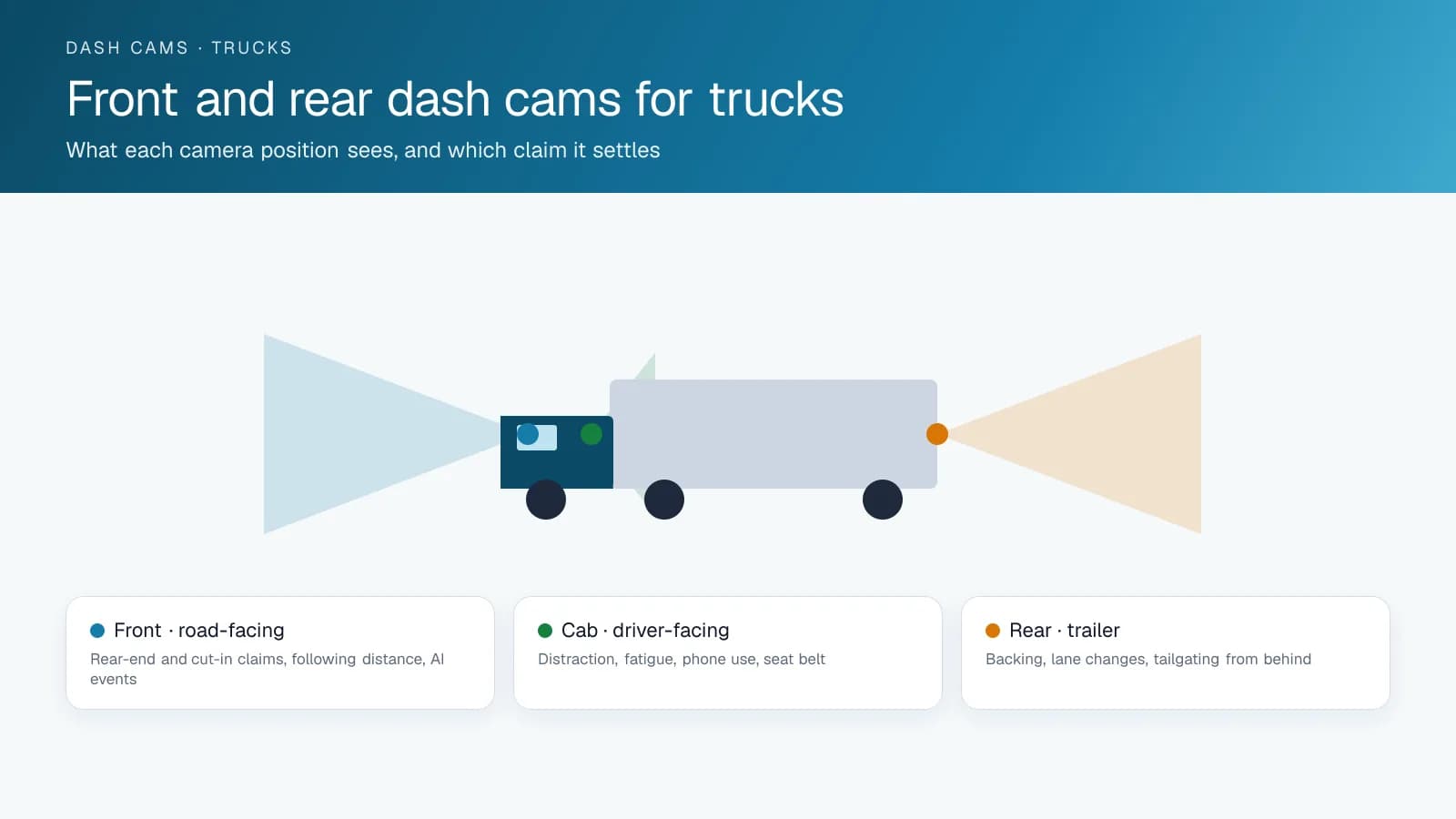
Front: The Road-Facing Camera
The road-facing camera is the one every fleet installs first. Mounted high on the windshield, it records the road ahead in a wide angle and, on an AI camera, runs detection for following distance, forward collision warning, lane departure and rolled stops. It settles the claims that cost fleets the most: the car that cut in and braked, the rear-end at a light where fault is disputed, the intersection collision. The clip, tied to the GO device's speed and GPS data, is what the insurer and the lawyer look at first.
Cab: The Driver-Facing Camera
A driver-facing lens, usually in the same housing as the road camera, records the cab and runs the detections the road camera cannot: phone in hand, eyes off the road, drowsiness, seat belt, smoking. It is the camera drivers object to and the one that changes behaviour most, because the events are specific and the video is unarguable. Fleets that deploy it with a clear policy on when footage is reviewed, and that use it to defend drivers as often as to coach them, keep their drivers; fleets that deploy it as surveillance do not.
Rear and Sides
A rear camera on a tractor faces the trailer and the road behind, recording backing, lane changes and the vehicle tailgating the truck; on a straight truck or van it is the reversing camera that also records. Side cameras on the mirrors cover the blind spots where cyclists and pedestrians are hit and where sideswipe claims begin. A multi-camera system feeds all of them into one recorder connected to the GO device, so an event from any camera is stored with the same telematics data. Tractor-trailers typically run front, cab and rear; refuse, delivery and construction trucks add sides; vans run front and cab.
Connection and Storage
Fleet cameras connect to the telematics device or run their own LTE modem, upload event clips within seconds and keep continuous recording on a local card for days, retrievable on request. Footage lives in the platform beside the trip, the driver and the ELD record, which is what makes it evidence rather than a video file. High Point GPS installs dual and multi-camera systems for truck fleets across Quebec, Ontario and the northeastern US, configured to the events the fleet's safety program actually coaches on.
Frequently asked questions
Do trucks need a front and rear dash cam?
A road-facing camera is the minimum. Rear and side cameras add coverage for backing, lane changes and blind spots, which is where straight trucks, refuse and delivery vehicles have most claims.
What does a driver-facing camera record?
The cab: phone use, distraction, drowsiness, seat belt and smoking, with AI detection that flags the event and saves the clip.
How do truck dash cams connect?
Through the GO telematics device or their own LTE modem. Event clips upload within seconds; continuous footage is kept on a local card for retrieval.
How many cameras does a tractor-trailer need?
Usually three: road-facing, driver-facing and rear. Vehicles working curbside add side cameras for blind spots.
Are dash cams legal on trucks in Canada?
Yes. Road-facing cameras are permitted everywhere; driver-facing cameras are subject to provincial privacy rules and workplace policy, and most fleets notify drivers and define review conditions in writing.
Related solutions & products
Continue reading
- Dash Cams & AI Video Safety overview →
- Fleet Dash Cams With Live View: What Live Streaming Shows and When It Is Actually Used →
- Does Geotab Record Audio or Video? What the GO Device Captures →
- Collision Reconstruction in Geotab: Reading the Seconds Before and After an Impact →
- GO Focus Plus: Geotab's Own AI Dash Cam and How It Coaches in the Cab →
- More in Video Safety & Dash Cams →
Get a free quote
What are you looking for?