Resources
ELD, DVIR, and IFTA guidance for staying audit-ready in Canada and the US.
Compliance
An ELD (electronic logging device) records driving time from the engine and replaces the paper logbook. What it records, who needs one and who is exempt.
ELD exemptions under FMCSA rules cover short-haul and local drivers, occasional paper loggers, driveaway-towaway and older vehicles. See which applies.
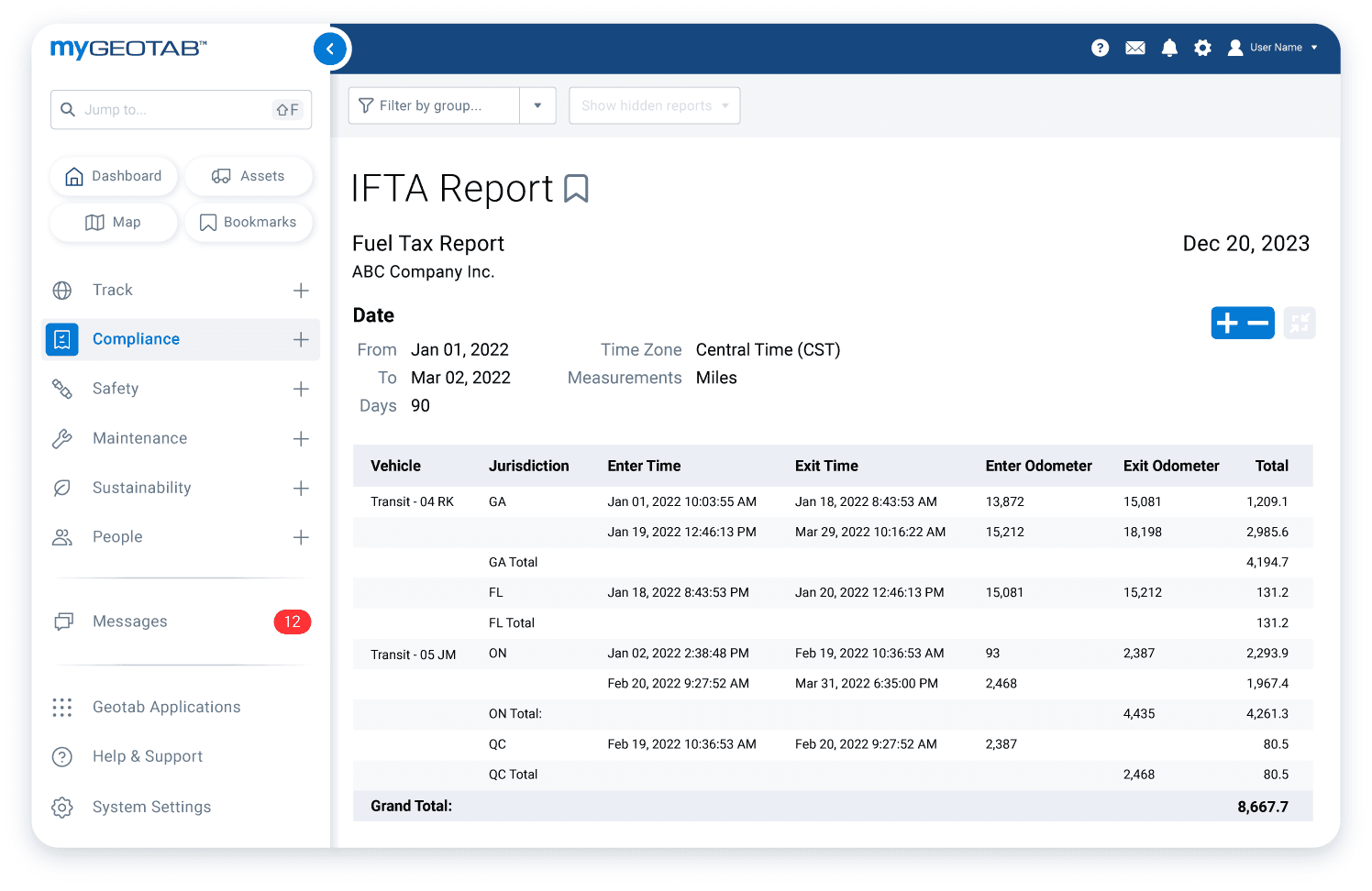
IFTA lets fleets that cross state and provincial lines file one quarterly fuel tax report. See who has to file for IFTA and how the reporting math works.
When is IFTA due? Four times a year, on the last day of the month after each quarter ends. The IFTA reporting deadlines, late fees and how to avoid them.
A DVIR (driver vehicle inspection report) is a driver's written record of vehicle defects. What the FMCSA rule requires, what to inspect and what to keep.
IFTA tax rates differ by jurisdiction and fuel type and can change every quarter. See how the IFTA rate matrix works and where fleets get the math wrong.
AOBRD vs ELD: ELDs replaced AOBRDs with a stricter, FMCSA-registered standard. See what changed in the transition and why the deadline still matters.
How is IFTA calculated? Allocate fuel to each jurisdiction by miles driven, apply its rate, then subtract tax paid at the pump. See the math worked out.
After an ELP violation at a roadside inspection, a truck driver can now be put out of service under the FMCSA English language rule. See what changed.
CVSA Roadcheck 2026 targeted ELD tampering and cargo securement. See what inspectors checked at the roadside and how to prepare for the next Roadcheck.
The AEB mandate for heavy trucks is a proposed US rule, not yet in effect, that would require automatic emergency braking on trucks above 10,000 lbs.
The FMCSA speed limiter rule for heavy trucks is gone: FMCSA and NHTSA withdrew the proposed mandate in 2025. What that does and doesn't change for fleets.
Truck tariffs, led by a 25% US tariff on imported medium- and heavy-duty trucks, add thousands to new-truck costs. What it means for replacement timing.
The most common ELD violations are incomplete logs, missed breaks and unassigned driving. See what FMCSA cites, the maximum fines and how to avoid them.
An integrated ELD is wired into a truck's factory electronics; a designated ELD is a separate aftermarket unit. Both meet the same FMCSA requirements.
ELD cost depends on the hardware model, contract length and features included. What drives ELD pricing, and what to ask before you compare quotes.
IFTA sticker placement: every IFTA-licensed vehicle needs two IFTA decals, one on each side of the cab. See the rules, decal costs and how to replace one.
Canada's ELD mandate requires third-party certification, while the US lets makers self-certify. The key mandate dates and how the two rules differ.
USDOT and MC number compared: a USDOT number is a free FMCSA safety identifier, while an MC number is paid operating authority not every carrier needs.
Telematics data ownership is set by your vendor contract, and the terms vary more than most fleets expect. Check these five clauses before you sign.
Yes, a non-CDL hotshot, box truck or cargo van can still need an ELD: the vehicle and the trip trigger the rule. See when the hotshot ELD rule applies.
FMCSA Hours of Service rules let property-carrying drivers drive 11 hours in a 14-hour window after 10 hours off. The US limits, breaks and exceptions.
Canadian HOS rules allow 13 hours of driving and 14 on duty a day after 10 off, under Cycle 1 (70 hours in 7 days) or Cycle 2 (120 in 14).
To pass a DOT roadside inspection, have credentials, ELD logs and a DVIR ready. This DOT inspection checklist covers brakes, tires, lights and the levels.
ELD cost for an owner-operator is a device plus a monthly per-truck fee. No ELD is free: a free app still needs engine-linked hardware and a subscription.
To file IFTA online, log in to your base jurisdiction's tax portal each quarter and report miles and fuel by jurisdiction. Steps, deadlines, checklist.
Your CSA score comes from inspection violations and crashes in FMCSA's SMS. To improve it, cut violations with clean ELD logs, steady DVIRs and coaching.
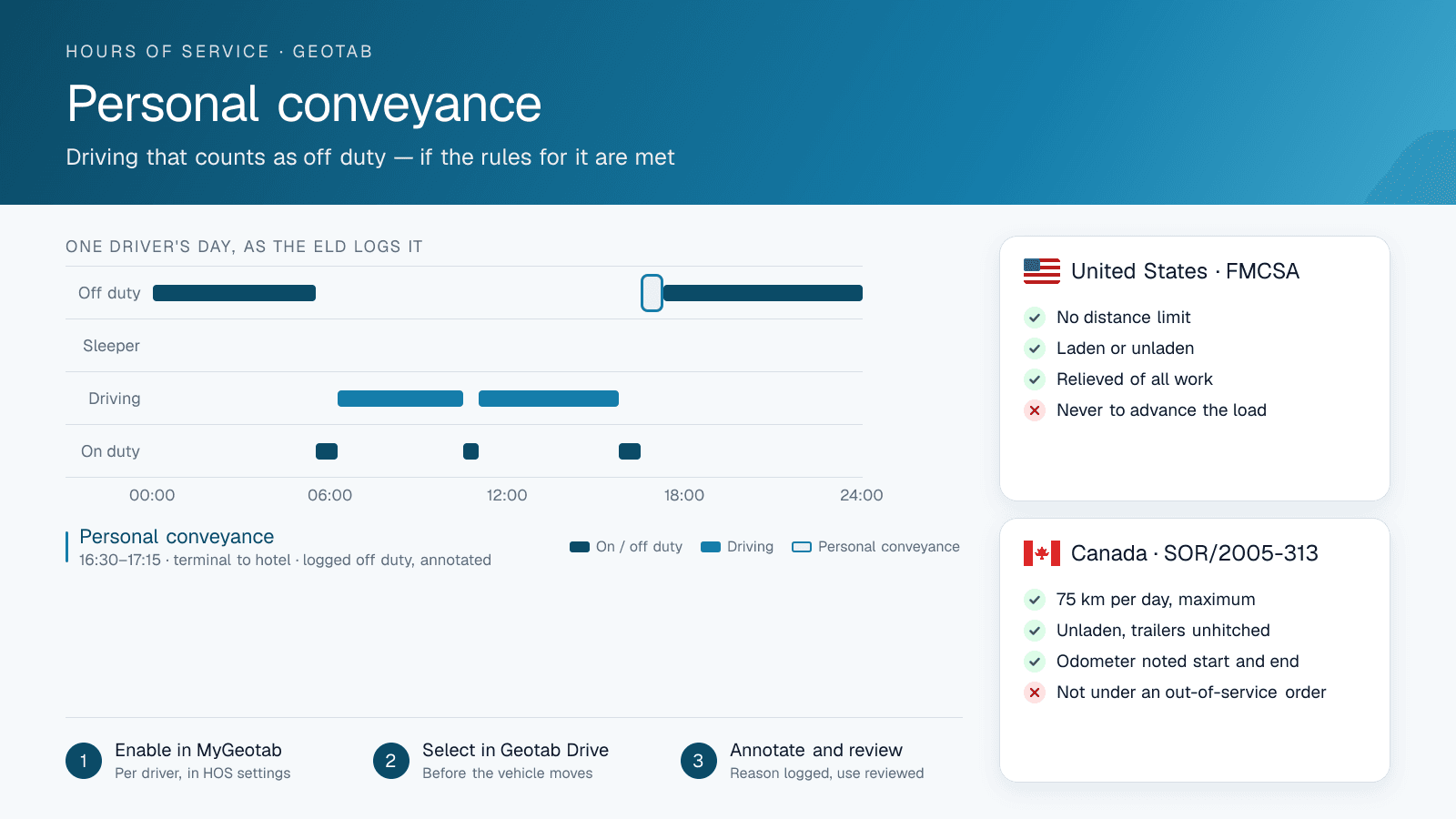
Personal conveyance rules: off-duty use of a truck under FMCSA and Canadian rules, and how to enable and log PC in MyGeotab and Geotab Drive.
ELD and telematics: an ELD is a compliance record; telematics is everything else the device reports. Most fleets that need an ELD run both on one device.
IFTA reporting software from High Point GPS turns GPS data into distance by jurisdiction per truck, the hardest part of the return. See how to run it.
ELD compliance takes a certified ELD, the right ruleset for each driver and a weekly log review. What the device enforces and what your fleet still owns.
A digital DVIR is the inspection record US and Canadian rules require, filed on the driver's phone, with defects routed to the shop and a sign-off trail.
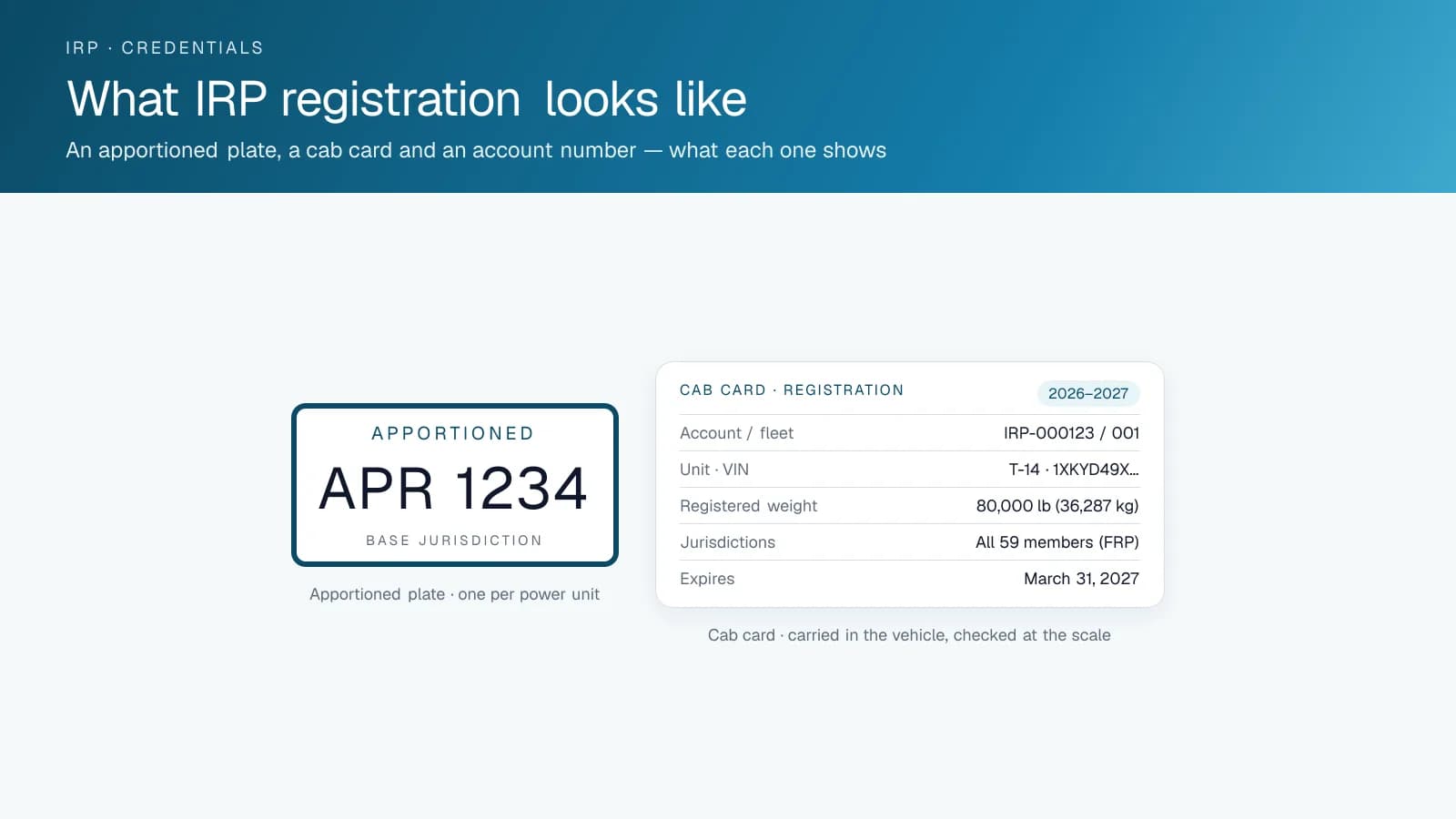
An apportioned plate means a truck is registered under IRP: one plate and cab card for 59 US and Canadian jurisdictions, with the fee split by distance.
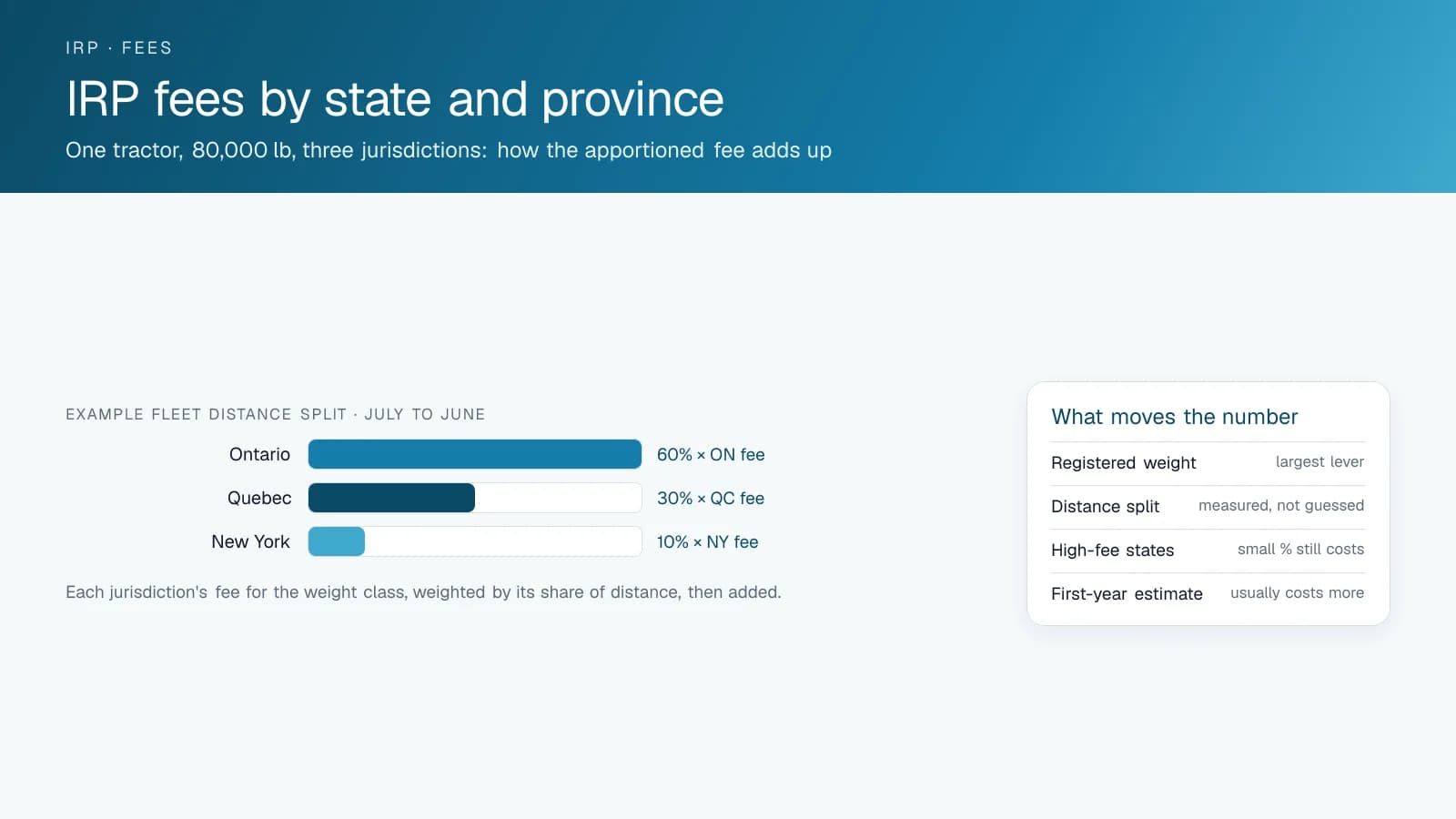
Apportioned plates cost the sum of each jurisdiction's IRP fee for your weight class, weighted by your distance there. See what moves the bill.
IRP requirements: a vehicle over 26,000 pounds or with three or more axles needs IRP in two or more member jurisdictions. Exemptions and how to apply.
Yes. Federally regulated carriers must use a device on Canada's approved ELD list, enforced since January 1, 2023. See who must comply and who is exempt.
IRP fees by state and province differ: each sets its own fee by weight, and you pay each in proportion to your distance there. See a worked example.
A cab card is the IRP registration document itself, carried in the truck: unit, VIN, registered weights, jurisdictions and expiry, read line by line.
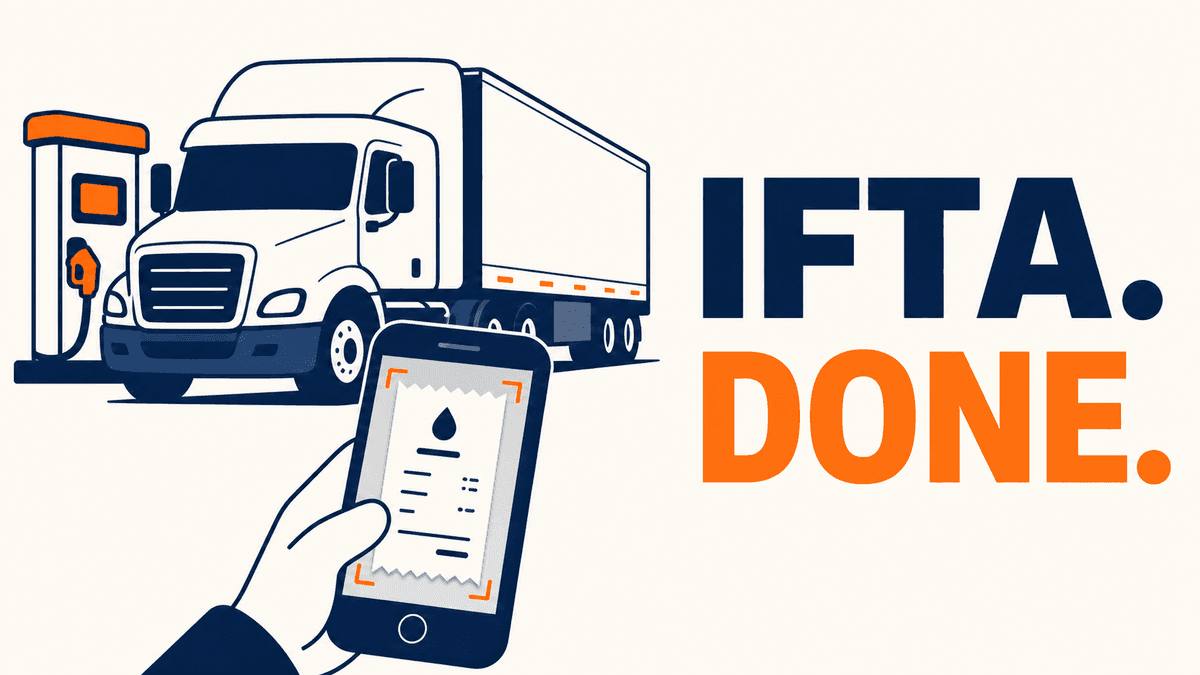
Fuel Receipt Capture is a fuel receipt app add-in: drivers photograph receipts at the pump and each purchase is filed by vehicle and jurisdiction for IFTA.
Compliance Data Summary shows each driver's hours of service left and each truck's DVIR status on the live map, before dispatch assigns a load.
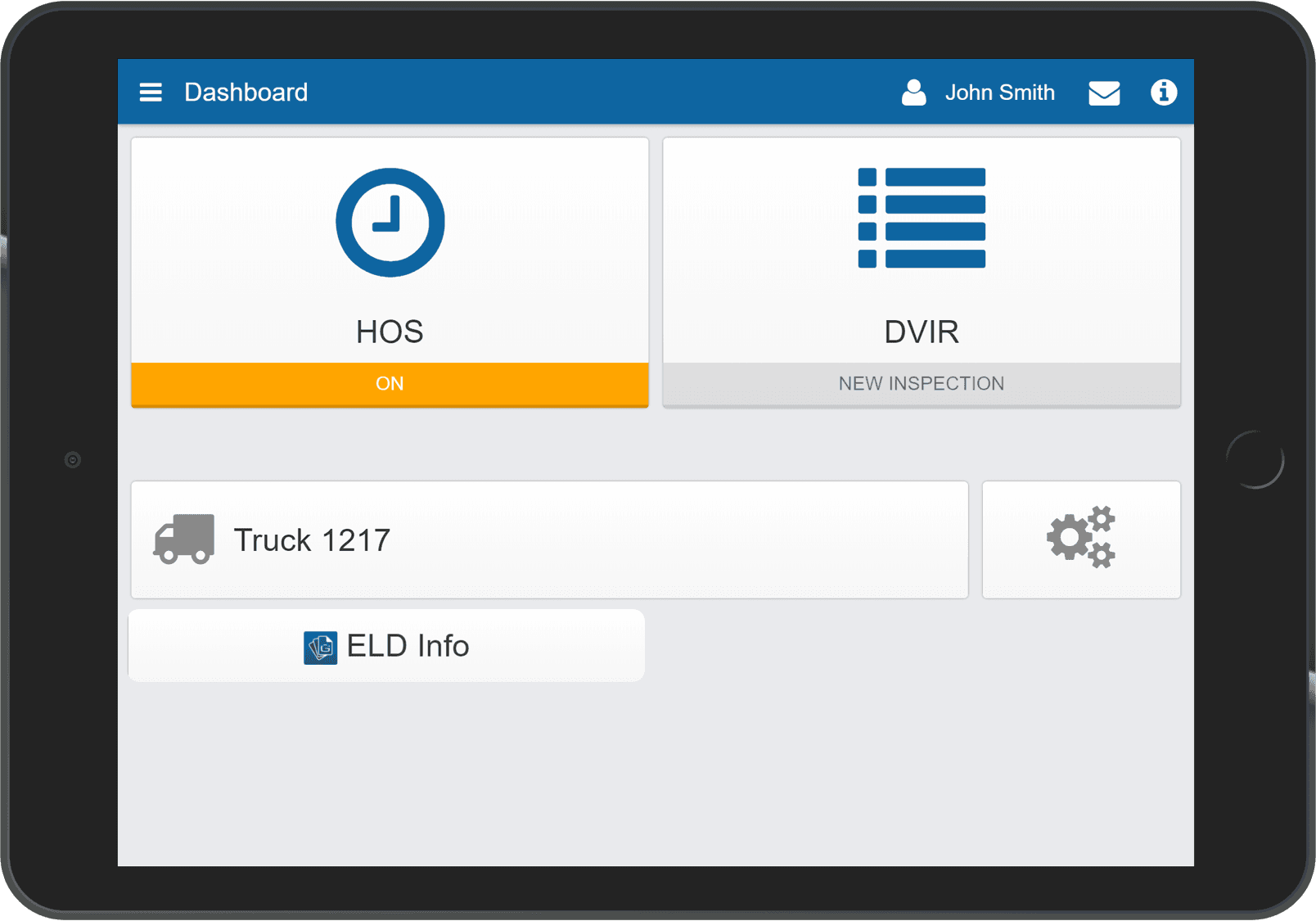
At an ELD roadside inspection, drivers must show the transfer sheet, malfunction steps and, in Canada, the user manual. ELD Info keeps them in the app.
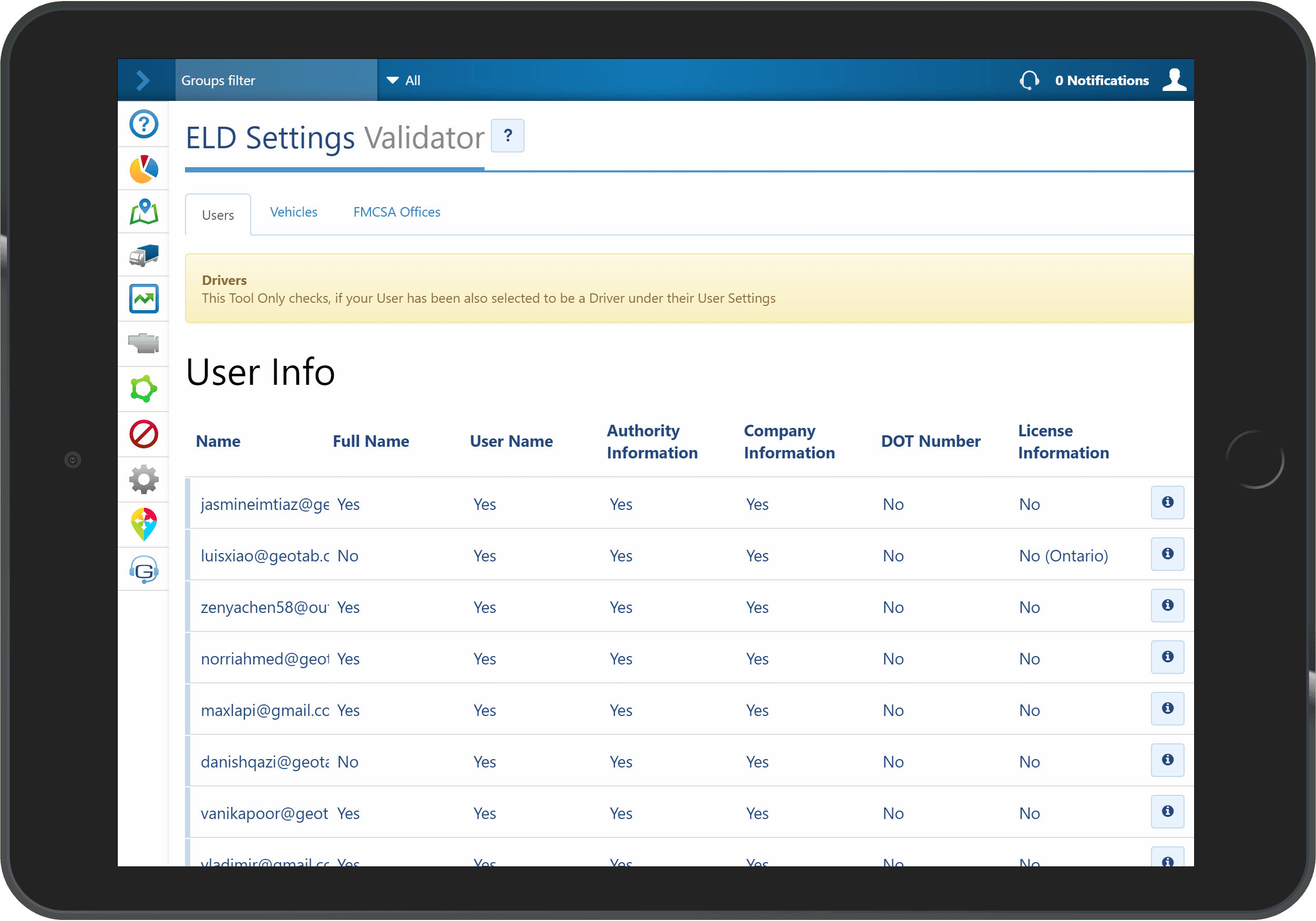
ELD Settings Validator checks your ELD setup in the High Point GPS platform and flags missing or wrong driver and vehicle fields before an inspection does.
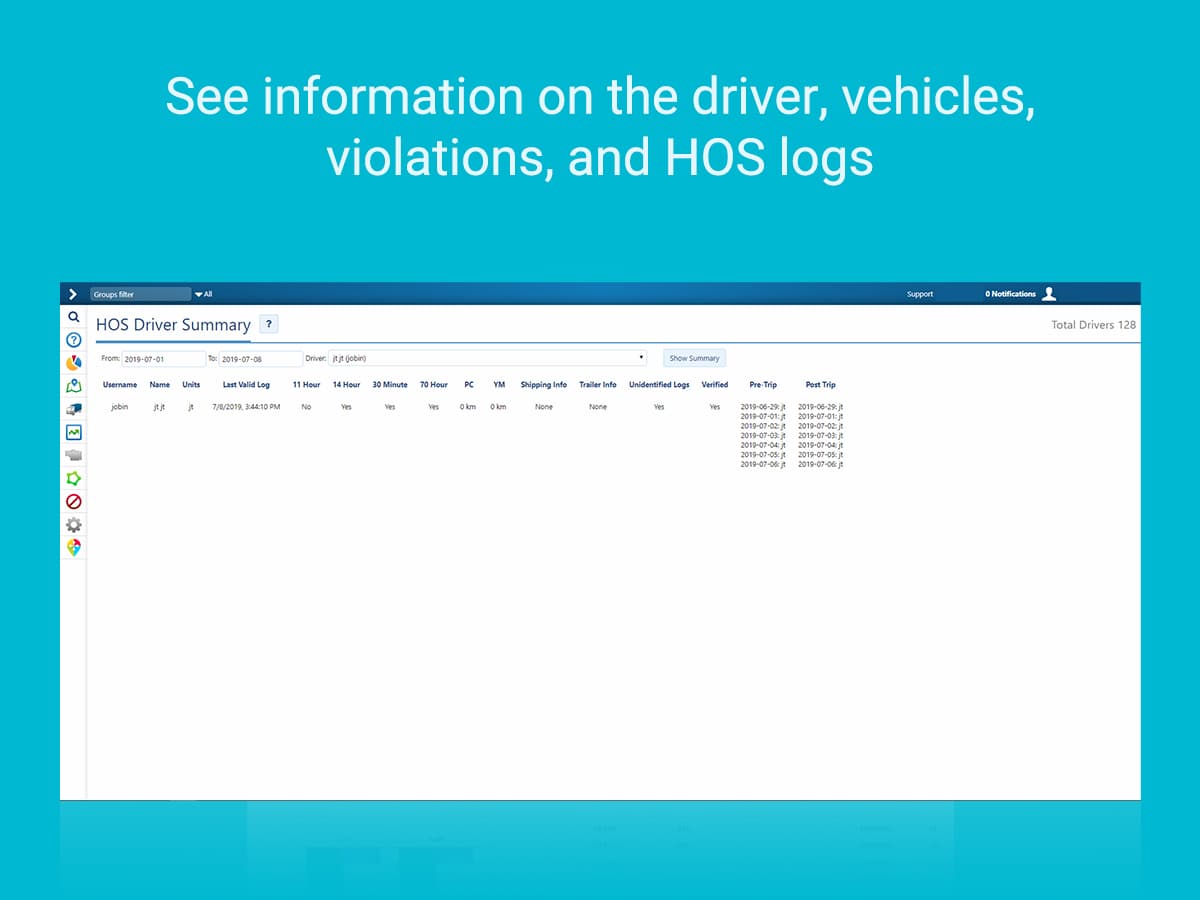
HOS Driver Summary turns ELD data into a scheduled HOS violations report: violations by driver and type, hours and DVIR completion, ready for the auditor.
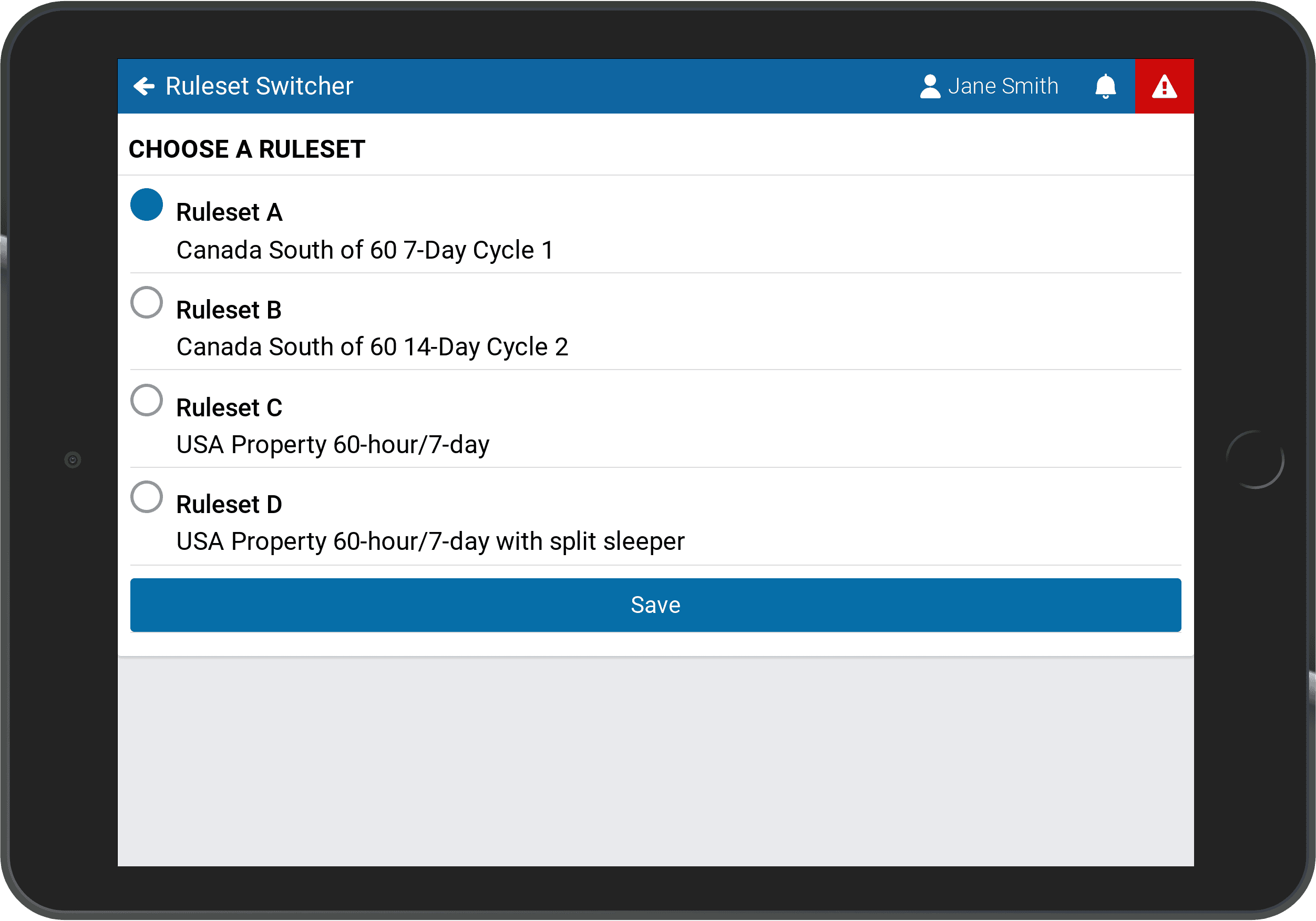
Ruleset Switcher lets a driver change HOS rules in Geotab Drive at the border, from Canadian cycle rules to US 70-hour rules, within the fleet's set.
The NY Highway Use Tax (HUT) charges heavy trucks for each mile on New York public highways, separate from IFTA and IRP. Who pays and how to file.
The Kentucky weight distance tax (KYU) is a per-mile tax on heavy trucks, separate from IFTA, with its own KYU number, quarterly return and audits.
New Mexico weight distance tax charges heavy trucks per mile, with a New Mexico weight distance permit per vehicle and a quarterly return. See who owes it.
Oregon's weight-mile tax charges heavy trucks by declared weight and Oregon miles in place of fuel tax. See how the return, flat fees and credentials work.
UCR registration is an annual US fee for interstate carriers and brokers, with nothing to display. Who must register, how the brackets work, when it's due.
Form 2290 reports the IRS Heavy Vehicle Use Tax owed on Canadian trucks of 55,000 pounds or more on US highways. IRP needs the stamped Schedule 1.
A CVOR is the Ontario certificate truck and bus operators over the threshold must hold. How to apply, how the rating works, what the abstract shows.
In Quebec, heavy vehicle owners and operators register with the Commission des transports, get an NIR number and are rated under PEVL. How the file works.
An Alberta Safety Fitness Certificate is required to register commercial trucks and buses. Who needs one, how to apply, provincial or federal, ratings.
Your BC NSC number links each inspection, collision and conviction to your NSC carrier profile. What it shows, how to pull it, what CVSE audits check.
Cross-border trucking from Canada to the US takes a USDOT number, IRP plates, IFTA, a customs broker and carrier bond, and ACE eManifest. The full list.
GVWR means gross vehicle weight rating, the maker's maximum loaded weight. GVW vs GVWR vs GCWR, and the rules from 10,001 pounds to 55,000 pounds.
An IFTA and IRP base jurisdiction is the one state or province where a carrier files. It must be where the business really is, and collects for the rest.
Who needs IFTA? A carrier running a qualified motor vehicle across member jurisdictions. A vehicle qualifies on weight, axle count or combination weight.
Quebec's 2027 thaw period dates are not published yet. The three thaw zones, the load limits, the 2026 dates and how Transports Québec sets them.
Spring road restrictions in Ontario, Manitoba, Alberta and Saskatchewan: the axle limits, which roads they cover, how dates are set and where to check.
Every province and territory runs its own carrier safety program: CVOR in Ontario, the SFC in Alberta, the NIR in Quebec. Who issues each and who needs it.
Hours of service rules by province: cross-border carriers follow federal SOR/2005-313, drivers who stay home follow provincial rules. Each one, sourced.
IFTA and IRP in Canada are run by each province: one table with the office, the filing method and the official page for all 10 provinces and 3 territories.
A CVIP inspection is the periodic mechanical check of commercial trucks, trailers and buses in Alberta and BC: who needs one, how often, decals, records.
A Manitoba Safety Fitness Certificate is required to run trucks of 4,500 kg or more. Who needs one, how to apply and renew, and how carrier profiles work.