
Compliance
High Point GPS ELD Compliance: Everything Fleets Need to Know
How the High Point GPS ELD works, what it enforces, how it handles the US and Canadian rules, what a driver sees in the driver app, and what a fleet has to do itself — because a certified device does not make a fleet compliant on its own.
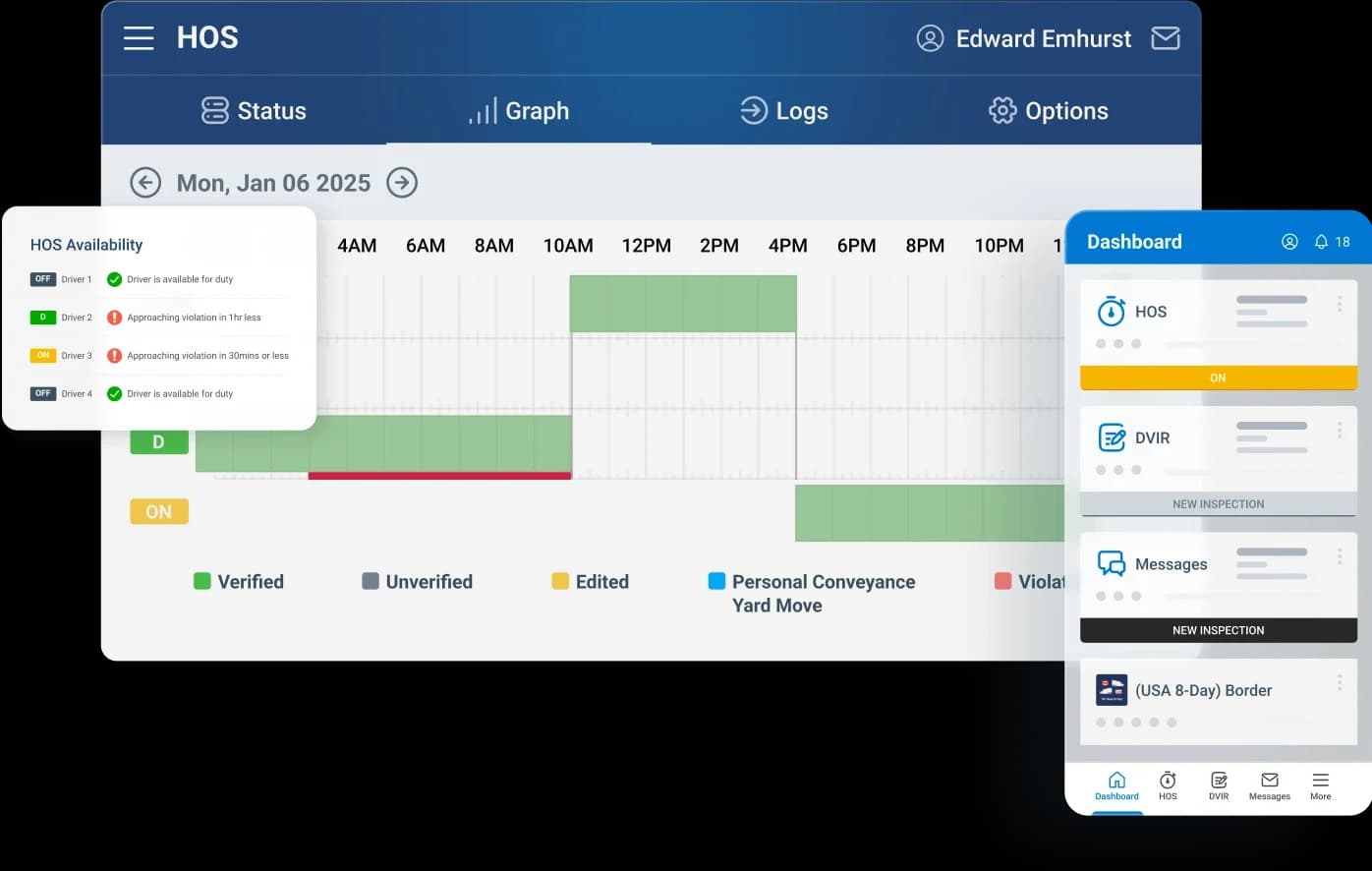
What the High Point GPS ELD Is
The High Point GPS ELD is the GPS tracking device in the vehicle plus the driver app on a phone or tablet, with an hours-of-service ruleset assigned to the driver in the High Point GPS platform. The device supplies the engine-tied movement, location and odometer data the regulation requires; the app is where the driver logs in, changes duty status, certifies logs and presents the record at roadside; the High Point GPS platform is where the carrier assigns rules, reviews logs, handles edits and pulls the records an auditor asks for.
It is self-certified and listed on the FMCSA's ELD registry for the United States, and third-party certified for Canada's mandate, which is the requirement north of the border. Both matter: a device that is compliant in one country is not automatically compliant in the other, and a cross-border fleet needs both.
What It Enforces
Once a ruleset is assigned, the app counts the driver down: driving time left, time left in the on-duty window, when the required break is due, hours remaining in the cycle. It warns before a limit is reached rather than recording the violation after. Movement is detected from the engine, so a driver cannot be in off-duty status while the truck is rolling — the app switches to driving, which is the behaviour the regulation exists to guarantee.
Rulesets are per driver, not per fleet. A carrier running under both the US property-carrying rules and the Canadian cycles assigns each driver the set that matches their operation, and a driver who crosses the border can be moved between them. Exceptions and special categories — personal conveyance, yard moves, the adverse-driving extension, the short-haul exception — are enabled per driver in the High Point GPS platform, and none is on by default.
What a Driver Sees and Does
The driver logs into the driver app at the start of the day, confirms the vehicle, and completes the pre-trip DVIR if the fleet uses it. Through the day the app shows the current status and the remaining hours. Status changes the driver makes — on duty, off duty, sleeper — take a tap; driving is set automatically from the engine. At the end of the shift the driver certifies the day's log, and at roadside the app produces the record for transfer or display exactly as the officer requests.
Edits are where discipline lives. A driver can annotate and propose edits; a carrier can suggest them; the driver has to accept them; and the original record is never overwritten. An inspector or auditor can see the edit history, which is why a fleet's edit rate is one of the first things a compliance review looks at.
What the Fleet Still Has to Do
A certified ELD is a tool; compliance is a practice. The carrier still has to assign the right ruleset to every driver, keep six months of logs and supporting documents, review unassigned driving time — movement recorded when nobody was logged in — and assign it or annotate it, resolve malfunctions within the regulation's eight days, and train drivers on the app, on their rights at roadside and on what the special categories are for.
The failures inspectors find most are exactly these: unassigned driving left piling up, a driver with the wrong ruleset for the trip, personal conveyance used to advance the load, and a malfunction nobody noticed. The platform's exception rules can flag each of them; a fleet that sets those rules up and looks at them weekly is doing the part the device cannot.
The Weekly ELD Review
The checks a carrier runs in the High Point GPS platform each week to do the part the device cannot, with the report or rule behind each.
| Check | Where | What to do |
|---|---|---|
| Unassigned driving time | Unassigned logs report | Assign to the driver or annotate as yard move or mechanic; never leave it |
| Violations by driver | HOS violation report | Review the cause; coach or fix the schedule |
| Edit rate and pending edits | Log edits report | Drivers accept or reject; a high edit rate is what auditors read first |
| Personal conveyance and yard move use | Exception rules on special categories | Confirm each use fits the definition |
| Malfunctions and diagnostics | Device status and malfunction report | Resolve within eight days; paper logs meanwhile |
| Rulesets by driver | Driver settings | Match the operation; cross-border drivers switched at the border |
| Uncertified logs | Certification report | Drivers certify each day; chase the gaps |
| Documents in the app | ELD Info add-in | Manual, transfer and malfunction sheets current |
Frequently asked questions
Is the High Point GPS ELD certified in both the US and Canada?
Yes. It is on the FMCSA ELD registry for the United States and third-party certified under Canada's ELD mandate. A cross-border fleet needs both, and High Point GPS provides rulesets for each.
Do I need a tablet, or will a phone work?
Either. The driver app runs on Android and iOS phones and tablets. The GPS tracking device does the vehicle-side logging; the phone or tablet is the driver's interface and the roadside display.
What is unassigned driving time in the High Point GPS platform?
Movement the GPS tracking device recorded while no driver was logged into the driver app. The regulation requires the carrier to assign it to the right driver or annotate why it is unassigned; leaving it to accumulate is one of the most common audit findings.
Can a carrier edit a driver's log in the High Point GPS platform?
A carrier can propose an edit, but the driver has to accept it, and the original record is preserved with the edit history. Nothing is overwritten, which is what the regulation requires and what an inspector checks.
Related solutions & products
Related terms
Continue reading
- Compliance (ELD, DVIR, IFTA) overview →
- Telematics vs ELD: Do You Need Both? →
- Compliance Data Summary: Hours of Service and Inspection Status on the Live Map →
- High Point GPS Personal Conveyance: How to Set It Up and Stay Compliant →
- ELD Info: The Documents a Driver Must Show at a Roadside Inspection, in the App →
- More in Compliance →
Get a free quote
What are you looking for?