
Compliance
IFTA Nova Scotia: Licence, Decals and Quarterly Fuel Tax Returns
IFTA Nova Scotia: carriers get the licence and two decals per vehicle from Service Nova Scotia. How the annual renewal and quarterly fuel tax returns work.
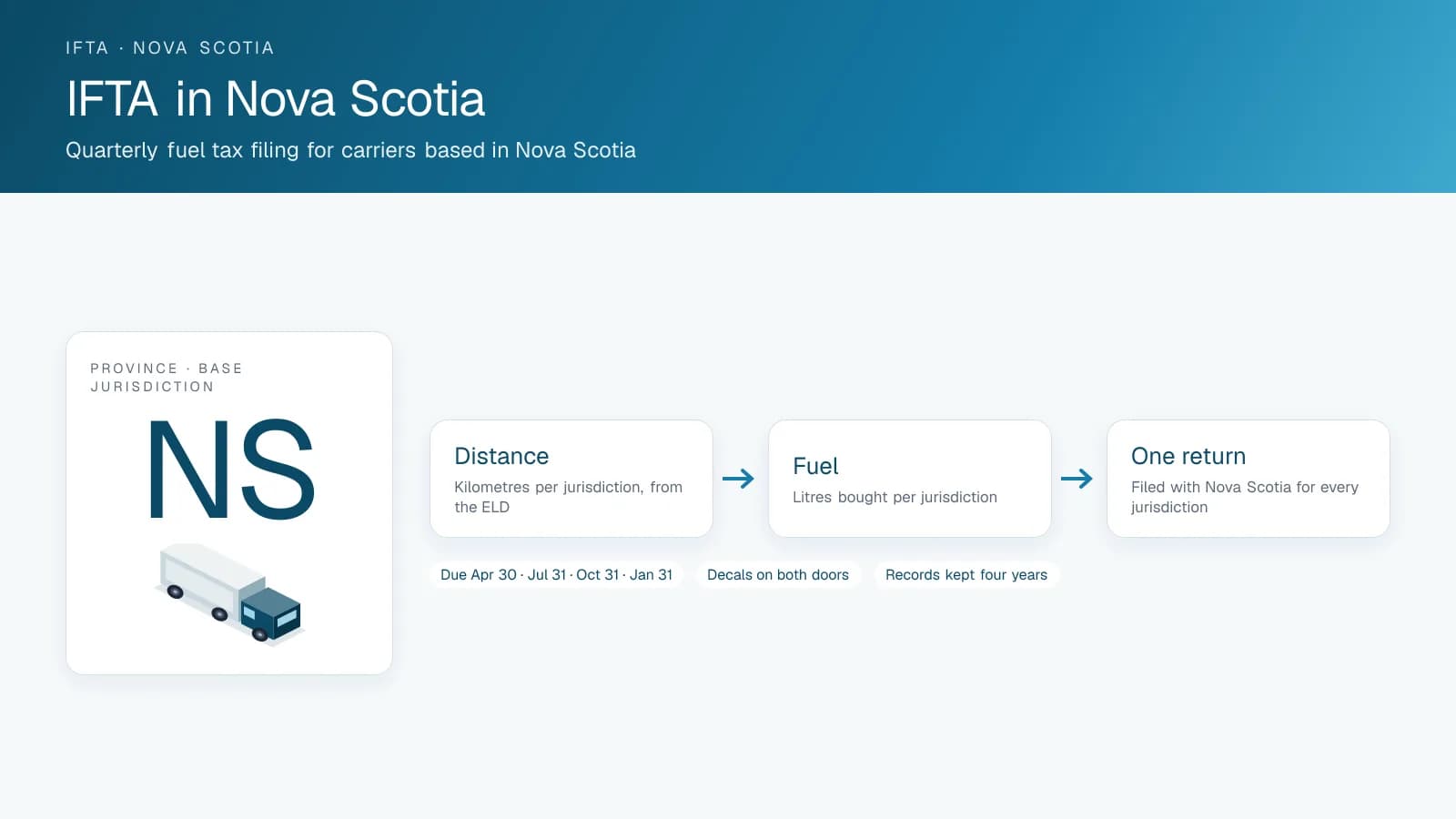
When Does a Nova Scotia Carrier Need IFTA?
You need IFTA in Nova Scotia once a qualified motor vehicle (generally over 26,000 pounds gross weight, or with three or more axles) runs in the province and at least one other jurisdiction. For a Nova Scotia carrier, that line is the New Brunswick border, which sits on the way to everywhere. A fleet running Atlantic freight to Moncton, or the long haul to Montreal and Toronto, is an IFTA carrier from its first week, however small it is.
Service Nova Scotia issues the licence and decals for carriers based in the province. You pay the licence and decal fees at registration, you get two decals per qualified vehicle, and the credential renews every year.
How Does the Nova Scotia IFTA Fuel Tax Return Work?
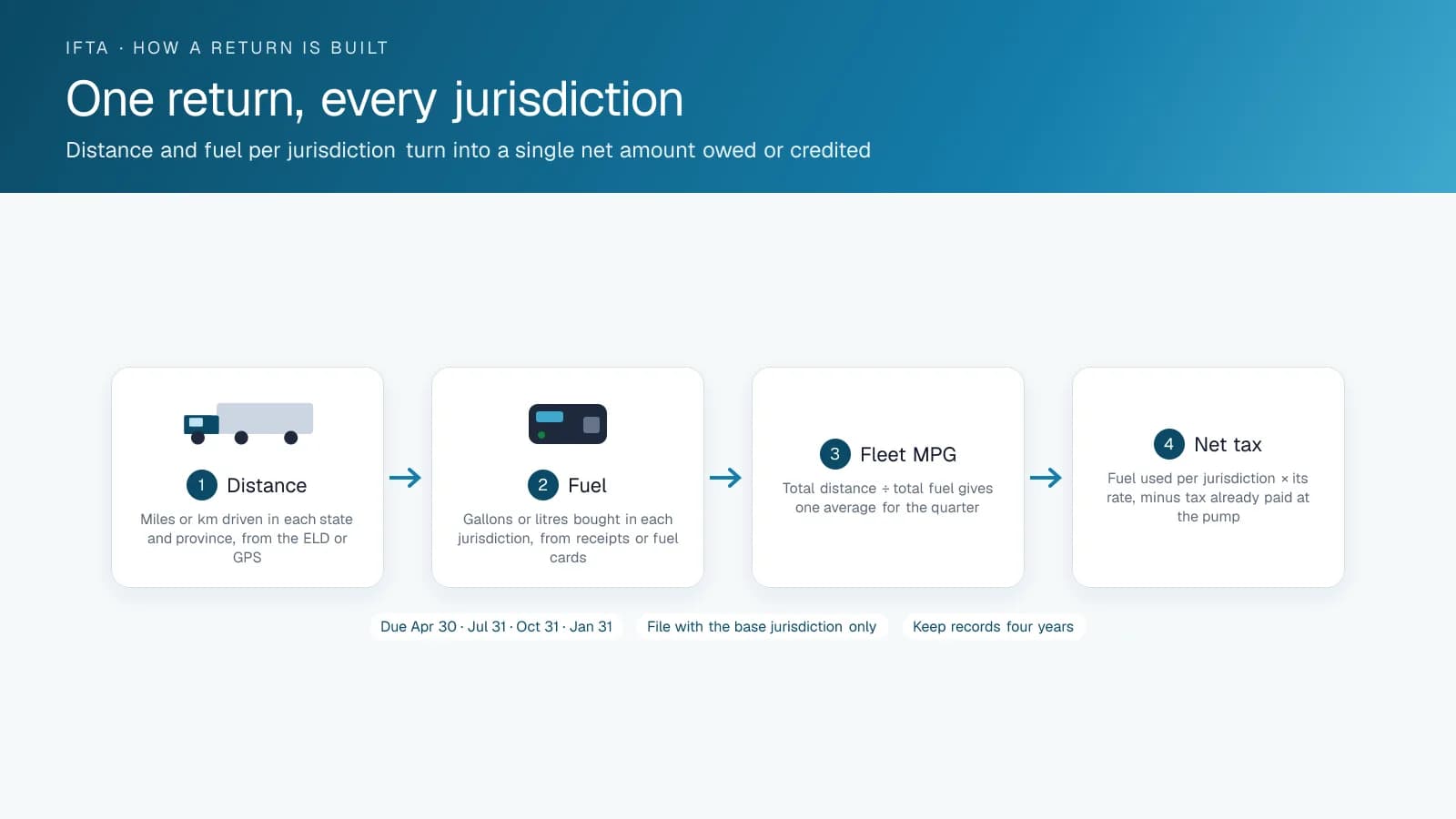
Returns are due April 30, July 31, October 31 and January 31, or the next business day. A quarter with no interjurisdictional travel still needs a zero return. Each return reports distance and fuel purchased in every jurisdiction your fleet ran in, and Nova Scotia settles the net with the other members, so you file once.
The annual renewal and the four quarterly deadlines fall on separate dates, so a small carrier should put all five in the calendar. A lapsed licence and a missed quarter are different failures with different penalties.
Long Hauls From a Small Base
A Nova Scotia return typically spans several provinces, and often US states: a run to Ontario crosses New Brunswick and Quebec, and Maine is a common alternative route. Distance by jurisdiction rebuilt from a driver's notes over that route is an estimate, and auditors disallow estimates. A telematics device logs the vehicle's position continuously and the platform totals distance per province and state for the quarter, so the number on your return is measured. The same device runs the Canadian-certified ELD, which puts your compliance and tax records on one source.
Which Records Survive an IFTA Audit?
Keep the records behind each return for four years from the due date or filing date, whichever is later, as the IFTA Procedures Manual requires. An auditor checks that trip-level distance and fuel receipts tie to a vehicle, a date and a jurisdiction. A GPS distance report with its trip logs, filed with the fuel-card export, gives you that record.
Nova Scotia IFTA at a Glance
Here are the essentials for a Nova Scotia-based carrier. Confirm current fees with Service Nova Scotia before each renewal.
| Item | Nova Scotia |
|---|---|
| Administering agency | Service Nova Scotia |
| Credential | Annual licence with two decals per qualified vehicle |
| Fees | Licence and decal fees due at registration and renewal |
| Return due dates | April 30, July 31, October 31, January 31, or the next business day |
| Zero-activity quarter | Return still required |
| Typical jurisdictions on a return | New Brunswick, Quebec, Ontario, often Maine |
| Record retention | Four years from the due date or filing date, whichever is later |
| Distance source | ELD or GPS jurisdiction report from the same device as the Canadian ELD |
Frequently asked questions
Who issues IFTA credentials in Nova Scotia?
Service Nova Scotia issues the IFTA licence and decals for carriers based in the province. You pay the licence and decal fees when you register, and the credential renews every year. Nova Scotia, as your base jurisdiction, then settles the net fuel tax with the other members.
How many decals does each vehicle get?
Each qualified vehicle gets two IFTA decals, one for each side of the cab. Service Nova Scotia issues them with the licence, which renews every year. Every qualified vehicle that runs outside Nova Scotia needs its own pair of decals.
When are Nova Scotia IFTA returns due?
Nova Scotia IFTA returns are due April 30, July 31, October 31 and January 31, or the next business day. You still file a zero return for any quarter with no interjurisdictional travel, so keep every deadline on the calendar.
Does a small Nova Scotia fleet need IFTA?
Yes, if a qualified vehicle crosses into New Brunswick or beyond. Fleet size doesn't matter. Operating in two or more member jurisdictions does, so a one-truck carrier hauling to Moncton needs an IFTA licence just as a long-haul fleet does.
How long must records be kept?
Keep IFTA records for four years from the return's due date or filing date, whichever is later. The rule is the IFTA Procedures Manual minimum; some jurisdictions ask for longer (Quebec, six years). Records should tie trip-level distance and fuel receipts to a vehicle, date and jurisdiction.
Related solutions & products
Service areas
Related terms
Continue reading
- Compliance (ELD, DVIR, IFTA) overview →
- Nova Scotia IRP: Apportioned Registration, Plates, Fees and the Distance Schedule →
- IFTA and IRP in Canada: The Base Jurisdiction Office for Every Province and Territory →
- When Is IFTA Due? IFTA Filing Deadlines and Late Fees →
- Who Needs IFTA? The Qualified Motor Vehicle Definition, Axle by Axle →
- More in Compliance →
Get a free quote
- Over 500 fleets
- Since 2013
- 4.9 on Google (19 reviews)
What are you looking for?
Prefer to talk?Call 1-800-613-6323[email protected]