
Compliance
When Is IFTA Due? IFTA Filing Deadlines and Late Fees
When is IFTA due? Four times a year, on the last day of the month after each quarter ends. The IFTA reporting deadlines, late fees and how to avoid them.
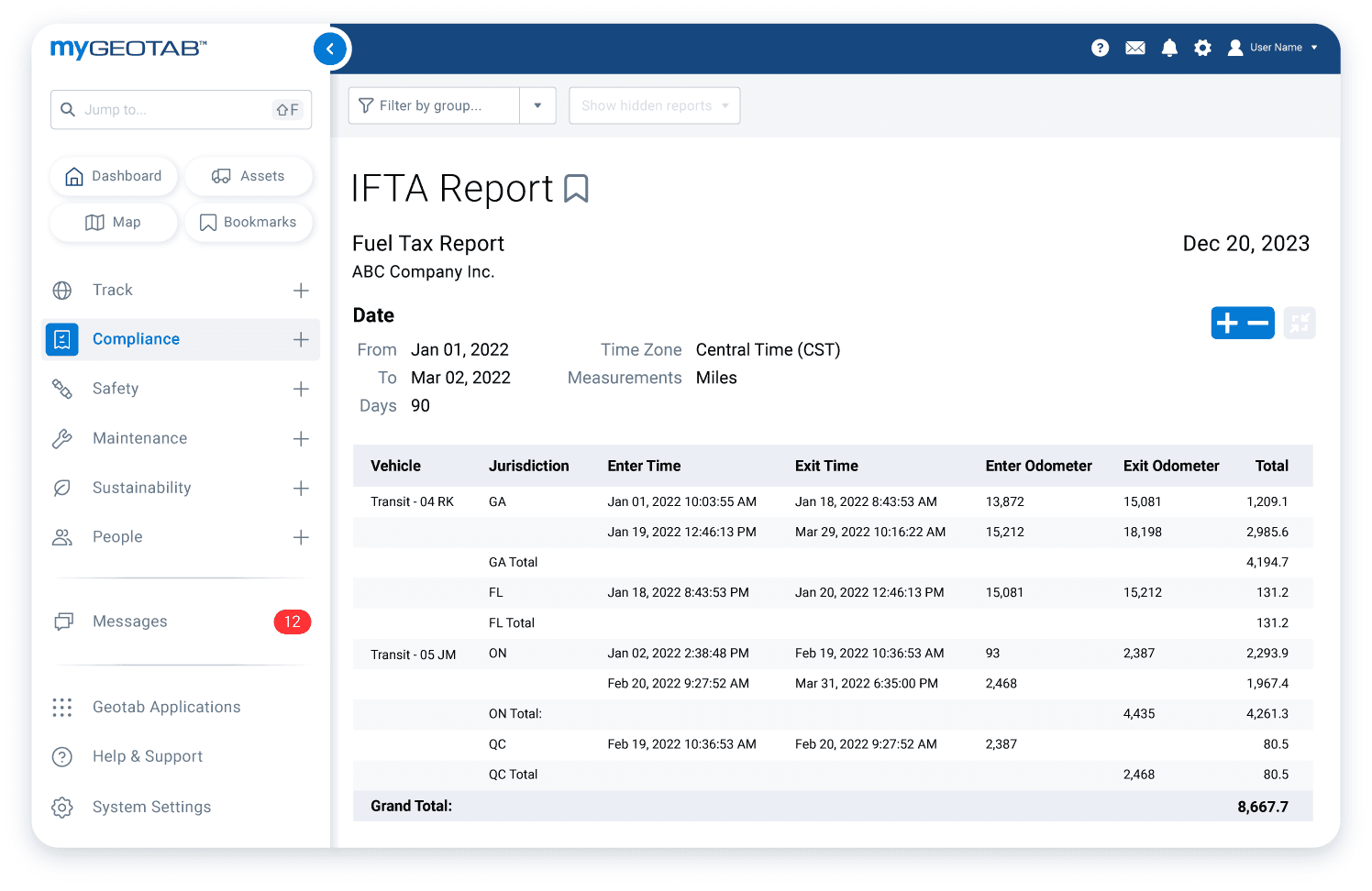
When Is IFTA Due? The Quarterly Filing Deadlines
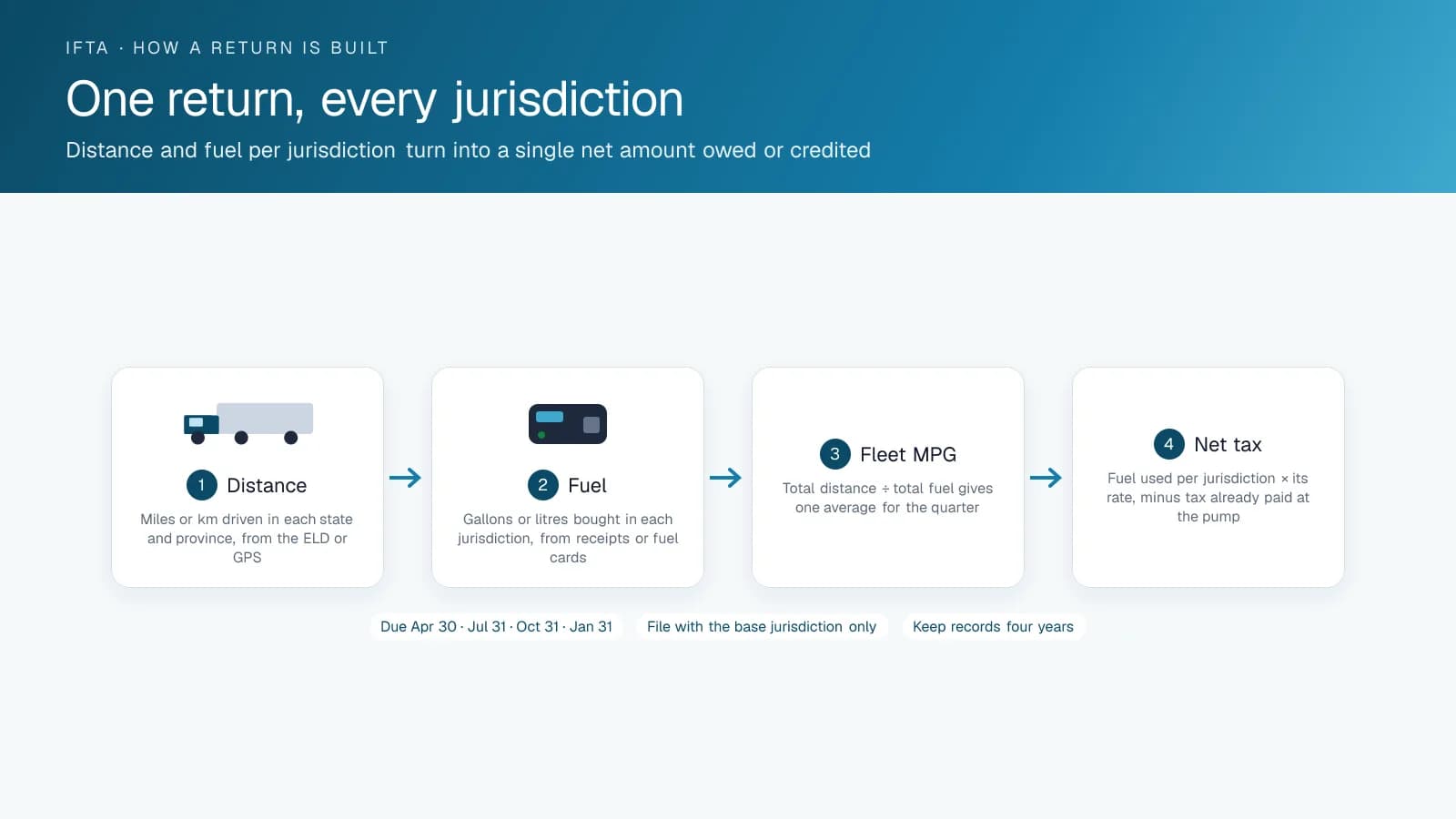
IFTA returns are due on the last day of the month after each quarter ends: April 30 for Q1 (January to March), July 31 for Q2 (April to June), October 31 for Q3 (July to September), and January 31 for Q4 (October to December). When that day falls on a Saturday, Sunday or legal holiday, the return is due the next business day. These IFTA filing deadlines leave no room for confusion, so when fleets file late, the cause is usually a process problem.
You still owe a filing for a quarter in which the fleet never left its base jurisdiction. A zero-mileage or no-travel quarter generally still requires a report that says so. Skipping the filing because there is nothing to report is a mistake.
What If the IFTA Due Date Falls on a Weekend? The Next Five Deadlines
The return is then due on the next business day. Section R960 of the IFTA Articles of Agreement sets the due date as the last day of the month after the quarter closes, and moves it to the next business day when that day is a Saturday, Sunday or legal holiday. The same section treats a mailed return as filed on the postmark date, while an electronic return is filed on the date your base jurisdiction's law sets.
Several of the next deadlines land on a weekend, so the familiar dates shift. A state or provincial holiday can push a date back one more day in some jurisdictions, so check the due date your base jurisdiction prints on the return.
| Quarter | Period covered | Last day of the month | Return due |
|---|---|---|---|
| Third quarter of 2026 | July 1 to September 30 | Saturday, October 31, 2026 | Monday, November 2, 2026 |
| Fourth quarter of 2026 | October 1 to December 31 | Sunday, January 31, 2027 | Monday, February 1, 2027 |
| First quarter of 2027 | January 1 to March 31 | Friday, April 30, 2027 | Friday, April 30, 2027 |
| Second quarter of 2027 | April 1 to June 30 | Saturday, July 31, 2027 | Monday, August 2, 2027 |
| Third quarter of 2027 | July 1 to September 30 | Sunday, October 31, 2027 | Monday, November 1, 2027 |
Can a Small Carrier File IFTA Once a Year?
Yes, if the base jurisdiction approves it. Under section R930 of the Articles of Agreement, a licensee whose travel outside the base jurisdiction totals less than 5,000 miles or 8,000 kilometres in 12 consecutive months, based on its previous filing history, may ask to report annually. The annual return is then due January 31 after the reporting year closes.
Annual filing has to be requested. Until the base jurisdiction says yes, the quarterly schedule applies, and a quarter with no travel still needs a return. A fleet that crosses a border only a few times a year can use its GPS distance reports to show the travel history its request rests on.
What Does a Late IFTA Filing Cost?
The penalties are meant to hurt. Under the IFTA agreement, the penalty is the same in every member jurisdiction: $50 or 10% of the delinquent tax, whichever is greater. On top of that, interest accrues monthly on any unpaid balance in every jurisdiction where you owe tax, including the ones outside your base state or province. One late filing on a busy quarter can add up to a real number quickly.
Fleets tend to underestimate the compounding. Interest keeps accruing every month until you settle the balance, so a return filed a few weeks late and then left for another couple of months costs noticeably more than the same return paid a few weeks after the deadline.
Why Do Fleets Miss IFTA Deadlines?
Fleets rarely miss the deadline because they forgot the date. More often, the mileage-by-jurisdiction data isn't clean in time, and someone has to rebuild it from odometer logs, route notes and a pile of fuel receipts under time pressure. That rebuild slips easily when the person who owns it also has ten other things due the same week.
Fuel receipts that don't match reported mileage cause a second set of problems, and they invite a closer look during an audit even when you filed on time. Buying fuel in a low-tax state while driving most of your miles in a high-tax one is legal, but the numbers still have to reconcile. With manual tracking, small transcription errors go unnoticed until an auditor finds them.
How Do You Make IFTA a Monthly Habit?
The fix that lasts is treating IFTA as a monthly task instead of a quarterly scramble. If your GPS platform already produces mileage by jurisdiction automatically, reconcile it against fuel purchases once a month. The quarterly filing then becomes a five-minute review of numbers you have already checked three times, instead of your first look at three months of driving.
Put it in a real calendar reminder, not a mental note; it takes two minutes to set up. A recurring monthly reminder to reconcile mileage and fuel data catches a gap while it is one month old and easy to fix. Left for three months, the same gap is much harder to reconstruct accurately.
The IFTA Calendar, With Reporting Periods
Here are the four deadlines with the period each one covers, plus the annual dates around them. In most jurisdictions, a deadline that falls on a weekend or holiday moves to the next business day.
| Return | Period covered | Due |
|---|---|---|
| Q1 | January 1 to March 31 | April 30 |
| Q2 | April 1 to June 30 | July 31 |
| Q3 | July 1 to September 30 | October 31 |
| Q4 | October 1 to December 31 | January 31 |
| Licence renewal | Calendar year | Varies by jurisdiction; often November or December |
| Decals on the vehicles | New year's decals | By January 1, with a grace period in some jurisdictions |
| Monthly reconciliation | Previous month | First week of each month, as a habit |
Frequently asked questions
When are IFTA reports due?
IFTA reports are due quarterly, on the last day of the month after each quarter ends: April 30, July 31, October 31, and January 31. You file with your base jurisdiction, and a return is still due for a quarter with no travel outside it, showing zero qualifying miles.
What's the penalty for filing IFTA late?
The IFTA agreement sets one penalty for every member jurisdiction: $50 or 10% of the delinquent tax, whichever is greater. Interest also accrues monthly on the unpaid balance in every jurisdiction you owe, including those outside your base jurisdiction. The interest keeps compounding until you pay, so a return left unpaid for months costs noticeably more.
Can I get an extension on an IFTA filing?
Possibly, but extension policies vary by base jurisdiction and none is guaranteed. If you know ahead of time that you will miss a deadline, contact your base jurisdiction's IFTA office directly. Do not assume a grace period exists, since penalties and monthly interest apply to late returns.
Do I need to file if my fleet didn't cross any jurisdiction lines that quarter?
Generally, yes. A quarter with no qualifying travel outside your base jurisdiction still requires a report that shows it. Do not skip the filing because there is no tax to report; file the zero-mileage return on the same quarterly schedule as any other.
When is the IFTA return for the third quarter of 2026 due?
It is due Monday, November 2, 2026. The usual date, October 31, falls on a Saturday in 2026, and the IFTA Articles of Agreement move a due date that lands on a weekend or legal holiday to the next business day. The return covers July 1 to September 30. Check the date your base jurisdiction prints, since a local holiday can shift it again.
Who can file IFTA annually instead of quarterly?
A carrier whose distance outside its base jurisdiction totals less than 5,000 miles or 8,000 kilometres over 12 consecutive months, based on its filing history, can ask its base jurisdiction for annual reporting. The base jurisdiction has to approve it. An approved annual return is due January 31 after the reporting year, and quarterly filing applies until approval comes through.
Sources
Related solutions & products
Continue reading
Get a free quote
- Over 500 fleets
- Since 2013
- 4.9 on Google (19 reviews)
What are you looking for?
Prefer to talk?Call 1-800-613-6323[email protected]