
Compliance
Kentucky KYU Weight Distance Tax Explained: The Tax Every Carrier Over 59,999 Pounds Meets in Kentucky
The Kentucky weight distance tax (KYU) is a per-mile tax on heavy trucks, separate from IFTA, with its own KYU number, quarterly return and audits.
What Is the Kentucky KYU Weight Distance Tax?
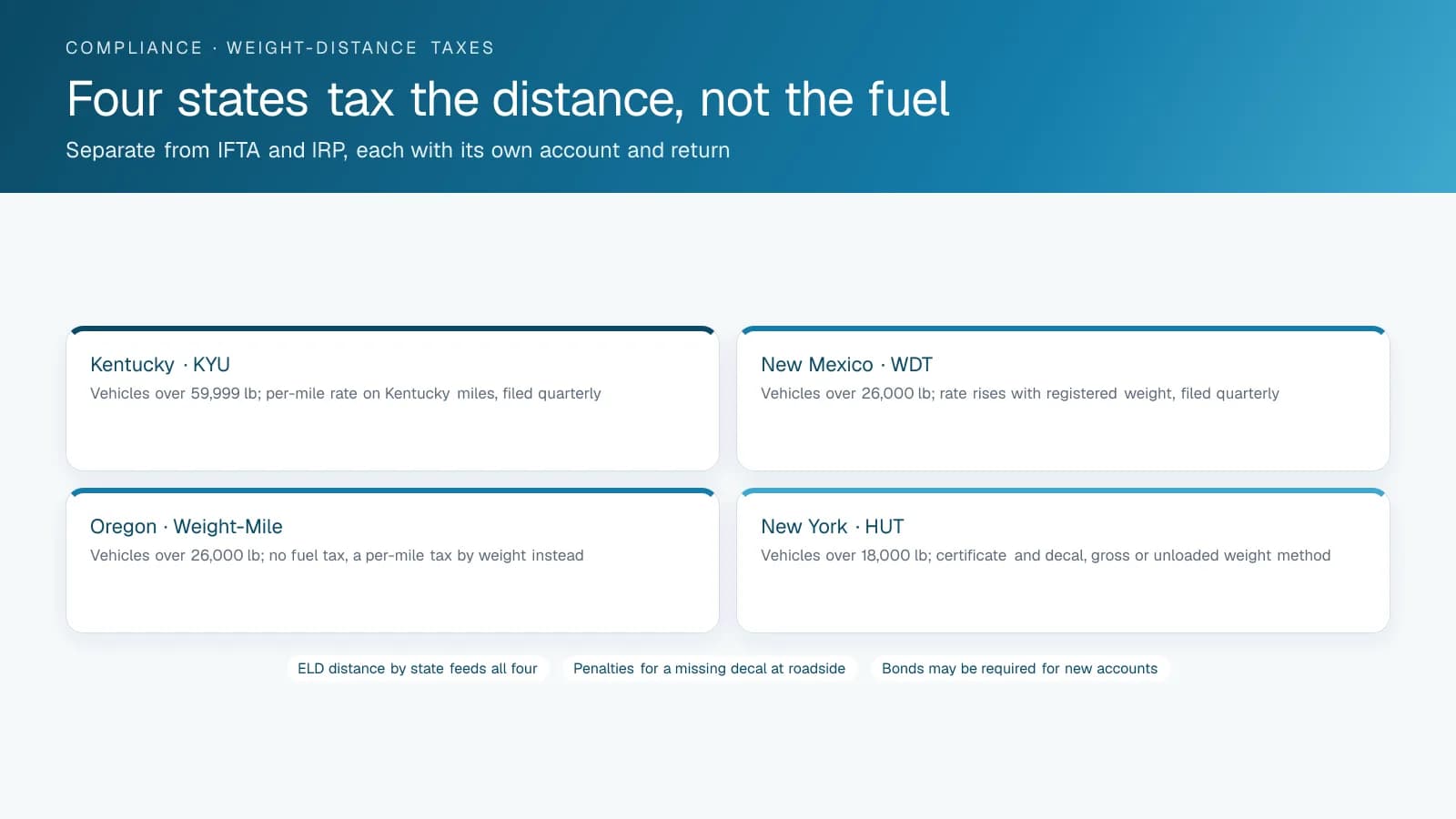
The Kentucky KYU weight distance tax is a per-mile tax on motor vehicles with a combined licensed weight over 59,999 pounds travelling on Kentucky highways. It takes the name KYU from its licence prefix. The Kentucky Transportation Cabinet's Division of Motor Carriers administers it (the same office runs Kentucky's IRP and IFTA programs), and you file it quarterly on the IFTA calendar. The rate is a flat amount per mile, currently 2.85 cents, whatever the fuel or the weight above the threshold.
Who Needs a KYU Number?
Any carrier, based anywhere, that runs a qualifying vehicle on Kentucky highways with any regularity applies for a KYU licence and gets a KYU number. The number goes on the vehicle, and Kentucky weigh stations check it. A carrier that crosses Kentucky once, say a Tennessee fleet on a single Cincinnati run or an Ontario fleet on one trip south on I-75, can buy a temporary KYU permit for that trip instead. If you expect to come back, get the licence; permits add up fast in a corridor state.
How Do You File the Quarterly KYU Return?
Each quarter, you report Kentucky miles per qualifying vehicle and pay the per-mile tax through the Cabinet's online system. A quarter with no Kentucky miles still needs a zero return, and a lapsed KYU account causes trouble at roadside before it becomes a tax problem. Keep the records behind each return for audit. A Kentucky auditor compares your KYU miles with the Kentucky line of your IFTA return for the same quarter, and a mismatch between the two is the finding that costs money.
Getting Kentucky Miles From Your Telematics
The KYU return needs the same figure as the Kentucky line of your IFTA return: miles in the state, per vehicle, for the quarter. Telematics produces it from continuously logged position, and one report answers both filings with matching numbers. Fleets running Louisville, Lexington or the I-65 and I-75 corridors routinely file KYU from the High Point GPS platform jurisdiction report. High Point GPS sets up that report for carriers across Canada and the United States whose runs cross Kentucky.
Kentucky KYU at a Glance
The main points for any carrier that runs Kentucky. The rate is set by statute and rarely changes, but confirm it with the Division of Motor Carriers before each return.
| Item | Kentucky KYU |
|---|---|
| Applies to | Vehicles with a combined licensed weight over 59,999 lb on Kentucky highways |
| Administered by | Kentucky Transportation Cabinet, Division of Motor Carriers |
| Credential | KYU licence and number, or a temporary KYU permit per trip |
| Rate | Flat rate per mile, currently 2.85 cents |
| Filing frequency | Quarterly, same calendar as IFTA |
| Zero-mile quarter | Zero return still required |
| Audit check | KYU miles compared with the Kentucky line of the IFTA return |
| Distance source | ELD or GPS jurisdiction report |
Frequently asked questions
What is KYU?
KYU is Kentucky's weight distance tax, a per-mile tax on vehicles with a combined licensed weight over 59,999 pounds travelling on Kentucky highways. Carriers file it quarterly with the Kentucky Transportation Cabinet's Division of Motor Carriers, and the KYU number on the vehicle is checked at Kentucky weigh stations.
Is KYU the same as IFTA?
No. IFTA is a fuel tax, while KYU is a separate mileage tax with its own licence and return. Both are filed quarterly and both use Kentucky miles, so a Kentucky audit compares the two, and a mismatch is the finding that costs money.
What is the KYU rate?
The KYU rate is a flat amount per mile, currently 2.85 cents, on all Kentucky miles driven by qualifying vehicles, regardless of fuel or weight above the threshold. The rate is set by statute and rarely changes, but confirm it with the Division of Motor Carriers.
Do I need KYU for one trip through Kentucky?
Yes. You need either a KYU licence or a temporary KYU permit for that trip. A carrier crossing Kentucky once, such as an Ontario fleet on a single run south, can buy the permit. Carriers that return regularly take the licence, because permits add up fast on a corridor state.
What does a KYU audit check?
A KYU audit checks that the Kentucky miles on the KYU return match the Kentucky miles on the IFTA return for the same quarter, supported by trip-level records. Pulling both figures from one telematics jurisdiction report keeps the two consistent.
Sources
Related solutions & products
Related terms
Continue reading
- Compliance (ELD, DVIR, IFTA) overview →
- New Mexico Highway Use Tax for Trucks: The Weight Distance Tax, Permit and Quarterly Return →
- Form 2290 and the Heavy Vehicle Use Tax for Canadian Carriers Running Into the US →
- Who Needs IRP? Apportioned Registration Requirements and How to Apply →
- Oregon Weight-Mile Tax Explained: What Heavy Trucks Pay Instead of Fuel Tax →
- More in Compliance →
Get a free quote
- Over 500 fleets
- Since 2013
- 4.9 on Google (19 reviews)
What are you looking for?
Prefer to talk?Call 1-800-613-6323[email protected]