
Compliance
CVIP Inspections in Alberta and BC: Who Needs One, How Often and Where
A CVIP inspection is the periodic mechanical check of commercial trucks, trailers and buses in Alberta and BC: who needs one, how often, decals, records.
What Is a CVIP Inspection?
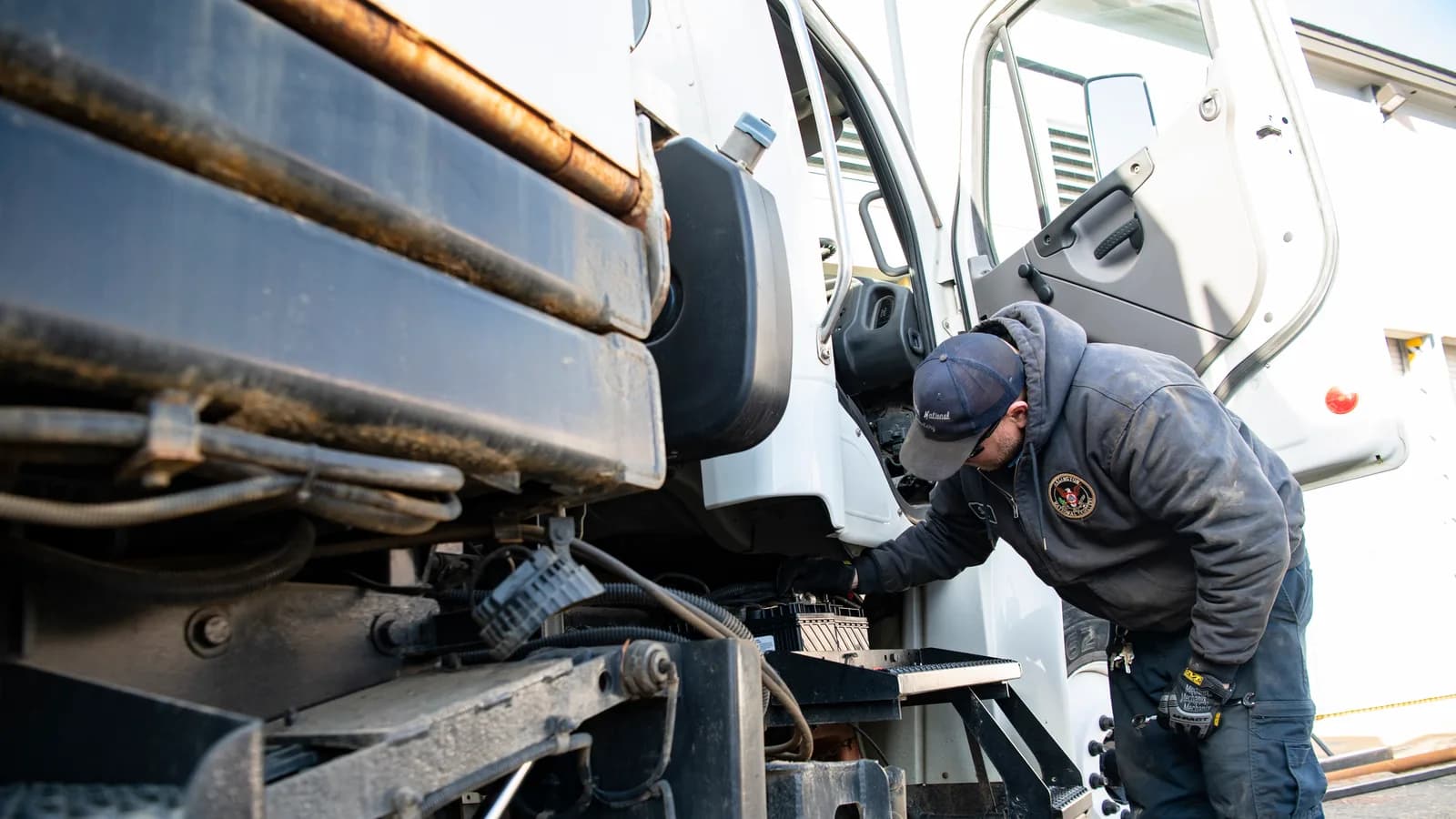
A CVIP inspection is the mandatory periodic mechanical inspection that commercial trucks, trailers and buses must pass under the Commercial Vehicle Inspection Program in Alberta and British Columbia. A licensed technician at a licensed facility (Alberta) or an authorized inspector at a designated inspection facility (BC) checks the vehicle against a national standard, and a vehicle that passes gets a decal and a certificate or inspection report that travels with it.
Both provinces inspect to National Safety Code (NSC) Standard 11, Maintenance and Periodic Inspection. Part B of that standard is the Periodic Motor Vehicle Inspection (PMVI) standard, and Alberta's Commercial Vehicle Inspection Manual states that the province adopted the 2014 edition of NSC 11B. Because every jurisdiction inspects to the same criteria, Alberta says all jurisdictions recognize each other's commercial inspections, except in rare circumstances.
CVIP is separate from your carrier certificate. The Alberta Safety Fitness Certificate and the BC NSC certificate cover the carrier; CVIP covers each vehicle, one decal at a time.
Who Needs a CVIP Inspection in Alberta, and How Often?
Alberta requires an annual commercial vehicle inspection for trucks, truck-tractors, semi-trailers, trailers and combinations with a registered gross vehicle weight (GVW) over 4,500 kg when they operate extra-provincially, and over 11,794 kg when they operate only inside Alberta. Buses designed to carry more than 10 people, including the driver, need a semi-annual inspection, unless they are operated for personal use.
Under section 30 of the Vehicle Inspection Regulation (AR 211/2006), the certificate and decal for a commercial vehicle other than a bus expire at the end of the 12th month from the month they were issued, and a bus certificate at the end of the 6th month. A commercial vehicle with a permanently mounted mobile service rig is the exception: its certificate runs to the end of the 60th month.
Section 19 of the same regulation sets what must be on the truck: a certificate and decal issued after an inspection, a signed copy of the certificate inside the vehicle, the decal affixed as the Vehicle Inspection Manual directs, and neither one expired. The driver must be able to produce the certificate when an investigator or peace officer asks.
Who Needs a CVIP Inspection in British Columbia, and How Often?
Division 25 of BC's Motor Vehicle Act Regulations applies the inspection program to taxis, buses (school buses included), commercial vehicles with a licensed GVW of more than 8,200 kg, vehicles operated under a Passenger Transportation Act licence, driver training school vehicles, and trailers and semi-trailers as defined under the Commercial Transport Act. Excluded are, among others, farm vehicles other than buses licensed at 17,300 kg or less and vehicles owned by the federal Crown.
BC's default is every six months: an inspection certificate of approval expires on the last day of the sixth month after it was issued. A 12-month certificate applies to a shorter list, including commercial vehicles other than buses, taxis and logging trucks with a licensed GVW of more than 8,200 kg but no more than 17,300 kg, commercial trailers except those used with a logging truck or fitted with a dump box, and emergency vehicles. A heavy highway tractor over 17,300 kg therefore stays on the six-month cycle.
BC's authorized inspector guide gives the arithmetic: a six-month decal issued April 4 expires October 31, and a 12-month decal issued April 4 expires April 30 of the following year. A vehicle that fails but is not a hazard to other road users can get an interim certificate, which expires 14 days after it is issued.
| Item | Alberta | British Columbia |
|---|---|---|
| Who runs it | Vehicle Inspection Program, Alberta Transportation and Economic Corridors | Commercial Vehicle Safety and Enforcement (CVSE) |
| Who inspects | Licensed technicians at licensed private facilities | Authorized inspectors at designated inspection facilities or preventative maintenance facilities |
| Trucks and trailers | Annual, over 4,500 kg registered GVW extra-provincially or over 11,794 kg inside Alberta | Six months by default; 12 months for listed vehicles such as trucks over 8,200 kg up to 17,300 kg and most commercial trailers |
| Buses | Semi-annual, more than 10 seats including the driver | Six months, except a bus licensed and insured as a farm vehicle |
| Proof in the vehicle | Signed copy of the certificate, plus the decal | Copy of the inspection report, plus the decal |
| Owner's records | Current calendar year and the 4 before it; 6 months after the vehicle leaves the fleet | Last 3 years of ownership and 6 months after disposal |
Where Do You Get a CVIP Inspection?
In Alberta, Carrier and Vehicle Safety licenses a network of private facilities and technicians. The province's Vehicle Inspection Search finds the nearest one; select the commercial program, then check which vehicle types each facility is authorized to inspect, because a shop licensed for trucks may not be licensed for buses.
In BC, qualified mechanics authorized as inspectors do the work at designated inspection facilities or at preventative maintenance facilities. CVSE publishes a Vehicle Inspection Facilities Map, and its Area Vehicle Inspectors audit both kinds of facility. A peace officer can also send any vehicle to a designated inspection facility if it appears mechanically unsafe or non-compliant, decal or not.
What Does a CVIP Inspection Check?
The inspection follows the 10 sections of NSC Standard 11, Part B: power train, suspension, brake systems, steering, instruments and auxiliary equipment, lamps, electrical system, body, tires and wheels, and coupling devices. An appendix covers propane (LPG), compressed natural gas and liquefied natural gas fuel systems for vehicles that run on them.
In Alberta, the technician completes a Record of Inspection for every inspection, passed or failed, and refuses the certificate and decal if the vehicle does not meet the manual. Alberta's Facility Operating Manual tells facilities to inform the customer of the 10-day re-inspection window after a failure. Repair the defects your drivers recorded on trip inspections before the appointment; in Alberta, a vehicle with an unrepaired major defect cannot be driven in any case.
Decals, Certificates and Inspections Outside the Province
Alberta decals carry a unique number, are assigned to one inspection facility and cannot be transferred. On a truck, the decal goes on the left-hand corner of the windshield or in a conspicuous spot on the left side of the cab; on a trailer or converter dolly, on the left side as close as practicable to the front; on a bus, on the lower right-hand corner of the windshield or nearby on the right side.
BC's regulation puts the decal on the outside lower left or lower right corner of the windshield, or on the outside of the fixed glazed surface to the right of the operator, and on a trailer at the outside left or right lower front corner. Any previous decal must come off before the new one goes on.
For trips south, NSC Standard 11 records that the US Federal Highway Administration (now FMCSA) recognized every Canadian jurisdiction's inspection program as equivalent to the US periodic inspection requirement on September 23, 1991. A valid Canadian decal therefore covers a Canadian-plated truck in the US, provided it was inspected to the Canadian standard.
What CVIP Records Must a Carrier Keep?
Alberta's Commercial Vehicle Safety Regulation (AR 121/2009, section 37) requires a file for each commercial vehicle: its unit number or serial number, make and year, the record of each inspection under the Vehicle Inspection Regulation, repairs, lubrication and maintenance with the date and odometer or hubometer reading, manufacturer defect notices and the work done on them, and trip inspection reports. Section 38 keeps those records for the current calendar year and the 4 before it, and for 6 months after a vehicle is retired. Trip inspection reports are kept for at least 6 months, and a peace officer can ask for the file at your principal place of business within 14 days.
In BC, section 25.18 of the Motor Vehicle Act Regulations requires the owner to keep a record of each inspection and every repair or replacement made after it, during the last 3 years of ownership and for 6 months after disposing of the vehicle. The records can pass to the buyer if the buyer agrees.
How Telematics Keeps CVIP Due Dates From Slipping
Alberta and BC both bar a commercial vehicle from the highway without an unexpired certificate, so a decal that lapses while the unit is out on a job parks that unit. Fleet maintenance software tracks each unit's CVIP due date next to its service intervals, so the shop books the inspection before the decal lapses, and the inspection report and repair invoices land in the same vehicle file an auditor will ask for.
A DVIR app stores each trip inspection with its defects and the repair that closed them, and the GPS tracking device reports odometer, engine hours and fault codes from the vehicle. FleetZap, the maintenance software High Point GPS builds, schedules preventive maintenance by engine hours or kilometres and keeps inspections and work orders per unit.
For the carrier side of compliance, read Alberta Safety Fitness Certificate Explained and BC NSC Certificate Explained, or the table of carrier safety programs by province. High Point GPS is a Montreal fleet telematics company and Geotab partner, founded in 2013, that installs and supports GPS tracking, ELD compliance and cameras for over 500 fleets across Canada and the United States, in English and French. Use the free quote form on this page to tell us about your fleet.
Frequently asked questions
What does CVIP stand for?
CVIP stands for Commercial Vehicle Inspection Program, the periodic mechanical inspection program for commercial trucks, trailers and buses in Alberta and British Columbia. Inspections follow National Safety Code Standard 11, Part B, and a vehicle that passes receives a decal and a certificate or inspection report. In BC, the decal itself shows its expiry date.
How often is a CVIP inspection required in Alberta?
In Alberta, trucks, tractors and trailers need a CVIP inspection every year, and buses with more than 10 seats including the driver need one every six months. The certificate expires at the end of the 12th month, or 6th month for a bus, counted from the month it was issued. A signed copy must stay in the vehicle.
Is CVIP every six months in BC?
Yes for most heavy vehicles. BC certificates expire on the last day of the sixth month after issue unless the regulation lists the vehicle for 12 months. The 12-month list includes trucks over 8,200 kg up to 17,300 kg, most commercial trailers and emergency vehicles. Buses, logging trucks, trucks over 17,300 kg and trailers used with a logging truck or fitted with a dump box stay on six months.
Does Alberta accept a CVIP decal from BC or another province?
Generally yes. Alberta states that all jurisdictions recognize the commercial inspections of each participating province or territory and, except in rare circumstances, accept the host jurisdiction's inspection as equivalent. The reason is that every province inspects to the same National Safety Code Standard 11, Part B criteria, so a valid decal from your home province is normally accepted.
How long must CVIP inspection records be kept?
In Alberta, keep inspection, repair and maintenance records for the current calendar year and the 4 years before it, and for 6 months after a vehicle leaves the fleet. In BC, keep each inspection and repair record during the last 3 years of ownership and for 6 months after disposal. Trip inspection reports have their own, shorter period.
Sources
- Government of Alberta: Vehicle Inspection Program, commercial vehicles
- Government of Alberta: Commercial Vehicle Inspection Program decals
- Alberta Vehicle Inspection Regulation, AR 211/2006 (sections 19 and 30)
- Alberta Commercial Vehicle Safety Regulation, AR 121/2009 (sections 13, 37 and 38)
- Government of Alberta: Commercial Vehicle Inspection Manual, Version 2.0 (NSC Standard 11, Part B)
- Government of Alberta: Vehicle Inspection Program Facility Operating Manual
- Government of British Columbia: Vehicles Subject to Inspection
- Government of British Columbia: Vehicle Inspections and Standards
- BC Motor Vehicle Act Regulations, Division 25 (sections 25.01, 25.07, 25.13, 25.14 and 25.18)
- BC CVSE: Authorized Inspectors guide (decal terms and placement)
- CCMTA: National Safety Code standards
- CCMTA: National Safety Code Standard 11, Maintenance and Periodic Inspection Standards (January 2020)
Related solutions & products
Related terms
Continue reading
- Compliance (ELD, DVIR, IFTA) overview →
- Quebec Thaw Period 2027 (Période de Dégel): Zones, Dates and How They Are Set →
- Manitoba Safety Fitness Certificate: Who Needs One, How to Apply and How the Carrier Profile Works →
- Spring Road Restrictions in Ontario, Manitoba, Alberta and Saskatchewan →
- Carrier Safety Programs in Every Canadian Province and Territory: CVOR, NSC Certificates and Safety Fitness Certificates →
- More in Compliance →
Get a free quote
- Over 500 fleets
- Since 2013
- 4.9 on Google (19 reviews)
What are you looking for?
Prefer to talk?Call 1800-613-6323[email protected]