
Compliance
Spring Road Restrictions in Ontario, Manitoba, Alberta and Saskatchewan
Spring road restrictions in Ontario, Manitoba, Alberta and Saskatchewan: the axle limits, which roads they cover, how dates are set and where to check.
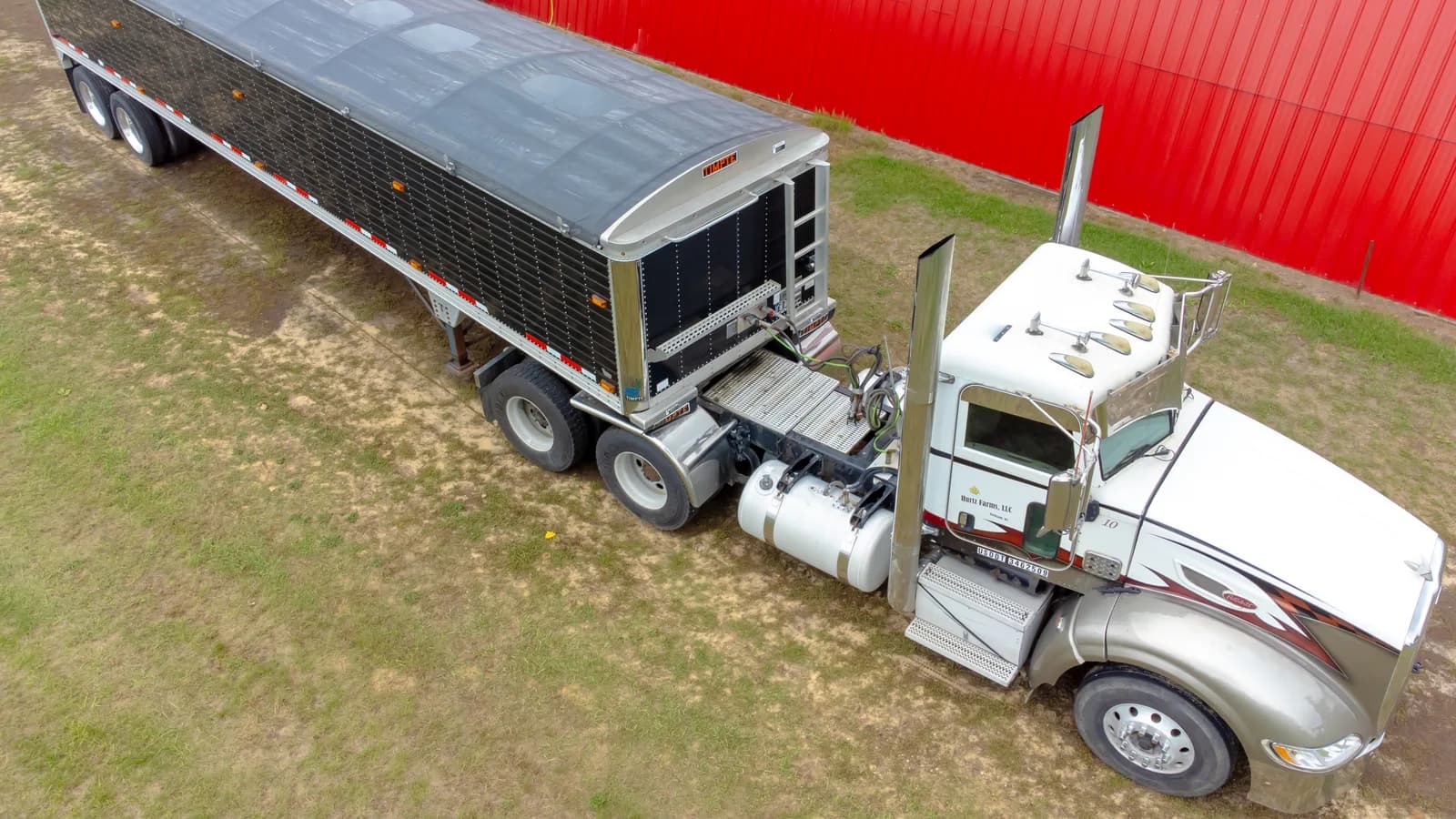
What Are Spring Road Restrictions?
Spring road restrictions are temporary axle weight limits that a province puts on roads weakened by the spring thaw. In Ontario the limit on designated highways is 5,000 kg per axle (what drivers call half load), Manitoba cuts axle weights to 90% or 65% of legal limits, Alberta road bans set 75% or 90% of axle weights, and Saskatchewan reduces weights by 10 to 15 per cent on secondary highways and municipal roads.
None of the four provinces publishes exact dates in advance. Each sets the start and end from thaw and weather conditions, issues orders during the season and expects carriers to check before every trip. Municipalities, counties and rural municipalities set their own limits on their own roads, so a provincial order never covers every road a truck uses.
| Province | Spring limit | Roads covered | Where to check |
|---|---|---|---|
| Ontario | 5,000 kg per axle during a reduced load period | Highways designated by MTO; municipal roads designated by by-law | Ontario 511, Seasonal Loads |
| Manitoba | Level 1: up to 90% of legal axle group weights; Level 2: up to 65% | Highways listed in the Spring Road Restrictions Order | manitoba.ca/mti/srr and Manitoba 511 |
| Alberta | 75% or 90% of the weight on carrying axles | Provincial highway sections on the Road Ban List; local roads by counties and municipal districts | Road Ban List and 1-855-ROADBAN |
| Saskatchewan | Allowable weights 10 to 15 per cent lower | Secondary-weight provincial highways and rural municipal roads | Spring Road Bans orders and the Highway Hotline (511) |
Ontario: What Is the Half Load (Reduced Load) Period?
Under section 122 of Ontario's Highway Traffic Act, no commercial motor vehicle or trailer may run on a designated highway during a reduced load period with more than 5,000 kg on any axle. Two-axle tank trucks carrying only heating fuel, two-axle trucks carrying only livestock feed, and vehicles carrying live poultry are allowed up to 7,500 kg per axle.
The 5,000 kg limit does not apply to municipal highway maintenance vehicles (including salting, sanding and snow removal), vehicles carrying only milk, fire apparatus, municipal waste vehicles, public utility emergency vehicles, or buses carrying passengers for compensation beyond a single municipality.
An MTO official designates the start and end dates and the King's Highways the period covers, and a municipality can do the same for its own roads by by-law. That is why county and township half load dates differ from the provincial ones. For 2026, Ontario 511 listed three MTO schedules with windows of March 1 to April 30, March 1 to May 31 and March 1 to June 30, with reduced loads imposed on the listed highways when appropriate.
Annual and project overweight permits are not valid on provincial highways in March and April in Southern Ontario, or in March, April and May in Northern Ontario, unless the permit says otherwise. Check the Seasonal Loads page on Ontario 511 for MTO designations, and each municipality's website for local roads.
Manitoba: How Do Spring Road Restrictions Work?
Manitoba Transportation and Infrastructure runs a Spring Road Restrictions (SRR) program with two levels. Level 1 applies to weak pavements and limits most axle groups to 9 kg per millimetre of tire width, up to 90% of legal axle group weights. Level 2 applies to very weak pavements: 6.5 kg per millimetre of tire width, up to 65% of legal axle weights.
Steering axles have their own limits. Under Level 1, a single steering axle on a single or tandem drive tractor is limited to 10 kg per millimetre of tire width, up to 5,500 kg. The table shows the province's example for a tandem drive tractor and semi-trailer on 305 mm (12 in.) tires, with the legal weight in brackets.
Manitoba has five climate zones. The earliest start dates are March 1 for Zone 1, March 6 for Zones 2, 3 and 4, and March 12 for Zone 5; the latest end dates are May 29, May 31 and June 10. A start can be delayed in a late thaw and an end brought forward, based on the trend of the thawing index in each zone. In 2026, Order No. 2 set start dates of March 20 in Zone 1, April 7 in Zones 2 and 3, April 9 in Zone 4 and April 13 in Zone 5, and the province announced end dates from May 19 (Zone 1) to May 31 (Zone 5).
The restricted roads are listed in the Spring Road Restrictions Order, which the province publishes in the fall from the previous year's data and updates as needed. Essential commodities, such as livestock feed, grain going to processors, bulk milk, groceries, fuel, fertilizer and medical supplies, may move at normal loading on Level 1 roads, and on Level 2 roads under conditions set in the order. Check manitoba.ca/mti/srr and Manitoba 511 throughout the season.
| Highway and level | Single steering axle | Single axle | Tandem axle | Tridem axle |
|---|---|---|---|---|
| RTAC, Level 1 | 5,500 kg (6,000) | 8,190 kg (9,100) | 15,300 kg (17,000) | 20,700 kg (23,000) |
| A1, Level 1 | 5,500 kg (6,000) | 8,190 kg (9,100) | 14,400 kg (16,000) | 20,700 kg (23,000) |
| B1, Level 1 | 5,500 kg (6,000) | 7,380 kg (8,200) | 13,050 kg (14,500) | 18,000 kg (20,000) |
| A1, Level 2 | 3,900 kg (6,000) | 5,915 kg (9,100) | 10,400 kg (16,000) | 14,950 kg (23,000) |
| B1, Level 2 | 3,900 kg (6,000) | 5,330 kg (8,200) | 9,425 kg (14,500) | 13,000 kg (20,000) |
Alberta: What Are Road Bans?
In Alberta, a road ban limits the weight that a commercial vehicle's carrying axles may put on a highway to a percentage of their normal maximum. Section 12 of the Commercial Vehicle Dimension and Weight Regulation lets the Minister set road bans as required, and the provincial Road Ban List shows each banned highway section at 75% or 90% axle weight.
Some vehicles are exempt from a road ban, including vehicles whose axles carry a combined gross weight of 5,000 kg or less, school buses, rubber-tired farm tractors not pulling a trailer, vehicles crossing a highway, and vehicles hauling fresh milk or cream, eggs or pregnant mare urine from where they are produced. Vehicles hauling bread, mail, heating fuel or fertilizer, and buses other than school buses carrying passengers, may carry up to 90% of the maximum axle weight on a banned road; vehicles hauling domestic drinking water, up to 80%. Other vehicles can apply for a road ban exemption permit through the Central Permit Office.
The Road Ban List changes through the year as bans are added and lifted (the list effective July 15, 2026 still had highway sections at 75% and 90%). For provincial highways, see the Road Ban List on alberta.ca, call 1-855-ROADBAN (1-855-762-3226), or subscribe to the province's road ban and seasonal weight email notifications. Bans on local roads are set by counties and municipal districts.
Saskatchewan: How Much Do Spring Weight Restrictions Reduce?
Saskatchewan's spring weight restrictions reduce allowable vehicle weights by 10 to 15 per cent on secondary-weight provincial highways and rural municipal roads, according to the Ministry of Highways. They usually start in the southwest, spread across the province over two to three weeks, and can stay in place for up to six weeks. In 2026 they began at 12:01 a.m. on Friday, March 20 in southwest Saskatchewan.
During the ban period, official orders are issued every Tuesday and Friday (except Good Friday) by 12:30 p.m. CST and take effect the following Thursday or Sunday at midnight; restrictions can change with 48 hours' notice. Under a spring restriction, a steering axle is limited to 10 kg per millimetre of tire width, up to 5,500 kg on a single steering axle, and other axles to 6.25 kg per millimetre of tire width, up to 1,650 kg per tire (2,630 kg for single tires 445 mm or wider).
Nine-month primary highways drop back to secondary weights each spring: March 15 to June 15 in the south and April 1 to June 30 in the north. Rural municipalities set their own limits on their roads. Check the Spring Road Bans order on saskatchewan.ca, the Highway Hotline (511), or the Trucking Inquiry Line at 1-866-933-5290.
How Does GPS Help a Fleet During Spring Restrictions?
A geofence drawn around a restricted highway section or climate zone records when each truck enters and leaves it, and the trip history shows which truck ran where on each date. Dispatch can plan loads around each province's orders and check afterwards which trips used restricted roads. GPS does not weigh the load; it shows where and when a truck travelled.
High Point GPS is a Montreal fleet telematics company and Geotab partner, founded in 2013, that installs and supports GPS tracking for over 500 fleets across Canada and the United States, in English and French. For Quebec, our guide to the période de dégel covers the thaw zones, the load limits and how the dates are set.
Frequently asked questions
What is half load season in Ontario?
Half load is the common name for Ontario's reduced load period. Under section 122 of the Highway Traffic Act, commercial vehicles and trailers on designated highways may not carry more than 5,000 kg on any axle during that period. MTO designates the dates and provincial highways, and municipalities set their own by by-law. Ontario 511 lists the MTO designations.
When do Manitoba spring road restrictions start?
Manitoba's earliest start dates are March 1 in Zone 1, March 6 in Zones 2, 3 and 4, and March 12 in Zone 5. The actual start can be later in a late thaw: in 2026, Zone 1 started on March 20. Restrictions end by May 29, May 31 or June 10 at the latest, depending on the zone, and can end earlier.
What percentage are Alberta road bans?
Alberta road bans limit the weight on a vehicle's carrying axles to a percentage of the normal maximum, and the provincial Road Ban List shows banned highway sections at 75% or 90%. Some loads, such as bread, mail, heating fuel and fertilizer, may carry up to 90% on a banned road. Counties and municipal districts set the bans on local roads.
How much do Saskatchewan spring weight restrictions reduce weights?
Saskatchewan's spring restrictions reduce allowable weights on secondary-weight provincial highways and rural municipal roads by 10 to 15 per cent. They usually begin in the southwest and can last up to six weeks. The Ministry of Highways issues orders every Tuesday and Friday during the ban period, and rural municipalities set their own limits on their roads.
Where can I check current spring road restrictions?
Use each province's own source: the Seasonal Loads page on Ontario 511 for MTO highways, manitoba.ca/mti/srr and Manitoba 511 for Manitoba, the Road Ban List or 1-855-ROADBAN for Alberta, and the Spring Road Bans orders or the Highway Hotline for Saskatchewan. For municipal, county and rural municipality roads, check the local authority.
Sources
- Government of Ontario: Highway Traffic Act, R.S.O. 1990, c. H.8, section 122
- Ontario 511 (Ministry of Transportation): Seasonal Loads
- Manitoba Transportation and Infrastructure: Spring Road Restrictions (SRR) Program
- Manitoba Transportation and Infrastructure: Allowable Axle Weights
- Manitoba Transportation and Infrastructure: 2026 Spring Road Restrictions Order No. 2 (PDF)
- Government of Alberta: Road restrictions and bans
- Alberta Transportation: Road Ban List (PDF)
- Alberta King's Printer: Commercial Vehicle Dimension and Weight Regulation, AR 315/2002 (PDF)
- Government of Saskatchewan: Increased Weights and Road Restrictions
- Government of Saskatchewan: Spring weight restrictions begin March 20, 2026
Related solutions & products
Related terms
Continue reading
- Compliance (ELD, DVIR, IFTA) overview →
- Quebec Thaw Period 2027 (Période de Dégel): Zones, Dates and How They Are Set →
- Detention Time in Trucking: What It Costs and How to Bill Detention Pay With GPS →
- Municipal Fleet Tracking: A Buyer's Guide for Cities, Counties and Public Works →
- School Bus Tracker App: Can You Track a School Bus, and What Does Each Person See? →
- More in Compliance →
Get a free quote
What are you looking for?