
Industries
Can You Track a School Bus? What Drivers, Dispatchers and Parents Each See
Yes, if the operator has switched it on. Most school buses carry a GPS device, but the driver's tablet, the dispatcher's map and the parent's phone each show something different. Here's what each app does, how the bus-is-near notification works, and why school bus drivers use GPS for more than directions.
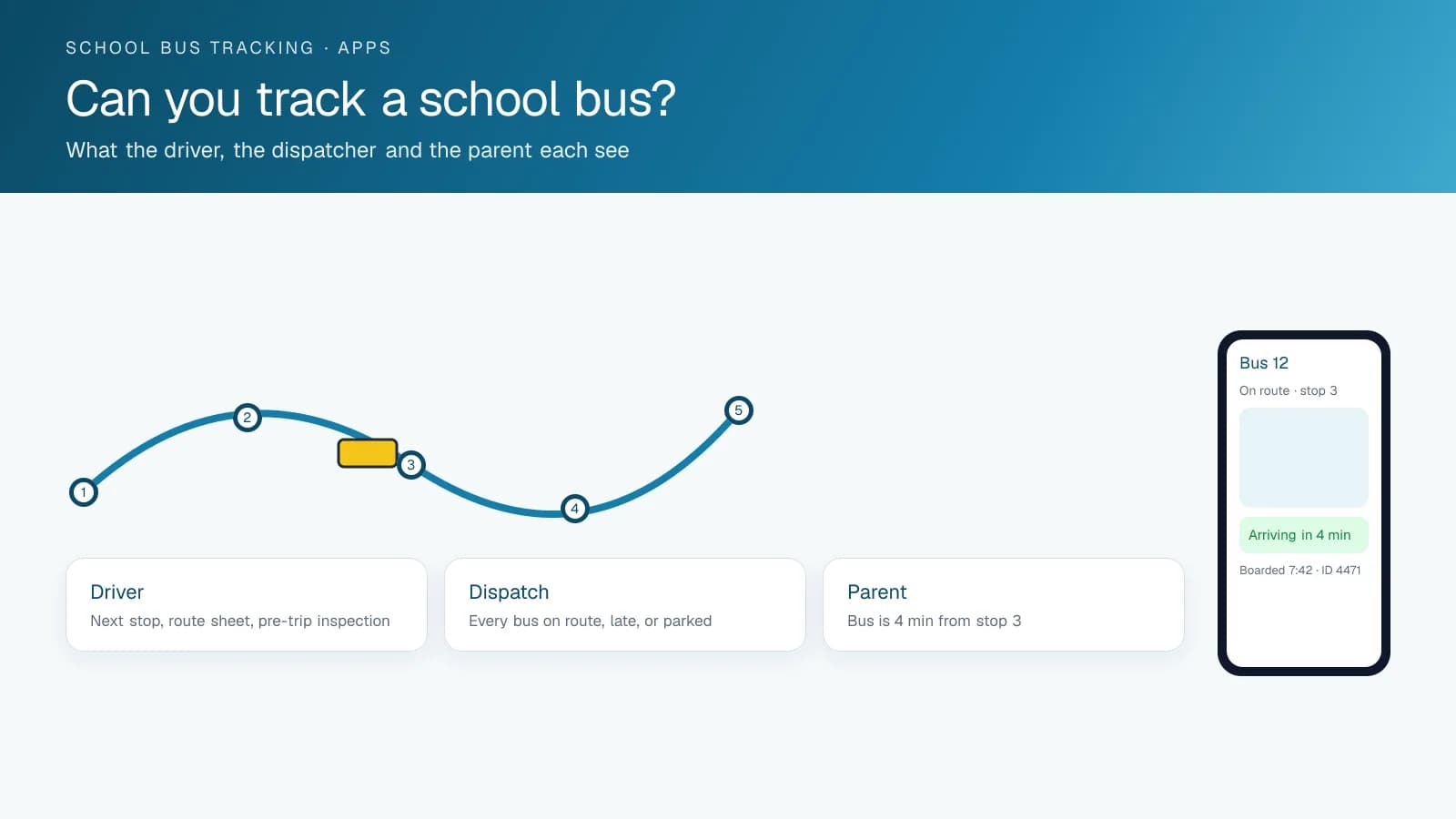
Three Screens, One Bus
The GPS device in the bus reports its position every few seconds, and three different people look at that position through three different apps. The driver has a tablet or phone running the driver app: the route sheet with stops in order, the pre-trip inspection form, and their hours. The dispatcher has the MyGeotab map with every bus, colour-coded by whether it is on route, running late or parked, through a view such as Bus Route Progress. The parent has, where the operator provides it, a phone app showing their child's bus on its route and an estimate of when it reaches their stop.
Whether a parent can see anything depends entirely on that third piece being deployed. The data exists on nearly every tracked bus; the parent app is a decision the board or contractor makes, and a policy about which parents see which route.
Do School Bus Drivers Use GPS?
Yes, and not mainly for directions. A regular driver knows the route; the GPS matters for the substitute driver on a route they have never run, for the dispatcher who needs to know where a bus is when a parent calls, and for the record of where the bus was when a question comes up later. The device also records speed in school zones, hard braking with children aboard and idling at the school beyond the board's limit, which feed the operator's safety program rather than the driver's navigation.
How the Notification Works
Each stop on the route has a geofence, a circle drawn around it in the platform. As the bus moves, the platform compares its position and speed against the remaining stops and estimates arrival at each. When the bus is a set number of minutes from a stop, the parent app sends a notification; when the route is running late, it sends that instead. Student ridership readers go further: a card tap at boarding and alighting records which student got on where, so the app can confirm the child boarded rather than only that the bus passed.
Getting It Turned On
For parents, the route is the school's transportation office or the bus contractor: ask whether a parent app is offered and how to register. For operators, the parent app is a Marketplace product or a custom add-in built on the tracking data already flowing, with access scoped so each parent sees their own child's route only. High Point GPS builds and deploys parent-facing and ridership add-ins for school bus operators in Quebec, Ontario and the northeastern US.
Frequently asked questions
Can parents track the school bus?
Yes, where the board or contractor has deployed a parent app on top of its GPS tracking. Ask the transportation office; the data usually exists even when no app has been offered.
Do school bus drivers use GPS?
Yes. For substitute drivers on unfamiliar routes, for dispatch to locate the bus, and for the safety record of speed, braking and idling with students aboard.
How does the app know the bus is near my stop?
Geofences at each stop and the bus's live position let the platform estimate arrival and notify when the bus is a few minutes away.
Can the app confirm my child got on the bus?
Only with a ridership reader on the bus, where a card tap at boarding and alighting records each student with the location.
Is there a school bus tracking app I can install myself?
No. The app is provided by the operator and linked to its tracking system; a parent cannot track a bus independently.
Related solutions & products
Related terms
Continue reading
- Industries overview →
- Do School Buses Have GPS? How School Bus Tracking Works for Districts and Parents →
- School Bus GPS Tracking System Price: What a District or Contractor Pays Per Bus →
- Bus Route Progress: The MyGeotab Add-In That Shows Which Buses Are On Route, Late or Parked →
- DIDCOM Passenger ID: Recording Every Student or Employee Boarding With a Card Tap →
- More in Industries →
Get a free quote
What are you looking for?