
Industry
GPS Fleet Tracking for Livestock & Grain Hauling
GPS tracking for livestock and grain hauling fleets: time in transit per load, proof of every wash-out, elevator wait times, hours of service and IFTA.
Updated September 22, 2026
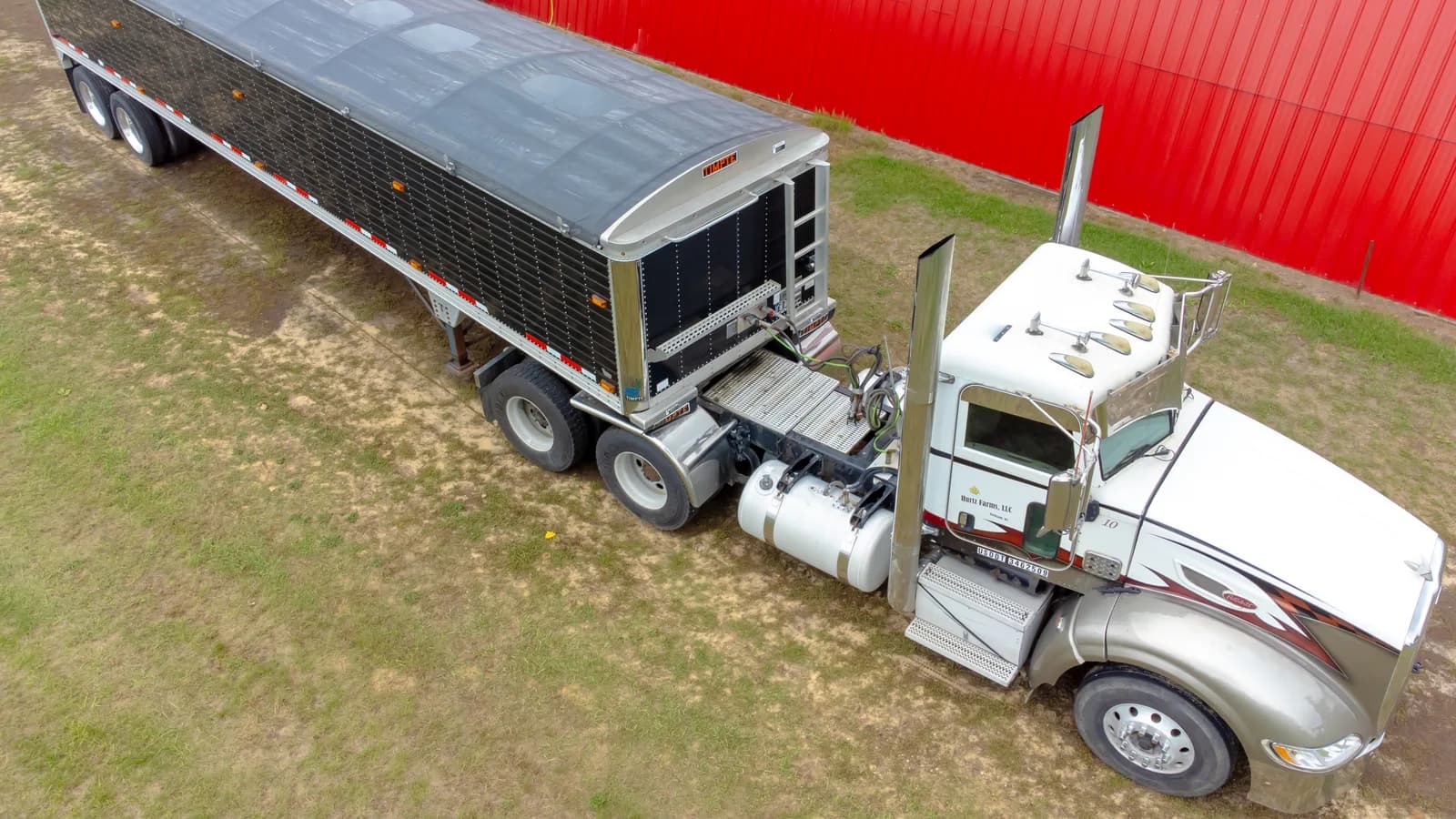
A livestock or grain hauler is judged on things most fleets never think about: how long the animals were on the trailer, whether the pot was washed before the next farm, and how many hours a truck sat in line at the elevator with a full hopper. GPS tracking for livestock and grain hauling turns each of those into a record. The GPS tracking device in the tractor logs departure from the loading chute and arrival at the plant. That gives a time-in-transit figure for every load that a dispatcher, a shipper or an inspector can read without reconstructing it from a driver's memory. Geofences around wash bays, elevators, feedlots and packing plants add the arrival and departure times that prove a biosecurity stop happened and show exactly how long a truck waited to unload. Battery trackers on the trailers themselves keep the pots and hoppers visible when they are dropped at a yard or a farm between loads. Hours of service run in the driver app, with the agricultural exemptions configured where a carrier qualifies for them, and the distance-by-jurisdiction report feeds IFTA at quarter end. Trips are stored on the device when a gravel road has no coverage and upload when the signal returns, which is how High Point GPS sets up fleets that spend harvest season a long way from a tower.
Common challenges
- No dependable time-in-transit record for a load of cattle or hogs when a shipper, a plant or an inspector asks for one
- Wash-out stops that cannot be proved after the fact when a farm or a packer questions biosecurity on a delivery
- Hours lost in line at the elevator or the plant with no data to bring back to the shipper or to plan around
- Trailers dropped at farms, feedlots and yards during harvest with nobody sure which pot or hopper is where
- Hours of service handled on paper through a harvest push, with exemptions applied from memory rather than from the log
- Trips on rural roads that vanish from the record when the truck runs out of cell coverage for an afternoon
How High Point GPS helps
- Time in transit for every livestock load, calculated from the departure geofence at the farm to the arrival geofence at the plant
- Wash bay geofences that stamp the arrival, the time on site and the departure of every trailer before it heads to the next farm
- Wait-time reports at each elevator, feedlot and packing plant, sorted by site and by day, to take back to the shipper
- Battery trackers on cattle pots and hopper-bottom trailers that report position daily and on movement, wherever they are dropped
- Hours of service in the driver app with agricultural exemptions applied where the carrier qualifies, and the audit record to show it
- Distance by jurisdiction for IFTA from the GPS tracking device's odometer, with fuel-card purchases matched to the truck
- Offline trip storage on the GPS tracking device that fills in the record when the truck comes back into coverage
- Driver scoring tuned for live loads: hard braking, fast cornering and long idling with animals aboard flagged for coaching
Time in transit as a record, not an estimate
Both Canada and the United States limit how long animals can be in transit without feed, water and rest, and a carrier is expected to know the figure for each load. On a paper system that figure is a departure time written at the chute and an arrival time written at the plant, both rounded, both from memory when the paperwork catches up days later. With a GPS tracking device in the tractor and a geofence around each farm and each plant, the departure and the arrival are recorded by the truck itself, to the minute. The load's time in transit is a number the dispatcher can read while the truck is still on the road.
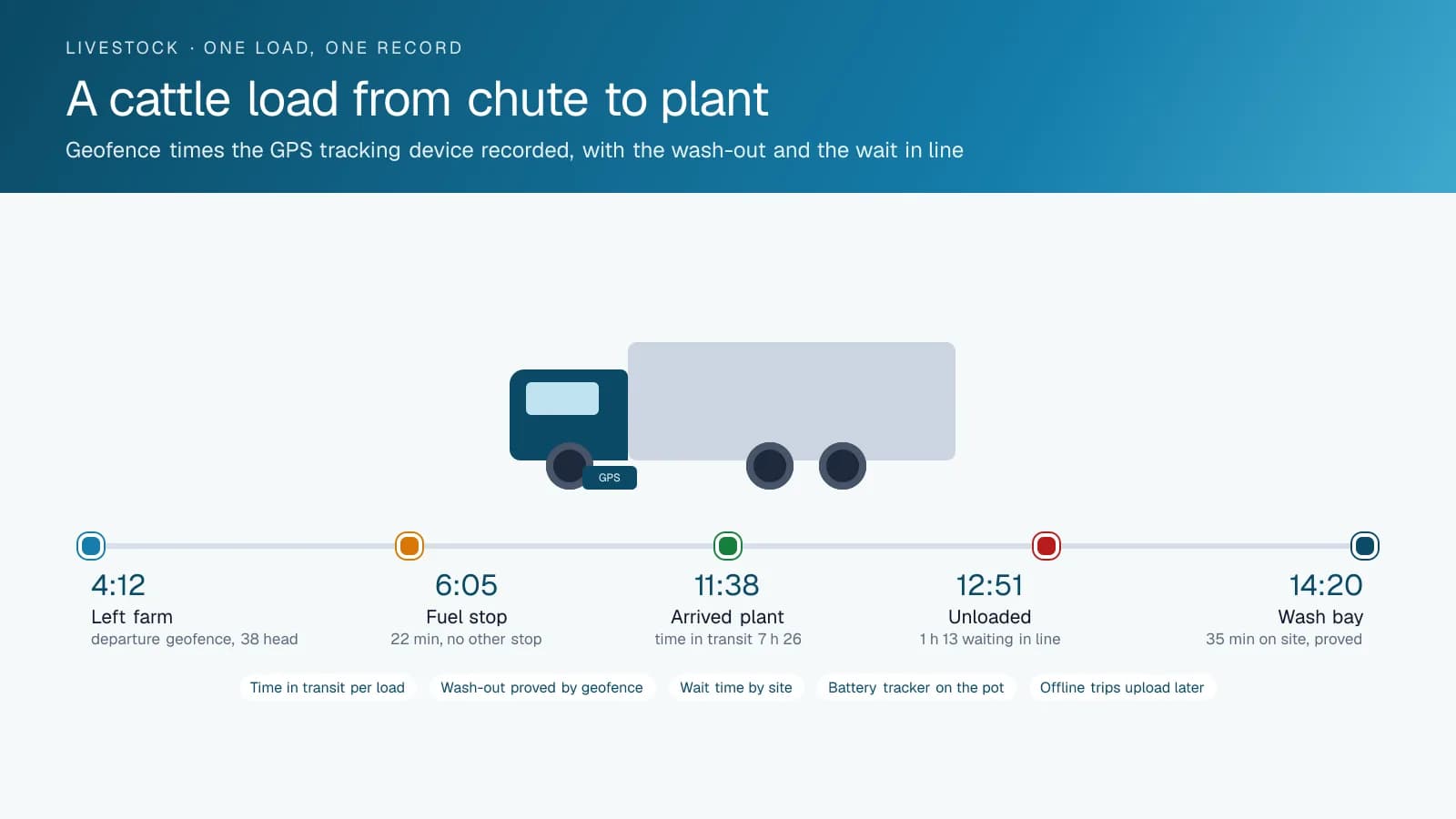
That record matters most when something goes wrong. A shipment arrives with animals in poor condition and the packer asks how long they were on the trailer. The trip replay shows the truck leaving the farm at 4:12, the two stops it made and their length, and the arrival at the plant at 11:38. If a driver pulled over for an hour in the heat, the record shows it, and if the delay was at the plant gate, the record shows that too. High Point GPS configures the reports so the office answers the question the same day, with a document the carrier can stand behind.
Proving the wash-out and tracking the trailer
Biosecurity is a condition of doing business with most producers and packers. A farm that receives a pot which was not washed after the last load has a real reason to refuse it, and the carrier has no defence if the wash cannot be proved. A geofence around every wash bay the fleet uses records when the truck entered, how long it stayed and when it left. The trailer's own record follows it through a battery tracker mounted on the pot or the hopper, which reports position once a day when parked and more often when moving. The wash record and the next delivery sit side by side in the High Point GPS platform, and the sequence is there for anyone who asks.
The same trackers answer the harvest-season question of where the trailers are. Hoppers get dropped at the field, at a bin site or at a customer's yard, and pots sit at a feedlot waiting on a sort. A battery tracker needs no vehicle power and no installer, and it reports for years on its own cell. The fleet sees every trailer on the same map as the tractors, with the last time it moved and which truck was last paired to it. When a trailer leaves a yard at night without a tractor from the fleet, the movement alert goes out before it reaches the highway.
Elevator lines, plant gates and the harvest peak
Wait time is the cost nobody prices into a grain rate until the trucks are three deep at the elevator. A geofence around each elevator, terminal and plant records the time each truck spent inside, and the wait-time report totals it by site, by day and by hour of the day. A dispatcher sees which elevator is moving trucks through in twenty minutes and which one held them for two hours, and shifts the next loads accordingly. When the shipper asks why fewer loads were delivered, the carrier brings a report rather than a complaint.
Harvest and fall run compress a year of work into a few weeks. Every truck and every trailer is on one map, and the dispatcher assigns the nearest empty hopper to the combine that is about to fill. Engine-hours maintenance keeps the trucks that idle for hours in line on the right service interval, and fault codes from the engine reach the shop while there is still time to fix a charging or cooling problem before it costs a day. The rugged GPS tracking device is available for tractors and equipment that spend the season on gravel and in dust.
Hours of service, agricultural exemptions and IFTA
Agricultural haulers in both countries work under hours-of-service rules with exemptions specific to farm commodities, and applying them correctly is where audits go wrong. In the driver app the driver logs hours against a ruleset the carrier configures for its operation, and the exemption a driver claims is recorded as part of the log rather than remembered afterward. When a load is not exempt, the app counts the hours the same way it does for any carrier, and the electronic record is the one an inspector reads at the roadside. High Point GPS sets the rulesets up with the carrier so the drivers do not have to decide in the cab.
Fuel tax follows the trucks across provincial and state lines to the plant. The GPS tracking device records distance by jurisdiction from the odometer, and fuel-card integration matches each purchase to the truck and the date. At quarter end the IFTA report is built from those two records, and the office is not sorting through receipts from a glove box. The same distance data supports the carrier's IRP reporting and shows where the fleet actually runs, by province, by state and by month, which is worth knowing when contracts are renewed and when a new plant or elevator is being priced.
Frequently asked questions
How does the system calculate time in transit for a livestock load?
A geofence around the loading farm and another around the plant record the truck's departure and arrival to the minute. The load's time in transit is the difference, with every stop along the way listed in the trip replay. The figure is available while the truck is still on the road and stored for later review.
Can it prove that a trailer was washed between loads?
Yes. A geofence around each wash bay records the truck's entry, time on site and exit. With a battery tracker on the trailer, the wash stop and the next delivery are both in the trailer's own history, which is the sequence a producer or packer asks to see when biosecurity is questioned.
Do the trailers need power for tracking?
No. A battery tracker mounts on the pot or the hopper and reports position on its own cell, daily when parked and more often when moving, for years without a charge. Powered trailer trackers are also available where a trailer has a lighting circuit to draw from, and both show on the same map as the tractors.
What happens to the record when a truck loses cell coverage on a rural road?
The GPS tracking device keeps recording position, speed and engine data in its own memory and uploads the stored trips when coverage returns. The trip replay is complete for the whole route, including the stretch with no signal, once the truck is back on the network, and nothing has to be re-entered by the driver.
Does the ELD handle agricultural hours-of-service exemptions?
The driver app supports the rulesets that apply to agricultural hauling in Canada and the United States, and High Point GPS configures them with the carrier. When an exemption applies, it is recorded in the log; when it does not, the hours count normally and the record is the one shown at roadside.
Related solutions
Related guides
- How Geofencing Works for Fleet Tracking →
- Trailer GPS Tracking: How to Track Trailers With and Without a Truck Attached →
- GPS Asset Tags vs. Powered Trackers: Which to Use →
- Hours of Service Rules Explained: The 11 and 14 Hour Limits →
- Canada Hours of Service Rules: Cycles and the 13-Hour Limit →
- High Point GPS IFTA Reporting: How Automated Fuel Tax Reports Save Fleets Hours →
Get a free quote
What are you looking for?