
Asset & Equipment Tracking
Trailer GPS Tracking: How It Works With and Without a Truck Attached
Trailer GPS tracking uses a tracker with its own GPS that reports with no truck attached: a battery unit for dry vans, a wired one for powered trailers.
How Does Trailer GPS Tracking Work With and Without a Truck?
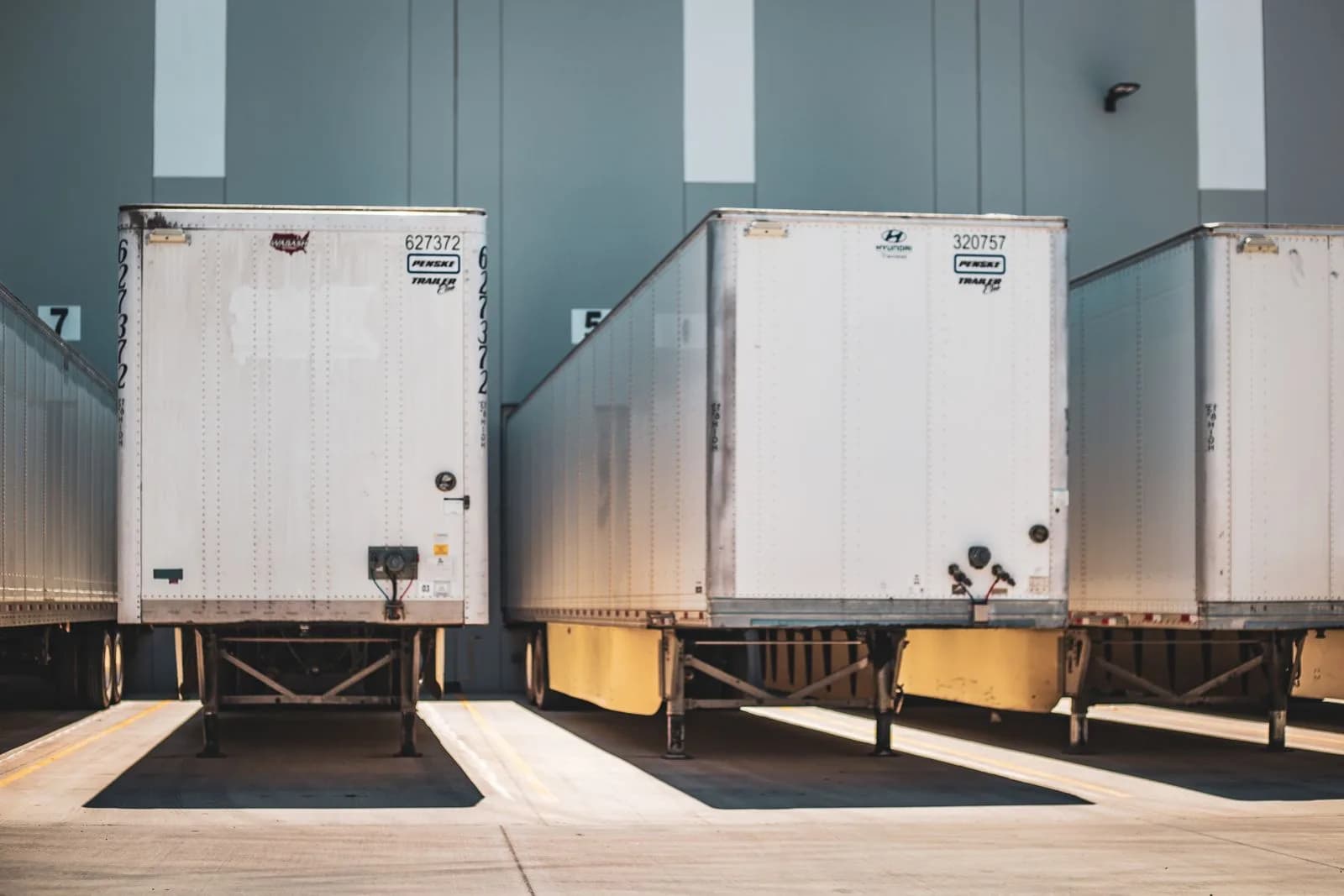
Trailer GPS tracking puts a tracker with its own GPS and cellular modem on the trailer, so it reports with or without a truck attached. A battery unit suits non-powered trailers such as dry vans, and a hybrid unit wired to trailer power, with a backup battery, suits powered trailers. Your tractors carry powered telematics devices, but a trailer is visible only while hitched: drop it at a customer yard, a rail ramp or the back lot and it disappears. Many freight fleets run more trailers than tractors, so they lose track of the assets they own the most of. Dispatch finds trailers by phone, and a trailer that sits at a customer for a week costs a day of detention nobody billed.
How Do You Track a Trailer? Three Options
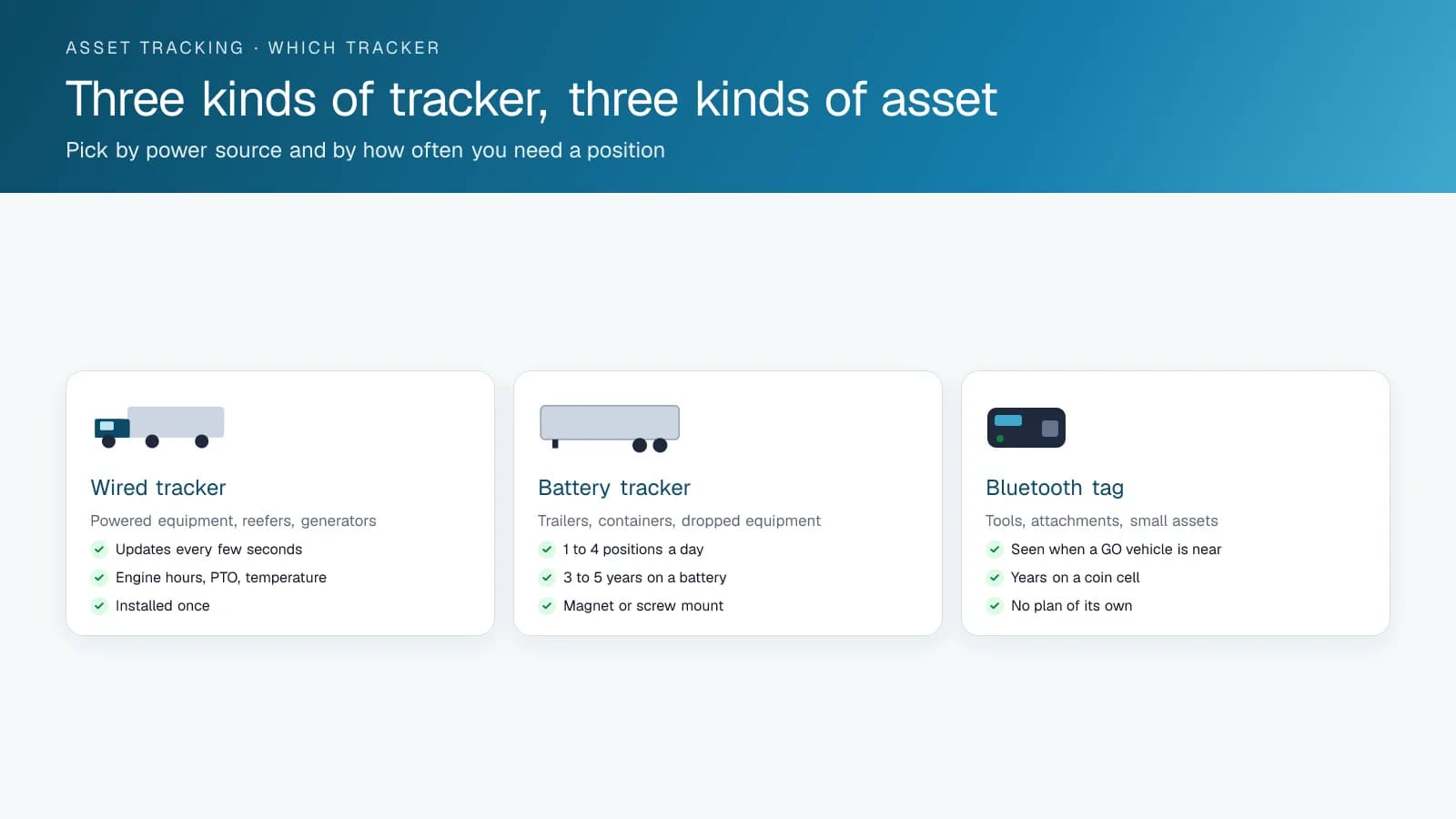
The simplest option is a battery-powered tracker such as the next-gen GO Anywhere. It has its own GPS and LTE modem, installs without wiring, and Geotab positions it for non-powered assets such as dry van trailers, with hourly reporting and up to 10 years of battery life. Bluetooth tags do a different job: Geotab positions them for tools and small assets, such as the toolboxes and attachments that ride in a trailer, which a GPS tracking device fitted with the IOX-BT module hears within range.
A hybrid tracker such as the GO Anywhere Plus wires to trailer power with a three-wire install and keeps a replaceable backup battery, with reporting set by interval or by movement. It finds the trailer anywhere, including a customer's yard three provinces away, so it fits drop-and-hook work, pooled trailers and anything left unattended for long stretches. High Point GPS fits both types as its GPS tracker for trailers: one device plus a monthly plan per trailer.
If the trailer carries something worth watching, temperature and door sensors can report alongside the position, and deeper trailer data, such as reefer, tire pressure or cargo, comes from partner integrations such as Thermo King TracKing and FleetPulse. On a refrigerated trailer that record doubles as the cold-chain record, and a door sensor paired with a geofence turns a door opening outside a customer site into an alert.
What Do Fleets Do With Trailer Tracking Data?
Detention billing pays back fastest: a timestamped arrival and departure at the customer's geofence is the evidence a detention invoice needs. Pool sizing comes second. A utilization report shows which trailers moved this month and which sat, and a fleet may find it can run with fewer. Dispatch improves because the board shows which trailers are empty and where they are, and theft gets noticed sooner because a trailer leaving the yard at 2 a.m. raises an alert that night instead of a police report a week later.
Battery or Wired Tracker: Which Fits Your Trailers?
Non-powered trailers, such as dry vans, suit a battery tracker like the GO Anywhere, wherever they are dropped. Powered trailers suit the GO Anywhere Plus, which runs on trailer power and keeps a backup battery. Set the reporting mode to how long a trailer normally sits, and keep Bluetooth tags for the tools and small assets inside. Reefers add temperature sensing, with deeper reefer data through partner integrations. Most fleets end up with a mix, and the platform shows all of them on the same map as the tractors.
How Do You Install a GPS Tracker on a Trailer?
A battery tracker mounts with no wiring, and a hybrid tracker needs a short wired install to trailer power. Geotab calls the next-gen GO Anywhere "slap and track": you fasten it to the trailer and it reports on its own battery. The GO Anywhere Plus attaches with screws, bolts or cable ties and wires to three leads (power, ground and ignition), so it runs on trailer power and keeps its replaceable battery as a backup when the trailer is dropped.
Placement decides how well the tracker reports. It needs a clear path to the sky for GPS and to the nearest cell tower, so avoid spots boxed in by steel, and pick a place a thief will not find in a quick look around the frame. Both units are sealed for road spray and pressure washing: Geotab rates them IP67 and IP69K. The GO Anywhere Plus is rated from minus 40 °C to +85 °C and the next-gen GO Anywhere from minus 40 °C to +70 °C, so a trailer parked outside through a Canadian winter keeps reporting.
High Point GPS installs both types, sets each tracker's reporting mode in the platform and adds the trailer to the same map as your tractors.
How Often Should a Trailer Tracker Report?
Report as often as the decision you make from the data requires, because every extra report uses battery. A trailer parked for weeks at a customer needs a daily or hourly check-in. A loaded trailer on the road, or one you think was stolen, needs frequent positions.
The two Geotab trailer trackers handle this differently. The next-gen GO Anywhere reports hourly and switches to a recovery mode that sends a position every 15 minutes. The GO Anywhere Plus offers four modes, listed below.
Coverage is the other half of the question. A trailer at a rural customer or a remote yard may sit outside cellular coverage. The GO Anywhere Plus can fall back to satellite through select carrier partners: Geotab lists T-Mobile and Rogers direct-to-cell with Starlink on model GATAA1, and availability depends on the carrier and the region.
| GO Anywhere Plus mode | What it does | Fits |
|---|---|---|
| Time-based | Reports at set intervals, such as daily or weekly | Trailers in long-term storage or seasonal pools |
| High-frequency | Reports every 15 minutes while the trailer moves | Loaded or high-value trailers on the road |
| Movement-based, delayed | Logs positions while moving and uploads them once a day | Trailers where the daily route matters more than live position |
| Movement-based, immediate | Reports start and stop in near real time | Drop-and-hook pools and detention billing |
Example: Resizing a Trailer Pool
Take an illustrative regional carrier with 40 tractors and 110 trailers after one quarter of trailer tracking. The dwell report showed 18 trailers that had not moved in 60 days: 11 sat at customer sites as free storage, and 7 were in the back lot, parked behind trailers that had moved. Billed from the geofence records at the contract rate, detention at the eleven sites came to more for the quarter than the trackers cost for the year, and four of those customers returned the trailers within a month of the first invoice. The carrier sold the seven idle trailers in the lot. Pairing reports showed dispatch sending drivers to the wrong yard for empties about twice a week, and that stopped. The carrier now runs 95 trailers to the same 40 tractors and knows where each one is.
Frequently asked questions
Can I track a trailer without a truck attached?
Yes. A trailer tracker such as the GO Anywhere or GO Anywhere Plus has its own GPS and cellular connection, powered by its battery or by trailer power with a backup battery, so it reports whether or not a truck is hitched. A Bluetooth tag only reports when a device fitted with the IOX-BT module comes within range, so it suits tools rather than trailers.
How long does a trailer GPS tracker battery last?
Geotab rates the next-gen GO Anywhere at up to 10 years with hourly reporting, and the GO Anywhere Plus backup battery at 3 to 5 years, depending on use. Bluetooth tags last up to 3 years. More frequent reporting drains a battery faster. Match the reporting interval to how long a trailer in your pool normally sits.
Can trailer tracking show temperature?
Yes. Temperature sensors report alongside location and can alert on excursions, and deeper reefer data comes through partner integrations such as Thermo King TracKing. On a refrigerated trailer, that makes the record the cold-chain record, and the same setup can also carry a door sensor for openings outside a customer site.
How does trailer tracking help with detention?
Trailer tracking records geofenced arrival and departure times at the customer site, which is the timestamped evidence a detention invoice needs. When a trailer sits at a customer for days, those records let you bill detention at your contract rate with timestamped evidence behind the invoice.
Does a Bluetooth tag need its own data plan?
No. A Bluetooth tag relays through the connection of a nearby GPS tracking device fitted with the IOX-BT module, which is why it costs so little to run. The catch is coverage: the tag reports only when such a device is in range, so Geotab positions tags for tools and small assets, and trackers such as the GO Anywhere for trailers.
How do you install a GPS tracker on a trailer?
A battery tracker such as the next-gen GO Anywhere fastens to the trailer and reports on its own battery, with no wiring. A hybrid tracker such as the GO Anywhere Plus mounts with screws, bolts or cable ties and wires to power, ground and ignition. Mount either one where steel does not block its view of the sky.
Can a trailer GPS tracker report outside cellular coverage?
Some can. The GO Anywhere Plus can fall back to satellite through select carrier partners, such as T-Mobile and Rogers direct-to-cell with Starlink on model GATAA1, and availability depends on the carrier and region. A tracker on cellular alone reports once the trailer is back in coverage, so check coverage on your routes before you choose.
Sources
Related solutions & products
Continue reading
- Asset Tracking overview →
- Trailer Tracking Software, Device and System: What Each Layer Does →
- Construction Equipment Telematics: Tracking Heavy Machines, Not Just Trucks →
- Construction Equipment and Asset Tracking Software: Machines, Attachments, Materials and Tools →
- GPS Tracking for Landscapers and Lawn Care: Crew Time, Equipment and Snow Season →
- More in Asset & Equipment Tracking →
Get a free quote
What are you looking for?