
Asset & Equipment Tracking
Trailer Tracking System, Software and Device: What Each Layer Does
A trailer tracking system is three layers: the device on the trailer, the connection it uses to report, and the software where the trailer appears on a map. Here's what each layer does, which device fits which trailer, and why the software matters more than the tracker once the fleet has more than a few.
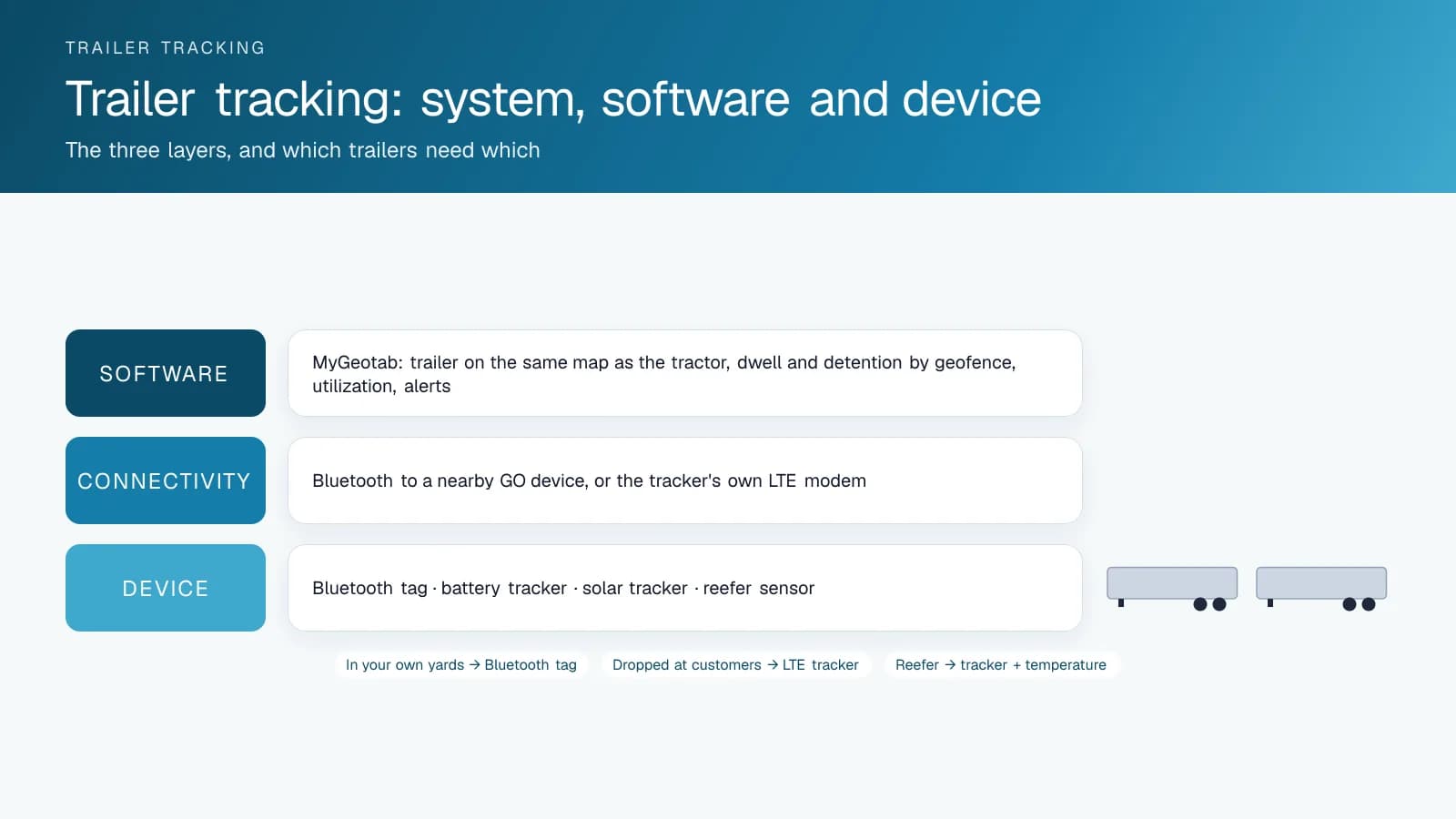
The Device Layer
The device is what goes on the trailer, and there are three kinds. A Bluetooth tag is a small sealed beacon with a multi-year battery and no GPS of its own; it is heard by any GO device that passes within range. A battery-powered tracker has its own GPS and LTE modem and reports on a schedule, every few hours parked and more often moving, for years on one battery. A solar tracker does the same with a panel that recharges it, for trailers that live outdoors. Any of them can carry sensors — door, cargo, temperature — and a reefer tracker reads the refrigeration unit directly. Which one fits depends on where the trailer goes: tags for trailers that stay in the fleet's own network, trackers for trailers dropped where no fleet truck visits.
The Connectivity Layer
A tag reports through the nearest GO device's cellular connection, which is why it costs almost nothing to run and why it is only seen when a tracked vehicle is nearby. A standalone tracker has its own modem and plan, reports from anywhere with signal, and stores its positions when out of coverage. The reporting interval is the trade-off between battery life and freshness: a trailer that sits for three weeks at a customer does not need a position every minute, and a tracker set to report every few hours parked lasts years.
The Software Layer
The software is where a tracker becomes a system. In MyGeotab a trailer appears on the same map as the tractors, with its last position and time, and the platform does the work that no device can: geofenced arrival and departure at customers, which is the detention billing record; dwell reports showing which trailers have not moved in a month, which is the pool-sizing record; pairing of trailer to tractor from proximity, so dispatch knows which trailer is behind which truck; and alerts for a trailer leaving a yard after hours or a reefer drifting off setpoint. A fleet with six trailers can manage with the device's own portal; a fleet with sixty needs the software, and the software needs the trailers and trucks on one platform.
Putting It Together
Most freight fleets end up with a mix: tags on yard trailers, LTE trackers on trailers that go to customers and rail ramps, temperature-sensing trackers on reefers, all reporting into the platform that already tracks the tractors. High Point GPS supplies and installs the full range and configures the geofences, dwell reports and alerts for fleets across Quebec, Ontario and the northeastern US.
Frequently asked questions
What is a trailer tracking system?
A device on the trailer, the connection it reports over, and the software where the trailer appears on the map with geofences, dwell reports, tractor pairing and alerts.
What is the difference between trailer tracking software and a device?
The device reports position; the software turns positions into detention records, utilization, pairing and alerts across the whole fleet. Both are needed beyond a handful of trailers.
Which trailer tracking device should I use?
Bluetooth tags for trailers that stay in your own network, battery or solar LTE trackers for trailers dropped at customers, and temperature-sensing trackers for reefers.
How does the software know which tractor has which trailer?
By proximity: the platform pairs a trailer with the tractor whose GO device is consistently beside it while moving.
Can trailer tracking bill detention?
Yes. Geofenced arrival and departure at the customer site are the timestamped evidence a detention invoice needs.
Related solutions & products
Continue reading
- Asset Tracking overview →
- Trailer GPS Tracking: How to Track Trailers With and Without a Truck Attached →
- Construction Asset Tracking Software: Equipment, Attachments, Materials and Tools in One System →
- Telematics for Construction and Heavy Equipment: Tracking Machines, Not Just Trucks →
- GPS Fleet Tracking for Landscaping and Lawn Care: Crew Time, Equipment and Snow Season →
- More in Asset & Equipment Tracking →
Get a free quote
What are you looking for?