
Compliance
North Carolina IFTA: How to File Online Through NCDOR eFile
North Carolina IFTA returns are filed online in NCDOR's eFile system. See who must register, when NC IFTA returns are due and which records to keep.
Who Administers IFTA in North Carolina?
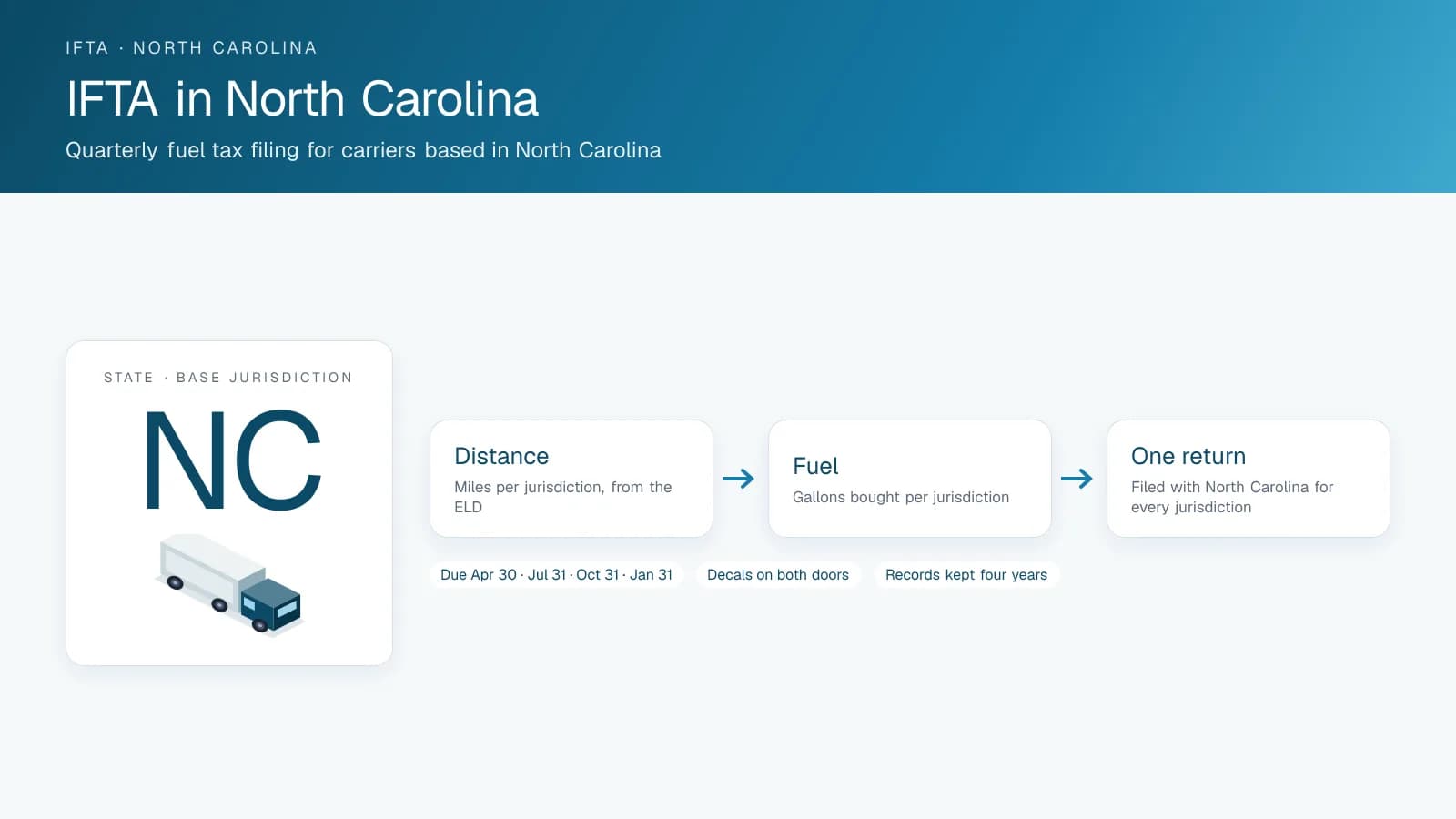
You file North Carolina IFTA returns with the Department of Revenue's Excise Tax Division, which administers the program for carriers based in the state, and you do it through NCDOR's online eFile system. The standard registration threshold applies: qualified motor vehicles, generally over 26,000 pounds gross vehicle weight or with three or more axles, operating in North Carolina and at least one other member jurisdiction.
North Carolina issues one IFTA license and a set of two decals per approved vehicle, and charges no fee for either. The license follows the calendar year, January 1 through December 31, so track renewal separately from the quarterly filing calendar.
First-time applicants register with NCDOR before any quarterly filing obligation begins. License approval and the first return due date won't always line up with your fleet's own fiscal calendar. If you're approved partway through a quarter, you still owe a return for the part of that quarter you were licensed and operating. The clock doesn't wait for the next full quarter.
How Do You File NC IFTA Online Through NCDOR eFile?
North Carolina carriers file returns, order credentials and make payments through the Motor Carrier IFTA/Intrastate online filing and payment system, which NCDOR runs itself. Quarterly returns follow the standard IFTA schedule shared by every member jurisdiction. When a due date lands on a weekend or holiday, it moves to the next business day.
Late filing in North Carolina carries the general IFTA penalty used across member jurisdictions: a flat fee or a percentage of the net tax due, whichever is greater, plus monthly interest on the unpaid balance. The rates change every quarter, so check the IFTA, Inc. matrix for the current figures.
Payments and credential orders go through the same eFile system as the return, which saves time compared with jurisdictions that split filing and payment across separate portals. The catch is that an expired card or lapsed payment method on file can hold up a return that is otherwise complete. Confirm your payment details well before the deadline.
Where Does GPS Data Help North Carolina Fleets?
North Carolina's highways carry a mix of interstate through-traffic and in-state hauls. Plenty of North Carolina carriers file IFTA because some of their routes cross into Virginia, South Carolina or Tennessee, even though they never set out to run long haul.
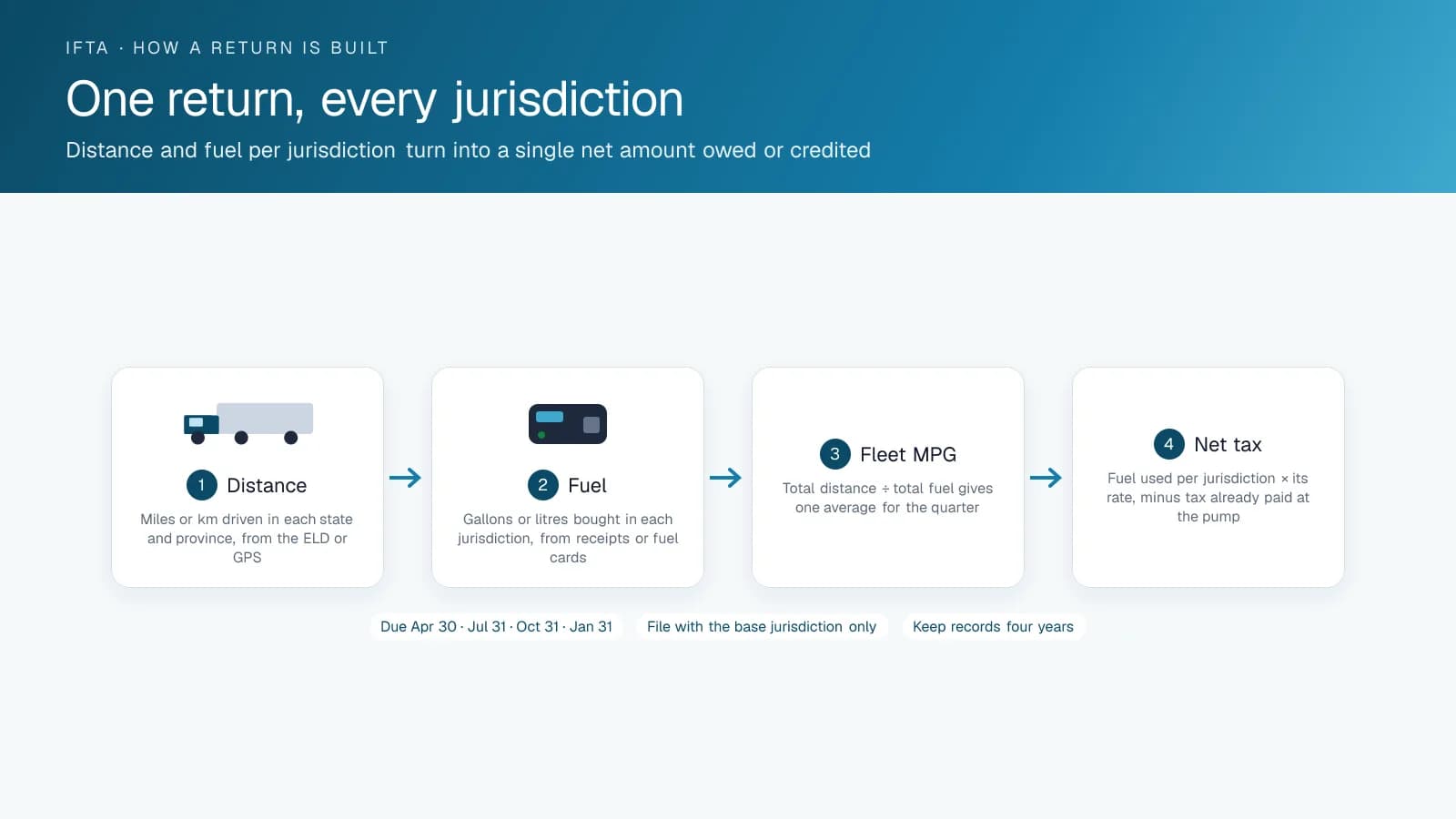
For that kind of fleet, manual IFTA reporting is a lot of work for a little cross-border driving: someone has to rebuild which trips crossed a state line from route memory and paper fuel receipts. GPS-based jurisdiction tracking removes that reconstruction step, whether cross-border trips make up a small or large share of your total miles.
Recordkeeping That Survives an Audit
The recordkeeping rule behind a North Carolina IFTA return is the one every member jurisdiction shares: keep mileage and fuel records for four years from the return's due date or filing date, whichever is later. The rule comes from the IFTA Procedures Manual that all jurisdictions follow, and NCDOR sets no separate window.
Records hold up in an audit when they tie a specific date, vehicle and jurisdiction together. A monthly mileage total that someone has to reverse-engineer from memory won't. GPS-based jurisdiction tracking closes that gap by producing a timestamped, vehicle-level record of every state-line crossing automatically, which is the level of detail an auditor checks a manual log against.
North Carolina IFTA at a Glance
The essentials for a North Carolina-based carrier in one place. Confirm procedures with NCDOR before each renewal.
| Item | North Carolina |
|---|---|
| Administering agency | North Carolina Department of Revenue, Excise Tax Division |
| Portal | NCDOR Motor Carrier IFTA/Intrastate eFile system; filing, credentials and payment in one place |
| Licence and decal fee | None |
| Credential period | January 1 to December 31 |
| Return due dates | April 30, July 31, October 31, January 31, or the next business day |
| Partial first quarter | Return still due for the licensed portion of the quarter |
| Late return | Flat fee or percentage of net tax, whichever is greater, plus monthly interest |
| Record retention | Four years from the due date or filing date, whichever is later |
Frequently asked questions
Which agency handles IFTA in North Carolina?
The North Carolina Department of Revenue's Excise Tax Division handles IFTA for carriers based in the state. It issues the license and decals, receives quarterly returns, and runs the Motor Carrier IFTA/Intrastate eFile system that carriers use to file, order credentials and pay.
Is there a fee for a North Carolina IFTA licence or decals?
No. North Carolina doesn't charge a fee for the IFTA license or for the two decals it issues per approved vehicle. You still apply through NCDOR and still owe quarterly returns once the license is active, but the credentials themselves cost nothing.
When does a North Carolina IFTA licence expire?
A North Carolina IFTA license runs on the calendar year and expires December 31. You renew it every year, on a separate calendar from the quarterly returns you file. Put both deadlines in your compliance calendar so the renewal doesn't slip.
How do North Carolina carriers file quarterly IFTA returns?
North Carolina carriers file quarterly IFTA returns online through NCDOR's Motor Carrier IFTA/Intrastate eFile system, which also handles credential orders and payments. Returns follow the standard IFTA schedule, and a due date that falls on a weekend or holiday moves to the next business day.
How long do North Carolina carriers need to keep IFTA records?
Keep North Carolina IFTA mileage and fuel records for four years from the return's due date or filing date, whichever is later. That is the shared standard from the IFTA Procedures Manual, used in every member jurisdiction, and NCDOR applies no window of its own.
Related solutions & products
Service areas
Related terms
Continue reading
- Compliance (ELD, DVIR, IFTA) overview →
- IRP in North Carolina: NC IRP Registration, Apportioned Fees and the Distance Schedule →
- When Is IFTA Due? IFTA Filing Deadlines and Late Fees →
- Who Needs IFTA? The Qualified Motor Vehicle Definition, Axle by Axle →
- UCR Registration Explained: The Unified Carrier Registration Fee for Interstate and Cross-Border Carriers →
- More in Compliance →
Get a free quote
- Over 500 fleets
- Since 2013
- 4.9 on Google (19 reviews)
What are you looking for?
Prefer to talk?Call 1-800-613-6323[email protected]