
Compliance
AEB Mandate for Heavy Trucks: Is It in Effect Yet?
The AEB mandate for heavy trucks is a proposed US rule, not yet in effect, that would require automatic emergency braking on trucks above 10,000 lbs.

What Does the AEB Mandate for Heavy Trucks Cover?
The proposed US AEB mandate for heavy trucks would require automatic emergency braking on vehicles above 10,000 pounds. NHTSA and FMCSA are writing the rule jointly, and it covers vehicle classes 3 through 8, which reaches well past the Class 7/8 tractors most people picture when they hear "heavy truck." A good share of medium-duty fleet vehicles would eventually fall under the requirement along with long-haul tractors.
The system uses cameras and radar to spot a stopped, slowing or slower vehicle in the truck's path. It warns the driver first with a visual and audible alert, then applies the brakes on its own if the driver doesn't react in time. Under the proposed performance standard, the truck has to come to a full stop and avoid contact at speeds from roughly 6 mph up to 62 mph.
Is the AEB Mandate in Effect Yet? Where the Rule Stands
The process has been a long one. The proposal went through a notice-and-comment period in 2023, and the 2026 regulatory agenda points to a joint supplemental notice of proposed rulemaking: a revised proposal that answers comments on the original version. It does not point to a final rule with a fixed compliance date. A proposed rule describes what regulators are considering, so no fleet is out of compliance with it today.
Fleets sometimes read a headline about a new mandate as if it already applies. Some scramble for no reason, and others write off a rule that is on its way. As of this writing, this one is an active, multi-year rulemaking by two agencies, with no final requirement and no compliance deadline yet.
Why Should Fleets Watch the AEB Rule Now?
Heavy vehicle AEB rules have a history of taking years to finalize once proposed, so a fleet planning truck purchases has time to factor this in calmly. A growing share of new Class 7/8 trucks already offer AEB as standard or optional equipment ahead of any mandate. The proposal applies to newly built trucks and does not require retrofits, so AEB you specify today puts the safety benefit on the road years early.
A fleet that buys trucks without AEB today goes without the safety benefit for the whole life of those trucks, since the proposal would not require adding it later. Specifying AEB on new purchases now is a low-regret decision, whenever the final rule lands and whatever form it takes.
What Can Fleets Do Before the AEB Rule Is Final?
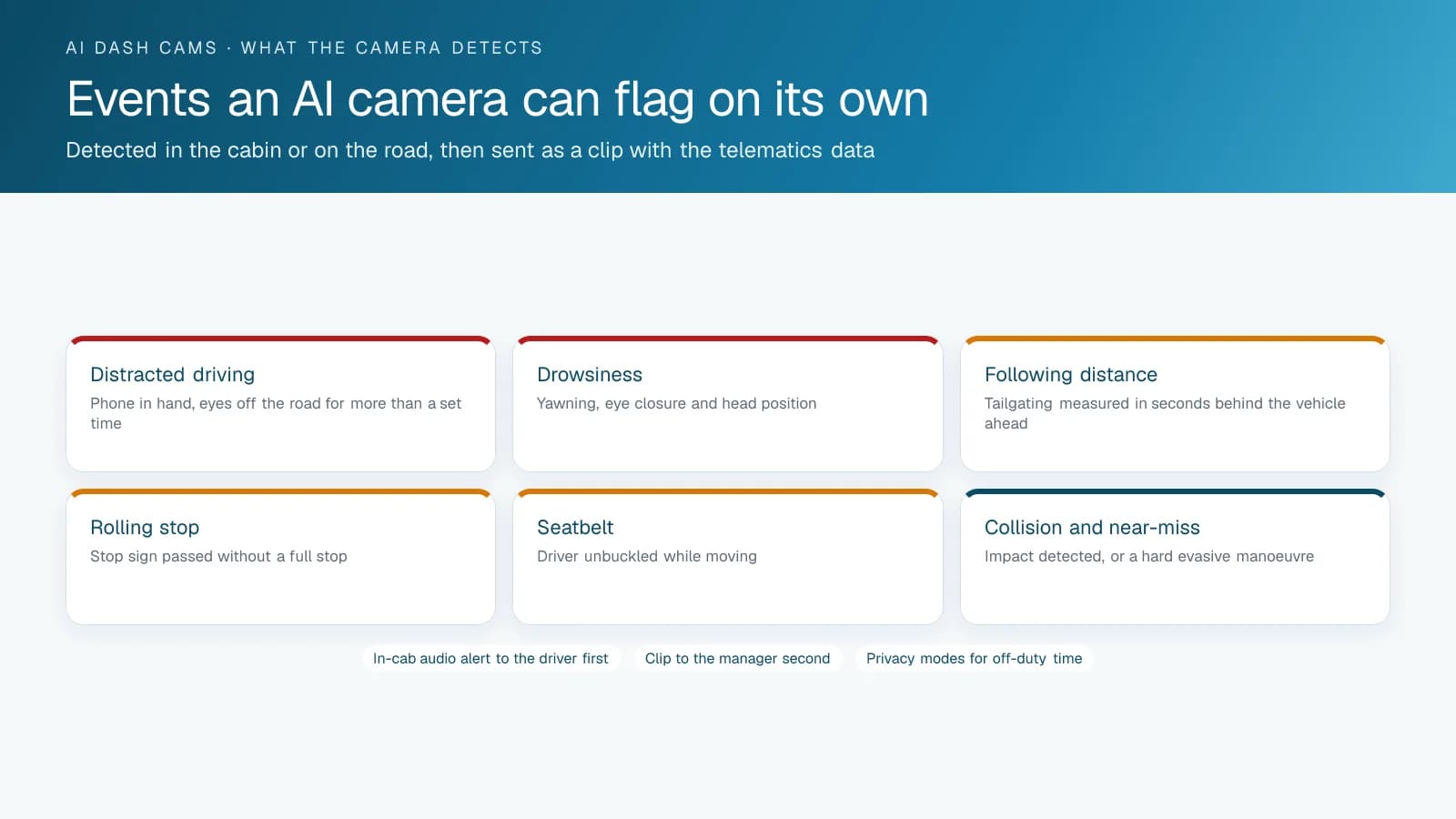
You don't need to wait for the final rule to get most of what it would deliver. New tractors from the major manufacturers already ship with automatic emergency braking and forward collision warning as standard or as an option, so adding it to your next order costs little and gets your team used to the events it generates. For trucks already in service, an AI dash cam covers the warning side of the function on any truck, whatever its age, with forward collision and following-distance alerts to the driver. It cannot apply the brakes. The telematics platform can also record when the truck's own system activated, on models that report it, and you can use those activations in driver coaching. High Point GPS installs the cameras and sets up the reporting for fleets across Canada and the United States that want to get ahead of the rule.
Frequently asked questions
What size vehicles would the AEB mandate cover?
The proposed rule covers heavy vehicles above 10,000 pounds, which spans vehicle classes 3 through 8. That scope is broader than the Class 7/8 tractors most people associate with heavy trucks, so many medium-duty fleet vehicles would eventually fall under the AEB requirement along with long-haul tractors.
Is the AEB mandate for heavy trucks already in effect?
No. As of 2026, the AEB requirement is an active joint FMCSA/NHTSA rulemaking, and the next expected step is a supplemental proposed rule. There is no finalized rule and no compliance date yet, so no fleet is out of compliance today. Heavy vehicle AEB rules have taken years to finalize once proposed.
What speed range does the proposed AEB standard cover?
The proposed performance standard requires the truck to come to a full stop and avoid contact with the vehicle ahead at speeds from roughly 6 mph up to 62 mph. The system warns the driver first with a visual and audible alert, then brakes on its own if the driver doesn't respond in time.
Should a fleet wait to buy AEB-equipped trucks until the rule finalizes?
There's little reason to wait. Many new heavy trucks already offer AEB as standard or optional equipment. The proposal would apply to newly built trucks and does not require retrofits, so waiting only delays the safety benefit on every truck you buy in the meantime. It is a low-regret choice, whatever form the final rule takes.
Related solutions & products
Continue reading
Get a free quote
- Over 500 fleets
- Since 2013
- 4.9 on Google (19 reviews)
What are you looking for?
Prefer to talk?Call 1-800-613-6323[email protected]