
Compliance
Michigan IFTA: How to File Quarterly Returns and Stay Compliant
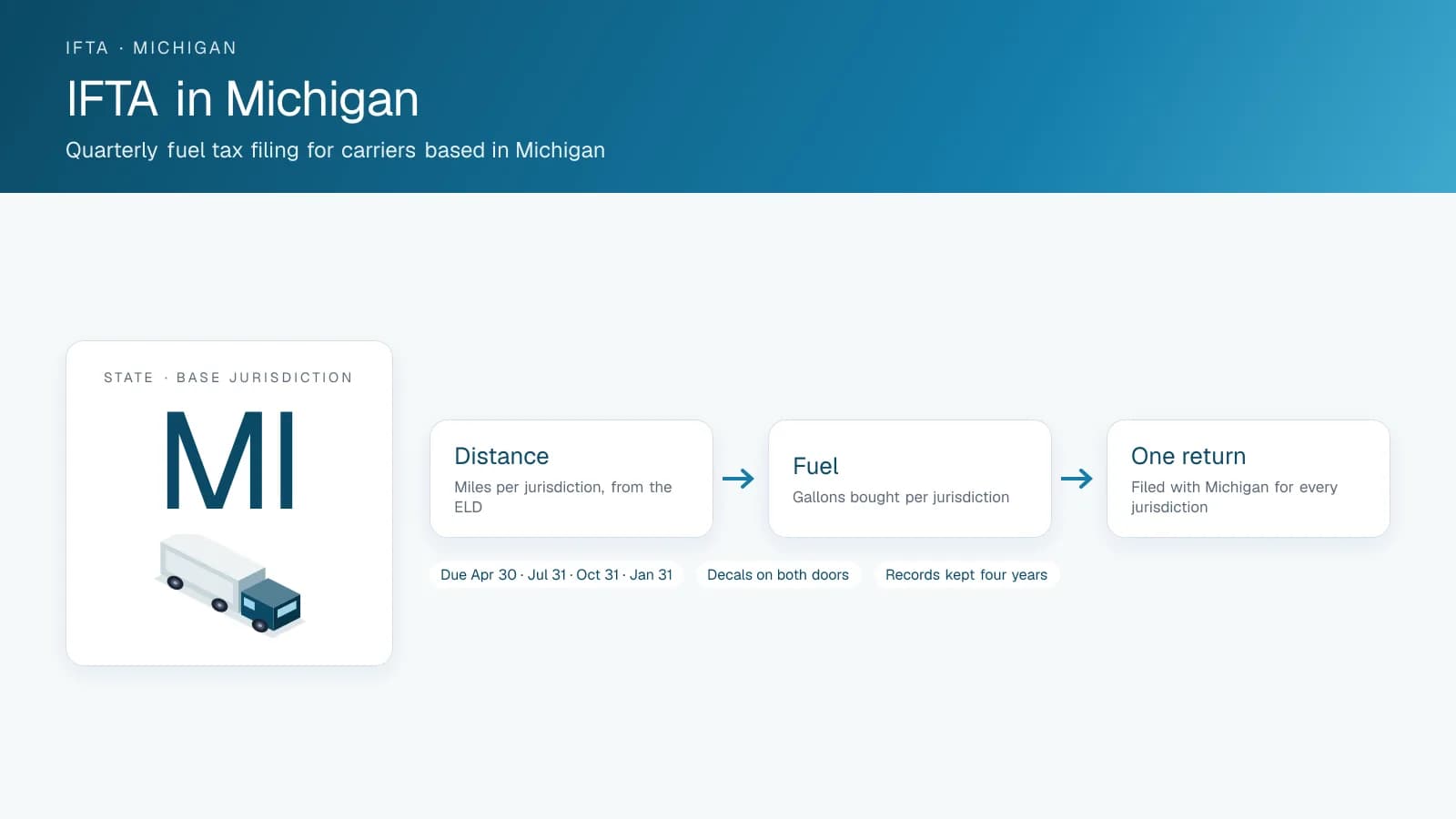
Michigan IFTA carriers register with the Department of Treasury and file quarterly returns through the IFTA Processing Consortium. See who qualifies.
Who administers Michigan IFTA?
For Michigan IFTA, the Department of Treasury administers the program for carriers based in the state, and you file your quarterly returns electronically. Michigan spells out what a qualified motor vehicle is: two or more axles with a gross or registered gross weight over 26,000 pounds, three or more axles regardless of weight, or a combination weight over 26,000 pounds, with recreational vehicles excluded.
The base jurisdiction rules are equally clear. You need an established place of business in Michigan with a real street address and a listed phone number, and your operational records have to be available in the state. A mailing address used only to register does not qualify.
You register for the first time through the Department of Treasury before you have anything to file. Michigan has mandated electronic filing since 2014, so a newly licensed carrier should confirm access to the IFTA Processing Consortium during onboarding. Don't wait for the first deadline to find out it isn't set up.
Electronic filing since 2014: how Michigan returns work
Michigan has required electronic IFTA filing since December 2014, through the IFTA Processing Consortium. Some carriers file through authorized third-party providers connected to Michigan Treasury Online instead, but most carriers use the IFTA Processing Consortium directly. The IFTA licence and decals carry no fee.
Michigan has no single branded consumer portal the way some states do. Carriers searching for "the Michigan IFTA website" sometimes land on Michigan Treasury Online when their quarterly return has to go through the IFTA Processing Consortium site. Bookmark the correct login and skip the search each quarter.
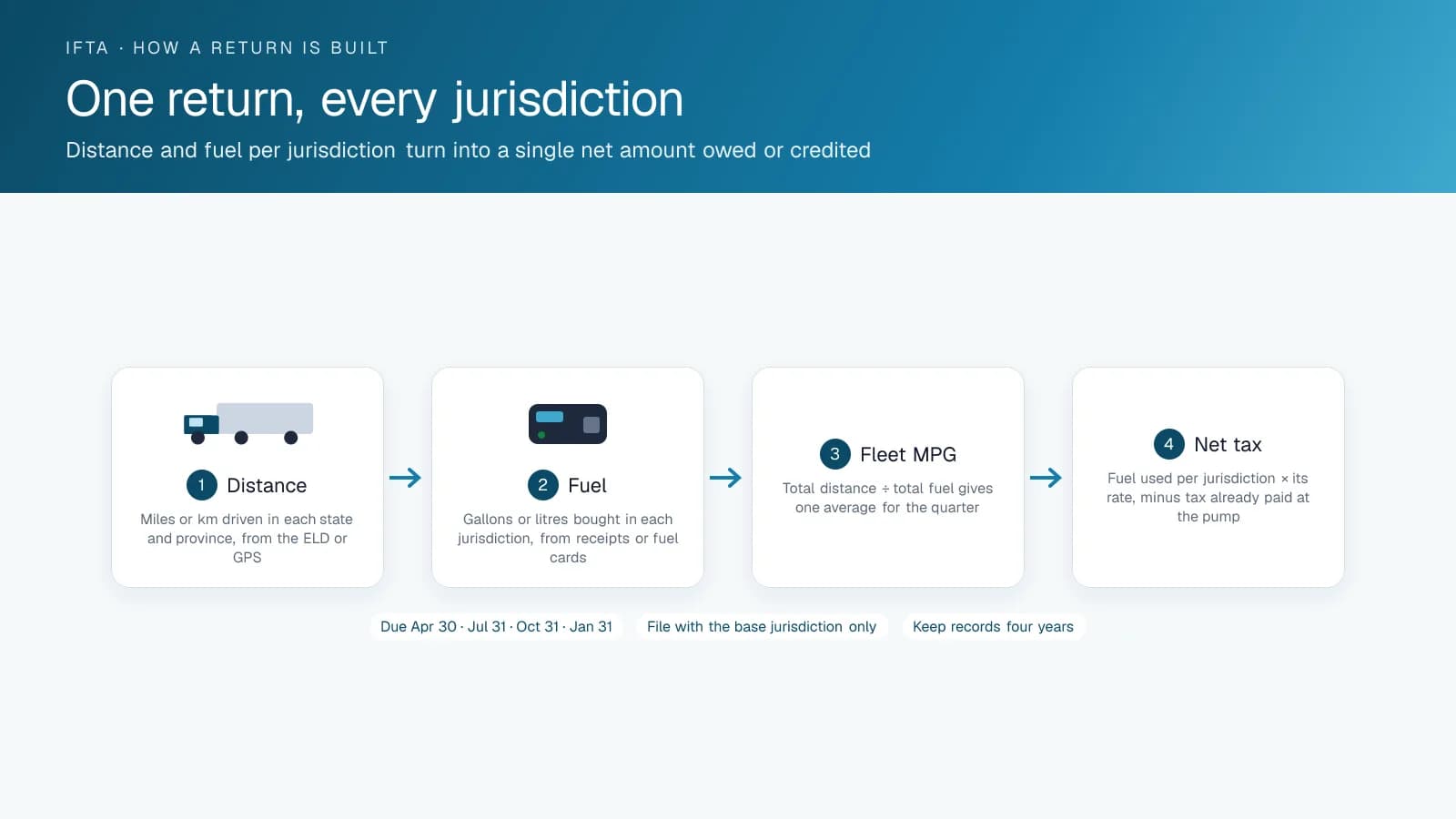
Quarterly due dates follow the standard IFTA schedule: April 30, July 31, October 31 and January 31, moved to the next business day when the date falls on a weekend or holiday. If you don't file, the state does not wait for a late return. It issues a computed, estimated assessment against your account, and that number tends to come out worse than your fleet's real tax liability.
Why does the estimated assessment matter?
A computed assessment is generally built on assumptions instead of your fleet's mileage and fuel data, so it often comes out higher than an accurate return would have. A missed Michigan filing therefore costs more than the late-filing penalty alone suggests.
GPS-based mileage and jurisdiction data keeps a Michigan return accurate quarter after quarter, with nothing rebuilt from memory or paper logs. That counts most for fleets running routes into Ohio, Indiana or Ontario, where an assessment based on rough estimates is more likely to overstate what you owe.
Recordkeeping that survives an audit
Michigan carriers follow the same recordkeeping window as every IFTA jurisdiction: four years of mileage and fuel records from the return's due date or filing date, whichever is later. The IFTA Procedures Manual sets that rule, not Michigan Treasury on its own, and it applies whether you file directly through the IFTA Processing Consortium or through an authorized third-party provider.
Because a missed Michigan filing leads to a computed, estimated assessment, clean mileage records by jurisdiction do two jobs. They protect you in an audit, and they are the fastest way to correct an estimated assessment if the state ever issues one. A GPS platform that logs every state-line crossing gives your fleet that evidence with no manual rebuild.
Michigan IFTA at a glance
Here are the essentials for a Michigan-based carrier in one place. Confirm procedures with the Department of Treasury before each renewal.
| Item | Michigan |
|---|---|
| Administering agency | Michigan Department of Treasury |
| Filing | Electronic only since December 2014, through the IFTA Processing Consortium |
| Licence and decal fee | None |
| Qualified vehicle | Two or more axles over 26,000 lb, three or more axles, or a combination over 26,000 lb; RVs excluded |
| Base jurisdiction test | Established place of business with a street address, listed phone and records available in Michigan |
| Return due dates | April 30, July 31, October 31, January 31, or the next business day |
| Missed return | Computed estimated assessment, usually higher than an accurate return |
| Record retention | Four years from the due date or filing date, whichever is later |
Frequently asked questions
Which Michigan agency administers IFTA?
The Michigan Department of Treasury administers IFTA for carriers based in Michigan. You register with the Department of Treasury before your first filing, and you file quarterly returns electronically through the IFTA Processing Consortium. Check procedures with the Department of Treasury before each renewal, because details can change between years and the agency is the authority on your account.
How do Michigan carriers file IFTA returns?
Michigan carriers file IFTA returns electronically through the IFTA Processing Consortium, which the state has required since December 2014. Some carriers file through authorized third-party providers connected to Michigan Treasury Online instead. Bookmark the correct login so you don't end up on the wrong site when a quarterly deadline is close.
What counts as a qualified motor vehicle for IFTA in Michigan?
A qualified motor vehicle in Michigan has two or more axles and a gross or registered gross weight over 26,000 pounds, three or more axles regardless of weight, or a combination weight over 26,000 pounds. Recreational vehicles are excluded, so an RV does not need IFTA credentials even when it meets the weight or axle test.
What happens if a Michigan carrier doesn't file an IFTA return?
Michigan issues a computed, estimated assessment against the carrier's account. Because the state builds that estimate on assumptions instead of your mileage and fuel data, it often comes out higher than an accurate return would. Correcting it afterwards takes more work than filing on time, so clean GPS mileage records help.
How long do Michigan carriers need to keep IFTA records?
Michigan carriers must keep IFTA mileage and fuel records for four years from the return's due date or filing date, whichever is later. That window comes from the IFTA Procedures Manual and applies in every member jurisdiction, whether you file directly through the IFTA Processing Consortium or through an authorized provider.
Related solutions & products
Service areas
Related terms
Continue reading
- Compliance (ELD, DVIR, IFTA) overview →
- Michigan IRP: Apportioned Registration, Fees and the Distance Schedule →
- Canada's ELD Mandate: Dates and How It Differs From the US →
- Who Needs IFTA? The Qualified Motor Vehicle Definition, Axle by Axle →
- IFTA in Quebec: Licence, Decals and Filing With Revenu Québec →
- More in Compliance →
Get a free quote
- Over 500 fleets
- Since 2013
- 4.9 on Google (19 reviews)
What are you looking for?
Prefer to talk?Call 1-800-613-6323[email protected]