
Compliance
IFTA Tax Rates by Jurisdiction: How the Rate Matrix Works
IFTA tax rates differ by jurisdiction and fuel type and can change every quarter. See how the IFTA rate matrix works and where fleets get the math wrong.

Why Aren't IFTA Tax Rates One Number?
IFTA tax rates aren't one number because every member jurisdiction sets its own fuel tax rate, and that rate often differs by fuel type. IFTA's members are the 48 contiguous US states and the 10 Canadian provinces, each with its own fuel tax rate, and diesel, gasoline, propane and other fuels are often taxed at different rates within the same jurisdiction. A fleet running mixed fuel types on multi-state routes faces a different rate for nearly every combination of jurisdiction and fuel type it touches in a quarter.
So a question like "what's the IFTA rate in Texas" or "what's the IFTA rate in Ohio" has no single stable answer worth memorizing. The correct answer is always "check the current quarterly matrix," because the number for any one jurisdiction can and does move. Treating a rate you remember from a previous filing as still current is how small, avoidable errors get into a quarterly report.
How Does the Quarterly IFTA Rate Matrix Work?
IFTA, Inc. publishes an updated rate matrix every quarter, and individual jurisdictions can and do change their rates between quarters. A rate you used correctly last quarter isn't automatically correct for this one. Filing off a stale rate table is an easy error to make, and one of the easiest to avoid. It happens most when someone fills out the report from a saved spreadsheet template instead of pulling the current matrix.
The matrix is organized by jurisdiction and fuel type, and IFTA, Inc. publishes it far enough ahead of each filing deadline that an outdated version usually points to a manual process nobody has updated. Fleets that file from a spreadsheet someone built once and keeps reusing are the most likely to be working from last quarter's numbers without knowing it.
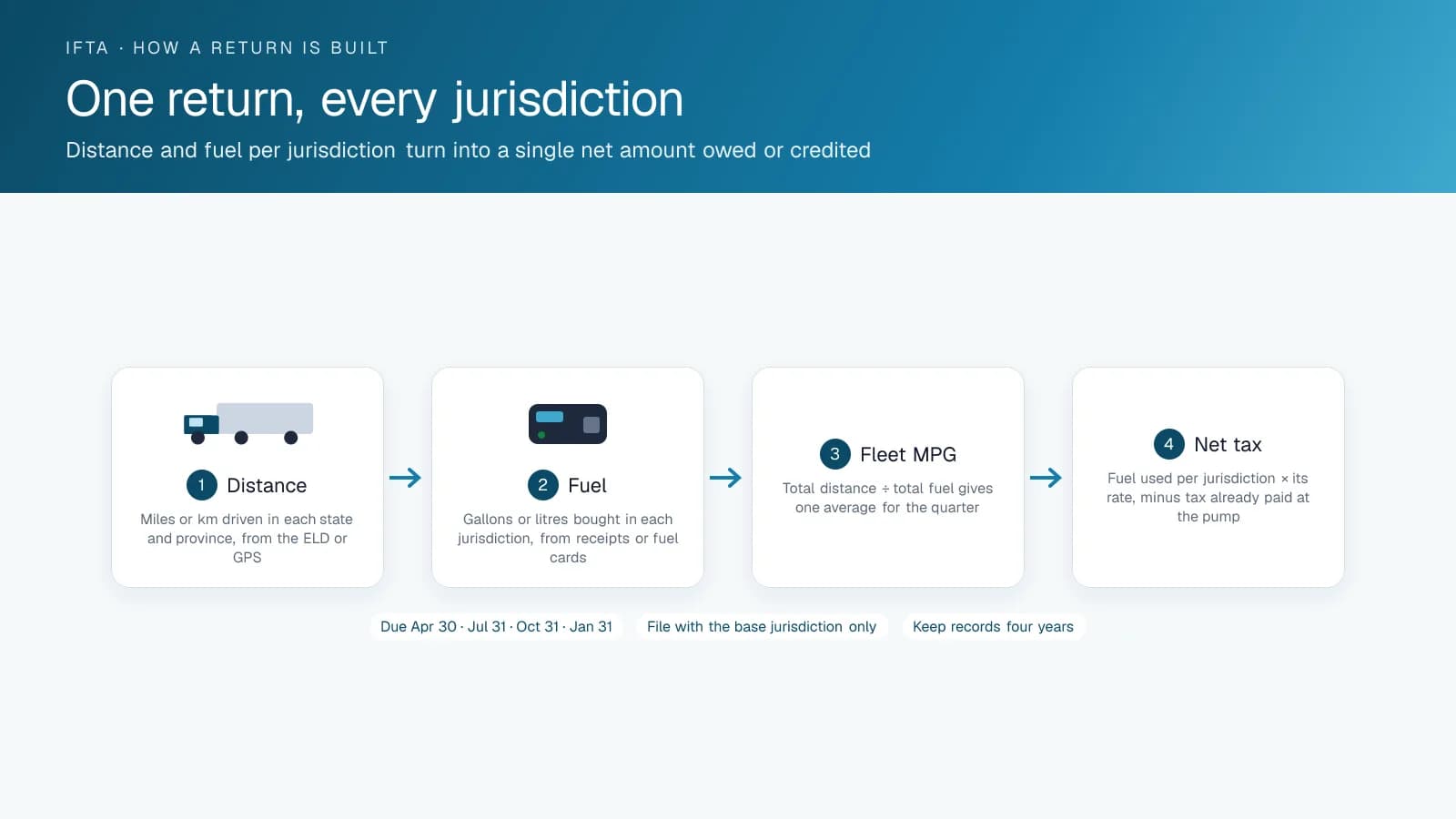
Where You Drove vs. Where You Bought Fuel
The rate matrix only matters once you know two things for each jurisdiction: how many miles you drove there and how much fuel you bought there. The report multiplies your miles in each jurisdiction by your average fuel consumption to estimate the fuel used there, applies that jurisdiction's tax rate, then credits you for tax you already paid at the pump. If you drive a lot of miles in a high-tax jurisdiction but buy most of your fuel in a low-tax one, you'll typically owe more there. Do the reverse and you're often due a credit.
That links fuel-buying habits to IFTA outcomes, whether or not a fleet manager thinks of it that way. Drivers who always fill up in whichever state is cheapest at the pump aren't doing anything wrong. It does mean the quarterly IFTA reconciliation has more work to do in squaring where fuel was bought with where it was burned.
What Mistakes Do Fleets Make With the IFTA Calculation?
Besides using an outdated rate, the frequent errors are mixing fuel types in one bucket (diesel and gasoline miles need to be tracked and reported separately), rounding mileage and fuel purchases differently in the report than on the receipts, and missing a jurisdiction entirely because nobody logged a short pass-through trip. Any of these can draw a closer look during an audit even when the total tax paid is roughly right.
A subtler mistake is applying the wrong quarter's matrix. Your return uses the rates the matrix lists for the quarter you are reporting, not the rate that happens to be current when you file weeks later. If a jurisdiction announces a change partway through a quarter, check your base jurisdiction's instructions for that quarter before you calculate. Carriers based in a Canadian province also report in kilometres and litres rather than miles and gallons.
How GPS Data Removes the Manual Rate-Matching Work
None of this math is complicated, but doing it by hand across dozens of vehicles and a full quarter of driving is tedious and invites mistakes. A telematics platform that already knows when each vehicle crossed each jurisdiction boundary can apply the current rate matrix to real mileage automatically. That fixes the stale-rate problem and the missed-jurisdiction problem at the same time.
Fleets that run short, frequent cross-border trips see the biggest benefit. Those are the trips easiest to under-report by hand, because no single one feels significant enough to track carefully. Automated jurisdiction tracking has no such blind spot: it logs every boundary crossing, however short the trip.
What Should You Check Before Filing IFTA Each Quarter?
A short pre-filing checklist catches most of these errors before they reach a filed report. Confirm you're pulling the current quarter's rate matrix and not a saved copy. Confirm mileage and fuel purchases are split by fuel type wherever a jurisdiction taxes fuels differently. Spot-check a handful of fuel receipts against the purchases you report for each jurisdiction. Then confirm that every jurisdiction your vehicles entered during the quarter, including short pass-through trips, appears in the report.
None of these checks takes long. Skip them, though, and a fleet can file a report that is internally consistent and still wrong. That kind of mistake usually surfaces only when an audit compares your numbers against fuel receipts and toll or weigh-station records that show a different picture.
A Rate Change Between Quarters, Worked
This example shows why each quarter needs its own matrix, using illustrative figures. A jurisdiction raises its diesel rate from $0.20 to $0.24 per gallon at the start of the second quarter.
| Period | Miles in the jurisdiction | Gallons used at 6 MPG | Rate | Tax on fuel used |
|---|---|---|---|---|
| First quarter, old rate | 6,000 | 1,000 | $0.20 | $200.00 |
| Second quarter, new rate | 3,000 | 500 | $0.24 | $120.00 |
| Both quarters, each at its own rate | 9,000 | 1,500 | Per quarter | $320.00 |
| If both quarters were filed at the old rate | 9,000 | 1,500 | $0.20 | $300.00, an underpayment of $20 |
| If both quarters were filed at the new rate | 9,000 | 1,500 | $0.24 | $360.00, an overpayment of $40 |
Frequently asked questions
Do IFTA tax rates change every quarter?
They can. IFTA, Inc. publishes an updated rate matrix every quarter, and each member jurisdiction is free to change its rates between quarters. A rate that was correct last quarter isn't guaranteed to be correct now, so pull the current matrix for every filing instead of reusing a saved rate table.
Are diesel and gasoline taxed at the same rate under IFTA?
Not necessarily. Many jurisdictions set different rates for different fuel types, including diesel, gasoline and propane. Fleets running mixed fuel types need to track and report mileage and fuel purchases by fuel type as well as by jurisdiction, because lumping them into one bucket is a common filing error.
Where can I find the current IFTA rate matrix?
IFTA, Inc. publishes the current quarterly rate matrix on its official site, and that is the authoritative source. A spreadsheet saved from a previous quarter isn't, because jurisdictions change their rates. Check the matrix for the quarter you're filing, organized by jurisdiction and fuel type, before you calculate what you owe.
What happens if a jurisdiction changes its rate?
Use the rate the IFTA, Inc. matrix lists for the quarter you are reporting, not the rate current when you file. If a change takes effect partway through a quarter, check your base jurisdiction's instructions for that quarter. Reconciling mileage and fuel data close to when trips happen also keeps each quarter's numbers clean.
Sources
Related solutions & products
Continue reading
- Compliance (ELD, DVIR, IFTA) overview →
- BlueArrow Fuel: Reconciling Fuel Card Transactions Against the Vehicle's Tank →
- Who Needs IFTA? The Qualified Motor Vehicle Definition, Axle by Axle →
- IFTA Reporting Software: How High Point GPS Automates Fuel Tax Reports →
- Who Needs IRP? Apportioned Registration Requirements and How to Apply →
- More in Compliance →
Get a free quote
- Over 500 fleets
- Since 2013
- 4.9 on Google (19 reviews)
What are you looking for?
Prefer to talk?Call 1-800-613-6323[email protected]