
Video Safety & Dash Cams
High Point GPS Dash Cams: How AI Video Integrates With the Platform
High Point GPS does not sell one dash cam; it deploys a platform that cameras plug into. Here is how a camera connects through the GPS tracking device, how events from the truck request the video, what the safety manager sees in the High Point GPS platform, and how to choose a camera for it.
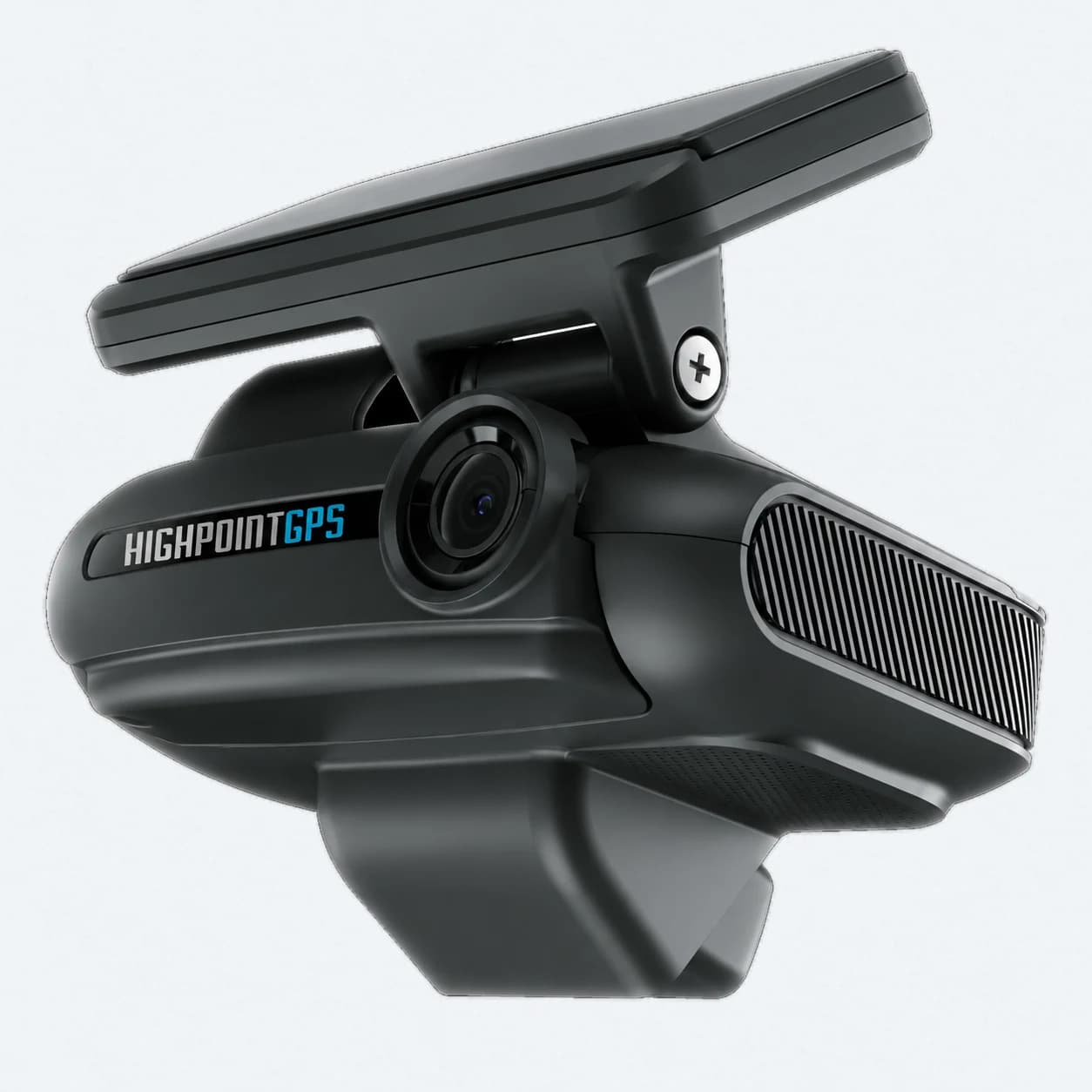
A Platform, Not a Camera
The platform's approach to video is the same as its approach to everything else: the GPS tracking device is the hub, the High Point GPS platform is the software, and the camera is an add-on that connects through the IOX port and the add-on library. That is why 'High Point GPS dash cam' returns several products rather than one. A fleet chooses a camera that integrates with the platform, High Point GPS's own Dual Dash AI Camera is one — and the platform does the rest: the events that trigger video, the place the clips land, the driver they attach to, the reports that show it all.
How the Camera Connects
The camera mounts on the windshield and connects to the GPS tracking device's IOX port, which supplies power and a data link. Through that link the camera receives the device's events and the platform's requests, and sends its clips up through the camera's cellular connection or the tracking device's. Installation is the GPS tracking device's plug-in install plus a cable run to the windshield; a five-camera system adds side and rear units on the same principle.
Events From the Truck Request the Video
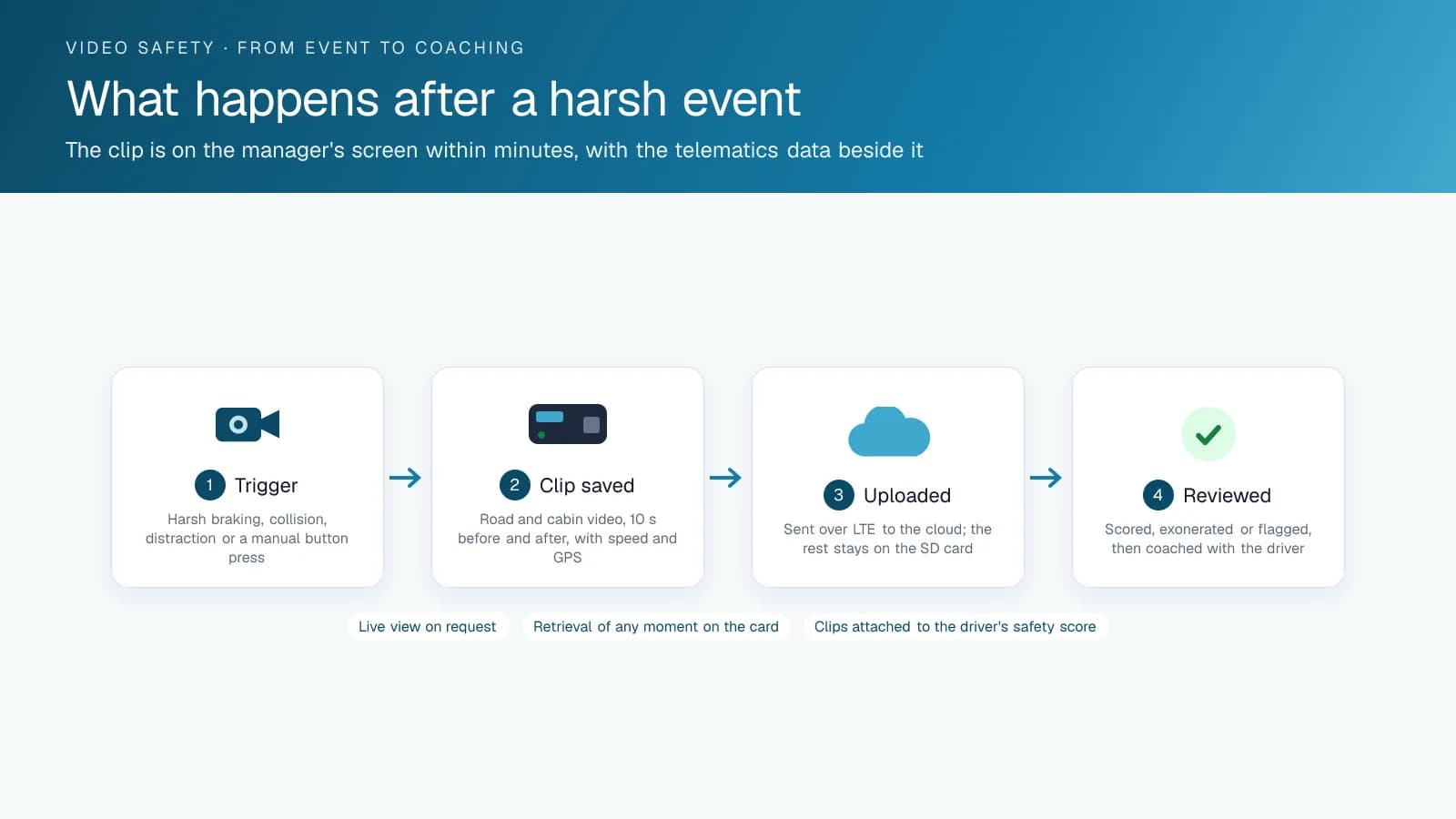
The GPS tracking device already detects harsh braking, harsh acceleration, cornering, speeding and collisions, calibrated per vehicle. When one occurs, the platform requests the clip around that moment from the camera, and the clip arrives in the High Point GPS platform tagged to the vehicle, the driver logged in at the time, the location and the event. The camera's own AI adds events the device cannot see — distraction, phone use, following distance, seat belt, drowsiness — with an in-cab alert to the driver in the moment, and those events request clips the same way.
A safety manager can also request video from any time window from the platform, which is how a customer's complaint or a damage claim at a dock gets looked at without a call to the driver.
What You See in the High Point GPS Platform
Where the video shows up, and what it is attached to.
| In the High Point GPS platform | What it gives you |
|---|---|
| Event with a clip | The harsh event, the map position, the speed trace and the video, together |
| Driver's safety scorecard | Camera-detected events alongside device events, per driver |
| Coaching workflow | Assign a clip to a coaching session; track it to completion |
| Video request | Any time window, any vehicle, from the platform |
| Exception rules | Alert a manager on a collision, on repeated distraction, on a camera going offline |
| Retention and access | Who can view and export, for how long |
Choosing a Camera for the High Point GPS Platform
Start with the events you want detected in the camera — distraction and following distance are the ones that change behaviour — and whether you need driver-facing at all. Then coverage: a dual camera for most vehicles, five for trucks with blind spots. Then the practical questions: night quality, tamper detection, how the camera behaves out of coverage, and who installs and supports it. Because the camera is an add-on rather than the platform, a fleet can change cameras later without changing anything else, which is the argument for choosing the platform first and the camera second.
Cameras That Integrate With the High Point GPS Platform, Compared
The cameras High Point GPS installs on its platform, and where each one fits. All report events into the platform and attach clips to the driver and vehicle.
| Camera | Channels | Strengths | Typical fleet |
|---|---|---|---|
| Dual Dash AI Camera | Road and driver | Deepest platform integration, provisioned from the platform, installed and supported by the same team as the GPS tracking device | Fleets wanting one login and one support line |
| Lytx Surfsight AI-12 | Road and driver, plus auxiliary | Detection tuned on a large video dataset, side and rear channels | Trucking, fleets that know Lytx |
| Rosco Vision DV6 | Road and driver, plus auxiliary | OEM-grade hardware for buses and outdoor vehicles, more inputs | School bus, transit, municipal |
Frequently asked questions
Does High Point GPS make its own dash cam?
High Point GPS provides the platform; cameras from several makers connect to it through the GPS tracking device's IOX port and the add-on library. High Point GPS's own Dual Dash AI Camera is one built for it, with a five-camera system for trucks.
How does the camera know when to save a clip?
The GPS tracking device's own events — harsh braking, collision, speeding — request the clip around that moment, and the camera's AI adds distraction, phone, following-distance and seat-belt events. A manager can also request any time window from the High Point GPS platform.
Where does the video appear?
In the High Point GPS platform, attached to the event, the vehicle, the driver logged in at the time and the map position, and on the driver's safety scorecard with a coaching workflow.
Can I switch cameras later without changing platforms?
Yes. The camera is an add-on to the GPS tracking device and the High Point GPS platform, so a fleet can change or add cameras while the platform, events and reports stay the same.
Related solutions & products
Related terms
Continue reading
- Dash Cams & AI Video Safety overview →
- Dual Dash AI Camera: Our AI Dash Cam and How It Coaches in the Cab →
- What Is the High Point GPS Platform? A Guide for Fleet Managers →
- Authorized Driver Tool: Only Approved Drivers Can Start the Vehicle →
- How Does the GPS Tracking Device Work? From the Diagnostic Port to the Dashboard →
- More in Video Safety & Dash Cams →
Get a free quote
What are you looking for?