
GPS Fleet Tracking & Telematics
What Is the High Point GPS Platform? A Guide for Fleet Managers
The High Point GPS platform is what sits underneath our fleet tracking, video safety, and compliance tools. Here's how the pieces fit together.

What High Point GPS Actually Is
The High Point GPS platform is commercial telematics: hardware and software that turn vehicle data into fleet tracking, safety, and compliance tools. It's the underlying technology behind everything High Point GPS installs, customizes, and supports, and it runs on one of the largest telematics platforms in the world, which is worth knowing since it means the platform underneath your fleet isn't a small, unproven vendor.
There are two core pieces. The GPS tracking device is the hardware: it plugs into a vehicle's diagnostic port and streams location, speed, trip, and engine data in near real time. The High Point GPS platform is the software side, the web-based dashboard where that data actually becomes useful: live maps, driver behavior scoring, engine fault alerts, maintenance reminders, and custom reports, available under any package rather than gated behind a premium tier.
Why the Platform Is Built to Be Open
What sets the High Point GPS platform apart from some competitors is that it's built as an open platform rather than a closed box. A public SDK and a large add-on library of first- and third-party add-ins mean the platform connects to fuel cards, dispatch software, cameras, and other tools instead of forcing everything into one vendor's walled garden. That openness is also what makes custom Add-Ins, like our own GeoDocs, possible in the first place.
This openness also shows up in how the hardware itself expands. The IOX port built into every GPS tracking device accepts cameras, sensors, and other accessories without needing to replace the base unit, so a fleet that starts with basic tracking can add capability over time rather than committing to everything (or nothing) on day one.
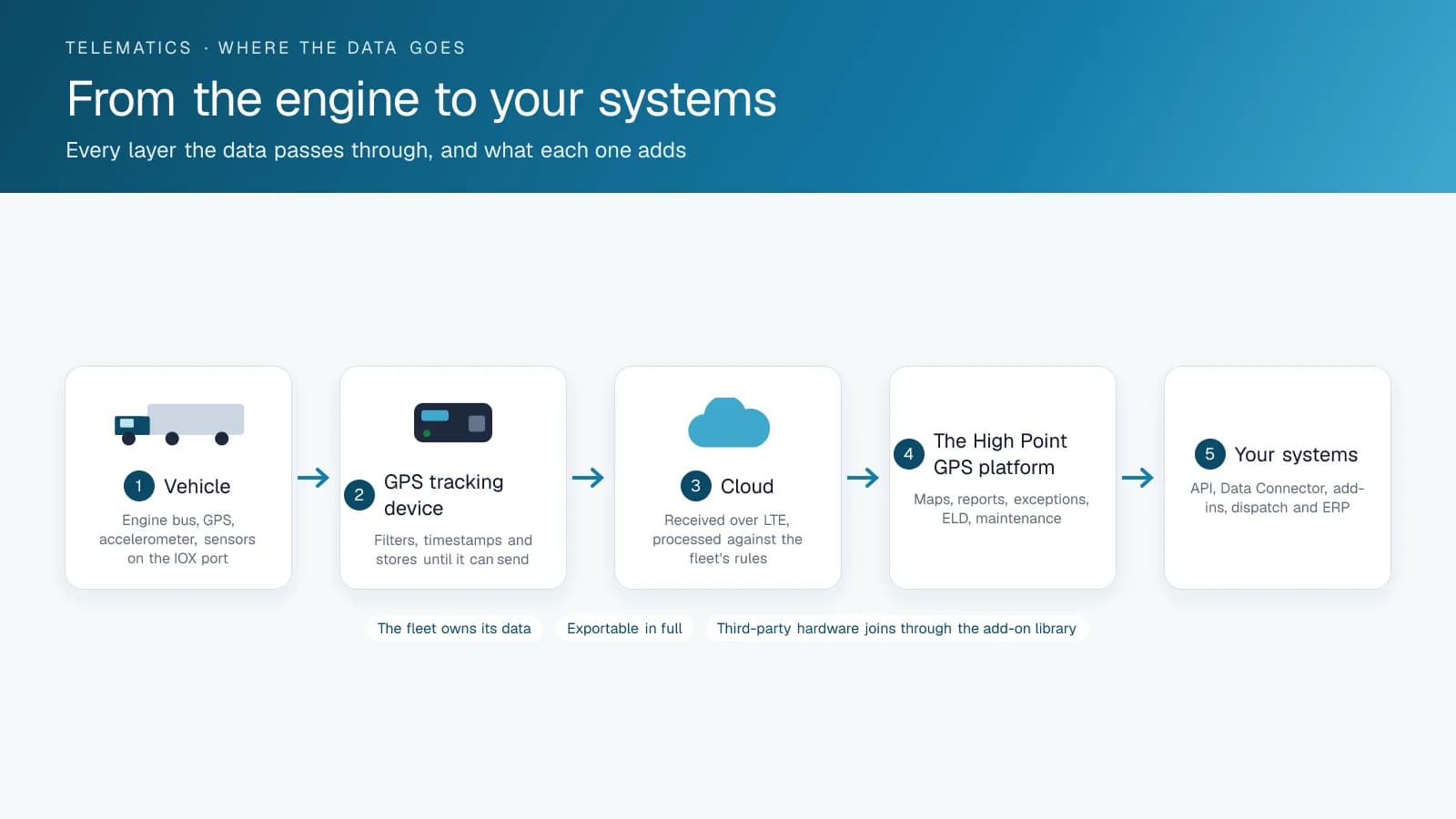
Where High Point GPS Fits In, and Where to Start
This is also where High Point GPS's own role actually matters. The device and the platform are the foundation; we do the rest. We scope your fleet, recommend the right hardware and software package, handle installation across Canada and the US, and stay available for support after go-live, including building custom tools when an off-the-shelf add-in from the add-on library doesn't quite fit how your team works.
If you're new to the platform, the practical starting point is usually the GPS tracking device plus standard High Point GPS platform reporting, then layering on video safety, compliance (ELD/DVIR/IFTA), or custom Add-Ins as specific needs come up, rather than trying to configure everything on day one.
That staged approach also tends to produce better internal adoption. A team learning live tracking and basic reporting first, then adding compliance and safety modules once the basics are second nature, ends up using the platform daily. A team handed every module at once more often reverts to old habits after the initial training session.
It's also worth deciding upfront who on your team owns which part of the platform. A dispatcher checking live location daily, a safety manager reviewing driver scoring weekly, and whoever handles compliance reporting quarterly are all using the same High Point GPS platform login for genuinely different reasons, and being clear about that from the start avoids the platform becoming any one person's sole responsibility by default.
The Pieces, Named
The names that come up in the first month with the platform, and what each one is.
| Name | What it is |
|---|---|
| GPS tracking device (standard, GPS Tracking Device Plus, rugged GPS tracking device) | The telematics device that plugs into the vehicle and reports |
| The High Point GPS platform | The web platform: map, reports, rules, maintenance, users and groups |
| The driver app | The driver app: ELD hours of service, DVIR, messaging, add-ins |
| IOX port | The expansion port on the GPS tracking device for cameras, driver ID, sensors and modules |
| Add-on library | The catalogue of add-ins, hardware and integrations from High Point GPS and partners |
| Add-In | Software that extends the High Point GPS platform or the driver app, such as GeoDocs |
| Add-On | Hardware that connects through the IOX port, such as a camera |
| Rules and exceptions | The conditions the fleet sets, and the events recorded when a vehicle breaks one |
| Groups | The fleet's own structure in the platform: depots, departments, regulatory classes |
| Data Connector and API | The two ways the fleet's data reaches its own tools |
| Fleet tracking provider | The partner, such as High Point GPS, that sells, installs, configures and supports it |
Frequently asked questions
Does High Point GPS make the tracking device and the platform itself?
No. The GPS tracking device and the High Point GPS platform are built on an established telematics platform. High Point GPS is the company that scopes, installs, customizes, and supports that platform for fleets in Canada and the US.
What's the difference between the GPS tracking device and the High Point GPS platform?
The GPS tracking device is the physical hardware that plugs into a vehicle and collects data. The High Point GPS platform is the web-based software where that data is displayed, reported on, and acted on. Every High Point GPS package includes both.
Can High Point GPS integrate with software we already use?
Usually, yes. The platform's public SDK and open data architecture mean it commonly connects with fuel cards, dispatch or TMS software, and accounting systems, and High Point GPS can build a custom integration when a pre-built connector doesn't already exist.
Should a new fleet turn on every High Point GPS platform module right away?
Usually not. Starting with core tracking and reporting, then adding compliance and safety modules as specific needs come up, tends to produce better team adoption than rolling everything out at once.
Sources
Related solutions & products
Related terms
Continue reading
- GPS Fleet Tracking & Management Software overview →
- How Much Does High Point GPS Cost? Pricing, Hardware, and Subscriptions Explained →
- IOX-NFCREADERA: Driver ID by NFC Tap, So Every Trip Has a Name on It →
- Authorized Driver Tool: Only Approved Drivers Can Start the Vehicle →
- Keyless and Keyless Lite: Phone-as-Key for Shared Fleet Vehicles →
- More in GPS Fleet Tracking & Telematics →
Get a free quote
What are you looking for?