
Video Safety & Dash Cams
Driver Safety Course for Fleets: What It Costs and Which Kind Changes Behaviour
A driver safety course costs a fleet least online and most behind the wheel. Which kind changes behaviour, and how to assign it to the drivers who need it.
How Much Does a Driver Safety Course Cost?
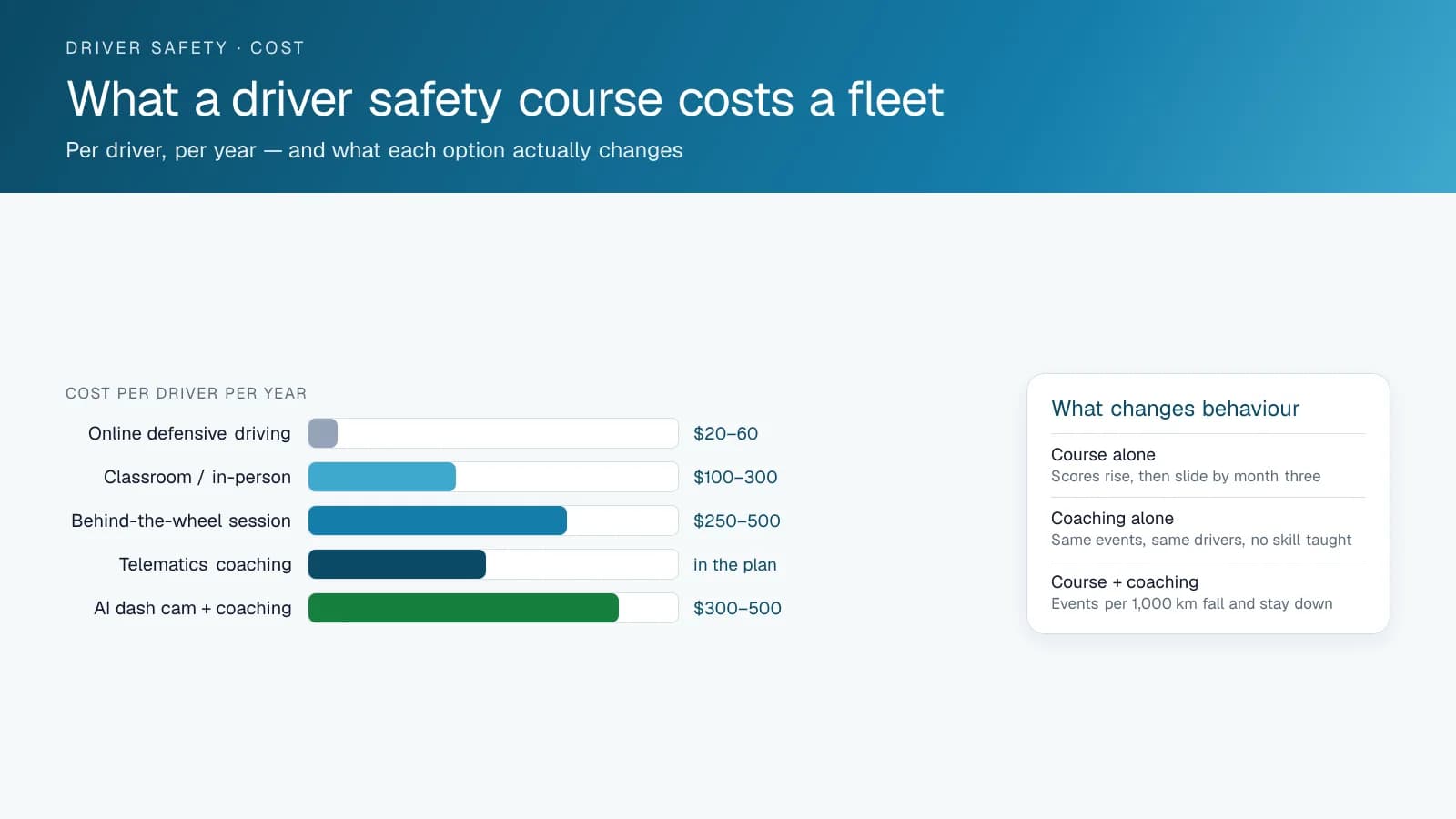
Per driver, a driver safety course costs a fleet least as an online module, more as an instructor-led session and most as behind-the-wheel training, so ask providers for current quotes in your currency. Online defensive driving and fleet safety modules are the kind a learning management system assigns and tracks, and some commercial insurers offer driver training to the fleets they insure through their risk services. Instructor-led sessions, in a classroom or virtual, usually run in groups. Telematics coaching, where a manager reviews the driver's events from the GPS tracking device and coaches on them, costs nothing beyond the tracking plan you already pay for and the manager's hour a week. An AI dash cam adds a camera plan and hardware cost per vehicle, and brings video into the coaching.
Which Kind of Driver Safety Course Changes Behaviour?
A course delivers knowledge and a certificate. It proves a driver was trained, which an insurer, a regulator and a plaintiff's lawyer will each ask for. A course can't notice when the driver stops applying what they learned, so scores often improve right after a course and then drift back once nothing reinforces the lesson. Coaching from telematics and camera events corrects specific moments with evidence and catches that drift. It doesn't teach the skill behind the event, though, so coaching alone keeps correcting the same drivers for the same things.
What Combination Lowers Collision Rates?
Fleets whose events per thousand kilometres fall and stay down use telematics data to decide who takes which course. The driver with tailgating events gets the following-distance module, the one with phone events gets the distraction module, and next month's data shows whether it took. Some training integrations available for the platform assign the module on their own when events cross a threshold. You pay the course price for the drivers who need it, not the whole fleet every year, plus a manager's weekly review, and the return shows up in the collision rate and at insurance renewal.
How Should a Fleet Budget for Driver Safety Training?
Take a fleet of thirty drivers that budgets for targeted online modules only for the drivers whose events call for them, one instructor-led session a year for new hires, and a manager's hour a week for event review. That program costs far less than putting every driver through every course, and a single at-fault collision can cost more than the whole program once repairs, downtime and the claim are counted. High Point GPS configures the driver scoring and camera events that show who needs what, and connects training assignment where the fleet's platform supports it.
Matching the Event to the Module
Targeting keeps the program cheap: map each event your telematics and cameras record to the course that addresses it.
| Event pattern | Assigned training | Relative cost per driver |
|---|---|---|
| Following-distance and forward-collision alerts | Space management and following distance module | Low, online |
| Phone use and distraction events | Distracted driving module plus a supervisor conversation | Low, online |
| Speeding exceptions | Speed and hazard perception module | Low, online |
| Harsh cornering and braking | Vehicle handling and load dynamics session | Moderate, instructor-led |
| Seat belt events | Policy review, no course; camera alert continues | No course cost |
| Collision or near-miss | Behind-the-wheel evaluation | Highest, in the vehicle |
| New hire | Orientation plus defensive driving | Moderate |
Frequently asked questions
How much does a driver safety course cost per driver?
Online modules cost the least, instructor-led sessions more, and behind-the-wheel training the most, and prices vary by provider, province or state and currency, so get current quotes. Some commercial insurers offer driver training to the fleets they insure. Assigning courses only to drivers whose events call for one keeps the total down.
Are driver safety courses free through insurers?
Sometimes. Some commercial insurers offer driver training to the fleets they insure through their risk services, and terms vary by insurer, so ask your broker at renewal before you buy a course library. Use what the insurer provides for common events and save paid sessions for drivers who need more.
Does a driver safety course reduce collisions?
Often only briefly on its own. Scores tend to improve right after a course and drift back, because nothing notices when the driver stops applying it. Paired with telematics coaching on the driver's own events, the improvement is far more likely to hold.
What does telematics coaching cost?
Nothing beyond the tracking plan you already pay for and about an hour a week of a manager's time reviewing events. Adding an AI dash cam adds a camera plan and hardware per vehicle, and brings video into the coaching.
Which drivers should take a course?
The drivers whose telematics and camera events show a specific behaviour, each assigned the module that addresses it. A driver with tailgating events gets the following-distance module, for example, and one with phone events gets the distraction module. That costs less than putting the whole fleet through courses on a calendar.
Sources
Related solutions & products
Continue reading
- Dash Cams & AI Video Safety overview →
- What Is a Driver Safety Program? How Fleets Build One That Works →
- 4G Fleet Dash Cams as Driver Monitoring Cameras: How Behaviour Events Reach the Manager →
- Best Dash Cam for Fleets: Features to Look For Beyond Consumer Models →
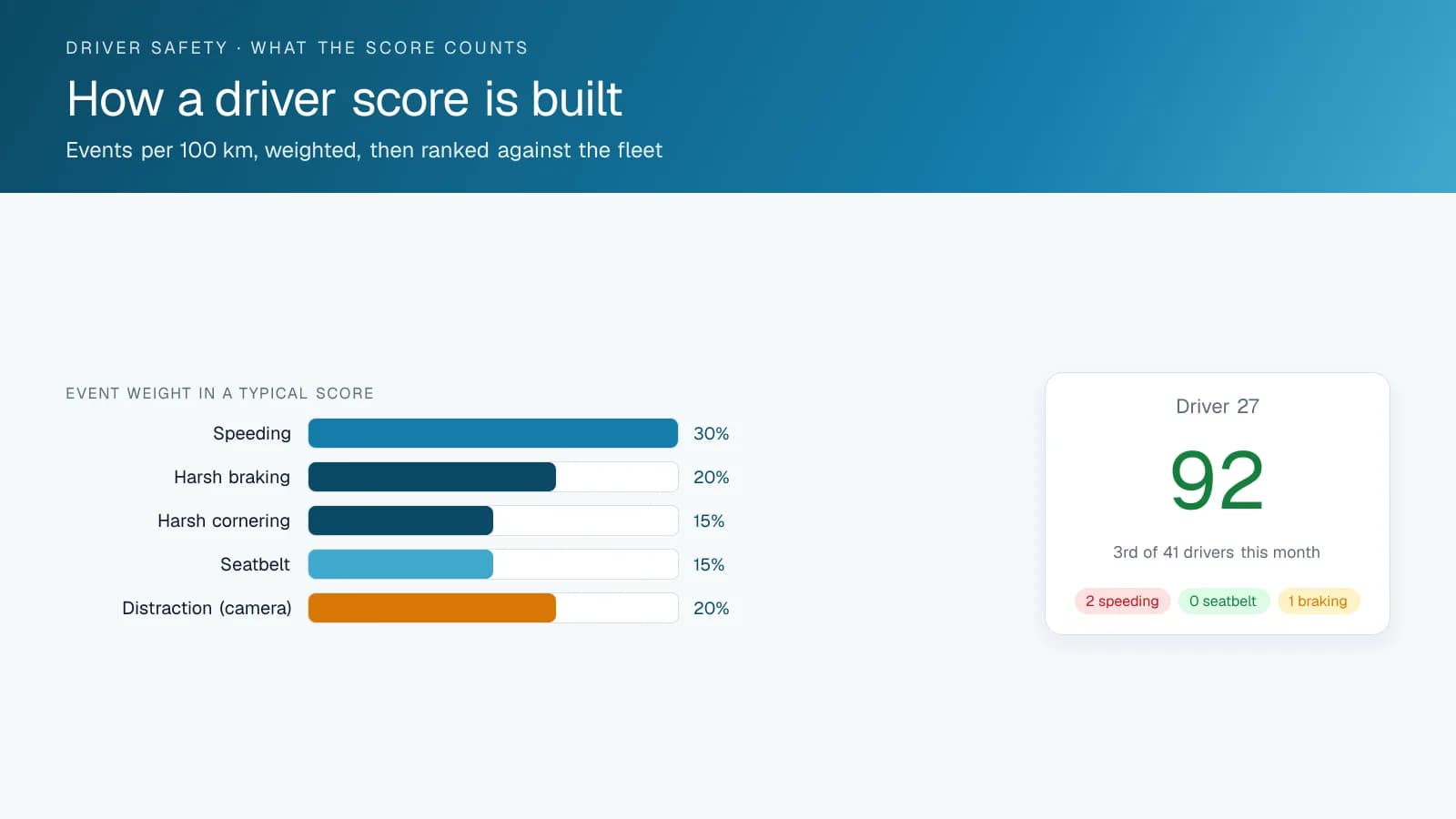
- Driver Safety Scorecard: How Driver Scoring Works for Fleets →
- More in Video Safety & Dash Cams →
Get a free quote
- Over 500 fleets
- Since 2013
- 4.9 on Google (19 reviews)
What are you looking for?
Prefer to talk?Call 1-800-613-6323[email protected]