
GPS Fleet Tracking & Telematics
Fleet Maintenance Schedule: Engine Hours vs Calendar and Mileage
A fleet maintenance schedule built on engine hours follows real use, so busy trucks get serviced sooner and idle ones skip shop visits they don't need yet.

Why Does Calendar-Based Fleet Maintenance Fall Short?
For most fleets, engine hours make a better clock for a fleet maintenance schedule than the calendar, because they measure how much each vehicle has worked. A schedule built on "every three months" or "every six months" assumes every vehicle in the fleet works about the same amount, and that is rarely true. Two identical trucks bought the same month can wear at very different rates: one runs long routes daily, the other sits in the yard as a backup. A calendar services both on the same clock, so the light-use vehicle gets too much maintenance and, worse, the busy one gets too little.
Over-maintaining sounds like the safer mistake, but it costs you too. Every unnecessary shop visit is unnecessary downtime, and a truck off the road for a service it didn't need yet earns nothing that day.
What Does Engine-Hour Scheduling Track?
Engine-hour tracking uses a telematics device to record runtime, meaning how long the engine has been running, in place of days since purchase or since the last service. The same device reads diagnostic trouble codes from the engine control module. Put together, a maintenance manager gets two real signals in place of one guess: how much a vehicle has been used, and whether it is already throwing a fault code that needs attention.
That picture differs from odometer mileage alone. In delivery, utility and trades work, engines often run while the vehicle is parked, for power or for heating and cooling. Those vehicles build up engine wear without covering much distance, and a maintenance plan based only on mileage misses that wear completely.
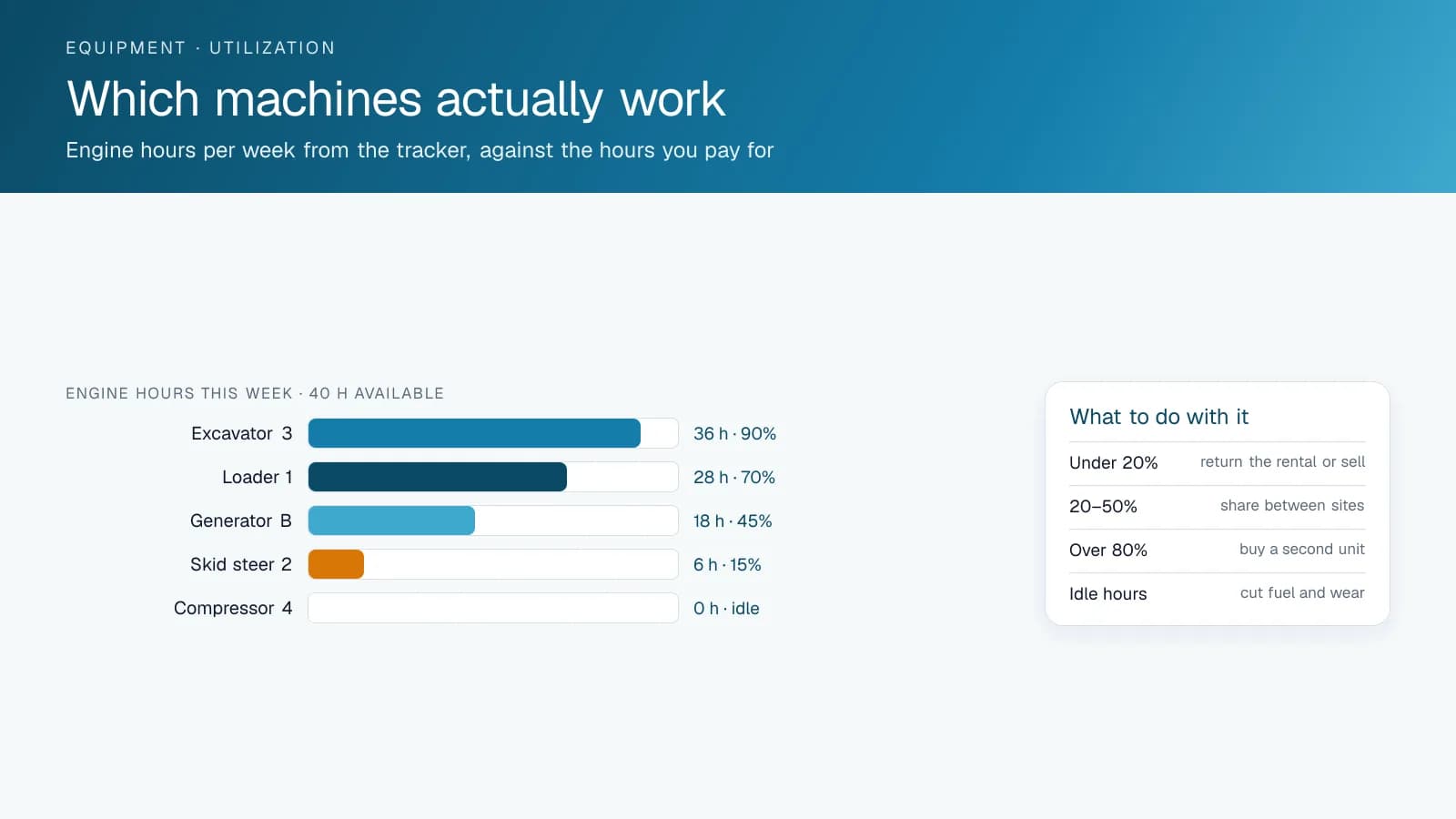
Setting Fleet Maintenance Schedule Intervals That Fit Your Fleet
Start with the manufacturer's recommended intervals. They are built for average conditions, though, and your conditions may not be average. A fleet working in extreme heat, cold or dust, or hauling heavy loads day after day, usually needs service more often than the manufacturer's baseline. Adjust once you have enough engine-hour and fault-code history on your own vehicles to see where problems tend to appear.
In practice, keep the manufacturer's baseline for the first several months and watch what your fault-code and breakdown history shows. If one vehicle type or route keeps developing issues before the scheduled interval comes up, you have real evidence to tighten the interval for that group, which beats any generic industry rule of thumb.
Turning Fault Codes Into Action Before a Breakdown
Engine-hour and diagnostic data also help you catch a developing problem before it turns into a roadside breakdown. A fault code that keeps showing up across a few trips tells you far more than a driver mentioning a dashboard light once in passing. When the platform flags that pattern automatically, the vehicle goes into the shop on a planned visit instead of an emergency one.
Telling a pattern from a one-off is something a fleet management platform does well and a busy driver or dispatcher does poorly. One fault code reading might be a sensor glitch. The same code across three consecutive trips is a developing issue. Fleets that treat both cases the same, by ignoring both or overreacting to both, end up with a lot of avoidable downtime or avoidable breakdowns.
What Does a Missed Maintenance Window Cost?
An unplanned breakdown costs you the repair and the load or job it disrupts. Missed maintenance also has a compliance side. If skipped routine maintenance leads to a defect on a DVIR, a minor issue can become an out-of-service order at a roadside inspection. Engine-hour scheduling and DVIR reporting fit together well because both draw on the same vehicle-condition data.
Resale and total cost of ownership come into it as well. A documented maintenance history tied to engine-hour and fault-code records, instead of a loose paper trail, tends to support a stronger resale value. It also gives whoever manages the fleet's assets a clearer view of each vehicle's condition when deciding whether to keep repairing it or replace it.
Two Identical Trucks, One Year Apart
Here is the same model, bought the same month, as the platform reports them after a year. The calendar would have serviced both four times.
| Measure | Truck 14: regional delivery | Truck 15: yard and backup |
|---|---|---|
| Distance | 68,000 km | 9,500 km |
| Engine hours | 2,150 | 610 |
| Idle hours | 640 | 380 |
| Fault codes in the year | 9, three recurring | 1 |
| Oil changes on the calendar | 4 | 4 |
| Oil changes on engine hours (every 300 h) | 7 | 2 |
| What the calendar did | Under-serviced by three changes; one DPF fault became a tow | Over-serviced by two changes; four days of downtime for nothing |
| Cost of the difference | About $4,800 in tow and repair | About $900 in unnecessary service and lost days |
Frequently asked questions
Should calendar-based maintenance be dropped entirely in favour of engine hours?
Not entirely. Some items, such as certain fluids and rubber components, degrade with time whether or not the vehicle is used. A hybrid approach usually works better than either method alone: engine hours for wear-related service, and calendar checks for parts that age on their own regardless of how much the vehicle runs.
Does engine-hour maintenance data connect to DVIR reporting?
Yes. On the High Point GPS platform, engine-hour maintenance and DVIR reporting draw on the same vehicle diagnostic and inspection data. A maintenance issue and a defect reported on a DVIR sit in one system instead of two separate ones, so your shop and your compliance team are looking at the same record of the vehicle.
How much advance notice do engine-hour maintenance alerts typically give?
That depends on where you set the alert threshold. Set it early enough that you can book the service during a planned downtime window, instead of reacting after a fault code has already escalated. The aim is proactive service on your schedule, before the vehicle forces an unplanned stop.
Can idle time affect maintenance scheduling even if a vehicle doesn't rack up much mileage?
Yes. Engine hours build up during idling the same way they do while driving. A vehicle that idles for long periods to run equipment or keep the cab heated or cooled can need service sooner than its odometer reading alone would suggest, which is why mileage-only schedules miss this wear.
Related solutions & products
Continue reading
- GPS Fleet Tracking & Management Software overview →
- What Is Fleet Maintenance Software (CMMS)? Preventive Service on Real Engine Hours and Kilometres →
- CVIP Inspections in Alberta and BC: Who Needs One, How Often and Where →
- How to Build a Preventive Maintenance Program for Your Fleet →
- GPS Fleet Tracking Buyer's Guide and Checklist →
- More in GPS Fleet Tracking & Telematics →
Get a free quote
- Over 500 fleets
- Since 2013
- 4.9 on Google (19 reviews)
What are you looking for?
Prefer to talk?Call 1-800-613-6323[email protected]