
GPS Fleet Tracking & Telematics
Electric Fleet Vehicles: What to Know Before You Transition
Before fleet electrification, compare total cost of ownership, check route duty cycles against real range and plan where electric fleet vehicles charge.
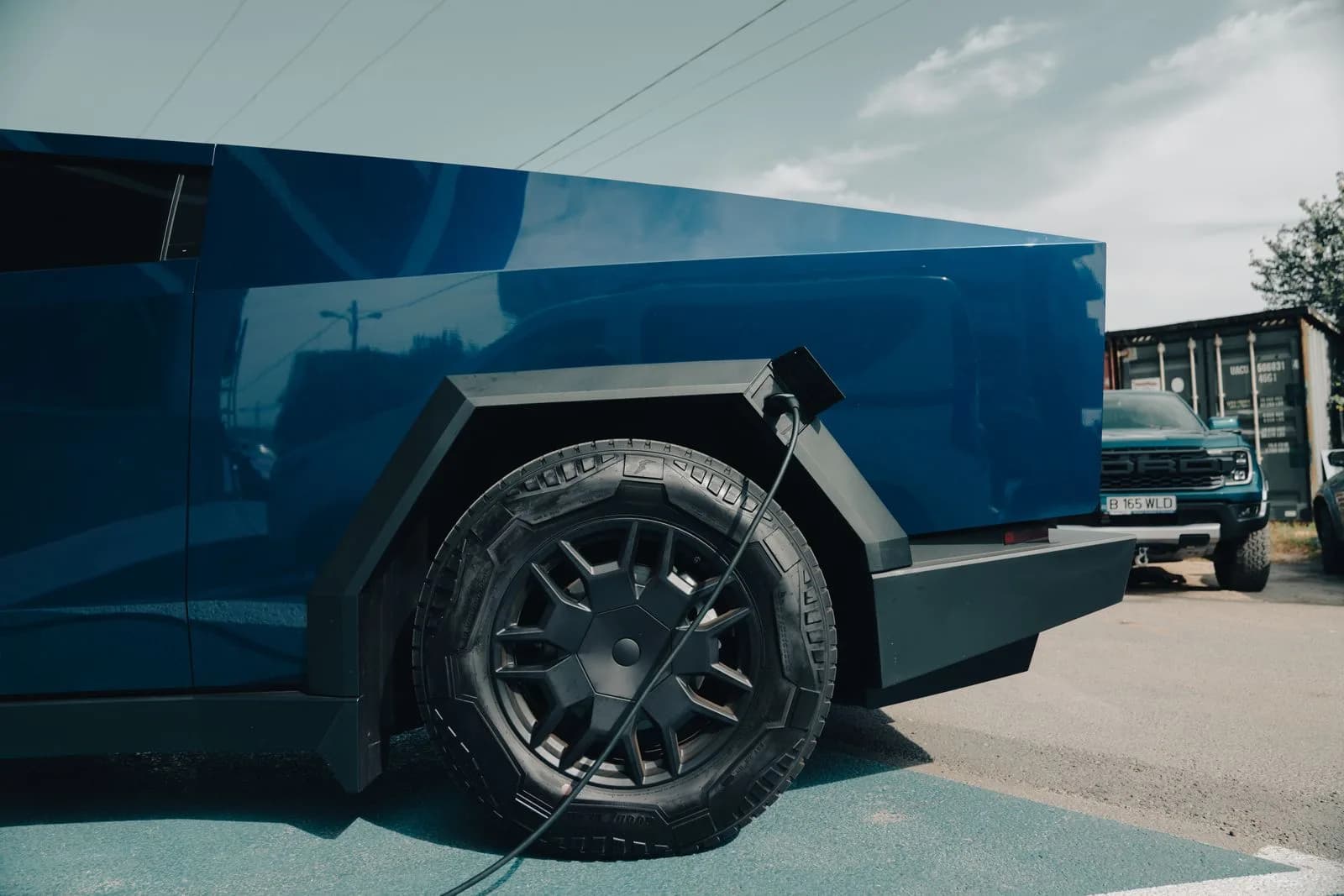
What Should You Know Before Moving to Electric Fleet Vehicles?
Three things decide whether electric fleet vehicles will work for you: total cost of ownership over the vehicle's life, whether each route's real duty cycle fits within an EV's range, and whether you can charge the vehicles where and when they sit. You make that call vehicle by vehicle and route by route, with no need to switch the whole fleet at once. Fleets that do it well start by finding the specific vehicles that make good candidates, and the best data for that is already in your current fleet's telematics.
So the question to ask is narrower than whether EVs work in general. Do they work on these routes, driven this way, charged here? A route that looks marginal against a spec-sheet range figure may sit comfortably within reach once you see how far the vehicle travels on a typical day. A route that looks fine on paper may fall short once you account for its real duty cycle and payload.
Why Compare Total Cost of Ownership Instead of Sticker Price?
An electric vehicle usually costs more up front than a comparable diesel, so the fair comparison is total cost of ownership over the years you'll keep it. Against the higher purchase price you weigh lower energy costs and simpler maintenance (no oil changes, fewer moving parts in the drivetrain), plus any purchase incentives where you operate. In the US, the Department of Energy's Alternative Fuels Data Center tracks available programs. In Canada, Transport Canada has run the federal purchase incentives for zero-emission vehicles, and Natural Resources Canada has funded charging infrastructure. Incentives vary a lot by jurisdiction and change over time, so check the current programs before you count on one.
Fleets most often underestimate charging in the TCO math, because the cost goes beyond electricity to infrastructure. Depot charging hardware and the electrical work behind it are real capital costs. The practical limit is often whether vehicles sit idle long enough overnight or between shifts to recharge on the chargers you can install. If a vehicle's duty cycle leaves no charging window, it is a poor candidate no matter how good the energy savings look.
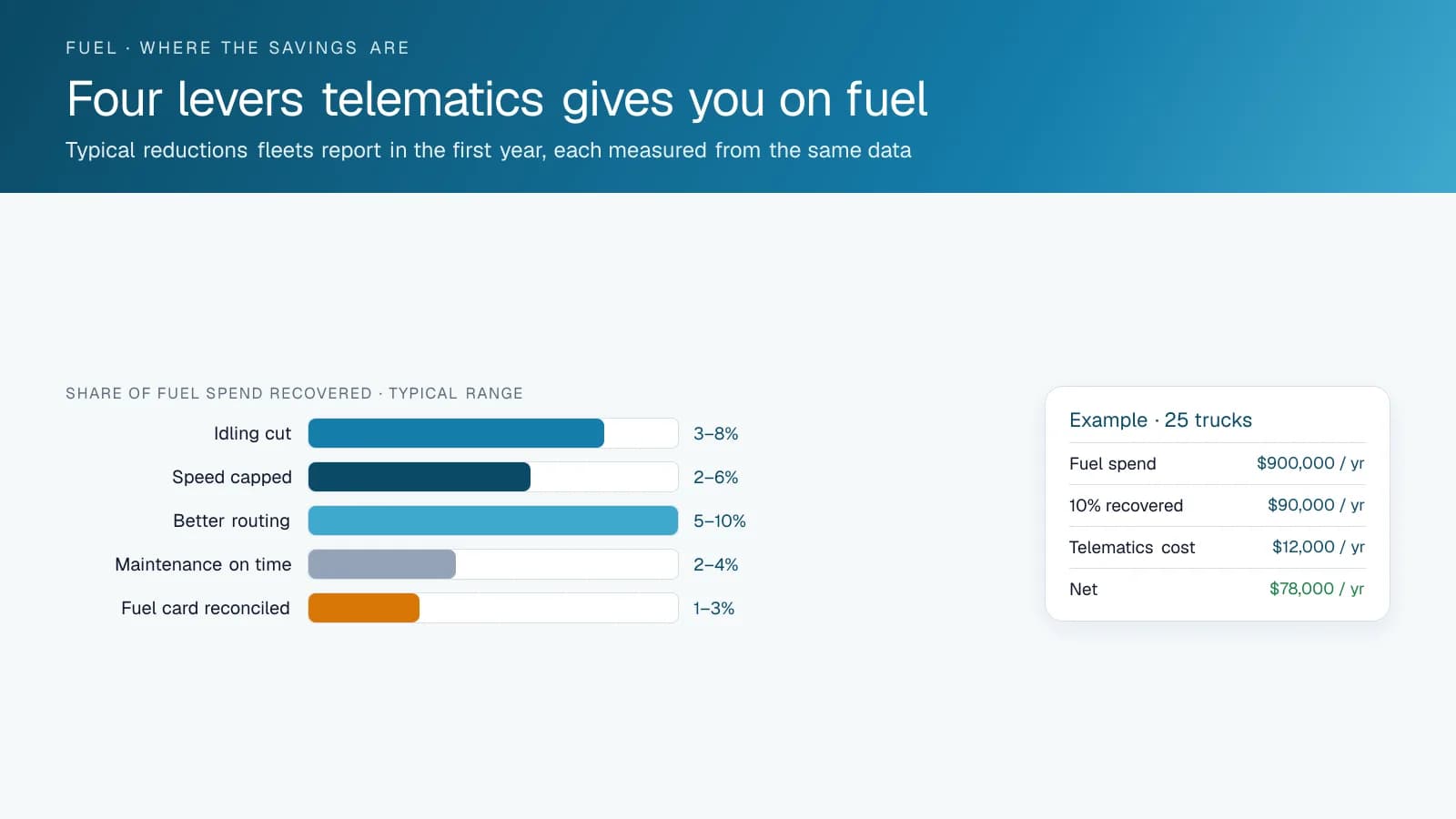
How Telematics Data Picks Your EV Fleet Candidates
Telematics on your current diesel or gas vehicles is the deciding tool here. The data you already collect (daily distance, route patterns, dwell time at the depot, idling) describes the exact duty cycle each vehicle runs. That is a far more reliable basis for an electrification decision than a manufacturer's range estimate under ideal conditions. A vehicle that reliably stays well inside an EV's real-world range and parks long enough to charge is a strong candidate. One that runs long, unpredictable distances with no charging window is a weak one, and your own trip history shows which is which.
The Electric Vehicle Suitability Assessment, available on the High Point GPS platform, runs this analysis on a fleet's existing telematics data, matching real driving patterns to suitable EV models, range capability and cost of ownership. You can use the formal assessment or work through the data yourself. Either way, electrify the vehicles your operating data says will work, prove the case on those, and expand from the results. Keep the comparison vendor-neutral and based on your own numbers, because the right answer differs from one fleet, and one route, to the next.
Candidate or Not: Reading the Duty Cycle
These telematics measures sort a fleet's light and medium vehicles into candidates and non-candidates, with the thresholds fleets commonly use. The exact figures depend on the EV model and the climate, but the test itself stays the same.
| Measure from telematics | Strong candidate | Weak candidate |
|---|---|---|
| Daily distance, 95th percentile | Under 70% of the EV's winter range | Regularly beyond the range, or unpredictable |
| Overnight dwell at a depot | 10 hours or more, most nights | Vehicle taken home with no charging, or on the road overnight |
| Idle time | High; an EV idles for free | Low |
| Route pattern | Repeating, urban or suburban, many stops | Long, variable, rural |
| Payload and towing | Light | Heavy or towing daily |
| Climate exposure | Parked indoors or plugged in on cold nights | Parked outside in a Quebec winter with no preconditioning |
| Fuel spend per vehicle | High; the energy saving is larger | Low; the payback is longer |
Frequently asked questions
How do I know which fleet vehicles are good candidates for electrification?
Use the telematics data from your current vehicles. Daily distance, route patterns and depot dwell time describe each vehicle's real duty cycle. Vehicles that stay well inside an EV's real-world range and park long enough to charge are strong candidates, while long, unpredictable routes with no charging window are weak ones.
Why compare total cost of ownership instead of purchase price?
Electric vehicles usually cost more up front but can cost less to fuel and maintain over their life, and incentives may apply. Total cost of ownership over the years you keep the vehicle is the only comparison that captures those offsets. Sticker price alone makes every EV look more expensive than it may turn out to be.
What is the most commonly underestimated cost of going electric?
Charging infrastructure. Beyond the electricity itself, depot charging hardware and the electrical work to support it are real capital costs. The bigger constraint is often whether vehicles sit idle long enough to recharge on the chargers you can realistically install, which is something your current telematics data can show.
Are there incentives for commercial fleet electrification?
Often, but they vary a lot by jurisdiction and change over time. In the US, the Department of Energy's Alternative Fuels Data Center tracks available programs. In Canada, Transport Canada has run federal vehicle purchase incentives and Natural Resources Canada has funded charging. Check the current programs where you operate before you assume a given incentive still applies to your purchase.
Sources
Related solutions & products
Related terms
Continue reading
- GPS Fleet Tracking & Management Software overview →
- GPS Tracking for Electric Fleet Vehicles: What It Shows →
- What Is Fleet Management? A Starter Guide for New Fleet Managers →
- How to Calculate Cost Per Mile: Fleet Formula and Example →
- Fleet Management KPIs: What to Track, How to Calculate Them and Where the Data Comes From →
- More in GPS Fleet Tracking & Telematics →
Get a free quote
- Over 500 fleets
- Since 2013
- 4.9 on Google (19 reviews)
What are you looking for?
Prefer to talk?Call 1-800-613-6323[email protected]