
GPS Fleet Tracking & Telematics
GPS vs. Cellular Tracking: How a Cellular GPS Tracker Connects Your Fleet
A cellular GPS tracker does two jobs: GPS finds where the vehicle is and cellular sends that position to your dashboard. Fleet tracking needs both.
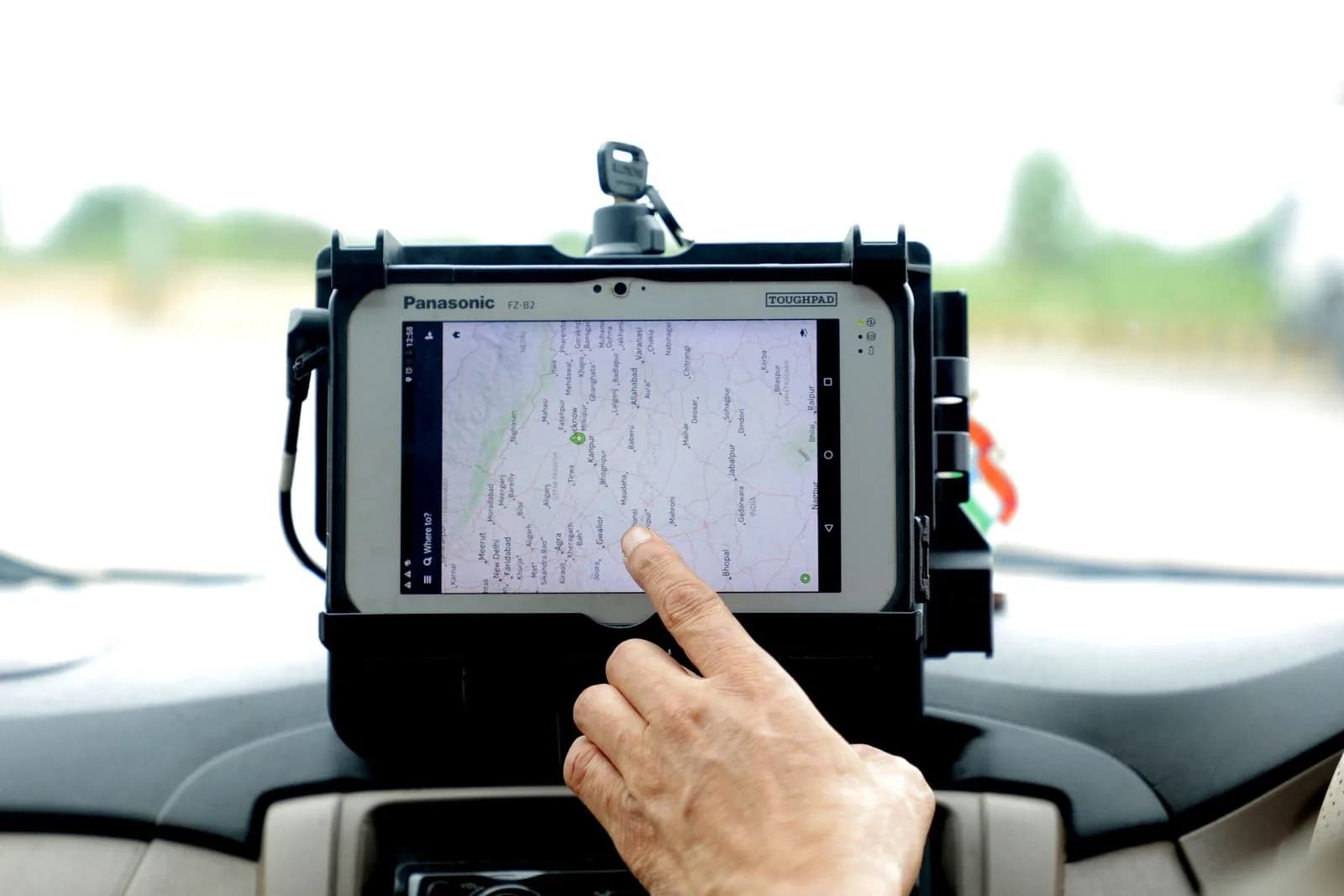
GPS vs. Cellular Tracking: What Does Each One Do?
A cellular GPS tracker uses GPS and cellular for two different jobs in the same device, so fleet tracking needs both. GPS works out where the vehicle is, and cellular carries that position from the vehicle back to your dashboard. The tracking device first calculates its own location by listening to satellites, then uses a cellular data connection to send that location, along with speed, engine data and driver events, to the software you log into. Lose GPS and there is no position; lose cellular and nobody can see it.
GPS belongs to a broader family called GNSS (Global Navigation Satellite System). GPS is the US satellite constellation, and modern fleet devices also listen to GLONASS, Galileo and others. A receiver that uses several constellations at once holds a more accurate fix in tough conditions, such as downtown between tall buildings, in a canyon or under heavy tree cover, than a basic GPS-only chip with fewer satellites to work with.
Why Does Fleet-Grade Tracking Need Both?
A consumer GPS unit that shows a driver a map needs only the positioning half, because the person who needs the location is sitting in the driver's seat. In fleet tracking, the person who needs the location is a dispatcher or fleet manager somewhere else, so the cellular link is mandatory. Telematics is useful because location and engine data show up on a screen back at the office in near real time, and that happens over a cellular network.
The same logic makes coverage and data handling worth checking when you evaluate a system. When a vehicle drives through an area with no cellular signal, a well-designed device keeps recording positions, stores them locally and uploads the backlog once it reconnects, so the trip history has no holes. A cheaper device that drops data in a dead zone leaves gaps in the places you might later need the record.
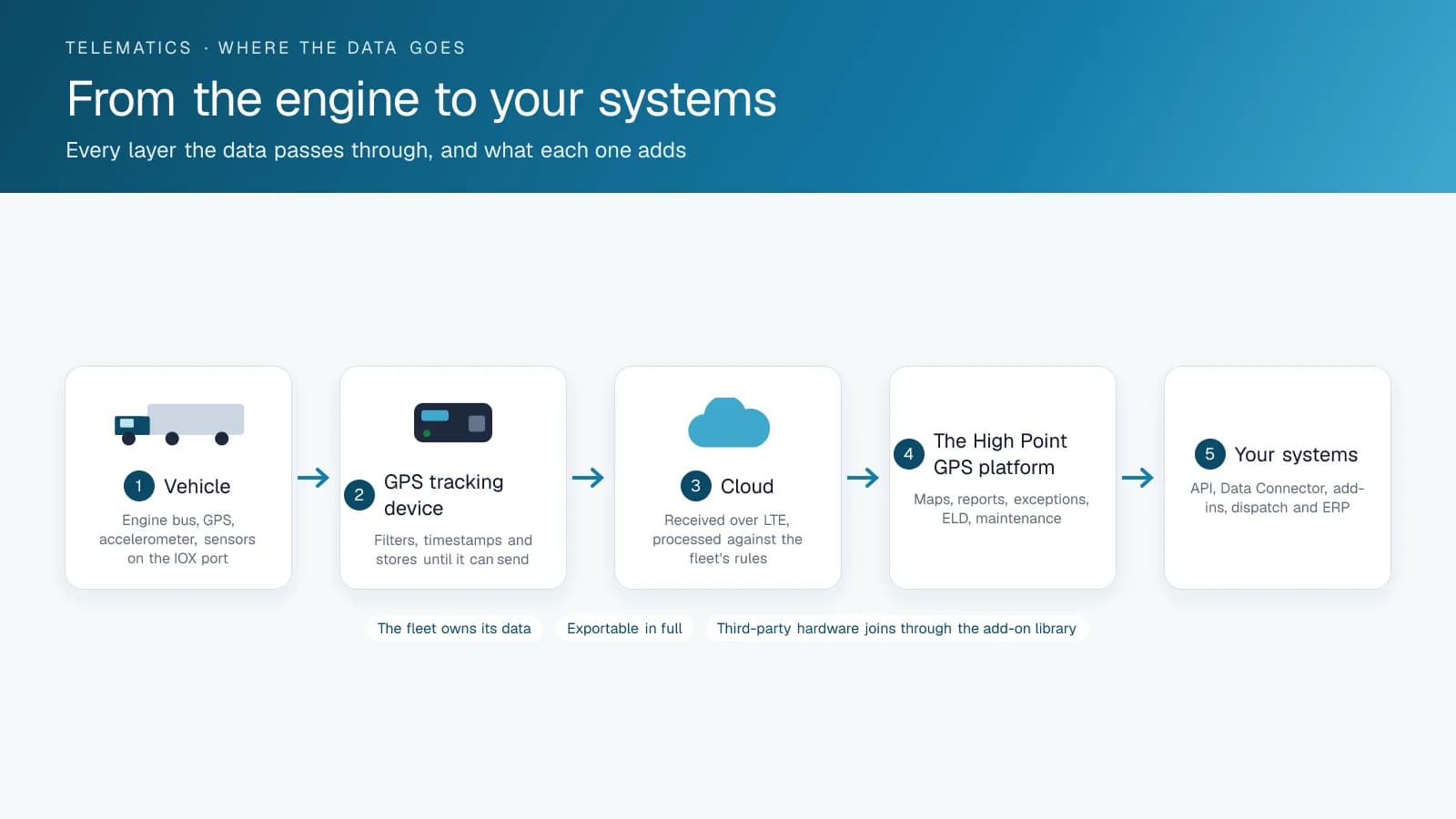
What Should You Check When Buying a Cellular GPS Tracker?
When a vendor advertises GPS accuracy, they're describing the positioning half. Real-time updates and reporting intervals describe the cellular half. Check both. Multi-constellation GNSS gives you positions you can trust in dense cities and at remote job sites, and a solid cellular strategy with local storage for dead zones makes those positions usable back at the office.
Most commercial fleets get both on one piece of hardware. A GPS tracking device handles GNSS positioning, reads the engine and manages the cellular connection in one unit, so the GPS-versus-cellular question comes down to what each half contributes, and you aren't choosing between two products. Knowing which half drives which behaviour also makes problems easier to diagnose: a stale position usually points to connectivity, and a jumpy one to satellite reception.
Which Cellular Network Does a Fleet Tracker Use, and What Happened to 3G?
Current fleet trackers report over 4G LTE, in the LTE category that fits what they send. Geotab's GO10 uses LTE Cat 1 bis and lists no 2G or 3G fallback. The next-gen GO Anywhere asset tracker uses LTE CAT-M1. The GO Focus Plus dash cam, which has video to move, uses LTE CAT 6. Position and engine data need little bandwidth; video needs far more.
The network matters because a tracker stops reporting when its network closes. According to the FCC, AT&T began phasing out its 3G network in February 2022, T-Mobile shut down its 3G UMTS network as of July 1, 2022, and Verizon set December 31, 2022 to finish its shutdown. In Canada, Bell's 3G/HSPA network stopped being available in Manitoba on December 31, 2025 and closes nationally on March 1, 2027. A 3G tracker without a network can still log positions, but it cannot send them to anyone.
When you compare trackers, ask which LTE category each device uses, which carriers it works on where your vehicles drive in Canada and the US, and whether the vendor has a plan to replace older units that still depend on 3G.
What If Vehicles Work Beyond Cellular Coverage?
Add a satellite link for the vehicles and equipment that spend real time out of coverage. A cellular tracker keeps logging in a dead zone and uploads when it reconnects, which is fine for a short gap. For a crew that works days at a remote site, the record only arrives when they drive back into coverage, and that can be too late.
Geotab offers two routes. The IOX-SATIRDv2 is an add-on for GO7 and newer devices that communicates over the Iridium satellite network where cellular is not available. By default it sends a position every 15 minutes, with immediate notices for ignition changes and acceleration events of 2.5 g or more, and drivers can send an alert message to fleet management. The GO Anywhere Plus asset tracker pairs 4G LTE Cat-1 bis with satellite fallback through select carrier partners: model GATAA1 includes T-Mobile and Rogers direct-to-cell service with Starlink, and availability depends on the carrier and region.
Satellite reporting is less frequent than cellular, so treat it as a safety net for remote work. The IOX-SATIRDv2 needs professional installation and, per Geotab, activation 24 hours before deployment. Map where your vehicles actually lose signal before you decide which units need it.
How Do You Diagnose a Bad Position?
Once you know which half does what, most tracking complaints take five minutes to diagnose. A stale position, showing the truck where it was an hour ago, is a cellular problem: the device is out of coverage and buffering, and it will catch up when signal returns. If it never catches up, check the device's power and antenna. A position that jumps, placing the truck a street over for a few seconds before correcting, is a satellite problem caused by buildings, a tunnel, a parking structure or a device mounted under metal. A position that drops out or wanders even on an open road usually points to the installation: a heated windshield or a metallic tint blocks much of the satellite signal, so the device needs a spot with a clear view of the sky. A vehicle that has shown no position at all since installation has a device that isn't powered or isn't assigned, which the platform's device status page shows. High Point GPS checks all four on every install before the technician leaves.
Frequently asked questions
Is GPS tracking the same as cellular tracking?
No. GPS (a form of GNSS) calculates the vehicle's location from satellite signals, and cellular is the network that carries that location back to your software. A fleet tracking device uses both together, one to find the position and the other to report it, so fleet tracking stops working without either.
What is the difference between GPS and GNSS?
GPS is the US satellite positioning constellation. GNSS is the umbrella term covering GPS plus other systems such as GLONASS and Galileo. A device that uses multiple GNSS constellations holds a more accurate fix in cities and remote areas than a GPS-only receiver, because it has more satellites to work with.
What happens to tracking data in an area with no cellular signal?
A well-designed device keeps recording positions to local storage and uploads the backlog once it regains signal, so the trip history stays complete. Cheaper devices may drop data during a dead zone and leave gaps in the record. Ask the vendor how its device handles dead zones before you buy.
Do I need to buy separate GPS and cellular devices?
No. Commercial fleets get both functions in one unit. A GPS tracking device handles satellite positioning, engine data and the cellular connection together, so you install and manage a single piece of hardware, and a well-designed unit also stores positions through dead zones until it reconnects.
Will a 3G GPS tracker still work?
Not once its network closes. US carriers shut down their 3G networks during 2022, according to the FCC. In Canada, Bell's 3G/HSPA network stopped being available in Manitoba on December 31, 2025 and closes nationally on March 1, 2027. A 3G tracker can keep logging positions without a network, but it cannot report them, so plan the swap to an LTE device before the shutdown.
Can a fleet tracker report by satellite?
Yes, with the right hardware. Geotab's IOX-SATIRDv2 add-on lets a GO7 or newer device report over the Iridium satellite network where there is no cellular coverage, every 15 minutes by default. The GO Anywhere Plus asset tracker offers satellite fallback through select carrier partners, and its availability depends on the carrier and the region where the asset operates.
Sources
- GPS.gov: The Global Positioning System
- Geotab Support Center, GO10
- Geotab, next-gen GO Anywhere
- Geotab Support Center, GO Focus Plus technical specifications
- FCC, Plan Ahead for Phase Out of 3G Cellular Networks and Service
- Bell, 3G/HSPA network discontinuation
- Geotab Support Center, IOX-SATIRDv2
- Geotab, GO Anywhere Plus
- Geotab Support Center, GO Anywhere Plus overview
Related solutions & products
Continue reading
- GPS Fleet Tracking & Management Software overview →
- Is There GPS Fleet Tracking With No Monthly Fee? →
- Telematics vs GPS Tracking: What's the Difference? →
- Telematics Control Unit (TCU): What It Is and What It Does in a Commercial Vehicle →
- GNSS vs GPS: Why Modern Fleet Trackers Use More Than One Satellite System →
- More in GPS Fleet Tracking & Telematics →
Get a free quote
- Over 500 fleets
- Since 2013
- 4.9 on Google (19 reviews)
What are you looking for?
Prefer to talk?Call 1-800-613-6323[email protected]