
Asset & Equipment Tracking
Equipment Utilization Tracking: How to Find Idle Machines
Equipment utilization tracking uses GPS and engine-hour data to show which machines work and which sit idle, so you buy, rent and redeploy on real usage.
What Does Idle Equipment Cost You?
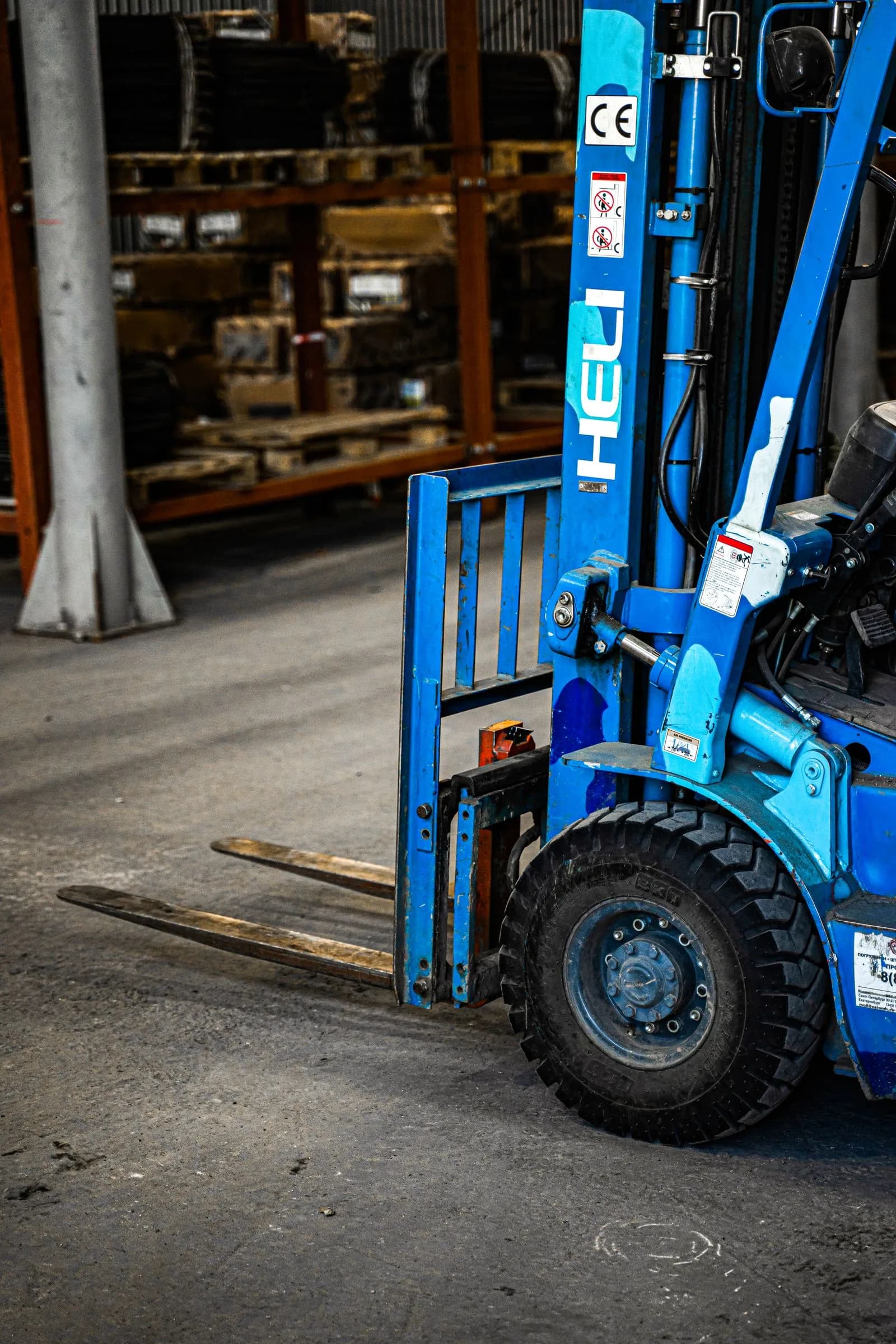
Equipment utilization tracking shows you which assets are working and which are sitting idle, using GPS location and engine-hour data. That matters because a machine sitting unused keeps costing money: financing or lease payments, insurance, and storage or yard space all keep accruing whether it is working or parked. Most fleets have a rough sense that some equipment is underused, but without location and engine-hour data that sense stays a hunch you can't act on with any confidence.
The cost is easy to underestimate because it is spread out and passive. Nobody gets a monthly invoice labelled "idle equipment cost," so the problem stays invisible until someone goes looking at the utilization data.
What Does Equipment Utilization Tracking Measure?
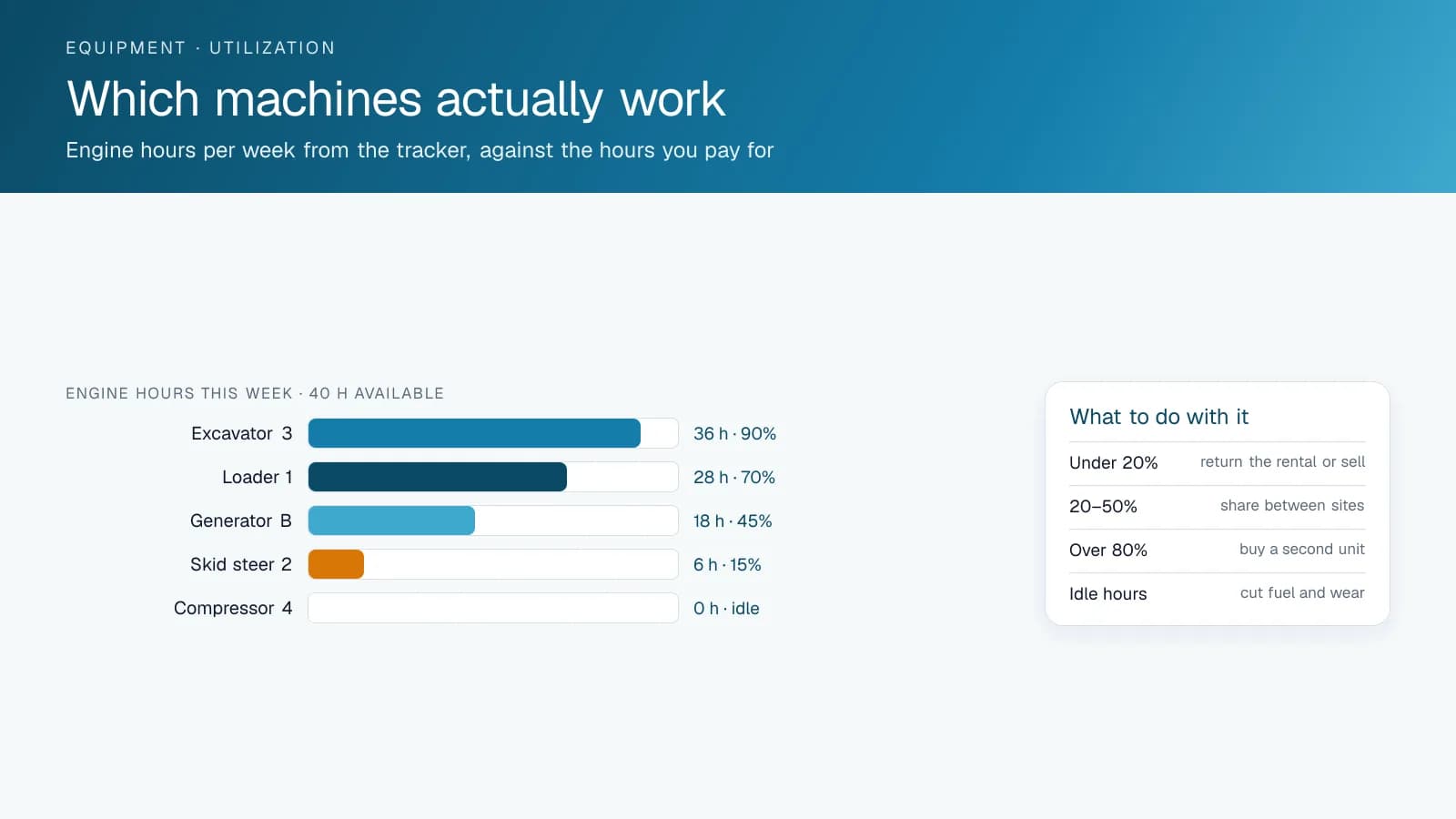
Utilization tracking, fed by a GPS tracker for equipment, combines a few data points: engine hours (as opposed to calendar time owned), GPS-confirmed movement against time parked, and how long an asset dwells at a job site compared with how long it sits in the yard between jobs. Put together, those turn "we own twelve compactors" into "three of our twelve compactors do most of the work hours, and four haven't left the yard in six weeks."
Engine hours tell you more than ownership time because they reflect wear and productive use, not how long an asset has been on the books. Two identical machines bought the same month can show very different engine-hour totals a year later, and utilization tracking exists to surface that difference.
Dwell time, meaning how long an asset stays productive at a job site against how long it sits waiting or in transit, often surprises a fleet manager seeing it for the first time. A machine logged as "deployed" for a full month may have spent a good part of that month idle, waiting for other parts of the project to catch up.
How Do You Find Idle or Underused Equipment in a Fleet?
Compare each asset against your own similar assets instead of an external industry benchmark. Lining up utilization rates across units of the same type shows which ones underperform their peers, and that tells you more than an abstract target percentage that may not fit your business or region.
The comparison also turns up operational problems beyond owning too much equipment. A unit may be underused because it is parked at a site with a scheduling bottleneck, or because it is the oldest or least reliable machine in its category and crews avoid requesting it. The data won't tell you why on its own, but it tells you exactly where to go and ask.
Using Utilization Data to Buy, Rent or Redeploy
Once you can see utilization clearly, purchasing conversations change. A category that runs near full utilization across the fleet is a reasonable candidate for buying another unit instead of renting one for the next job. A category that stays underused is a candidate for renting going forward, or for moving idle units to a different site before you book a new rental.
Purchases like these often get decided on gut feel, or by whoever lobbies loudest for a new machine. Usage data across the whole fleet gives the decision a footing. You still use judgment, but now it has something concrete to work from.
Getting Started Without Overwhelming Your Team
Start with your highest-cost or highest-count equipment category instead of instrumenting everything at once. That is usually where the clearest utilization gaps are, and it gives you a before-and-after case for expanding tracking to the rest of the fleet.
Decide up front who reviews the utilization reports and how often. Monthly is a reasonable starting point for most fleets. Data that gets collected but never reviewed on a set schedule changes no purchasing or deployment decisions and ends up as another dashboard nobody opens.
Utilization Tracking for Equipment Rental Businesses
For an equipment rental business, utilization tracking does two jobs. It informs internal fleet decisions the same way it would for any owner-operator, and it gives you a documented usage record for each rental period. That record helps with billing disputes, damage or overuse conversations, and seeing which units in the rental fleet earn their keep and which mostly sit in the yard between rentals.
The second job, tying utilization data to specific rental periods and customers, separates a rental fleet that guesses which units to retire or replace from one that decides on usage patterns tied to revenue.
A Utilization Report for One Category
Here are twelve compactors over one month, as the platform reports them, with the decision for each in the right-hand column.
| Unit | Engine hours | Days moved | Days on a site | Utilization of 160 h | Decision |
|---|---|---|---|---|---|
| C-01 | 142 | 19 | 21 | 89% | Keep; consider a second unit of this type |
| C-02 | 131 | 18 | 20 | 82% | Keep |
| C-03 | 118 | 16 | 19 | 74% | Keep |
| C-04 | 64 | 9 | 12 | 40% | Keep; share between two sites |
| C-05 | 58 | 8 | 14 | 36% | Keep; share |
| C-06 | 41 | 6 | 9 | 26% | Watch |
| C-07 | 22 | 4 | 22 | 14% | On a site but barely running; ask the superintendent |
| C-08 | 0 | 0 | 0 | 0% | In the yard six weeks; sell or rent out |
| C-09 to C-12 | 0 to 11 | 0 to 2 | 0 | Under 7% | Sell two; keep two as spares |
Frequently asked questions
What's a good utilization rate for construction or rental equipment?
No reliable universal benchmark exists, because utilization varies enormously by equipment type, business model and region. The more useful comparison is relative: track utilization across your own similar assets over time and look for the specific units that underperform their peers. Those units are where to start asking questions.
Can utilization tracking help decide whether to rent or buy equipment?
Yes. Equipment categories that run near full utilization across your fleet are reasonable candidates for buying another unit. Categories that stay underused are often better served by renting for future jobs, or by moving idle units between sites, instead of owning more of the same machine.
Does utilization tracking need different hardware than basic location tracking?
Not necessarily. The same wired GPS tracking device that reports location also reports engine hours, read from the engine computer, and movement data, and those are what utilization tracking is built on. Bluetooth asset tags report presence only, not engine hours. The difference lies in how you review and use the data, more than in buying separate hardware.
How often should utilization reports be reviewed?
Monthly is a reasonable starting schedule for most fleets. The exact frequency matters less than who does the review: someone with purchasing or deployment authority should look at the data on a consistent schedule, so it informs decisions instead of sitting in a dashboard nobody opens.
Related solutions & products
Related terms
Continue reading
- Asset Tracking overview →
- How GPS Equipment Tracking Works, and What Drives the Cost →
- Types of Construction Equipment and How to Track Each One →
- Construction Equipment Telematics: Tracking Heavy Machines, Not Just Trucks →
- Rental Equipment GPS Tracking: Billing, Returns and Utilization →
- More in Asset & Equipment Tracking →
Get a free quote
- Over 500 fleets
- Since 2013
- 4.9 on Google (19 reviews)
What are you looking for?
Prefer to talk?Call 1-800-613-6323[email protected]