
Asset & Equipment Tracking
Heavy Equipment GPS Tracking: Which Tracker Fits Each Machine?
The best GPS tracker for heavy equipment depends on each machine's power, age and how long it sits alone. Compare rugged, wired and battery trackers.
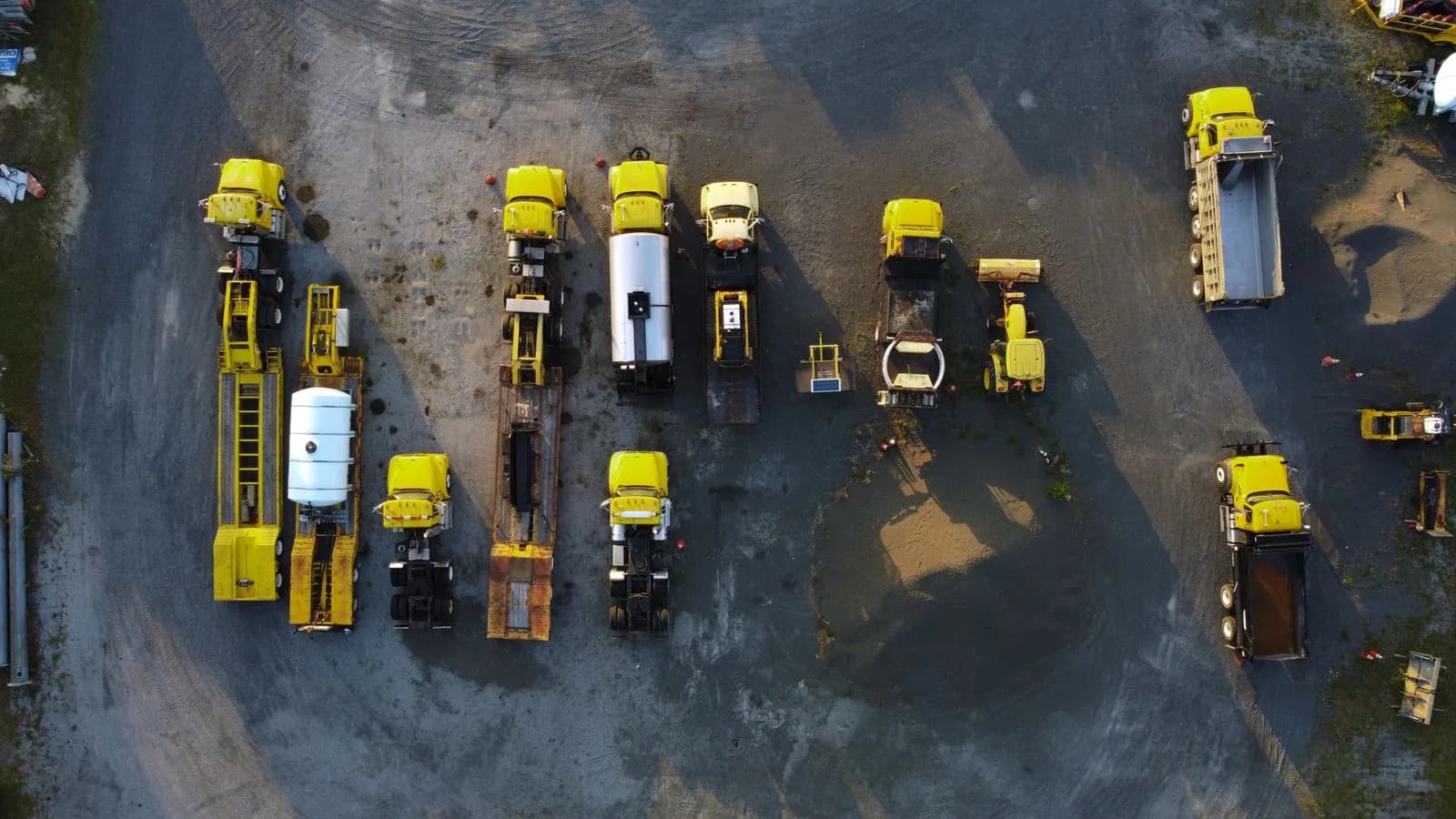
What should a GPS tracker for heavy equipment do?
The best GPS tracker for heavy equipment depends on the machine: a sealed, wired unit on excavators, loaders and other powered machines, a battery tracker on equipment with no reliable power, and a Bluetooth tag on tools and attachments. On a machine, the tracker has to survive dust and vibration in a ruggedized IP67 enclosure, report engine hours so you schedule maintenance on real runtime, and use geofencing with after-hours movement alerts to deter theft. For construction fleets in Canada and the United States, High Point GPS installs these equipment trackers and picks the model machine by machine, because trackers built for on-road vehicles tend to fail on a job site. The models High Point GPS fits are on our GPS Tracker for Equipment page.
A typical vehicle GPS spec sheet leaves out what construction equipment tracking needs. Sites are dusty and wet, and they punish anything not built for them. Equipment also sits unattended for long stretches, overnight or over a weekend, and that changes which tracker features earn their place. What the tracker then reports, from engine hours to utilization, is covered in our guide to construction equipment telematics.
Most buyers underestimate this until a device dies in the field. A tracker that behaves perfectly in a demo or a light-duty pickup can stop reporting within weeks once a job site hits it with vibration, dust and temperature swings. A spec sheet written for on-road vehicles is no safe substitute for one written for construction conditions.
Requirement one: a ruggedized enclosure
Start with the enclosure. An IP67 rating (dust-tight and water-resistant) is the baseline for anything mounted on equipment that lives outdoors on a construction site. A consumer-grade or light-vehicle tracker without that rating tends to fail before the tracking pays for it.
Requirement two: engine-hour reporting. Requirement three: theft deterrence
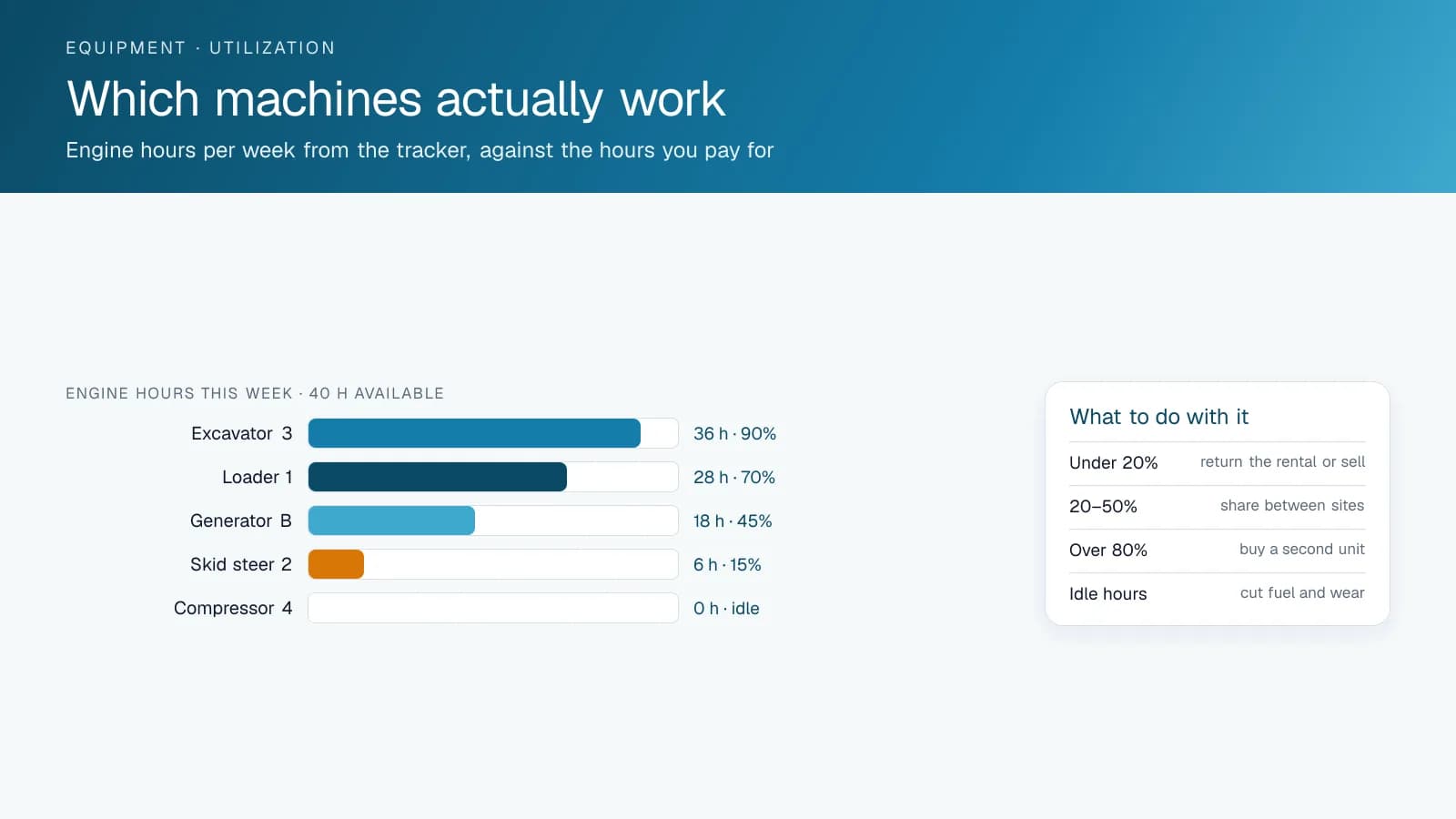
Next comes engine-hour reporting on top of location. You are supposed to service heavy equipment by engine hours, not a calendar guess. A tracker that reports GPS position with no diagnostic or engine-hour data leaves your maintenance planning where it started, with a dot on a map added.
Theft weighs more heavily in construction than in most fleet verticals. Equipment theft is a well-documented, ongoing problem because expensive machines often sit alone on a site with little oversight after hours. Geofencing and after-hours movement alerts tell you when a machine leaves an approved area or moves outside expected working hours. On a job site those alerts do far more work than they would on a delivery van parked in a secured lot every night.
How does a heavy equipment GPS tracker get engine hours?
From the machine's engine control unit (ECU) when the tracker can read it, and from ignition and movement when it cannot. Geotab calculates engine hours from the engine's operating time as reported by the ECU. When the ECU does not report it, the platform calculates hours from the ignition signal and GPS movement, and you can enter the current hour meter reading as the starting value.
The source matters for maintenance. ECU hours come from the engine itself. Hours calculated from ignition and movement are an estimate, so compare the first weeks of data with the hour meter on the machine before you schedule service from them. Once the numbers line up, set service intervals on engine hours and let the platform flag each machine as it comes due.
Unpowered and lightly powered assets are covered too: Geotab says the GO Anywhere Plus reports trips, distance, ignition status and engine hours on powered and non-powered assets. Newer machines from Caterpillar, John Deere, Komatsu and Kubota can also send their own data into the same platform through an AEMP 2.0 connection, with no tracker on the machine.
Which tracker fits an older machine, and which a newer one?
Check the machine's age and the protocol it speaks before you pick a device. Geotab states that the GO10 does not support the PWM/JPW protocols, which limits its make, model and year coverage, specifically legacy pre-2010 heavy-duty and offroad equipment. Before fitting a GO10 to an older machine, have your installer confirm the protocol it uses. For machines that live in mud, dust and pressure washing, Geotab positions the GO9 RUGGED, a sealed, hardwired previous-generation device, for heavy equipment, yellow iron, agricultural machinery and oil field equipment.
In the United States, California adds one more check. Geotab says the GO10 has not been granted a CARB Executive Order exemption and must not be installed on vehicles registered or mainly operated in California until one is issued. The GO9 RUGGED is covered by Geotab's CARB Executive Order with its listed T-harnesses. High Point GPS installs all of these devices and picks the model machine by machine.
| Device | Power and install | Sealing and temperature | Fits |
|---|---|---|---|
| GO9 RUGGED | Hardwired by a professional; 12 V and 24 V systems; IOX expansion | IP68 and IP69K; minus 40 to +85 °C; meets SAE J1455 | Heavy equipment, yellow iron, agricultural and oil field machines |
| GO10 | Harness install; up to 5 IOX expansions | Minus 40 to +85 °C; no IP rating published, so it needs a protected mounting | Modern machines (post-2010) with a supported diagnostic connection |
| GO Anywhere Plus | Three-wire install to asset power, with a replaceable backup battery | IP67 and IP69K; minus 40 to +85 °C | Generators, light towers and powered equipment that sits for long stretches |
| Next-gen GO Anywhere | Battery only, no wiring | IP67 and IP69K; minus 40 to +70 °C | Unpowered equipment, roll-offs and trailers |
Why do construction fleets need more than one tracker type?
Most construction fleets end up with more than one device type instead of a single SKU for everything. Trucks with reliable 12V power can run a standard or rugged GPS tracking device. Equipment with no power, or with power you can't count on, is better served by a battery tracker such as the GO Anywhere, and tools and attachments by a battery-powered Bluetooth asset tag. Neither depends on the machine's electrical system.
Avoid standardizing on one device type for the sake of simplicity. If you force every asset onto the same tracker regardless of its power supply, you either overpay for capability your tools don't need or under-track equipment that needed a ruggedized, independently powered unit.
How do heavy equipment GPS trackers compare?
Here are the device options for a construction fleet side by side.
| Tracker | Power | Reports | Rating | Fits |
|---|---|---|---|---|
| rugged GPS tracking device | Machine's electrical system | Position, engine hours, fuel, fault codes, utilization, live | Sealed, IP68 and IP69K, minus 40 to 85 °C | Excavators, loaders, dozers, graders, generators with an engine |
| GPS tracking device in a sealed enclosure | Machine's electrical system | Same, on machines with a standard diagnostic connector | Enclosure-dependent | Newer machines with OBD or J1939 access |
| Battery LTE tracker (next-gen GO Anywhere) | Internal battery, up to 10 years | Position on a schedule, movement alerts | IP67 and IP69K | Dry van trailers, roll-offs, dumpsters, unpowered equipment |
| Hybrid LTE tracker (GO Anywhere Plus) | Wired to asset power, with a replaceable backup battery | Position on set intervals or on movement, trips, engine hours | IP67 and IP69K | Trailers, yellow iron, generators, powered equipment |
| Bluetooth tag | Coin cell, years | Last seen by a fleet vehicle, and where | Sealed | Attachments, buckets, tools, survey gear |
Frequently asked questions
What makes a GPS tracker 'rugged' enough for construction equipment?
A rugged tracker carries an IP67 or better rating for dust and water, tolerates constant vibration and keeps working through temperature extremes. Construction equipment operates outdoors in conditions that would damage a standard consumer-grade tracker, so check the rating and the operating temperature range on the spec sheet before you buy.
Can GPS tracking help prevent construction equipment theft?
It helps, though it can't physically stop a theft on its own. Geofencing and after-hours movement alerts flag equipment that leaves an approved job site or moves during hours it shouldn't be running. That supports faster recovery, and visible tracking can also act as a deterrent to anyone looking at an unattended machine.
Do I need different trackers for trucks versus heavy equipment?
Often, yes. Trucks with reliable power typically run a standard or rugged powered GPS device. Unpowered equipment is usually better tracked with a battery tracker such as the GO Anywhere, and hand tools with a Bluetooth asset tag, because neither relies on the equipment's own electrical system to keep reporting its location.
Is it a mistake to use one tracker model across an entire construction fleet?
Usually, yes. Forcing every asset onto the same device regardless of its power situation means you either overpay for tools that never needed a powered tracker or under-track equipment that needed a ruggedized, independently powered one. Matching the device to each asset's power supply avoids both problems.
How does a GPS tracker get engine hours from heavy equipment?
It reads them from the engine control unit when the machine reports them. When it does not, Geotab calculates engine hours from the ignition signal and GPS movement, and you can enter the hour meter reading as the starting value. Compare the first weeks of tracked hours with the hour meter before you schedule maintenance from them.
Which GPS tracker suits construction equipment built before 2010?
Check the protocol first. Geotab states that the GO10 does not support the PWM/JPW protocols, which limits its coverage of legacy pre-2010 heavy-duty and offroad equipment, so have your installer confirm what the machine uses. A GO Anywhere Plus, wired to power, ground and ignition, suits older powered equipment that only needs position and engine hours.
Sources
Related solutions & products
Related terms
Continue reading
- Asset Tracking overview →
- Construction Equipment Telematics: Tracking Heavy Machines, Not Just Trucks →
- Rental Equipment GPS Tracking: Billing, Returns and Utilization →
- Construction Equipment and Asset Tracking Software: Machines, Attachments, Materials and Tools →
- Construction and Concrete Dispatch Software: Sites, Equipment, Loads →
- More in Asset & Equipment Tracking →
Get a free quote
- Over 500 fleets
- Since 2013
- 4.9 on Google (19 reviews)
What are you looking for?
Prefer to talk?Call 1-800-613-6323[email protected]