
Asset & Equipment Tracking
Rental Equipment GPS Tracking: Billing, Returns and Utilization
GPS tracking for rental equipment records engine hours and location from pickup to return, so you can bill hours run accurately and settle disputes.
Why Does Rental Equipment Need Different GPS Tracking?
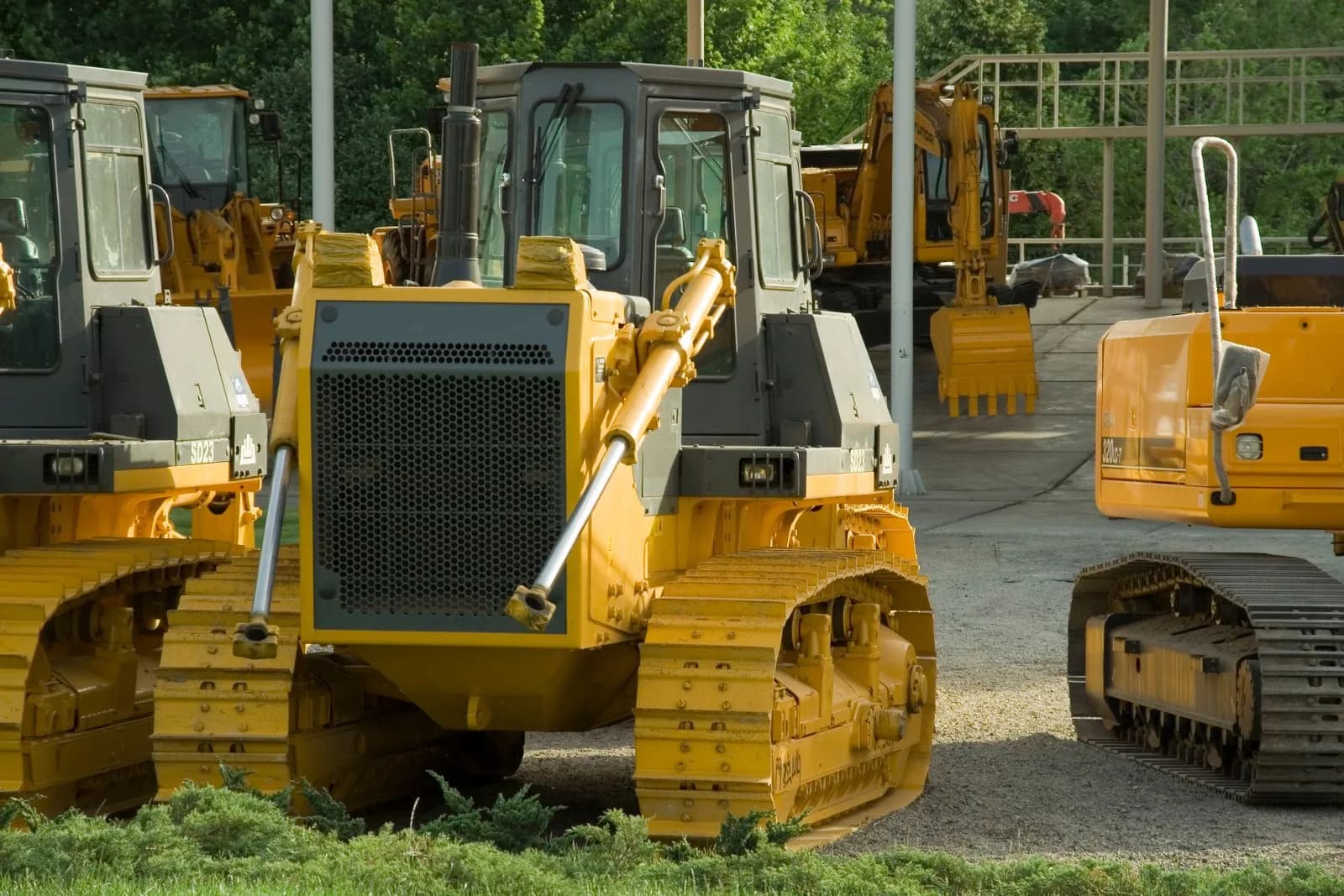
GPS tracking for rental equipment has to cover machines that leave your control entirely. Most fleet tracking involves equipment your own team operates. A rental business hands equipment to a customer for a defined period, often on a job site you cannot otherwise see, and needs it back in the condition and at the time the rental agreement sets. You give up control for a while and still have a contract to enforce, and typical fleet-tracking advice does not map cleanly onto that.
The return on tracking shows up differently too. A contractor tracking its own equipment is mostly improving internal efficiency. A rental business is protecting the assets its whole revenue depends on, and those assets spend most of their working life outside the company's direct oversight.
Utilization: Which Units Earn Their Keep?
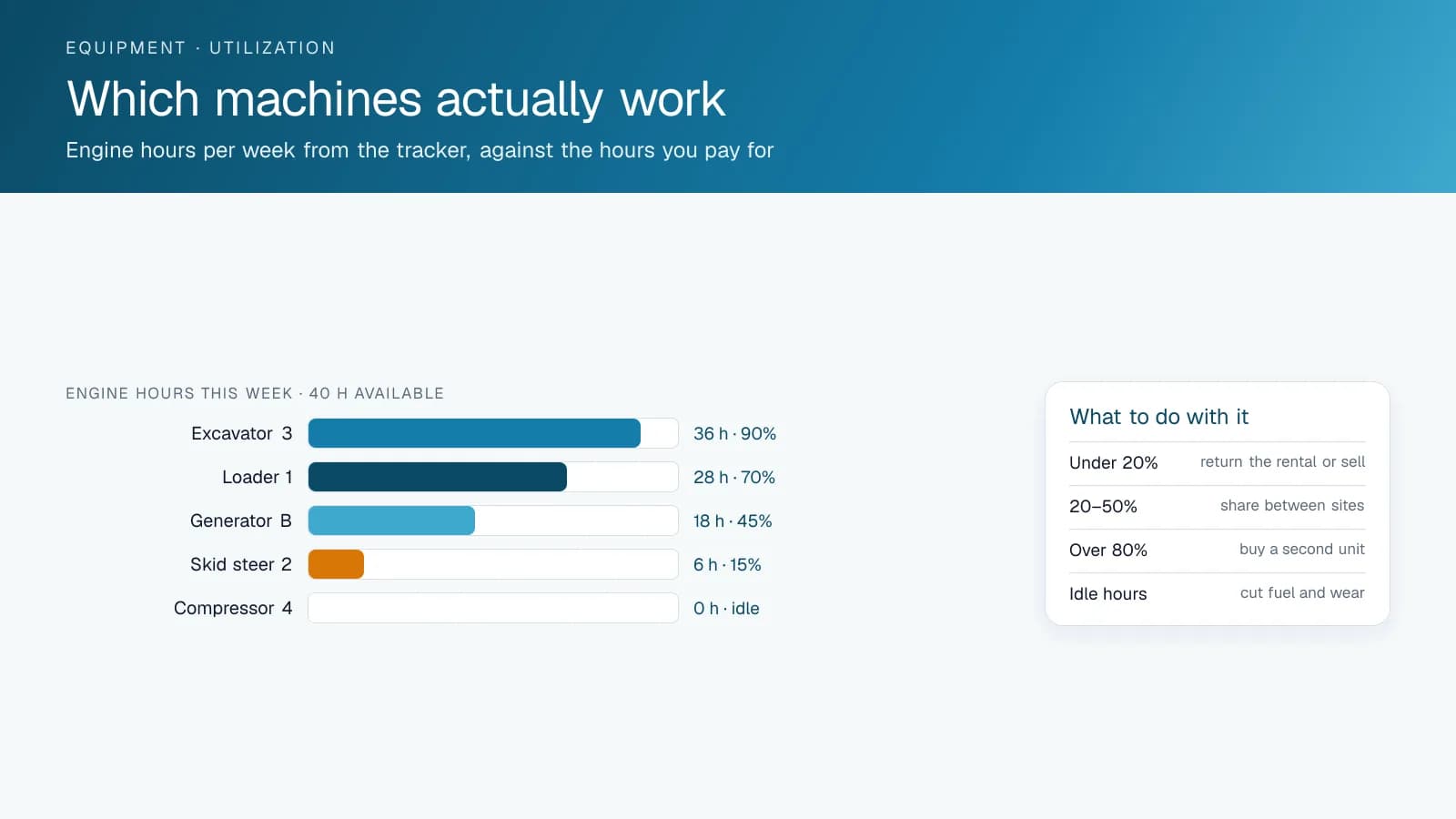
The engine-hour and GPS-movement data that reveals underused equipment in any fleet matters even more in rental, because utilization maps straight to revenue. A unit that sits in the yard between rentals more than it earns is a candidate for different pricing or a fresh marketing push. It may also be one you do not replace with the same type when it retires.
Comparing utilization by equipment category across the fleet also guides purchasing. If one class consistently rents out faster than you can meet demand while another sits idle, that is a much stronger signal for the next capital purchase than a gut sense of what customers seem to be asking for lately.
Documenting Condition and Location at Pickup and Return
Engine hours and location recorded when a rental starts and ends give you an objective baseline for the state a unit was in and where it was, which counts for a lot when a damage or usage dispute comes up. A customer who claims they barely used a machine is a different conversation when engine-hour data from pickup to return says otherwise. Without that record, you are left with two people's memories.
This documentation tends to settle disputes faster in both directions. It protects the rental business when a customer understates how much they used a unit. It also protects the customer when a rental business claims more usage or damage than occurred, which helps the relationship even if no dispute ever goes against you.
Build it into the pickup and return process itself, instead of checking only once a dispute exists. A quick engine-hour and condition log at both ends of every rental, not only the disputed ones, means you always have a baseline when a disagreement does come up.
Enforcing Rental Terms With Geofencing and Usage Alerts
Geofencing lets you define the area a rented unit should stay within for a given job, and alerts you if it leaves. That helps with plain theft or loss prevention. It also supports enforcing rental terms: some agreements restrict where equipment can go or how it can be used, and a movement alert gives you facts for that conversation in place of a suspicion.
Billing Accuracy: Charging for Hours Run, Not Only Calendar Days
Most rental billing still runs on calendar days or weeks, but engine-hour data makes usage-based billing an option: you charge for how much a unit ran instead of how long it sat on a customer's lot. Even if you stay with calendar pricing, real usage data strengthens your hand in a billing dispute or a renewal negotiation, because it is a factual account of how the equipment was used during the rental.
Consider offering usage-based pricing to customers, as well as tracking it internally. Some customers prefer paying for hours run over a flat daily rate, particularly for equipment that sits unused on their site for stretches of a longer rental. Offering that choice can set you apart from a competitor that still bills strictly by the calendar.
A Rental Contract Backed by the Record
The clauses a rental agreement can carry once every unit reports, and the data that enforces each one.
| Clause | Typical term | Data behind it |
|---|---|---|
| Condition and hours at handover | Engine hours and location recorded at pickup and return | Hour meter reading and geofence event at each end |
| Usage limit | A set number of engine hours per day or week included; overage billed | Engine hours per rental period |
| Site restriction | Equipment stays within the named site or region | Geofence exit alert with time and position |
| After-hours use | No operation outside contracted hours without notice | Engine-on events by time of day |
| Return deadline | Due back by a date; late fees after | Movement toward the yard, or not, on the due date |
| Usage-based option | Billed per engine hour instead of per day | Engine hours per rental, exported to the invoice |
| Theft and recovery | Renter liable until returned; tracker not to be removed | Power-disconnect alert; live position for recovery |
Frequently asked questions
Can GPS tracking for rental equipment help resolve damage disputes?
Yes. Engine-hour and location data from pickup to return gives an objective record of how much a unit ran and where it went. That is useful evidence when a customer's account of usage or condition does not match what your team expects, and it protects the customer from overstated claims too.
Does geofencing enforce rental contract terms?
Geofencing alerts you when equipment leaves a defined area, and your team still has to act on that alert. What it changes is the footing: a site restriction in the contract stops being an honour-system agreement and becomes something you can verify and act on, with time and position on record.
Is usage-based billing realistic for an equipment rental business?
It is an option once you have reliable engine-hour data. Many rental businesses keep calendar-based pricing for simplicity and use usage data only as supporting evidence in disputes or renewal talks. Others offer per-hour billing as a choice, which some customers prefer for equipment that sits idle on site.
Can utilization data inform future equipment purchases for a rental fleet?
Yes. Comparing utilization by equipment category shows which types are in high demand relative to your current supply and which sit underused. That gives you a stronger basis for the next purchase than general impressions of customer demand, and it flags units you may not need to replace with the same type.
Related solutions & products
Related terms
Continue reading
- Asset Tracking overview →
- Construction Equipment Telematics: Tracking Heavy Machines, Not Just Trucks →
- Construction Equipment and Asset Tracking Software: Machines, Attachments, Materials and Tools →
- Route Optimization for Waste Management: Rebuilding Collection Routes With Data →
- Construction and Concrete Dispatch Software: Sites, Equipment, Loads →
- More in Asset & Equipment Tracking →
Get a free quote
- Over 500 fleets
- Since 2013
- 4.9 on Google (19 reviews)
What are you looking for?
Prefer to talk?Call 1-800-613-6323[email protected]