
Asset & Equipment Tracking
How GPS Equipment Tracking Works, and What Drives the Cost
GPS equipment tracking works through a battery tracker, a Bluetooth tag relayed by a vehicle, a wired unit or factory data. How each one works and costs.
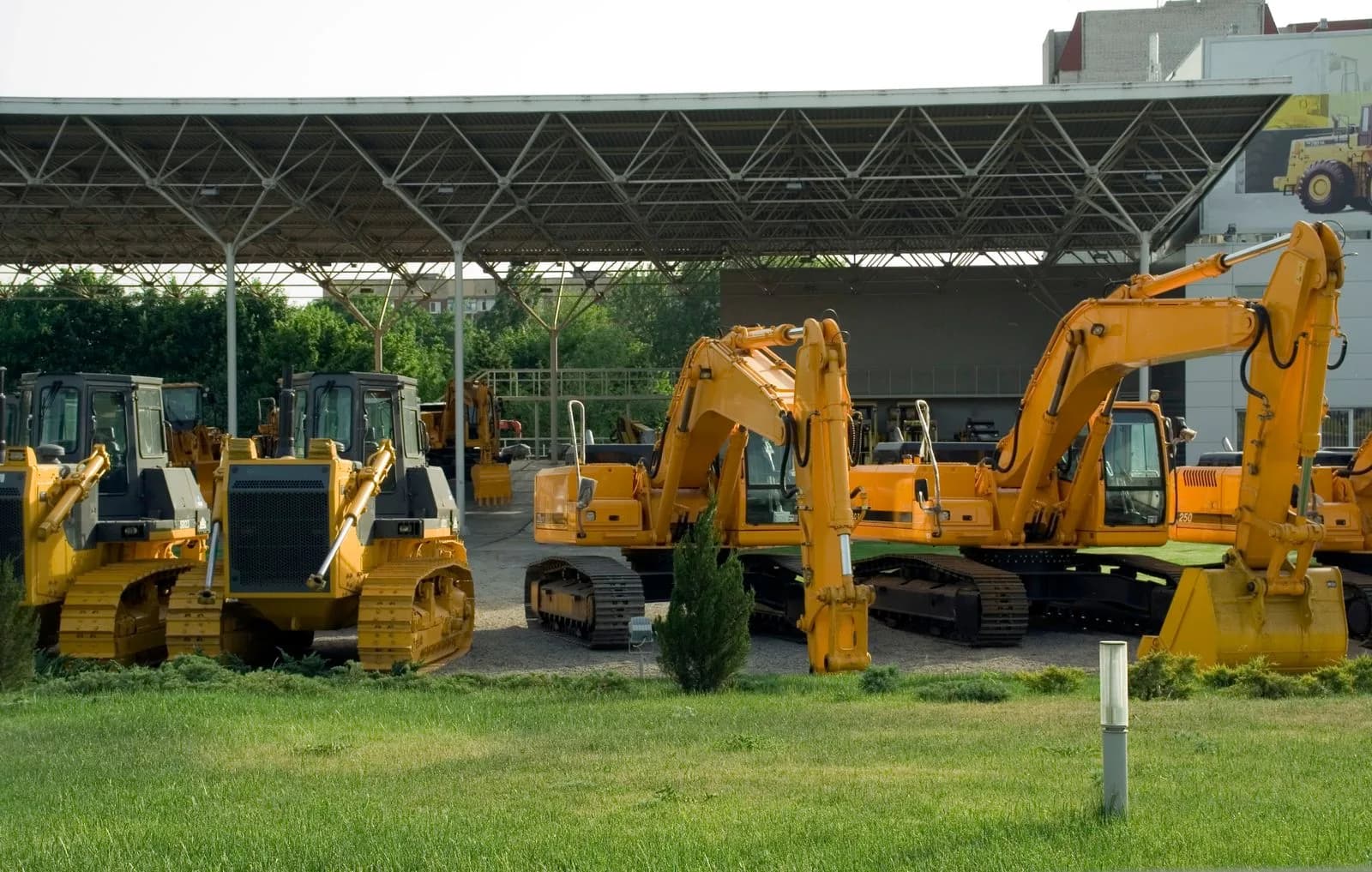
How Does GPS Equipment Tracking Work Without an Engine?
GPS equipment tracking works in one of four ways: a standalone battery-powered tracker with its own cellular connection, a Bluetooth tag that relays its location through a GPS tracking device in a nearby vehicle, a wired tracker on a powered machine, or the manufacturer's own telematics feed. Vehicle tracking is simpler: the device connects to the engine's diagnostic connector through a harness and reports over its own cellular link. Trailers, generators, compressors and hand tools have no engine control module to plug into, and many have no reliable power at all.
That gap is why generic "GPS tracker" buying advice, written for someone fitting one device to one powered vehicle, falls apart once you apply it to a mixed fleet of tools and equipment. The right device depends on the asset, and no single product suits every item you own.
Standalone Tracker or Bluetooth Tag: How Each Approach Works
The first approach is a standalone powered GPS tracker with its own battery and cellular connection. Fleets usually save it for higher-value assets, where theft risk or utilization value easily justifies the ongoing data plan. The second is a Bluetooth low-energy beacon, read by a vehicle device fitted with the IOX-BT module, which needs no cellular plan of its own. It relays its location through the nearest GPS tracking device already installed in a vehicle, and because you aren't paying for a second data connection per asset, the recurring cost drops sharply. On a construction fleet, the guide to the types of construction equipment shows which device each machine family takes.
Cost depends on matching the approach to the asset. Beacon tracking is generally cheaper per unit because it rides on a vehicle's existing connection, which makes it practical to tag a large number of lower-value items like tools and small equipment. Standalone powered trackers, such as a GPS tracker for equipment, cost more per unit and per month. They pay off on assets that spend long stretches away from any vehicle, like a generator left at a remote job site for weeks.
Can You Track Equipment That Already Has Factory Telematics?
Often yes, with no tracker to install. Many newer machines leave the factory with the manufacturer's own telematics unit, and Geotab brings that AEMP 2.0 data from Caterpillar, John Deere, Komatsu and Kubota equipment into MyGeotab, so the machine appears on the same map as your trucks and trailers. Activation is remote, and no device hardware goes on the machine.
AEMP 2.0 is the ISO 15143-3 standard manufacturers use to share machine data with other software. To connect a Caterpillar, Komatsu or Kubota machine, you need an active ISO 15143-3 API subscription for it and a Client ID and Secret from your dealer. Expect a delay at the start: Geotab notes that Caterpillar data may take up to 24 hours to appear after the connection is set up.
In a mixed fleet, use the factory connection on newer machines whose subscription is active, and spend the tracker budget on older machines, attachments, trailers and anything with no telematics of its own. Both report into one platform, so the yard list and the utilization reports cover every unit. What that data shows on a heavy machine is covered in our guide to construction equipment telematics.
How Does GPS Equipment Tracking Work Without Cell Coverage?
Through a satellite link. GPS positioning works anywhere with a view of the sky, but a cellular tracker needs a signal to send that position, and quarries, pipelines and northern sites often have none. Geotab offers two ways around that.
For powered machines, the IOX-SATIRDv2 is a wired expansion for a GO device (GO7 and newer) that communicates over the Iridium satellite network where cellular is not available. By default it sends the position every 15 minutes, and it reports ignition changes and acceleration events of 2.5 g or more immediately. It is installed by a professional and must be activated 24 hours before the machine goes out.
For trailers and powered equipment that run on a GO Anywhere Plus, the tracker can fall back to satellite through select carrier partners: model GATAA1 includes T-Mobile and Rogers direct-to-cell with Starlink, with availability depending on carrier and region. Geotab's page for the next-gen GO Anywhere lists LTE-M connectivity only, so plan battery trackers for sites that have a signal.
Why Fleets Track Equipment, and Where to Start
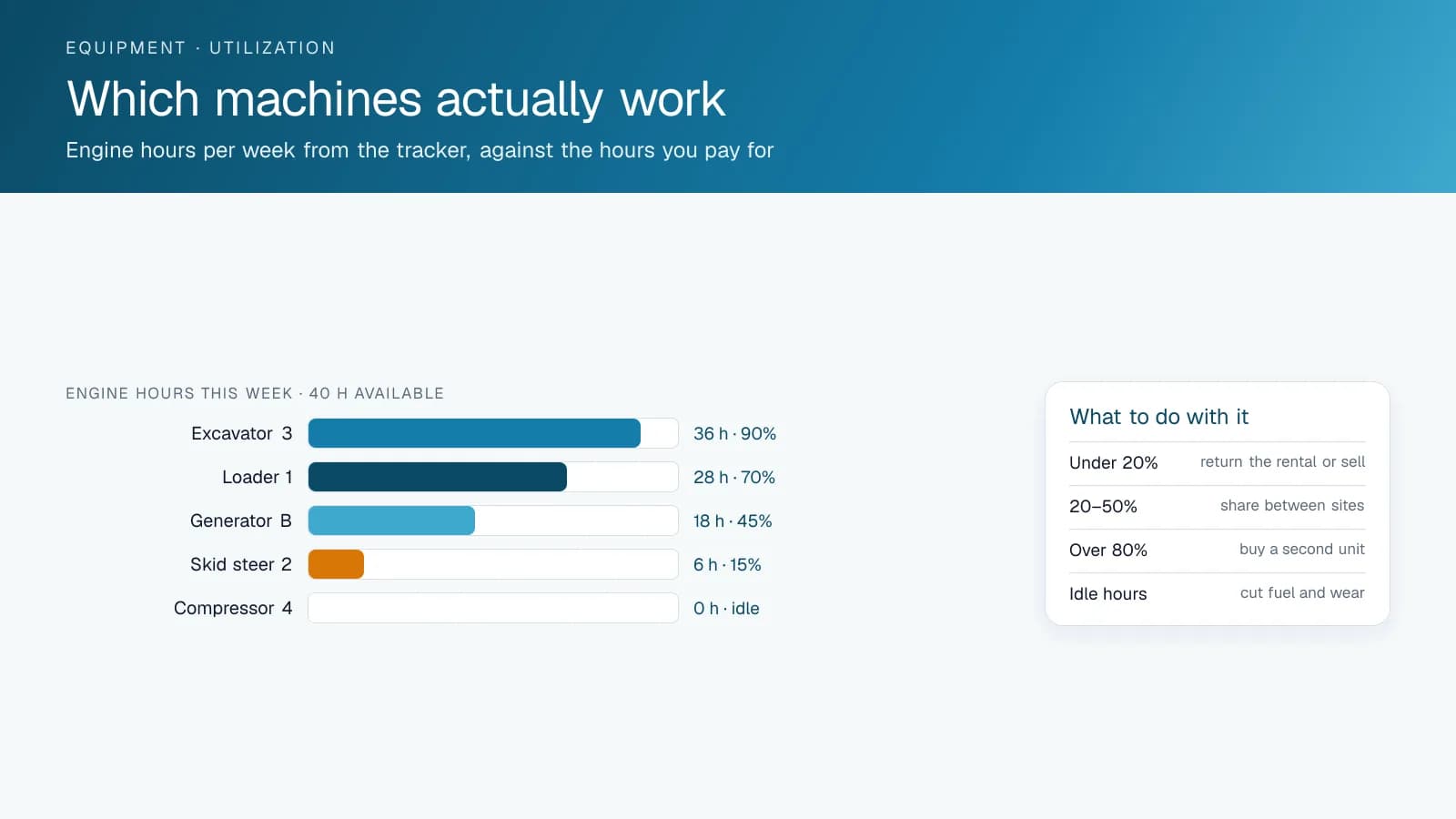
Fleets usually invest in equipment tracking for three reasons: recovering stolen or misplaced equipment, seeing real utilization (is that compressor working, or sitting idle across town?), and scheduling maintenance on actual engine hours instead of a calendar guess. A spreadsheet and someone's memory of where things were last seen handle all three badly.
If you're starting from zero, track your highest-value or highest-loss-risk assets first and leave the rest for later. Trailers that go missing and generators that drift from one job site to another are where the return shows up fastest, and they give you real results to base the next expansion decision on.
Revisit that starting list every few months instead of treating it as a one-time decision. Once tracking has proven itself on your top-priority assets, adding the next tier of equipment is an easy internal conversation. Justifying tags for everything up front, before anyone has seen a result, is a much harder one.
What Drives the Cost of Each Approach
Cost follows two things: whether the device needs its own cellular connection, and how it is powered. The recurring data plan is the line that decides how many assets a fleet can afford to cover.
| Approach | Own cellular plan | Power source | Best for |
|---|---|---|---|
| Bluetooth tag through a device fitted with the IOX-BT | No, relays through a vehicle's device | Internal battery | Tools, attachments and small equipment that travel with the fleet's own vehicles |
| Battery LTE tracker (next-gen GO Anywhere) | Yes | Internal battery | Trailers and equipment dropped where no fleet vehicle goes |
| Battery tracker in recovery mode (GO Anywhere) | Yes | Internal battery | Assets reported stolen or missing, which then report every 15 minutes |
| Wired tracker on powered equipment | Yes | The equipment's electrical system | Machines and generators where engine hours and fuel matter |
| Ruggedized GPS tracking device | Yes | The machine's electrical system | Excavators, loaders and other heavy machines with a diagnostic interface |
Frequently asked questions
How much does GPS equipment tracking cost per unit?
It depends on the approach. Bluetooth beacon tracking, which relays location through a nearby vehicle's GPS tracking device, is generally the cheaper option because it needs no separate cellular plan. Standalone powered trackers cost more per unit and per month, but they work independently of any vehicle, which suits assets left at remote sites.
Can I track equipment that doesn't have an engine, like a generator or trailer?
Yes. Bluetooth beacons, heard by a GPS tracking device fitted with the IOX-BT module, are built for exactly that. A battery-powered beacon attaches to the equipment and relays its location without an engine or a cellular connection of its own. For equipment that sits far from your vehicles for weeks, a standalone battery tracker such as the GO Anywhere is the better fit.
What's the difference between a vehicle tracker and an equipment tracker?
A vehicle tracker connects to the engine's diagnostic port and runs on the vehicle's power with its own cellular connection. An equipment tracker is built for assets with no engine and often no reliable power, so it is usually a battery-powered beacon or a standalone unit. The choice depends on how far the asset travels from your vehicles.
Should I track all my equipment at once or start small?
Start with your highest-value or highest-loss-risk assets, such as trailers that go missing or generators that move between job sites. Once you have a real result to point to, expanding tracking is an easy internal case to make. Justifying tags on every piece of equipment before anyone has seen a return is much harder.
Can I track Cat or John Deere machines without installing a tracker?
Often, yes. Geotab brings AEMP 2.0 data from Caterpillar, John Deere, Komatsu and Kubota equipment into MyGeotab with remote activation and no hardware on the machine. For Caterpillar, Komatsu and Kubota you need an active ISO 15143-3 API subscription and a Client ID and Secret from the dealer. Older machines without factory telematics still need a tracker.
Does GPS equipment tracking work where there is no cell signal?
Yes, with a satellite option. The IOX-SATIRDv2 connects a GO device to the Iridium satellite network and reports every 15 minutes by default, plus ignition changes and acceleration events right away. The GO Anywhere Plus can fall back to satellite through select carrier partners, depending on carrier and region. Cellular-only trackers report once they are back in coverage.
Sources
Related solutions & products
Continue reading
- Asset Tracking overview →
- Types of Construction Equipment and How to Track Each One →
- What Does the GPS Tracking Device Track? GPS Tracking Data and Features →
- Keyless Vehicle Access for Shared Fleets: Keyless and Keyless Lite Explained →
- PTO Tracker: The PTO On/Off Reader for Tow Billing and Hydraulic Maintenance →
- More in Asset & Equipment Tracking →
Get a free quote
- Over 500 fleets
- Since 2013
- 4.9 on Google (19 reviews)
What are you looking for?
Prefer to talk?Call 1-800-613-6323[email protected]