
Industries
Construction Fleet Tracking: GPS for Trucks and Heavy Equipment
Construction fleet tracking has to cover trucks, heavy equipment and tools across moving job sites. How GPS tracking works for builders, step by step.
Why Is Construction Fleet Tracking Harder Than Other Fleets?
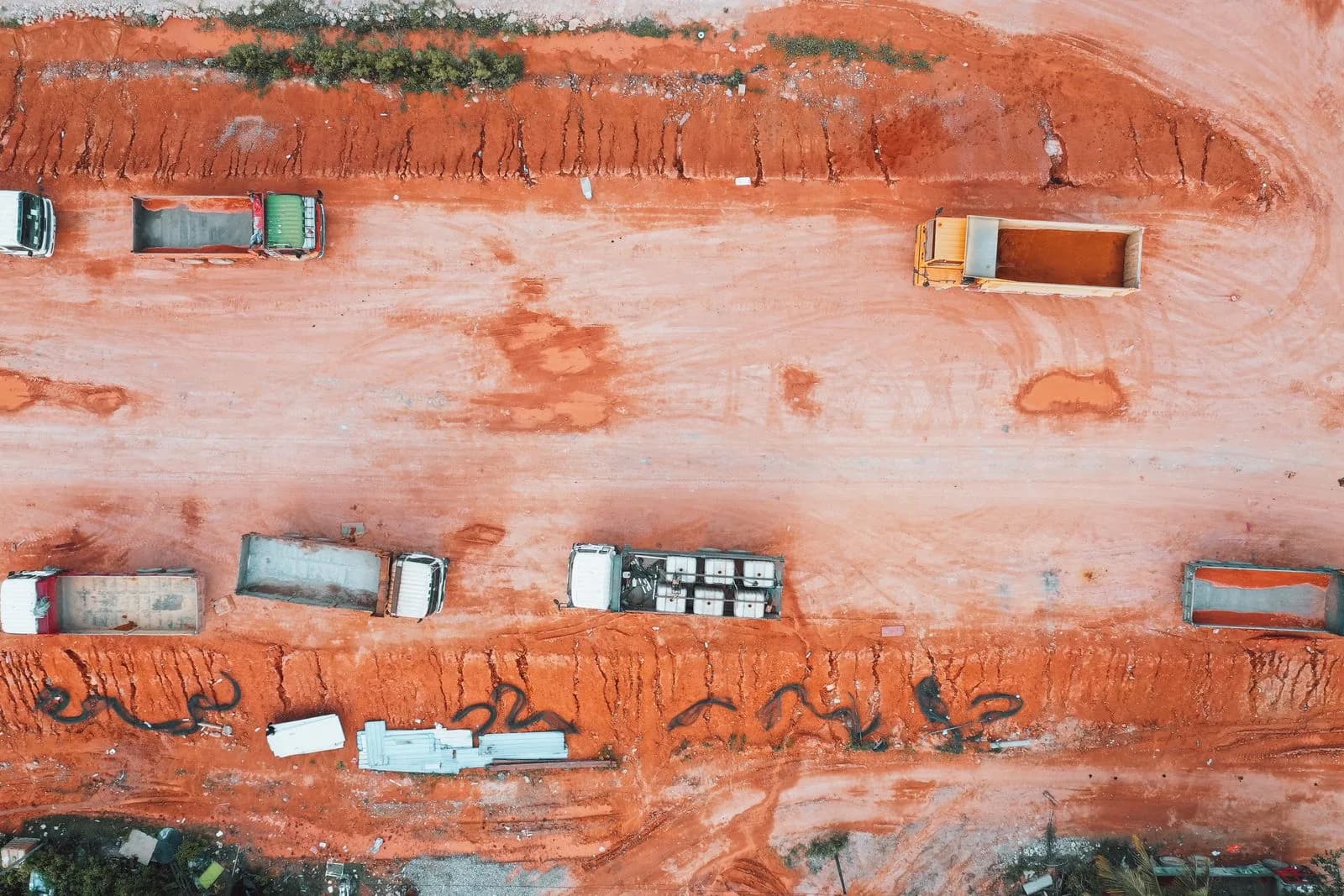
Construction fleet tracking, or GPS fleet tracking for construction companies, has to cover more than one kind of asset: pickups, dump trucks and heavy equipment, spread across job sites that change by the week or the month. Add subcontractor equipment moving in and out of the same sites, and even a mid-sized operation can't keep an accurate picture of what's where with a spreadsheet and someone's memory.
That variety is why fleet-tracking advice written for delivery or trucking often transfers poorly to construction. A delivery fleet runs a fixed set of trucks on similar routes every day. A construction fleet mixes asset types with different power, connectivity and risk profiles, and moves them between locations that change on a project timeline. Your tracking approach has to account for that variety from day one instead of bolting it on later.
GPS Tracking for Trucks vs. Heavy Equipment
Trucks with reliable 12V power are the easy case: a standard or rugged GPS device covers them the same way it covers any on-road commercial vehicle. Heavy equipment and tools are harder, since they often have no engine control module to plug into, or no reliable power at all. Most fleets solve this with a mix: ruggedized powered trackers on high-value equipment and battery-powered Bluetooth tags on tools and smaller items.
Take the ruggedization requirement seriously. A device rated for a light-duty truck cab isn't built for the dust, vibration and temperature swings an earthmover sees outdoors year-round, and a device that fails in the field defeats the reason you bought it.
Do ELD and DVIR Rules Apply to Construction Trucks?
Many contractors assume ELD and DVIR requirements don't apply to construction fleets, and that isn't automatically true. In the US, FMCSA generally treats a vehicle as a commercial motor vehicle once it crosses a 10,001-pound gross vehicle weight rating and is used for business, a lower bar than the 26,001-pound threshold that triggers a CDL requirement. Whether ELD and HOS rules apply depends on further factors, such as interstate operation and whether an exemption fits your situation (such as the short-haul exception for drivers who stay within 150 air-miles and return to the same location within 14 hours). Confirm your fleet's status against current FMCSA guidance before you assume either way. In Canada, the federal hours-of-service rules and ELD requirement cover commercial vehicles over 4,500 kg registered gross vehicle weight, with a similar exemption for drivers who stay within 160 km of the home terminal; check provincial rules for trucks that never leave the province.
DVIR requirements follow similar logic: they depend on the vehicle's classification and use, not on whether it spends most of its time on a job site or a highway. A dump truck that occasionally makes an interstate delivery run still owes inspection reports, even if most of its work is local.
Using Geofencing and After-Hours Alerts for Job Site Security
Construction equipment theft is an ongoing problem, tracked in the US in theft reports from the National Equipment Register and the National Insurance Crime Bureau. Expensive machines often sit alone on a site overnight or over a weekend with little oversight. Geofencing and after-hours movement alerts flag when equipment leaves an approved area or moves outside working hours, which speeds recovery and deters theft in the first place.
To make this work, update the geofence boundaries as the project moves through its phases. A site's active work area at groundbreaking looks very different near completion, and a geofence set once at the start either fires constant false alerts or stops being useful.
Dash Cams for Construction Vehicles
Construction sites carry liability exposure many other fleets see less often: pedestrians, subcontractors on foot, and tight manoeuvring around other equipment. Road-facing and driver-facing video gives you an objective record when an incident happens, and it increasingly counts in insurance conversations about higher-risk vehicles like dump trucks and heavy haulers.
On larger vehicles such as dump trucks, add blind-spot and backup camera integration. Low-speed manoeuvring incidents around pedestrians and other equipment are a real, recurring risk on active job sites, separate from the higher-speed collision risk that dominates on-highway safety discussions.
What Does a Construction Fleet Tracking Rollout Look Like?
Most construction fleets follow the same sequence. Put trucks on standard tracking first, since that is the simplest install. Add ruggedized trackers or Bluetooth tags to the equipment with the highest value or theft risk next. Then fit dash cams to the vehicles with the most public-road or pedestrian exposure, and treat compliance tooling (ELD and DVIR) as mandatory the moment a vehicle meets the weight and usage thresholds. Instrumenting everything on day one usually stalls the rollout; this order gets results showing up within the first month.
Because construction projects have a defined start and end, build a simple checklist for onboarding and offboarding tracked equipment as it moves between active sites. Don't rely on someone remembering to update the platform each time a machine gets reassigned. That habit keeps utilization and location data accurate over the life of a project, long after rollout.
A Rollout in Four Steps
Here is that sequence as a plan, with what each step needs and what it returns.
| Step | Assets | Hardware | First result |
|---|---|---|---|
| 1. Trucks | Pickups, dump trucks, service trucks | GPS tracking device, plug-in | Site attendance, idle, after-hours use, the readers for tags |
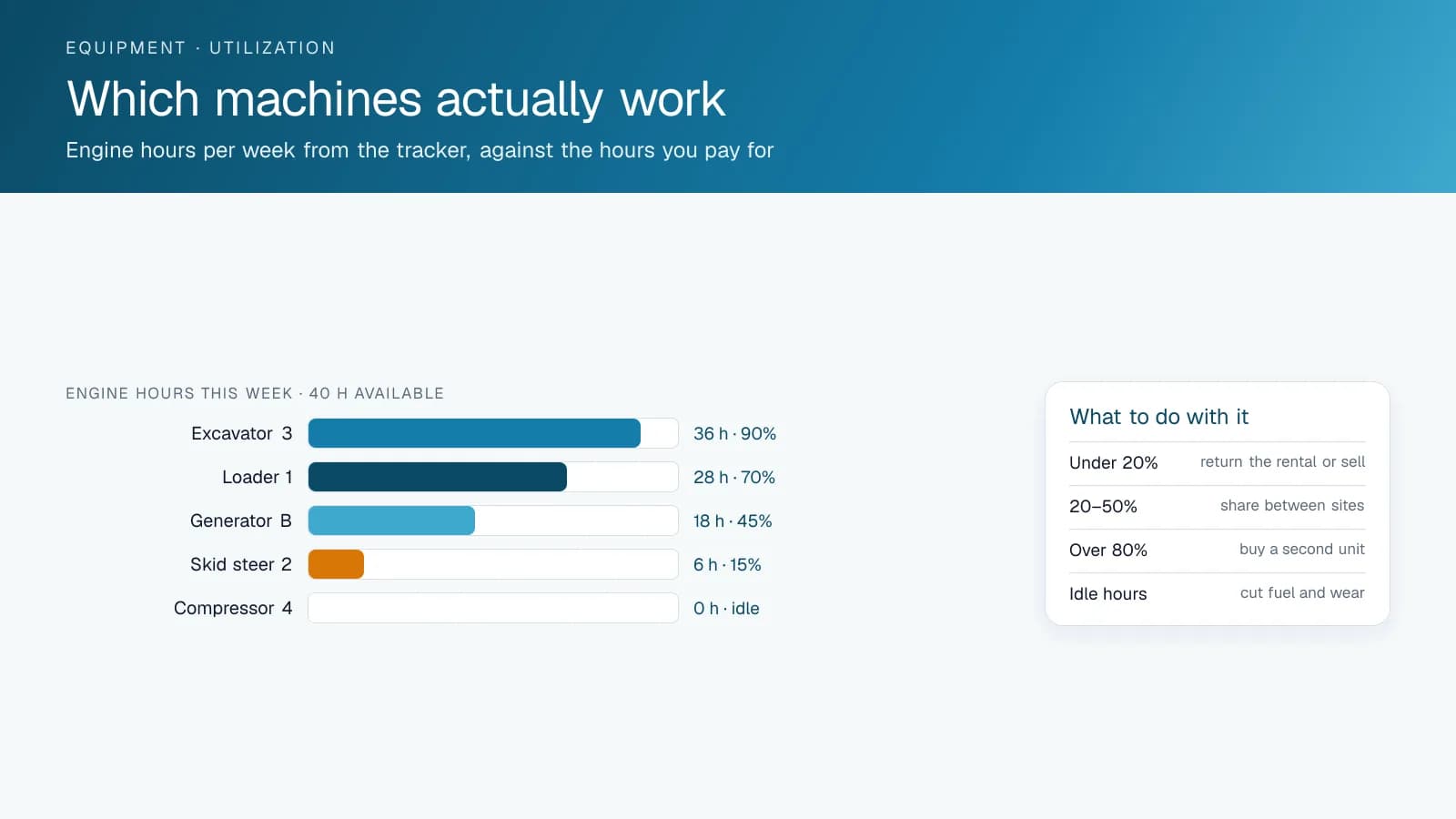
| 2. Machines | Excavators, loaders, dozers, generators | rugged GPS tracking device or sealed GPS tracking device | Engine hours, utilization, theft alerts |
| 3. Everything else | Trailers, compressors, attachments, tools | Battery trackers and Bluetooth tags | Where the small stuff is; left-behind alerts |
| 4. Cameras and compliance | Dump trucks, haulers, any vehicle on public roads | AI dash cams; ELD and DVIR switched on where thresholds are met | Claims defended; roadside inspections passed |
| Ongoing | Every project | Geofence per site, opened and closed with the job | Attendance, hours by job, theft alerts that stay accurate |
Frequently asked questions
Does ELD apply to construction trucks?
It depends on the vehicle's weight rating, whether it runs in interstate commerce, and whether an exemption such as the short-haul exception applies. A truck can be a commercial motor vehicle under FMCSA's 10,001-lb threshold without needing a CDL (required from 26,001 lbs) or an ELD. In Canada, the federal threshold is 4,500 kg. Check current guidance for your fleet.
What's the biggest fleet-tracking mistake construction companies make?
Using one device type for everything. Trucks, heavy equipment and tools have different power and connectivity realities, so treating them the same usually means overpaying to track low-value tools or under-tracking high-value machines. Match the device to the asset: powered trackers on trucks and equipment, Bluetooth tags on tools.
Can one platform handle both trucks and heavy equipment?
Yes. The High Point GPS platform can run standard or rugged GPS devices on trucks alongside Bluetooth asset tags or standalone trackers on equipment. All of it shows up in the same High Point GPS platform dashboard, so you see trucks, machines and tools on one map instead of juggling separate systems.
Do geofences need to be updated as a construction project progresses?
Yes. A job site's active work area changes shape as the project moves through its phases. A geofence boundary set once at the start of a project either becomes a source of false alerts or stops covering the area you need monitored, so update it at each phase.
Sources
Related solutions & products
Related terms
Continue reading
- Industries overview →
- Who Needs IRP? Apportioned Registration Requirements and How to Apply →
- Who Needs IFTA? The Qualified Motor Vehicle Definition, Axle by Axle →
- Form 2290 and the Heavy Vehicle Use Tax for Canadian Carriers Running Into the US →
- Construction Equipment Telematics: Tracking Heavy Machines, Not Just Trucks →
- More in Industries →
Get a free quote
- Over 500 fleets
- Since 2013
- 4.9 on Google (19 reviews)
What are you looking for?
Prefer to talk?Call 1-800-613-6323[email protected]