
GPS Fleet Tracking & Telematics
Small Fleet GPS Tracking: What It Changes for Your Fleet
Small fleet GPS tracking pays off in fewer phone calls, less idling and earlier repairs. See what to use under twenty vehicles and what to skip.

What Does GPS Tracking Change for a Small Fleet?
Small fleet GPS tracking mostly changes how much of your day goes to answering questions. At five or ten vehicles the owner can usually say roughly where everyone is, having spoken to half of them that morning, so a pitch about seeing where your fleet is falls flat.
Getting that knowledge costs you the morning, though. At this size the return comes from the phone calls you stop making: the customer asking when someone will arrive, the dispatcher checking whether a job finished, the argument about how long a van sat at a site. You read those answers off a screen and get the time back.
Which Numbers Move in a Small Fleet?
Fuel and idling are usually the first wins. A small fleet notices one truck idling an hour a day, where a two-hundred-vehicle operation averages it away. Maintenance reminders come next: at this size one unplanned breakdown can take a meaningful share of a week's capacity, and catching a fault code early decides whether you get a scheduled repair or lose a day.
Disputed accidents are the third, and owners tend to underestimate them until one happens. With a handful of vehicles, a single at-fault claim can move an insurance renewal materially. Video of what happened is worth having before you need it.
What Can a Small Fleet Ignore?
A telematics demo will show driver scorecards, benchmarking across depots, custom dashboards and workflow automation, all built for fleets with a full-time fleet manager. If nobody at your company has that job title, you will never open most of it.
Say so in the sales conversation. A smaller fleet gets more from three reports it reads than from forty it ignores, and a provider who can't configure down to that is selling you their org chart.
Does Compliance Still Apply to a Small Fleet?
Fleet size is not the test for ELD, DVIR or IFTA. A two-truck operation crossing into another jurisdiction with a qualifying vehicle falls under the same rules as a large carrier, and small fleets are more likely to assume an exemption because they feel small.
Check instead of assuming, in either direction. A vehicle's weight, axle count and where it travels decide the answer, and being a family business doesn't change it.
How Long Does Installation Take?
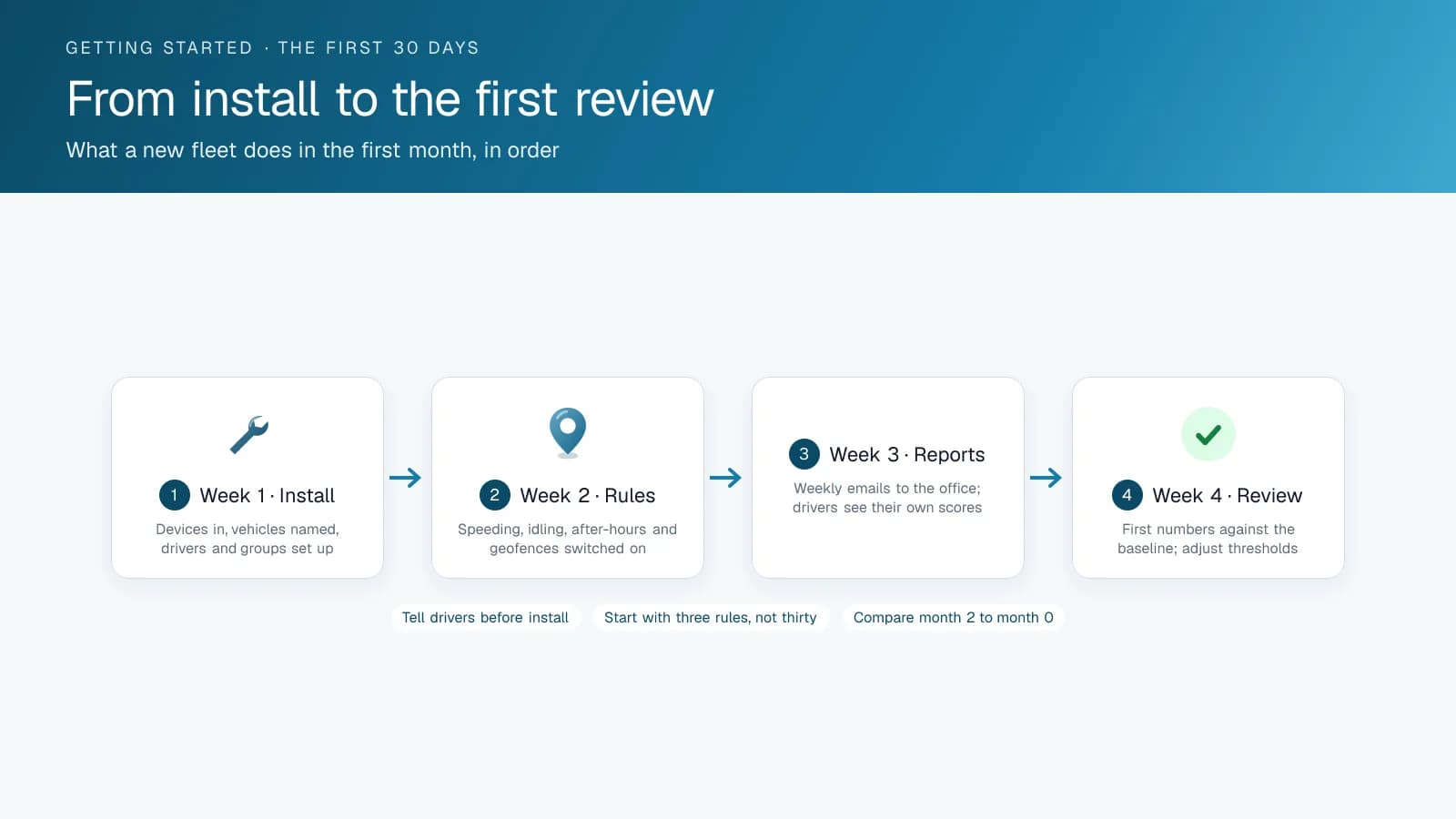
For vans and light trucks with a standard diagnostic port, the tracking device connects at the port through a T-harness, with no wires cut and no downtime. A fleet can do this itself, but High Point GPS always recommends a professional installer, and installation is part of the service.
Older vehicles, heavy trucks and anything hardwired are the exception and need scheduling. In a mixed fleet, the simple half goes in right away and the rest gets a date.
Which Three Reports Should You Read?
For a fleet of five to ten vehicles, three reports carry almost all the value, and each takes a few minutes a week.
| Report | When | What to do with it |
|---|---|---|
| Stops by vehicle | Daily, or when a customer calls | Answer arrival and time-on-site questions from the screen; attach to disputed invoices |
| Idle and after-hours | Weekly | Name the vehicle idling the most and the trip on Sunday; one conversation each |
| Maintenance due and fault codes | Weekly | Book the service before the breakdown; send the truck with the active code to the shop |
Frequently asked questions
Is fleet tracking worth it for under ten vehicles?
Usually, though for different reasons than a large fleet. At this size the return comes from lower fuel and idling costs, catching maintenance issues early, and having evidence in a disputed accident. Visibility matters less, because a small operator mostly knows where the vehicles are already. Fewer check-in phone calls add to the payback.
What is the minimum fleet size for GPS tracking?
There is no technical minimum, and a single vehicle can be tracked. The practical question is whether the monthly per-vehicle cost pays for itself in fuel, downtime or claims. For a small fleet, the answer usually turns on idling and unplanned breakdowns.
Does a small fleet need ELD or IFTA compliance?
Possibly. Fleet size is not the test: vehicle weight, axle count and the jurisdictions travelled decide it. A two-truck operation crossing a border with a qualifying vehicle is under the same rules as a large carrier, so check each vehicle instead of assuming you are exempt.
How long does installation take for a small fleet?
It depends on the vehicle. For vans and light trucks with a standard diagnostic port, the device connects at the port through a T-harness, with no wires cut. A fleet can do it itself, but High Point GPS always recommends a professional installer. Heavy trucks, older vehicles and hardwired setups take longer and need a scheduled install.
Related solutions & products
Related terms
Continue reading
- GPS Fleet Tracking & Management Software overview →
- GPS Fleet Tracking Buyer's Guide and Checklist →
- What Is Telematics? Fleet Telematics and GPS Data Explained →
- What Is Fleet Management Software? Modules and How to Choose →
- Motive Alternatives in Canada: ELD, Camera and Tracking Options Compared →
- More in GPS Fleet Tracking & Telematics →
Get a free quote
- Over 500 fleets
- Since 2013
- 4.9 on Google (19 reviews)
What are you looking for?
Prefer to talk?Call 1-800-613-6323[email protected]