
GPS Fleet Tracking & Telematics
GPS Tracking Device Installation: What to Expect
Most GPS tracking device installs are plug-and-play with no wiring. Here is what actually happens during install, and when a different setup is needed.

What a Standard Install Actually Involves
For most light and medium-duty vehicles, installing a GPS tracking device is a plug-and-play job: the device connects directly to the vehicle's OBD-II or 9-pin diagnostic port, with no antennas to mount and no wires to cut or splice. That's the detail that actually matters for fleet-wide rollout planning, since a technician can typically move through an entire fleet in a single visit rather than scheduling extended downtime per vehicle.
There's no calibration step or extended setup window after the physical install either. Once plugged in, the device begins reporting location, trip, and engine diagnostic data into the High Point GPS platform, and a fleet manager can generally start seeing live data the same day, not after a multi-day onboarding delay.
When the Install Looks Different
Not every vehicle has a standard OBD-II port. Older vehicles, and many heavy-duty trucks and off-road equipment, either lack one entirely or use a different diagnostic standard than the GPS tracking device's default harness expects. For those, a 3-wire tracking option delivers the same location and trip data through a hardwired connection instead, which does take longer and typically requires a technician comfortable with basic vehicle wiring rather than a simple plug-in.
A mixed fleet, some newer vehicles with standard ports, some older ones without, usually ends up running both installation types side by side. That's normal and doesn't mean the rollout has to happen in two separate phases; a technician can typically handle both installation types in the same visit if the fleet mix is known ahead of time.
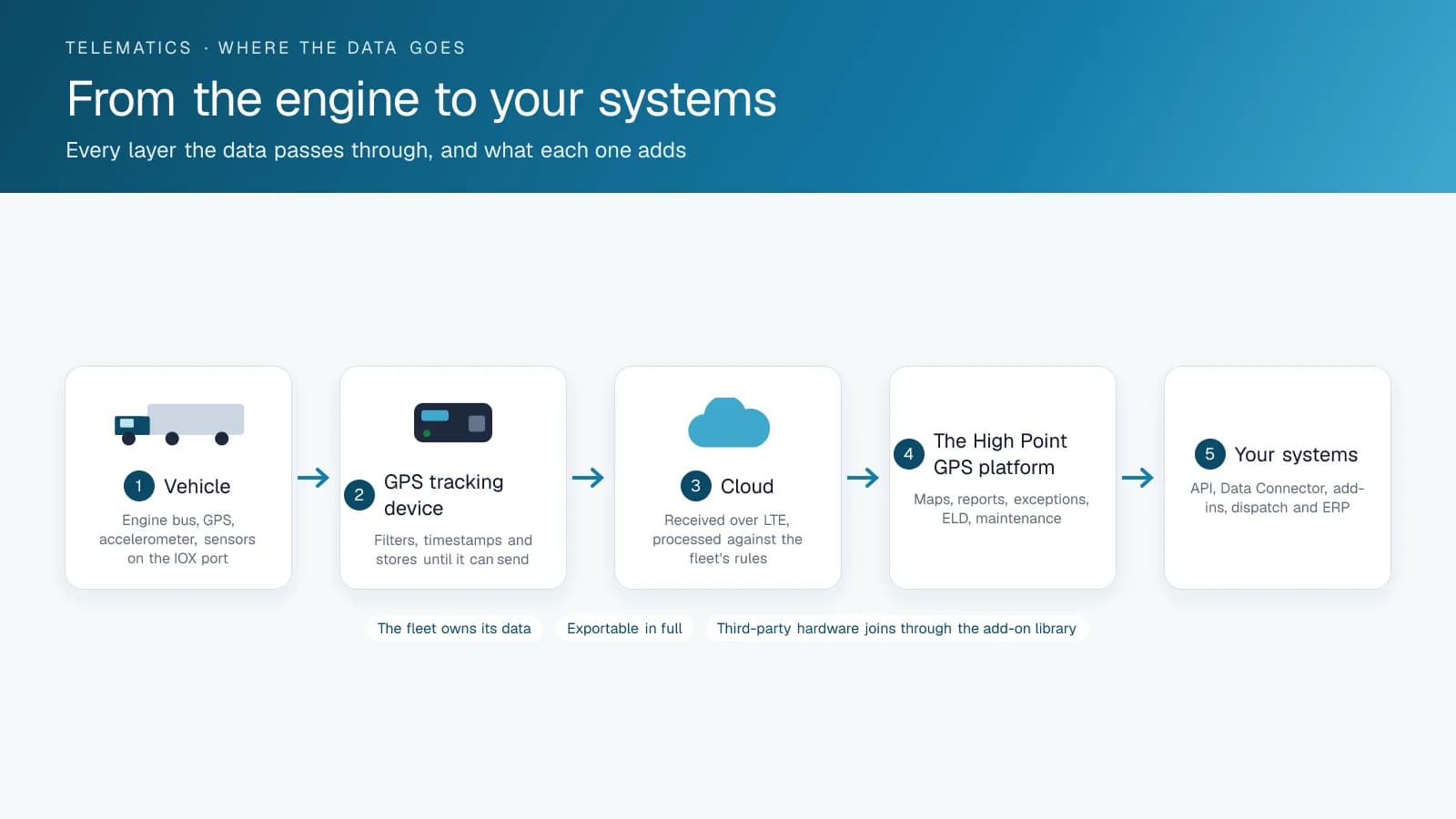
What Actually Determines Install Time
The single biggest factor in how long a fleet-wide install takes isn't the number of vehicles, it's the mix of installation types needed. A fleet where every vehicle has a standard OBD-II port moves fast, since each install is genuinely just plugging in a device. A fleet with a significant share of older or heavy-duty vehicles needing the 3-wire option takes longer per vehicle, which is worth factoring into rollout scheduling rather than assuming a flat per-vehicle time estimate.
That's also why confirming port compatibility across a fleet before scheduling installation matters. Knowing the actual mix in advance, rather than discovering it vehicle by vehicle on install day, is what keeps a multi-vehicle rollout from running long.
What to Prepare Before the Installer Arrives
An installation day goes quickly when the office has done five things in advance. A vehicle list with unit number, VIN, plate and where each vehicle will be on the day, so the installer is not hunting for trucks. A decision on device placement for each vehicle class, because a GPS tracking device that must be hidden takes longer than one on the port. The High Point GPS platform database built with vehicles named and groups set, so each device is assigned as it goes in rather than sorted out afterwards. Drivers told what is being installed and why, with the camera policy signed if cameras are going in. And a person on site with keys and authority, because the installer will find a vehicle with a dead battery or a port already occupied by another dongle and will need a decision. High Point GPS sends the checklist with the quote and confirms it the day before.
Frequently asked questions
Does installing a GPS tracking device require cutting or splicing any wires?
Not for most vehicles. A standard install plugs directly into the OBD-II or 9-pin diagnostic port. Only vehicles without a standard port need the 3-wire hardwired option.
How long does a GPS tracking device install take per vehicle?
A standard plug-and-play install typically takes minutes. A 3-wire hardwired install for a vehicle without a standard diagnostic port takes longer, since it involves basic wiring work rather than a simple plug-in.
Does data start showing up in the High Point GPS platform right after installation?
Yes, generally the same day. There's no extended calibration period after a standard install before location and trip data starts reporting.
Can a mixed fleet with different vehicle ages be installed in one visit?
Usually, yes. A technician can typically handle both standard plug-and-play and 3-wire installs in the same visit if the fleet's port compatibility mix is confirmed ahead of time.
Sources
Related solutions & products
Related terms
Continue reading
- GPS Fleet Tracking & Management Software overview →
- How Does the GPS Tracking Device Work? From the Diagnostic Port to the Dashboard →
- GPS Tracking Device vs GPS Tracking Device Plus: Which Is Right for Your Fleet? →
- What Does a Fleet Tracking Reseller Do? How Buying Through a Partner Works →
- What Is an IOX Port and What Does It Do? →
- More in GPS Fleet Tracking & Telematics →
Get a free quote
What are you looking for?