
GPS Fleet Tracking & Telematics
Maintenance Strategy for Aging Fleets
Aging fleet maintenance works best when it is condition-based: service each truck on fault codes, engine hours and inspections, not a fixed calendar.
Why Does Fixed-Interval Maintenance Fail Aging Fleets?
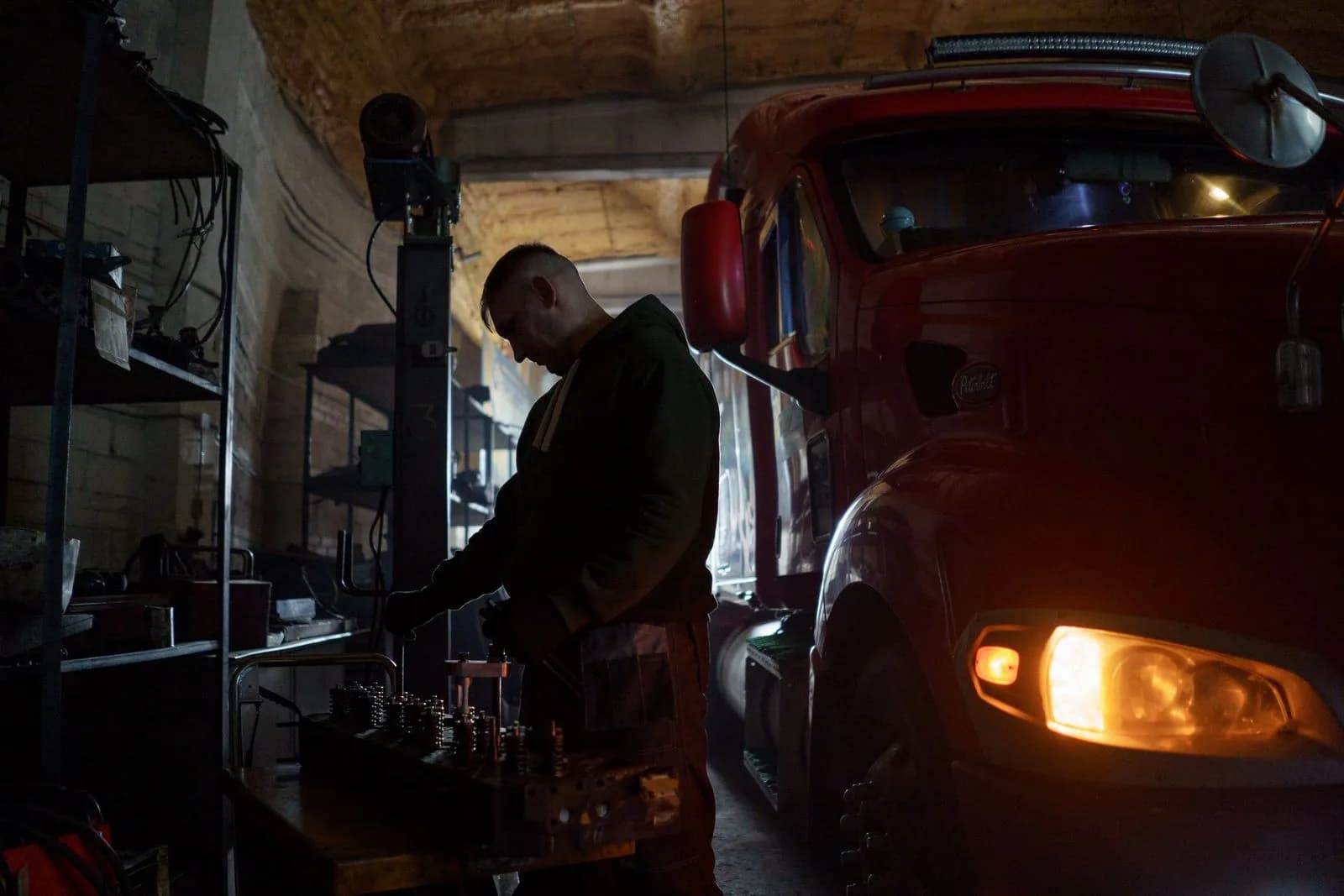
For aging fleet maintenance, the strategy that fits is condition-based: you service each truck on what inspections, usage data and live vehicle condition show, instead of on a fixed interval. A fixed schedule (service every so many miles or months) rests on one assumption, that vehicles of similar age and type wear out in similar ways. That holds up well enough for a fleet of newer trucks bought around the same time. It holds up far less well once replacement cycles stretch out and trucks with very different ages and wear histories run side by side.
As trucks age, each one develops its own wear pattern, so repairs get less standard and harder to plan against a generic schedule. Two trucks of the same model bought at the same time can need completely different attention by year five, even if both started on the same maintenance calendar.
What Is Replacing the Fixed Schedule?
Fleets are moving toward maintenance guided by inspections, usage data and real-time vehicle condition in place of a static calendar. It takes more effort to run, but it is more accurate, because you service a vehicle based on what it is telling you instead of what a generic interval assumes.
Repair-or-replace decisions are changing the same way. They used to be a one-time calculation, and now they are an ongoing review that weighs parts availability and technician labour constraints alongside the vehicle's own condition. A repair that made sense a year ago may not make sense today if the parts lead time has stretched or a skilled technician for that system has become harder to find.
Why It Matters More as Fleets Keep Trucks Longer
When a fleet keeps its trucks longer, the cost of getting the maintenance strategy wrong goes up. A fleet keeping older equipment longer has less margin for an approach that over-services healthy vehicles or misses a real problem in a truck that is wearing out.
It also helps explain why more fleets now use independent aftermarket service networks instead of relying only on OEM dealer networks. Those dealer networks generally aren't set up to support vehicles indefinitely once they age well past a typical warranty or first-owner period.
What Data Makes Condition-Based Maintenance Possible?
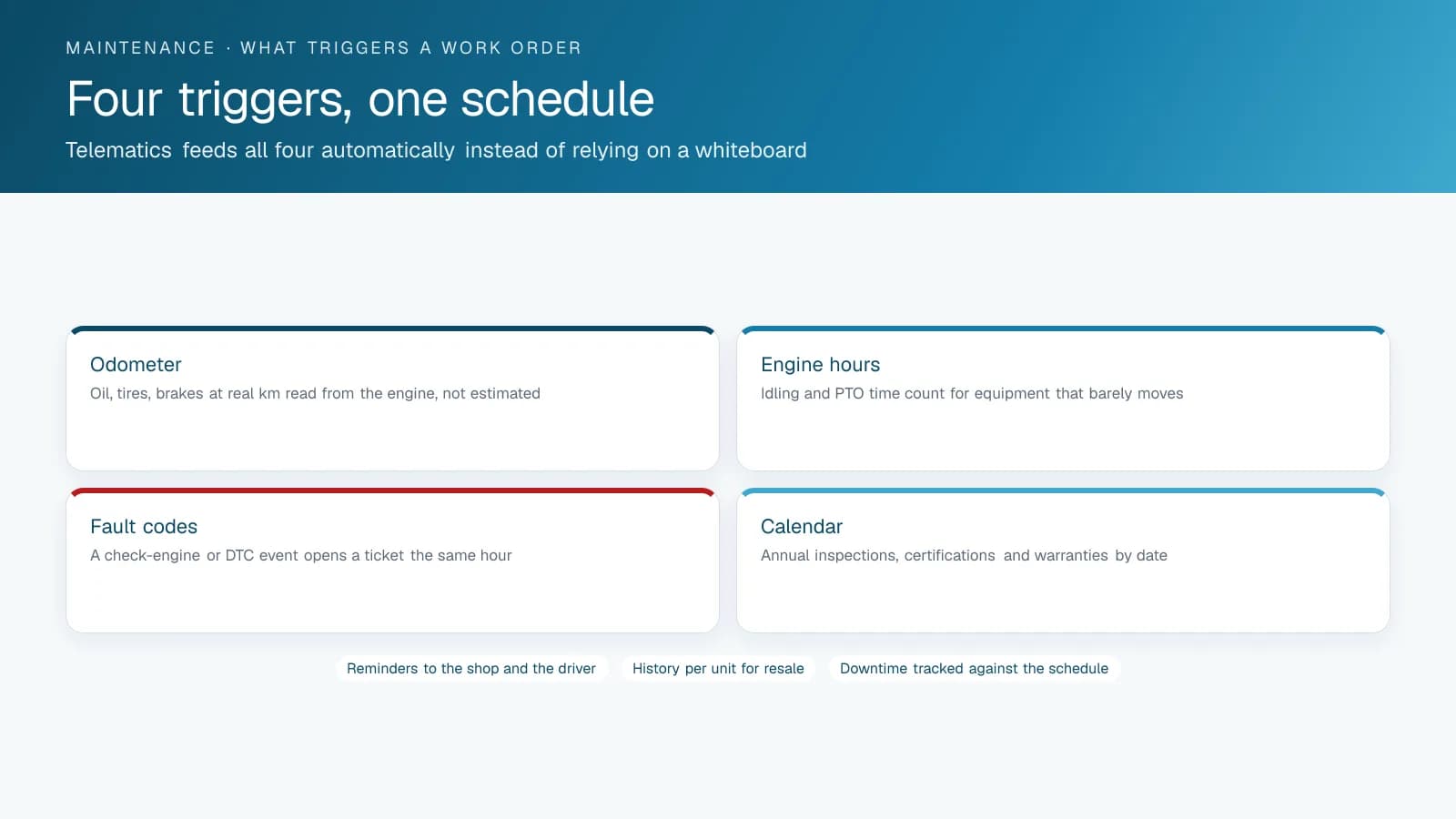
Condition-based maintenance needs real usage and condition data behind it. Engine-hour tracking, fault code data and diagnostic trends over time let a fleet manager see which vehicles show real wear and which are running better than their calendar age would suggest, so decisions stop being guesses based on age alone.
That is where telematics connects to this change in how fleets maintain trucks. Condition-based maintenance is only as good as the condition data feeding it, and a fleet without that data falls back on a generic schedule, however well it understands the better approach in principle.
A Condition-Based Rule Set to Start With
You don't need a data science project to start condition-based maintenance. Five rules on the telematics platform capture most of the gain for an aging fleet. Open a ticket on any active fault code above a severity your shop sets, so the truck comes in before the code turns into a tow. Flag any unit whose battery voltage trends down over ten days, since that predicts a no-start. Flag any unit whose coolant temperature under normal load has risen against its own average, which points to a cooling-system problem. Move oil intervals to engine hours for units that idle more than a quarter of their engine time, because calendar intervals over-service the light users and under-service the idlers. Finally, review maintenance cost per kilometre by unit each quarter, so the trucks with climbing costs are the first ones considered for replacement. High Point GPS configures these rules as part of a maintenance setup for fleets across Canada and the United States.
Frequently asked questions
Why is fixed-interval maintenance becoming less effective for aging fleets?
As trucks age, each one develops its own wear pattern, so repairs become less standard and harder to schedule. A fixed schedule assumes vehicles of similar age wear out the same way, and that assumption breaks down once a fleet runs trucks with very different ages and wear histories side by side.
What is condition-based maintenance?
Condition-based maintenance is service guided by real-time vehicle condition, inspections and usage data instead of a fixed calendar or mileage interval. You service each vehicle based on what its data shows, such as fault codes, engine hours and diagnostic trends, and not on a generic schedule that assumes every truck wears the same way.
What data makes condition-based maintenance possible?
Engine-hour tracking, fault code data and diagnostic trends over time make it possible. Telematics collects all three. Without that data, a fleet has no practical way to tell which vehicles need attention now and which are fine despite their calendar age, so it ends up back on a generic schedule.
Why are more fleets using independent aftermarket service instead of OEM dealers?
OEM dealer networks generally aren't built to support vehicles indefinitely once they age well past a typical warranty or first-owner period. Fleets that keep older trucks running longer therefore turn to independent aftermarket service networks for the repairs a dealer network is less suited to handle on an older truck.
Related solutions & products
Related terms
Continue reading
- GPS Fleet Tracking & Management Software overview →
- Is There GPS Fleet Tracking With No Monthly Fee? →
- The Questions Worth Asking a Fleet Tracking Vendor Before You Sign →
- Truck Driver Shortage 2026: Why Retention Matters More →
- Driver Safety Scorecard: How Driver Scoring Works for Fleets →
- More in GPS Fleet Tracking & Telematics →
Get a free quote
- Over 500 fleets
- Since 2013
- 4.9 on Google (19 reviews)
What are you looking for?
Prefer to talk?Call 1-800-613-6323[email protected]