
Industries
NEMT Dispatch Software: What NEMT Software Has to Handle
NEMT dispatch software takes in broker-assigned trips, matches each ride to an accessible vehicle and tracks pickup times for billing and disputes.
How is NEMT dispatch software different from standard dispatch?
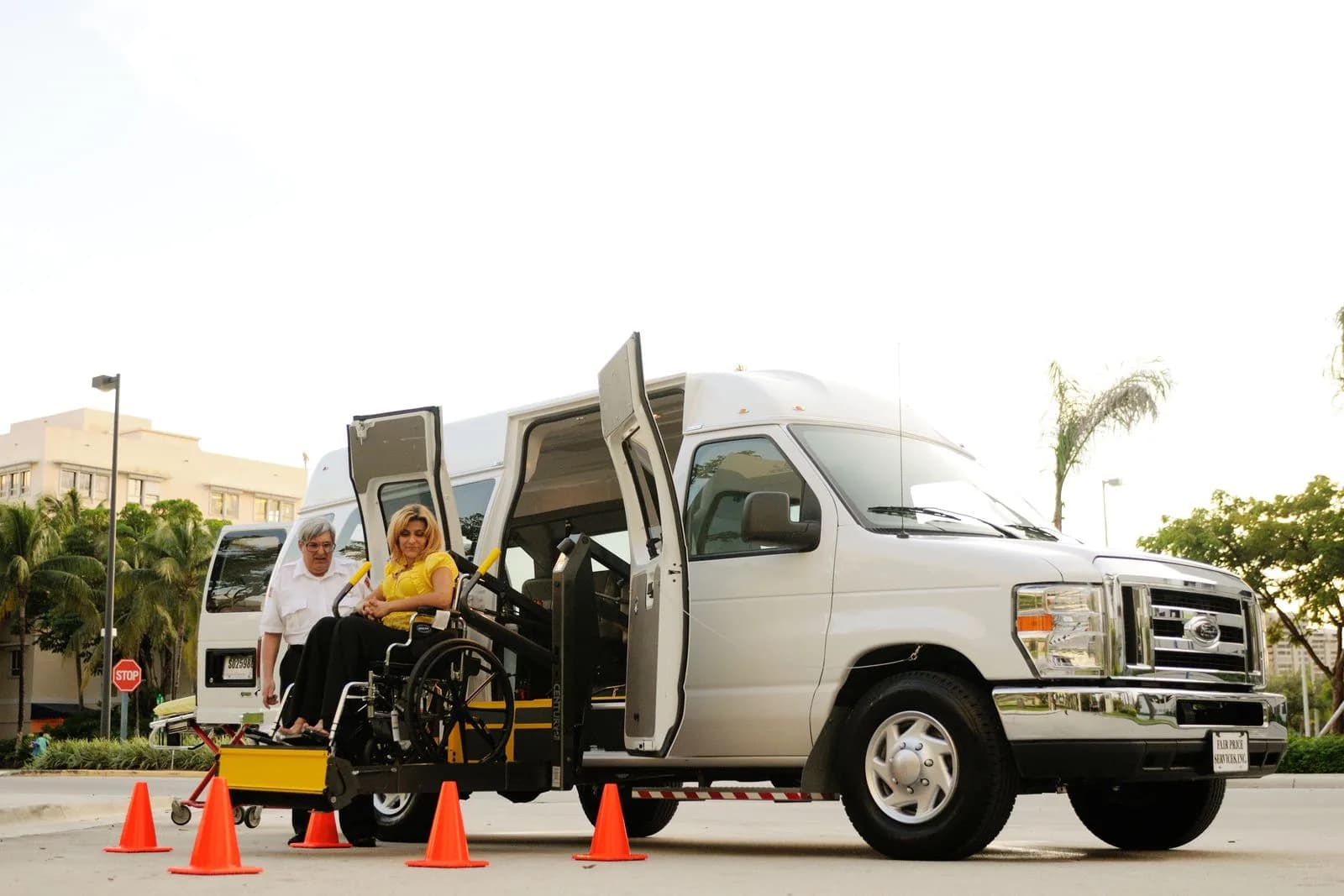
NEMT dispatch software has to handle rides that a broker assigns, match each one to a vehicle that meets the rider's needs, and time pickups around medical appointments that can't move. That makes non-emergency medical transport (NEMT) dispatch a different problem from standard fleet dispatch. Each ride often carries its own requirements, such as wheelchair accessibility or a specific vehicle type, and a general-purpose dispatch tool isn't built around them.
NEMT dispatch software typically has to take in broker-assigned trips (often through an integration instead of a phone call) and match each ride to a vehicle that meets its accessibility requirements. It also tracks pickup and drop-off times as they happen, for broker reporting and billing, and flags a trip running late early enough for you to act, before a rider has already missed an appointment.
A late or missed pickup also costs more here than in most dispatch work. When a dialysis patient or someone due for a chemotherapy session misses an appointment, the treatment itself may have to be rescheduled. That is part of why brokers watch on-time performance closely and why documentation carries so much weight in this industry.
What do Medicaid rules require of NEMT providers and drivers?
Federal Medicaid law sets four minimum requirements for NEMT providers and drivers, and each state sets the rest. Section 209 of the Consolidated Appropriations Act, 2021 added section 1902(a)(87) to the Social Security Act, which requires every state Medicaid plan to have a mechanism, which may be an attestation, ensuring that: no provider or individual driver is excluded from federal health care programs or listed on the HHS Inspector General's exclusion list; each driver has a valid driver's licence; each provider has a process to address any violation of a state drug law; and each provider has a process to disclose to the state Medicaid program the driving history, including traffic violations, of each driver it employs. Public transit authorities are excluded from these requirements.
Beyond those four, CMS says federal Medicaid law sets no additional basic driver and vehicle standards; states generally set them through the agencies that manage motor vehicles. Where a state runs NEMT through a broker, 42 CFR 440.170(a)(4) requires the broker contract to be competitively bid and to include oversight procedures that monitor beneficiary access and complaints and ensure transport personnel are licensed, qualified, competent and courteous. That is why brokers ask for driver credentials and records before assigning trips.
For dispatch, the practical consequence is that each trip should carry the identity of a driver you can show is qualified. Keep licence expiry dates, exclusion list checks and driving history disclosures on the driver's file, and use driver ID in the vehicle so the trip record names that driver. These are US Medicaid rules; they do not govern medical transport in Canada.
What trip records does Medicaid expect an NEMT provider to keep?
Every Medicaid provider agrees to keep the records needed to show the extent of the services it furnished, and to hand them over on request. Under 42 CFR 431.107(b), the state plan must require an agreement in which each provider keeps those records and furnishes them, along with information on payments claimed, to the state Medicaid agency, the HHS Secretary or the state Medicaid fraud control unit when asked. CMS's Medicaid Transportation Coverage Guide adds that documentation should support that each claim represents necessary transportation to or from a covered service, and that records should be accurate and complete.
CMS also expects the state, the broker and the transportation company to monitor complaints about access and quality, naming timely rides, courteous drivers and clean vehicles among the examples. The exact fields a trip record needs, such as signatures, odometer readings or wait times, come from your state Medicaid manual and your broker contract, so read both before you choose a dispatch tool.
GPS trip history supports those records independently of the driver's entries: a time-stamped arrival, departure and drop-off at each geofenced address, and the distance driven between them. When a broker or auditor asks about a trip months later, the answer comes from the record, matched to the claim, instead of from memory.
Where GPS and telematics data already helps
GPS and telematics data earns its keep in NEMT whatever dispatch tool you use. Brokers dispute pickup and drop-off times regularly in this industry, and a time-stamped location record settles the argument far faster than a driver's word against a broker's assumption. Fleets with solid trip documentation go into these disputes in a much stronger position than fleets relying on memory and paper logs.
Driver-facing video adds a layer specific to NEMT. With vulnerable or elderly riders on board, a recorded view of how a driver helped a passenger in and out of the vehicle can resolve a complaint or liability question far faster than conflicting accounts from the driver and a rider's family member.
Where High Point GPS stands today, and where to start
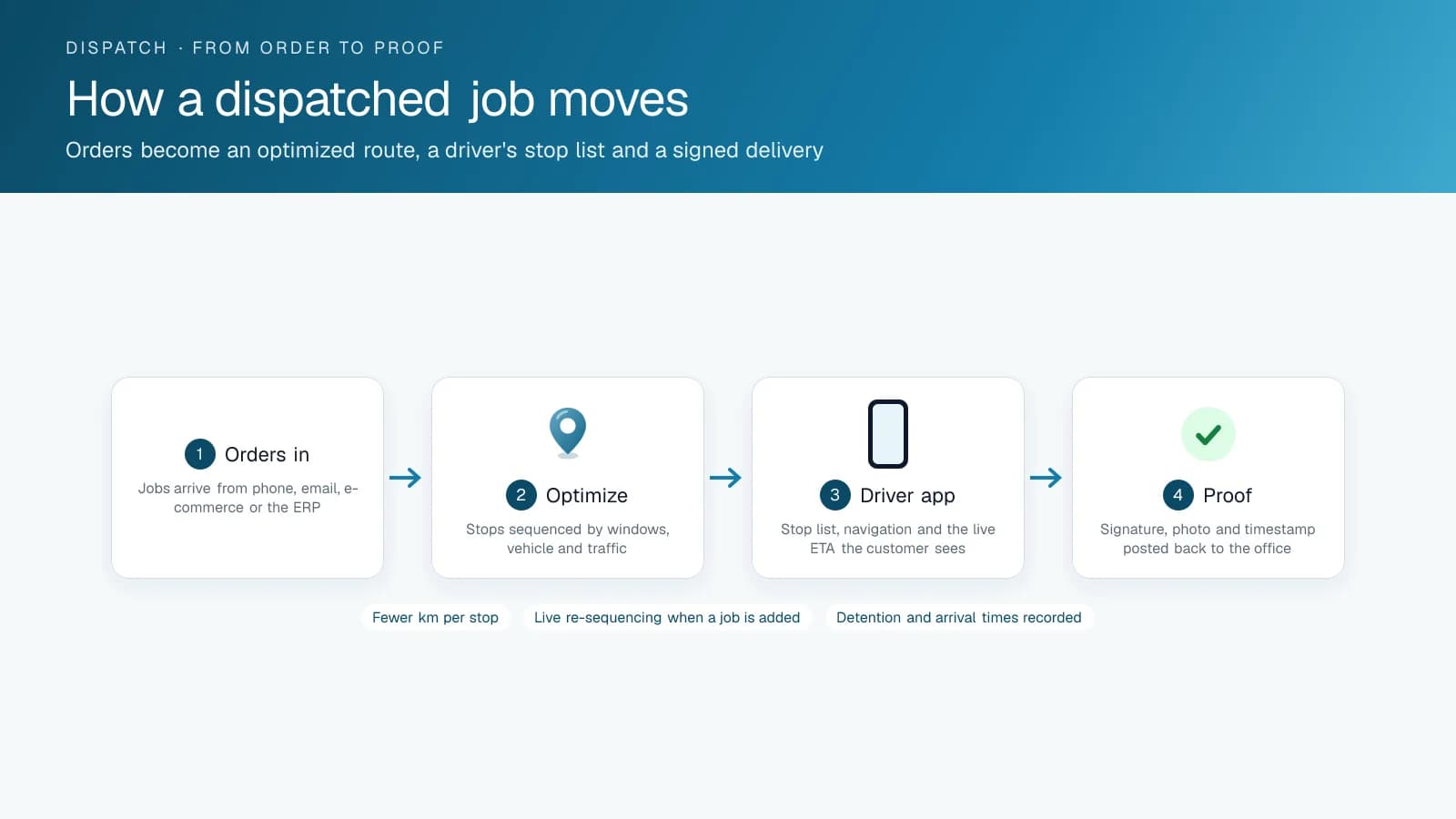
To be direct: High Point GPS does not sell a dedicated NEMT dispatch product. Our own maintenance and dispatch software, FleetZap (fleetzap.com), is available now: its Dispatch module optimizes routes across drivers, gives ETAs based on road time, includes a driver app, emails customers a live tracking link and records proof of delivery, and it integrates with Geotab and other telematics platforms. It is general dispatch software, not an NEMT-specific product built around broker trip intake or Medicaid billing. Alongside it, GPS tracking, driver-facing video and detailed trip history already cover the documentation and accountability half of the NEMT problem, which for many fleets is the more urgent gap.
If you run an NEMT operation and are deciding where to start, lock down trip documentation and driver accountability first with GPS tracking and video, because that is what protects you in broker disputes today. Treat dispatch software as the next investment, once your ride volume and broker relationships justify it, and check any tool, FleetZap included, against what your broker contract asks of trip intake and records.
What should an NEMT operator put in place first?
For an NEMT operator starting from paper and phone calls, this order protects revenue soonest. First, put a GPS tracking device in every vehicle and a geofence around every recurring pickup and facility, so each trip has an arrival, a wait and a drop-off time from the day the devices go in. Second, add driver ID, so every trip carries a credentialed driver's name for the broker's audit. Third, install a driver-facing camera in the wheelchair vans, where passenger-assistance complaints are most common and most costly. Fourth, match the weekly trip report against the broker's remittance; that is where operators find unpaid trips and the no-shows they can now prove. Only then choose a dispatch tool, judged on its broker integration and its ability to read the platform's live positions, so the trips it schedules get checked against the record you already keep. High Point GPS sets up the first four for NEMT operators across Canada and the United States, offers its own dispatch software, FleetZap, and connects other dispatch tools through the High Point GPS API.
Frequently asked questions
What makes NEMT dispatch different from regular fleet dispatch?
NEMT trips are usually assigned by a broker instead of booked directly, and they are tied to medical appointment times that can't be pushed back. Each ride often needs a specific vehicle type, such as a wheelchair-accessible van, and general-purpose dispatch tools aren't built to match those requirements ride by ride or to produce the trip records brokers expect.
Can GPS tracking help resolve NEMT broker disputes over trip times?
Yes. Time-stamped location and trip history give you a defensible record of exact pickup and drop-off times, which is typically what brokers and payers ask for when they dispute a trip. That record settles disagreements far faster than a driver's word, and it helps you prove trips the broker has not yet paid for.
Does High Point GPS offer dedicated NEMT dispatch software?
Not NEMT-specific software, but our own dispatch software, FleetZap, is available. It optimizes routes across drivers, gives road-time ETAs, includes a driver app, emails customers a live tracking link and records proof of delivery. Confirm how it fits your broker's trip and billing requirements. GPS tracking, video and trip documentation cover the reporting side, and other dispatch tools can connect through the High Point GPS API.
Does driver-facing video help with NEMT-specific liability concerns?
Yes. With vulnerable or elderly riders on board, recorded footage of how a driver assisted a passenger during pickup and drop-off can resolve a complaint or liability question faster than conflicting verbal accounts. Wheelchair vans are the place to start, since that is where passenger-assistance complaints are most common and most costly.
What are the federal requirements for Medicaid NEMT drivers?
Federal law sets four minimums. Providers and drivers must not be excluded from federal health care programs or on the HHS Inspector General's exclusion list, each driver needs a valid driver's licence, and each provider needs a process to address state drug law violations and to disclose each driver's driving history to the state Medicaid program. States set any other standards.
Do NEMT providers have to keep trip records for Medicaid?
Yes. Federal rules require each Medicaid provider to keep the records needed to show the extent of the services it furnished and to provide them on request to the state Medicaid agency, HHS or the state Medicaid fraud control unit. CMS says the documentation should show each claim was necessary transportation to or from a covered service.
Sources
Related solutions & products
Related terms
Continue reading
- Industries overview →
- NEMT Fleet Tracking: GPS for Non-Emergency Medical Transportation Vehicles →
- Best Free Trucking Dispatch Software: What You Get →
- AI Dispatch Software: How AI Dispatching and Automated Routing Change Fleet Dispatch →
- Towing Dispatch Software: Real-Time Routing and Driver Assignment for Towing Companies →
- More in Industries →
Get a free quote
- Over 500 fleets
- Since 2013
- 4.9 on Google (19 reviews)
What are you looking for?
Prefer to talk?Call 1-800-613-6323[email protected]