
Industries
NEMT Fleet Tracking: GPS for Non-Emergency Medical Transportation Vehicles
NEMT fleet tracking gives non-emergency medical transportation providers the GPS pickup and drop-off records brokers expect, plus no-show proof.
Why Do NEMT Providers Need GPS Fleet Tracking?
NEMT fleet tracking produces the trip record that gets a non-emergency medical transportation provider paid. NEMT is reimbursed by the trip. In the US, a broker or state Medicaid program pays for a member taken from home to dialysis and back only if it can verify the trip: the vehicle was at the pickup address at the scheduled time, the member boarded, the vehicle reached the facility. Some state Medicaid programs and brokers validate completed trips with trip logs and GPS data, and audits recover payment for trips that do not meet program requirements. A geofence at each address and the vehicle's continuous track give arrival and departure times for every trip that match the broker's system or support a dispute.
How Does GPS Tracking Prove an NEMT No-Show?
The costliest NEMT trip is the one where the member never comes out. Under most contracts a no-show is billable only if the driver waited the required minutes at the correct address, and the provider carries the burden of proof. The vehicle's track shows the van at the address from 8:02 to 8:19, and a driver-facing camera shows the driver at the door. Without that evidence, the trip goes unpaid. The same data supports wait-time billing at facilities, where a driver held forty minutes for a patient being discharged is owed for that time.
Scheduling Around Wheelchair Vans
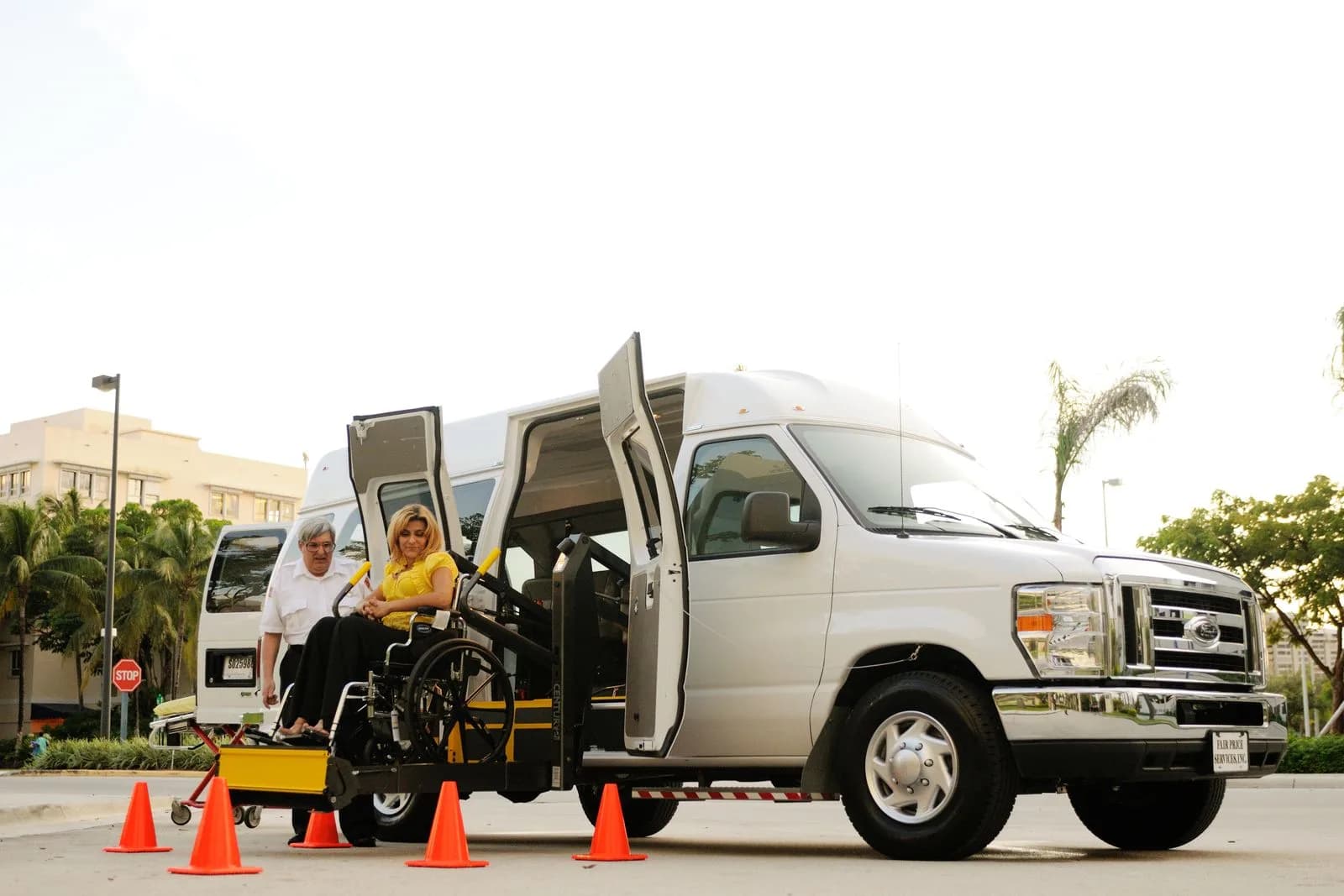
An NEMT fleet mixes sedans, minivans and wheelchair-accessible vans, and the accessible vans are the constraint. Dispatch needs to know where each one is, when its current trip ends and which member needs it next; the platform's live map with driver status shows that. Connect your dispatch or broker software through the API and the live ETA flows to the scheduler and, where the broker offers it, to the member's phone. Utilization reports show whether the mix is right. An operation running its accessible vans at capacity while sedans sit idle is about to buy the wrong vehicle next.
How Does Tracking Cover Drivers, Passengers and Video?
NEMT passengers are elderly, disabled or unwell, so the driver's speed, braking and cornering with a wheelchair secured in the back are a safety matter and a contract matter. Telematics scorecards give you a basis for coaching. An in-cab camera documents the ride for the complaint that arrives a week later and the injury claim that arrives a year later. Driver ID through the platform ties each trip to a named, credentialed driver, which matters because Medicaid fraud cases have involved unauthorized drivers.
What Trip Record Will a Broker Accept?
Brokers define what a verified trip looks like, and the platform produces each element while the driver does nothing more than drive.
| Broker requirement | Where it comes from | Format |
|---|---|---|
| Pickup arrival time and location | Geofence entry at the member's address | Timestamp and coordinates |
| Wait time at pickup | Dwell inside the geofence | Minutes, with entry and exit times |
| Drop-off arrival | Geofence entry at the facility | Timestamp and coordinates |
| Trip distance | Trip record between the two stops | Kilometres or miles |
| Driver identity | Driver ID or app login | Driver name and credential on file |
| Vehicle used | Device assigned to the vehicle | Unit number, wheelchair-accessible flag |
| No-show evidence | Dwell at the address for the required minutes, camera clip if fitted | Report and clip attached to the trip |
Frequently asked questions
Why do NEMT brokers ask for GPS tracking?
Brokers and state Medicaid programs use GPS data, along with trip logs, to verify trips. GPS timestamps at pickup and drop-off show that a reimbursed trip took place, and audits recover payment for claims that do not meet program requirements. A geofence at each address records arrival and departure times automatically.
How does tracking help with NEMT no-shows?
The vehicle's GPS track proves the driver waited the required time at the correct address, which most contracts make the condition for billing a no-show. Since the burden of proof sits with the provider, a driver-facing camera clip of the driver at the door strengthens the record.
Can GPS data feed the broker's system?
Yes. Through the platform's API, trip timestamps and live ETAs can flow into dispatch and broker software, so the scheduler sees where each vehicle is and when its trip ends. Where the broker offers it, the live ETA can also reach the member's phone.
Does NEMT tracking include driver monitoring?
Yes. Telematics driver scorecards, driver ID and optional in-cab cameras document who drove, how they drove and what happened on board. Driver ID ties each trip to a named, credentialed driver, and footage covers complaints or injury claims that arrive long after the ride.
Does NEMT tracking work for small operators?
Yes. A two-van operation faces the same trip verification requirement as a large fleet, because brokers and Medicaid programs pay only for trips they can verify. Payment for any trip it cannot verify can be recovered in an audit, whatever the size of the fleet.
Related solutions & products
Continue reading
- Industries overview →
- GPS Fleet Tracking for HVAC, Plumbing and Electrical Contractors →
- NEMT Dispatch Software: What NEMT Software Has to Handle →
- School Bus Tracker App: Can You Track a School Bus, and What Does Each Person See? →
- GPS Tracking for Landscapers and Lawn Care: Crew Time, Equipment and Snow Season →
- More in Industries →
Get a free quote
- Over 500 fleets
- Since 2013
- 4.9 on Google (19 reviews)
What are you looking for?
Prefer to talk?Call 1-800-613-6323[email protected]