
Dispatch & Routing
Route Optimization Software: What It Does and When It Pays
Route optimization software decides which vehicle visits which stops, and in what order, before navigation starts. What it weighs and when it pays off.
What Does Route Optimization Software Solve?
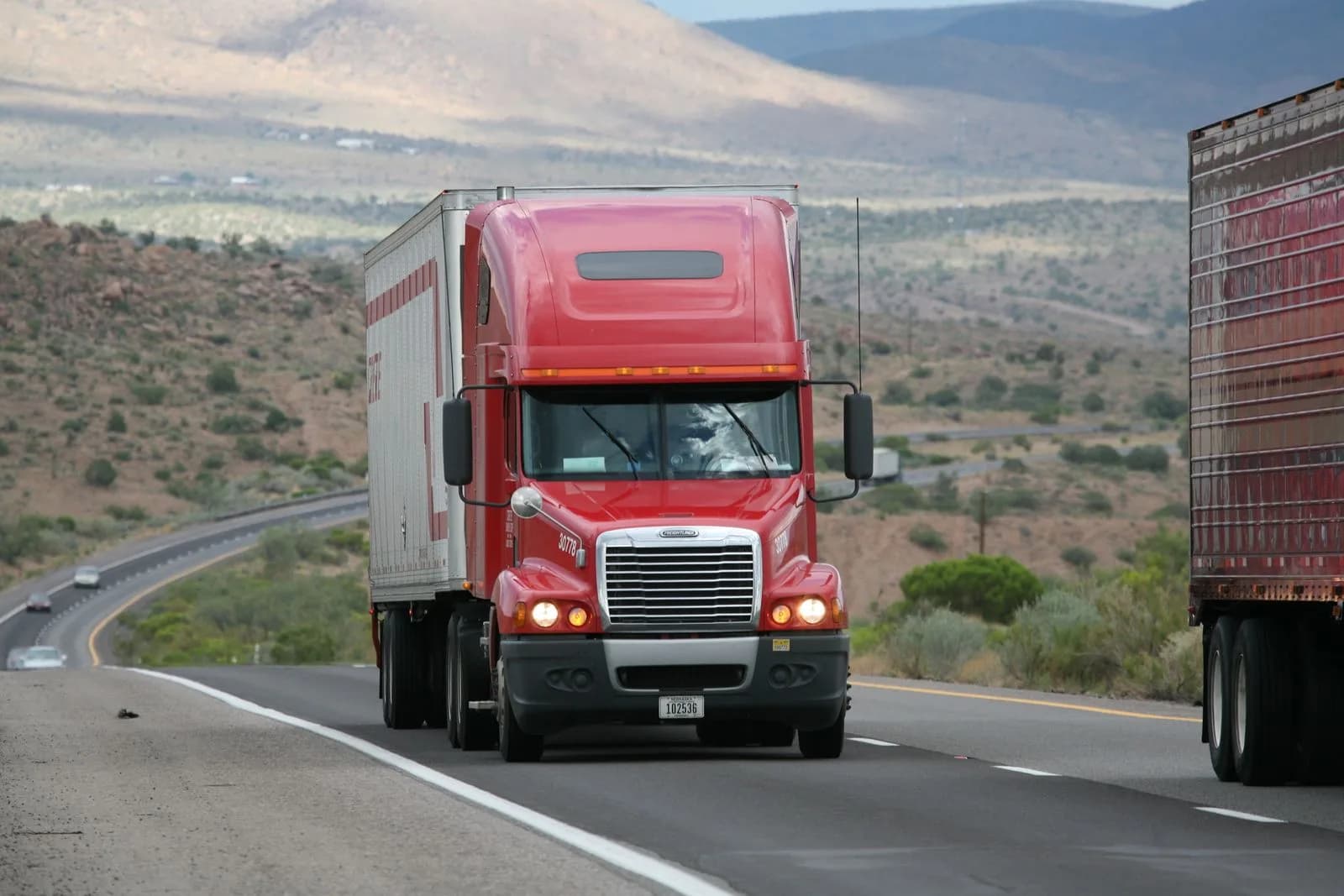
Route optimization software decides which vehicle should handle which stops and in what order, so total drive time, distance or cost is as low as possible across the whole day. Turn-by-turn navigation handles a far simpler job: getting one vehicle from point A to point B. Optimization belongs to the same family of problems as the classic "traveling salesman" puzzle, with real-world constraints added on top.
It pays to understand what sits behind the "optimize" button, because the quality of the plan depends on which constraints the engine weighs. Give two optimization tools the same stop list, and they can produce very different route plans if one accounts for each driver's remaining hours of service and the other ignores them.
For a large, complex routing problem, calculating the perfect solution exactly is often impractical, so most real-world engines use algorithms that find a very good solution quickly instead of searching every possibility for the mathematically perfect one. A dispatcher rarely notices the difference. A very good plan produced in seconds is more useful than a perfect one that takes too long to compute.
What Does a Route Optimization Engine Weigh?
A route optimization engine weighs delivery or appointment time windows, vehicle capacity, each driver's remaining hours of service, current and predicted traffic, and total distance, all at once, across every stop and vehicle in the plan. Change one input (a new rush order, a driver calling in sick, a road closure) and the best routing changes with it. That makes it a hard computational problem, and beyond a handful of stops a dispatcher cannot reliably work it out by eye.
Vehicle capacity matters more than people expect once you go past simple point-to-point deliveries. The shortest path between ten stops is useless if the assigned vehicle runs out of cargo space or weight capacity at stop six, and a plain "shortest distance" approach misses that kind of constraint completely.
Route Optimization vs Turn-by-Turn Navigation
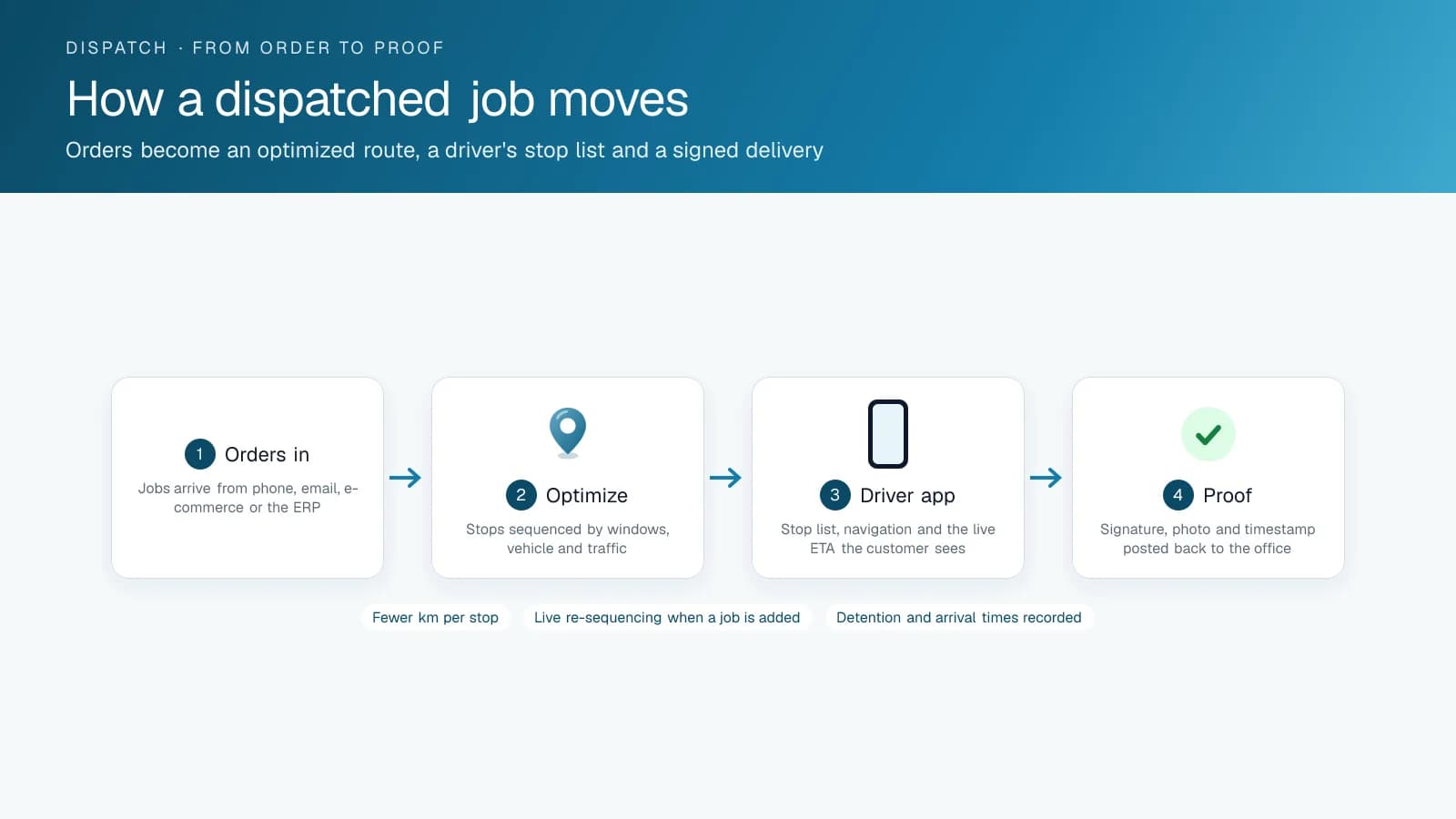
People mix these up all the time, but they solve different problems at different points in the day. Navigation comes after the plan is set and guides a driver along one specific route. Optimization comes first and decides the plan: which stops, in what order, on which vehicle. A fleet can have excellent navigation and still run badly sequenced routes if nothing upstream decides the order.
Put another way, navigation answers "how do I get there" and optimization answers "where should I be going, and in what order." You can buy the best navigation app on the market and still lose hours of drive time a day if nobody ever optimized the stop sequence underneath it.
What Needs to Be in Place Before Route Optimization Pays Off?
Route optimization is only as good as the data you feed it. You need clean, accurate stop addresses, real vehicle capacity and constraint data, and ideally your own historical trip times instead of generic map estimates. The payoff also grows with complexity. A fleet with a handful of stops on simple, stable routes has less to gain than one juggling dozens of stops, tight time windows and a vehicle count that changes from day to day.
Address quality is the blocker fleets most often miss. Feed an engine a batch of inconsistently formatted or outdated addresses and it produces a plan that looks efficient on paper and falls apart on the road. That is why cleaning up stop data usually comes first, well before you compare optimization tools.
Where High Point GPS Fits Today
To be plain about it: a dedicated, built-in route optimization engine is part of the platform's Dispatch & Routing product, which is still in development. What the platform gives you today (real-time vehicle location, historical trip times and hours of service remaining) are the inputs any route optimization tool needs, whether that turns out to be our future product or a third-party tool you connect to your existing GPS data in the meantime.
What to Do Before You Buy Route Planning Software
If dedicated route optimization software is not in your budget or timeline yet, the most useful step is usually to clean up and centralize your stop and delivery data, so it is ready the day you adopt a tool. A fleet with clean, consistent address and time-window data can start using an optimizer quickly once it decides. A fleet that has to fix its data first pushes the benefit back by months.
Until then, real-time GPS visibility on its own helps a dispatcher make better manual routing calls, such as moving a stop to a closer vehicle or spotting a driver who is falling behind before a customer complains. That falls short of full optimization, and it is still a clear step up from routing blind.
Inputs That Make or Break the Route Plan
The inputs an optimizer needs, where your fleet gets each one, and what happens to the plan when one is wrong.
| Input | Source | If it is wrong |
|---|---|---|
| Stop addresses, geocoded | Order system, cleaned once | Vans sent to the wrong block; the most common failure |
| Time windows per stop | Customer commitments | Windows missed by a plan that looked efficient |
| Service time per stop | Geofence dwell history from telematics | Routes that run an hour long every day |
| Vehicle capacity and equipment | Fleet list | A liftgate stop on a van without one |
| Driver shifts and hours remaining | Schedule and the ELD | An illegal or unfinishable route |
| Drive times by hour | Fleet's own trip history plus traffic | Plans that assume the bridge takes six minutes at 07:30 |
| Live positions during the day | GPS tracking devices | No re-plan when a van falls behind |
Frequently asked questions
Is route optimization the same as GPS navigation?
No. Navigation guides a driver along a single route that someone has already chosen. Route optimization decides what the routes and stop order should be in the first place, across multiple stops and vehicles, before navigation starts. A fleet needs both, and good navigation cannot fix a badly sequenced stop list.
How many stops or vehicles before route optimization is worth it?
There is no fixed number. It depends on route complexity, how tight your time windows are and how often your stop list changes from day to day. Fleets with simple, stable routes have less to gain than fleets juggling many stops, tight windows and frequent changes to the plan.
Does High Point GPS offer route optimization today?
Not yet as a built-in engine. A dedicated optimization engine is part of our Dispatch & Routing product, which is still in development. Real-time location, trip history and hours-of-service data are available today, and those are the inputs any optimization approach needs, including a third-party tool connected to your GPS data.
What's the most common reason a route optimization rollout underperforms?
Poor input data is the most common reason, usually inconsistent or outdated stop addresses and inaccurate vehicle capacity constraints. An optimization engine can only produce a plan as good as the data it gets, so cleaning that data up first matters more than which specific tool you pick.
Related solutions & products
Related terms
Continue reading
- Dispatch & Routing overview →
- Route Optimization Software for Small Business: Twelve Stops, Two Vans, One Morning →
- Route Optimization for Waste Management: Rebuilding Collection Routes With Data →
- Omnitracs ELD vs High Point GPS: Long-Haul Heritage vs Open Platform With a Local Partner →
- Multi-Stop Route Planner Software for Last-Mile Delivery: Route Optimization Explained →
- More in Dispatch & Routing →
Get a free quote
- Over 500 fleets
- Since 2013
- 4.9 on Google (19 reviews)
What are you looking for?
Prefer to talk?Call 1-800-613-6323[email protected]