
Industry
GPS Fleet Tracking for Environmental Services & Remediation
GPS fleet tracking for environmental services and remediation contractors: pump hours from the truck's circuits and manifested loads on record.

Updated September 21, 2026
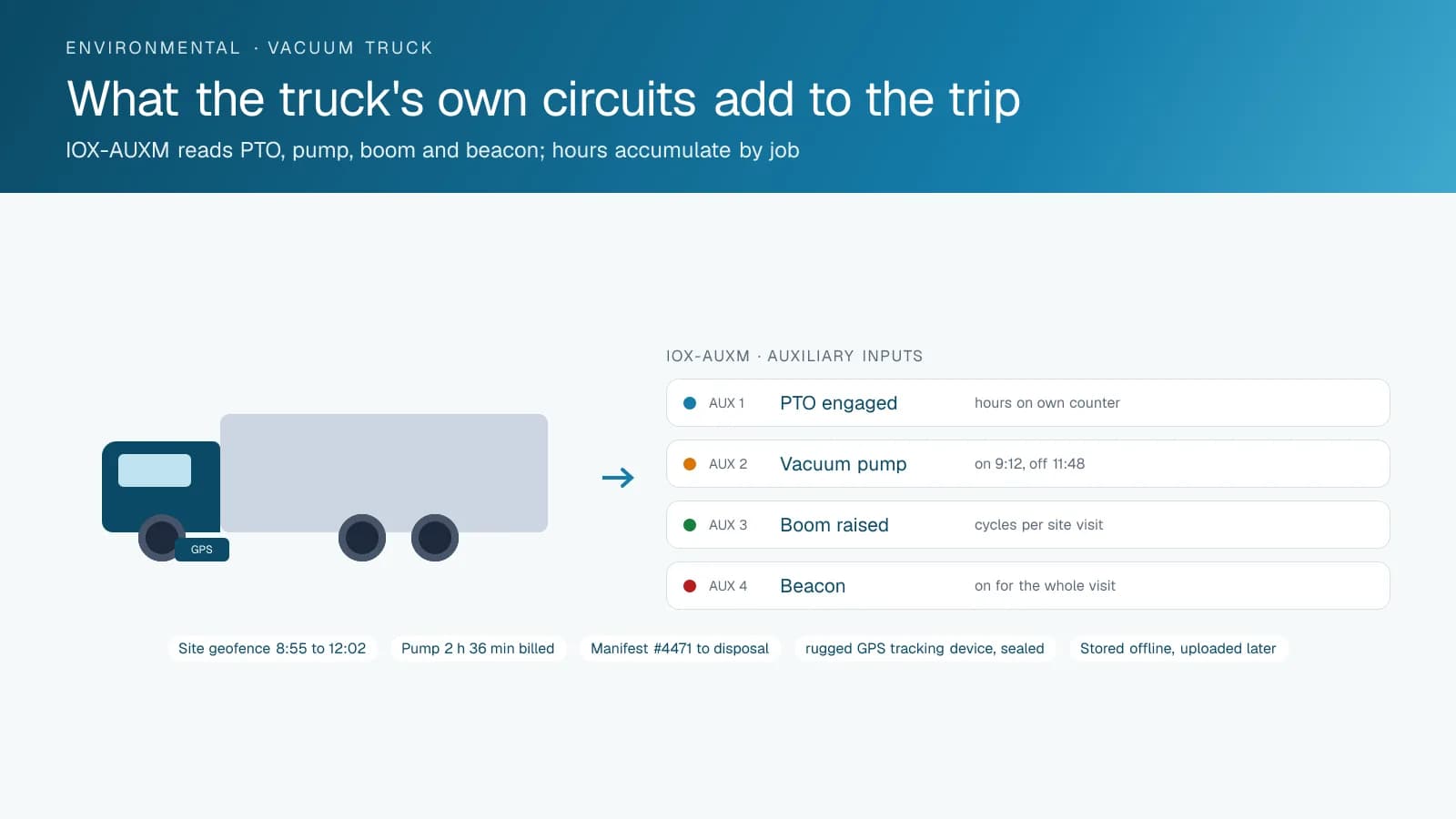
Environmental services is a business of records. A vacuum truck that pumped a sump, a hydro-excavator that dug around a gas main, a crew that ran a spill response at two in the morning: each one produces a bill, a manifest and, sooner or later, a question from a regulator, a client or an insurer about exactly what happened and when. High Point GPS puts every truck and every piece of equipment on one live map in the High Point GPS platform and builds the record underneath it. The GPS tracking device, in its rugged version for trucks that live in mud and brine, records the trip, the site arrival through a geofence and the time on location. An IOX-AUXM module reads the truck's own circuits: PTO engaged, vacuum pump running, boom up, beacon on, and the hours accumulate against the job. A manifested load is a trip from the pickup geofence to the disposal facility geofence, with the times at both ends and the route between. Battery trackers and Bluetooth tags follow pumps, generators and containment gear left at a site for weeks. Driver ID assigns the work to the operator, hours of service in the driver app cover the trucks that need ELD, and electronic DVIR replaces the clipboard. Trips are stored on the device at remote sites and uploaded when coverage returns.
Common challenges
- Client disputes over pump hours and time on site with nothing behind the invoice but the operator's ticket
- Manifested waste loads with a pickup time and a disposal time from two different pieces of paper
- Pumps, generators and containment equipment left at sites for weeks and lost track of
- Spill response call-outs at night with no record of when the crew left, arrived and started work
- Regulator or client audits that take a week to reconstruct from tickets, fuel receipts and memory
- Hydro-excavation and vacuum trucks in remote areas with no cell coverage for hours at a time
How High Point GPS helps
- Live location of every truck and tracked piece of equipment on one map, with geofences at active sites and disposal facilities
- PTO, vacuum pump, boom and beacon status read from the truck's circuits through IOX-AUXM auxiliary inputs, with hours by job
- Manifested loads recorded as a trip from the pickup geofence to the disposal geofence, with the times at both ends
- Battery trackers and Bluetooth asset tags on pumps, generators and containment gear left at sites
- Call-out records for spill response: departure, arrival and pump-on times on one timeline
- rugged GPS tracking devices for trucks that work in mud, brine and washdown conditions
- Hours of service and electronic DVIR in the driver app for the trucks that need ELD
- Trips and input records stored on the device out of coverage and uploaded when the truck returns
Billing pump hours the client cannot argue with
A vacuum truck bills by the hour, and the hour that matters is the one the pump was running. An IOX-AUXM module on the GPS tracking device reads the PTO and the pump circuit, and the trip record shows pump-on at 9:12 and pump-off at 11:48 inside the client's site geofence. The invoice line for two hours thirty-six minutes has that record behind it. When a client says the truck sat idle for half the morning, the report shows the truck arriving at 8:55, the pump running from 9:12, and the beacon on for the whole visit. High Point GPS sets up the inputs during installation and builds the hours-by-job report the office needs at invoicing.
The same inputs run the maintenance program. Pump hours and PTO hours accumulate on their own counters, separate from engine hours, and the reminder for the pump service comes from the pump's own hours rather than the odometer. Engine fault codes reach the shop as the truck logs them. A truck that is about to fail on a remote site is the most expensive truck in the fleet, and the fault code is the earliest warning the shop will get.
Manifested loads from pickup to disposal
A manifested load has to be accounted for from the generator's site to the disposal facility, and the paper manifest is only as good as the times written on it. In the High Point GPS platform, each pickup site and each disposal facility is a geofence. A load becomes a trip: the truck entered the pickup geofence at 13:20, the pump ran, the truck left at 14:05, drove the route on the map and entered the disposal facility geofence at 15:32. The report for that load shows every point in between, and it matches the manifest number entered in the driver's app. If a regulator asks where a load went, the answer is a printed trip with the times at both ends.
The route matters too. A truck that leaves the expected corridor between pickup and disposal shows up on an exception report, whether the cause is a detour, a stop at a yard or something the office would rather know about before an inspector does. High Point GPS configures the corridor geofences and the exception rules so the report is reviewed in the morning rather than discovered in an audit.
Equipment left at the site for weeks
Remediation work strands equipment. A pump runs at a site for a month, a generator sits with it, containment berms and a light tower go out on a trailer and come back when the job is done, if anyone remembers where they are. Battery trackers on the trailers, the generators and the pumps report their position on a schedule and raise an alert if they move at night. Bluetooth asset tags on smaller gear report to the GPS tracking device of whichever truck is nearby, which is enough to know the tags were on the site when the crew visited and were still there when the crew left.
The asset list in the High Point GPS platform shows every tracked item, where it is and how long it has been there. A pump at a site whose job closed last week is on the morning exception report. A generator that moved from one client's site to another without a transfer is on it too. When a piece of equipment goes missing, the last known position and the movement alert are the recovery file for the police and the insurer.
Spill response, hours of service and the audit file
An emergency call-out is judged on response time, and the record of it is made under the worst conditions: night, weather, a crew that is thinking about the spill rather than the paperwork. The GPS tracking device makes the record without them. The truck left the yard at 2:14, arrived at the site geofence at 3:02, and the pump ran from 3:11. Driver ID from an IOX-NFCREADERA reader shows who was on the truck. The client's after-action report and the invoice for the call-out come from the same timeline, and the crew wrote none of it.
The trucks that fall under the ELD mandate run hours of service in the driver app, with the electronic DVIR before the shift in the same app. High Point GPS configures the ruleset for each truck and each jurisdiction, including the ones that cross the border. When a regulator or a client audits a period, the audit file is a set of the High Point GPS platform reports: site visits, pump hours, manifested loads, equipment locations and driver hours, all from one database. The office assembles it in an afternoon.
Frequently asked questions
Can it record when the vacuum pump was running?
Yes. An IOX-AUXM module on the GPS tracking device reads the PTO and pump circuits, so pump-on and pump-off times appear in the trip record and accumulate on their own hour counter by job. The hours-by-site report backs the invoice and drives the pump maintenance schedule.
How does it document a manifested load?
The pickup site and the disposal facility are geofences in the High Point GPS platform. A load is a trip from one to the other, with the entry and exit times at both ends, the route between and the manifest number the driver enters in the app. The report for that load prints as a single trip record.
Can it track pumps and generators left at a site?
Yes. Battery trackers on generators, pumps and trailers report position on a schedule and alert when they move. Bluetooth asset tags on smaller gear report to the GPS tracking device of any truck nearby, which confirms the gear was on site at each crew visit.
Will the devices survive vacuum-truck conditions?
High Point GPS installs the rugged GPS tracking device on trucks that work in mud, brine and washdown conditions. It is sealed and rated for exposure that would fail a standard device. Trips and input records are stored on the device out of coverage and uploaded when the truck returns to a covered area.
Does it cover ELD and inspections for the trucks that need them?
Yes. Hours of service run in the driver app on the trucks that fall under the mandate in Canada or the US, with the electronic DVIR before each shift in the same app. High Point GPS sets the ruleset per truck and per jurisdiction and handles the trucks that work on both sides of the border.
Related solutions
Related guides
- What Is an IOX Port and What Does It Do? →
- PTO On/Off Reader: Proving the Winch Ran, for Tow Billing and Hydraulic Maintenance →
- How Geofencing Works for Fleet Tracking →
- Equipment Theft Recovery: How GPS Gets Stolen Machines and Trailers Back →
- GPS Asset Tags vs. Powered Trackers: Which to Use →
- What Is an ELD? A Plain-English Guide for Fleets →
Get a free quote
What are you looking for?