
Industry
GPS Fleet Tracking for Hydrovac & Vacuum Excavation
GPS tracking for hydrovac and vacuum excavation fleets: geofenced site hours to back billing, pump and boiler hours from IOX-AUXM, ELD and dash cams.
Updated September 22, 2026
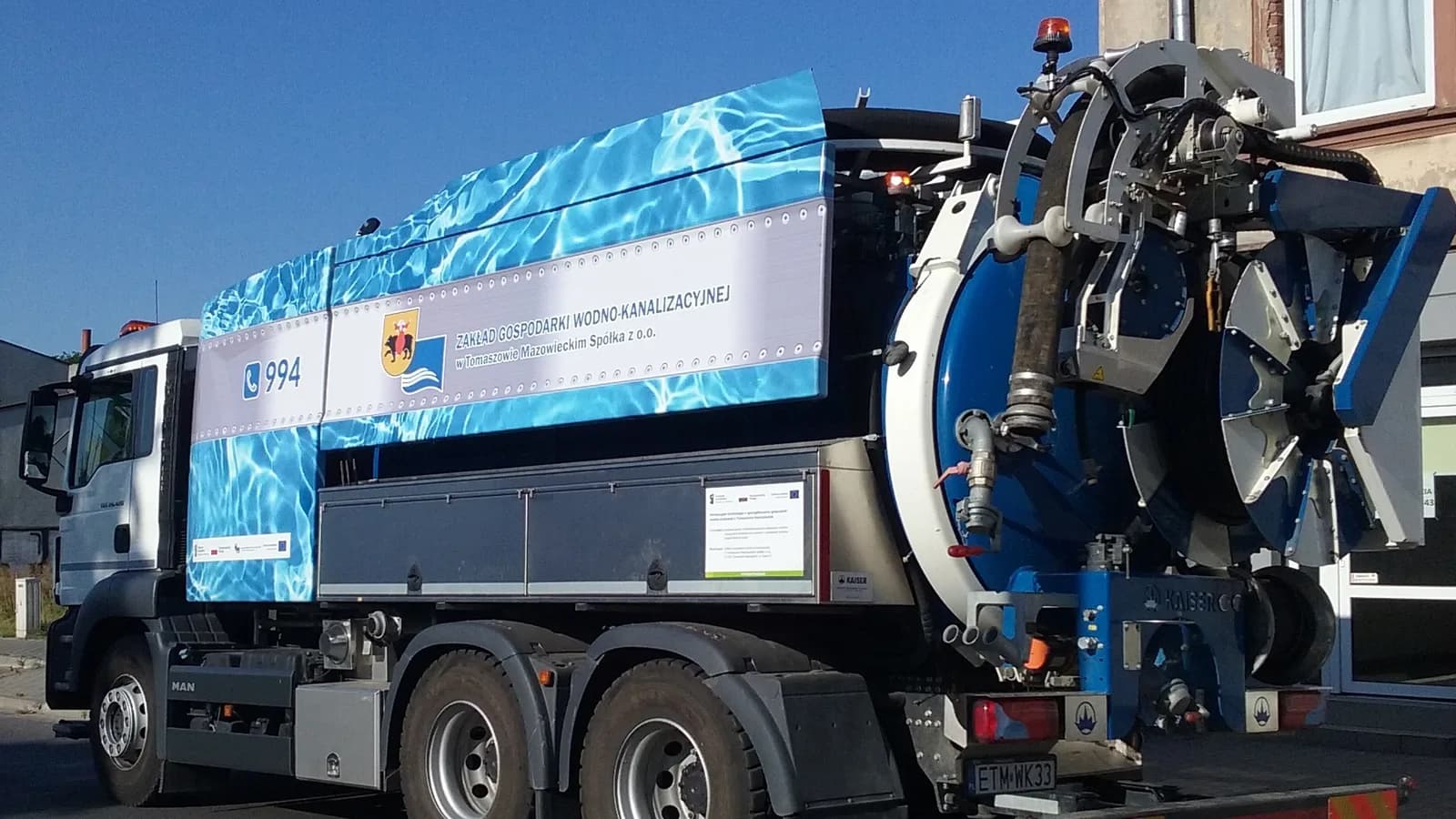
A hydrovac truck earns its money by the hour on someone else's site, and the invoice for that hour is only as good as the record behind it. Daylighting a gas main for a locate, potholing along a fibre route, slot-trenching beside a foundation: the work is billed from arrival to departure, plus the trip to the disposal site and back for water. Every one of those times is disputed sooner or later. GPS tracking from High Point GPS puts a GPS tracking device in each truck and a geofence around each site. The arrival and departure times on the invoice come from the truck, not from a ticket filled in at the end of the shift. An IOX-AUXM module reads the truck's own circuits: PTO engaged, vacuum pump running, boiler firing, water pump on. The platform turns those states into hours per site and hours per component, which is what the shop needs to plan blower and boiler service and what the billing office needs when a customer questions pump time. Disposal runs appear as trips to a geofenced facility with dwell time, matching the manifest. Hydrovac units are among the heaviest trucks on a city street, and most fall under hours-of-service and ELD rules; the driver app handles logs and electronic DVIR in the same cab. AI dash cams record the approach to tight urban sites, where a backing incident or a struck pedestrian is the claim that matters most.
Common challenges
- Hourly site tickets filled in at the end of the shift that customers dispute weeks later
- No record of how long the vacuum pump, boiler or PTO actually ran, so blower and boiler service runs late
- Disposal runs and water refills that vanish into the day with no proof of the facility, the time or the wait
- Winter boiler use that burns fuel with no way to separate heating hours from digging hours
- Heavy trucks working under ELD, hours-of-service and weight rules, with paper logs and inspections that do not hold up at roadside
- Backing incidents and close calls on tight urban sites with no video and no witness the operator can rely on
How High Point GPS helps
- Geofenced arrival and departure records for every site, exported to back hourly billing and settle disputes
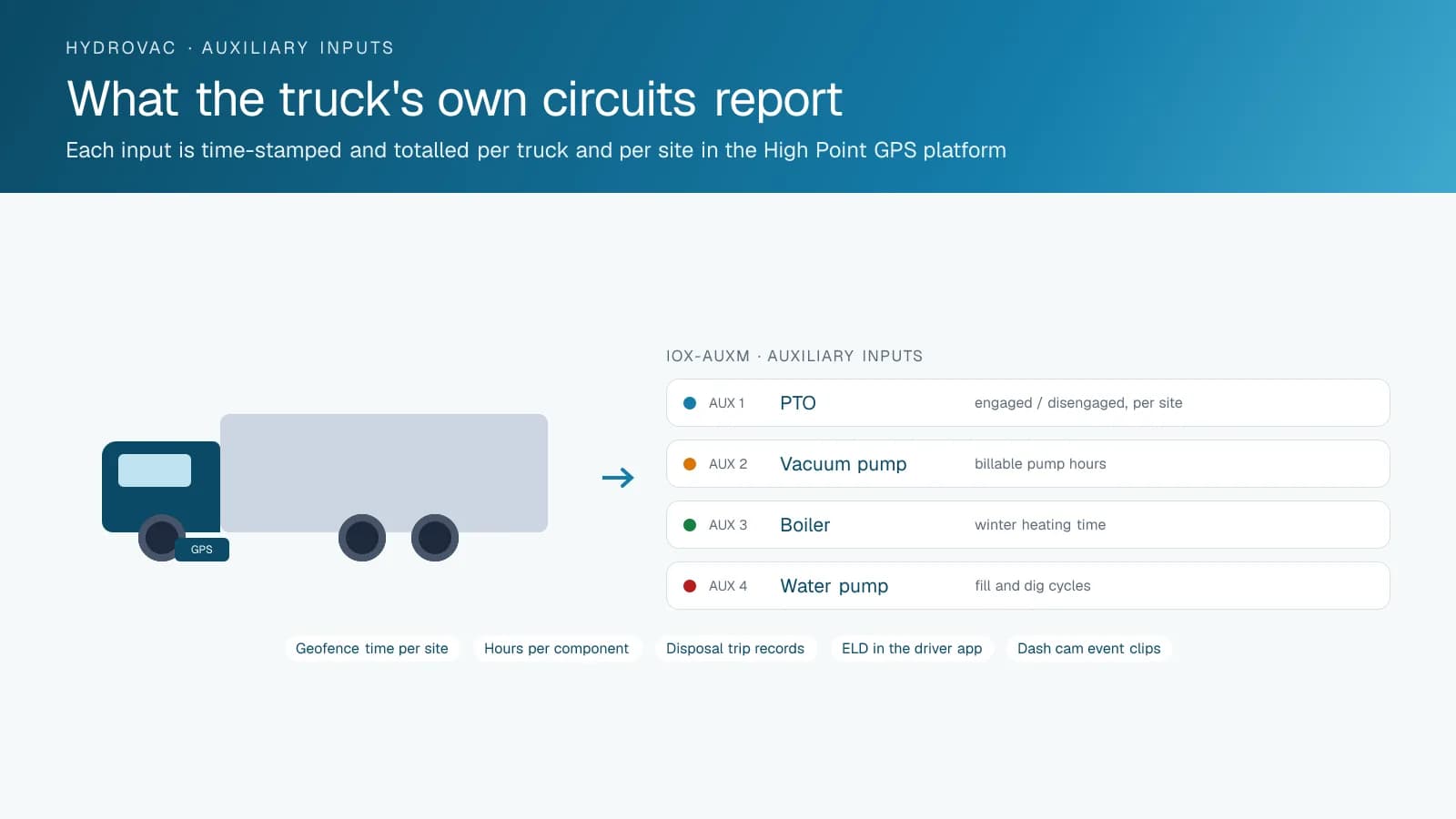
- PTO, vacuum pump, boiler and water pump states read from the truck's own circuits through IOX-AUXM inputs
- Hours per component for the shop: blower, boiler and pump service scheduled on actual run time, not calendar days
- Disposal facility geofences that record each dump trip, the dwell time and the return, alongside the manifest
- Winter reporting that separates boiler heating time from excavation time for fuel and billing questions
- ELD hours of service and electronic DVIR in the driver app, on a rugged GPS tracking device where the cab takes abuse
- AI dash cams facing the road and the operator, with event clips retrieved for backing incidents and near misses
- Bluetooth tags on hose reels, wands and traffic gear so what left the yard is what comes back
Proving the hours on the site ticket
A hydrovac site ticket says the truck arrived at 7:30 and left at 3:15, and the customer's project manager remembers it differently. With a geofence around the site, the GPS tracking device records the truck crossing in and out on its own, with the time to the minute and the position on the map. The site report lists every truck on that job that day, the arrival, the departure and the time inside the zone. High Point GPS sets the geofences from the job list, or the dispatcher draws one when a locate request comes in, and the record starts building the moment the truck rolls through the gate.
That record travels with the invoice. When a customer questions four hours of pump time on a two-hour locate, the office pulls the trip replay. It shows the truck inside the zone from 7:31 to 11:48, the vacuum pump running for three hours and fifty minutes of it, and one trip to the water fill and back. Most disputes end there. The same reports feed job costing, because a site that took eleven truck-hours to daylight three crossings is either a hard site or a slow crew, and the timeline shows which. Contracts that bill travel time get the trip from the previous site or the yard, with its duration and distance.
Reading the pump, the boiler and the PTO
The billable part of a hydrovac truck is not the odometer. It is the vacuum blower, the water pump, the boiler in winter and the PTO that drives them. An IOX-AUXM module on the GPS tracking device reads each of those circuits as on or off, and the High Point GPS platform turns the transitions into a log: PTO engaged at 8:02, vacuum on at 8:04, off at 9:37, on again at 10:10. Hours per component accumulate per truck and per site. A dispatcher sees which trucks are digging and which are waiting on a locate, without a radio call, and a supervisor sees when a pump ran for an hour on a site with no debris hauled.
The shop gets the numbers it has been guessing at. Blower service, boiler inspection, water pump seals and hydraulic fluid changes are scheduled on the hours those components actually ran, with reminders in the High Point GPS platform and fault codes from the engine arriving as they are logged. A truck that shows high engine hours and low pump hours is idling on sites; one with high pump hours and a service interval based on mileage is overdue without anyone knowing. High Point GPS wires the inputs during installation, labels each one and builds the reports around the way the fleet bills, whether that is by the hour, by the hole or by the day.
Disposal runs, water refills and the winter boiler
Every hydrovac day includes trips that are not digging: the run to a licensed disposal facility with a full debris tank and the trip to a hydrant or fill station for water. Geofences around each facility record the arrival, the time on site and the departure, and the trip replay shows the route between. When a customer is billed for disposal, the invoice cites the facility and the time, and the record matches the manifest the facility issued. When an operator reports a forty-minute wait at the dump, the dwell time confirms it. Trips are stored on the device when coverage drops and uploaded when it returns, which matters on rural pipeline rights-of-way.
Winter changes the arithmetic. The boiler runs to heat water for frozen ground and to keep the tank from freezing between sites, and that fuel and those hours are easy to lose in the day's total. A boiler input on the IOX-AUXM separates heating time from excavation time, so the fleet knows what winter actually costs per truck and can price cold-weather work accordingly. Fuel-card integration matches each fill-up to the truck and the day, and the fuel report compares consumption against pump and boiler hours instead of kilometres alone. A truck burning far more than its hours explain is a truck with a problem worth a look.
Heavy trucks, tight streets and the rules that apply
A loaded hydrovac unit is a heavy truck by any definition, and in most fleets it falls under the ELD mandate in both Canada and the United States, along with hours-of-service limits and weight rules that vary by jurisdiction and season. The driver app on a tablet in the cab keeps the operator's hours, with the ruleset set to match where the truck works, and the electronic DVIR walks the pre-trip through a hydrovac-specific checklist: boom, hose, tank doors, boiler, lights. A defect goes to the shop before the truck leaves the yard. High Point GPS installs the rugged GPS tracking device where the cab sees mud, water and vibration all day.
The sites themselves are the other hazard. A hydrovac truck backing into a lane closure downtown, with a boom swinging over a sidewalk, is where the fleet's largest claims come from. AI dash cams facing the road and the operator record the approach, the backing and the setup, and an event such as hard braking or a collision saves the clip automatically. When a pedestrian or a parked car is involved, the clip and the trip replay are in the office before the police report is written. Driver scoring set for heavy trucks, with speeding thresholds by zone, gives supervisors a specific trip to coach from rather than a general reminder.
Frequently asked questions
Can it prove how long our truck was on a customer's site?
Yes. A geofence around each site records the truck's arrival and departure to the minute, and the site report lists the time inside the zone for every truck and every day. With IOX-AUXM inputs, the report also shows how long the vacuum pump and PTO ran during that window, which is the number most hourly disputes turn on.
How does the system know when the vacuum pump or boiler is running?
An IOX-AUXM module on the GPS tracking device is wired to the truck's own circuits: PTO, vacuum blower, water pump, boiler. Each is read as on or off and time-stamped, and the High Point GPS platform accumulates the hours per truck and per site. High Point GPS wires and labels the inputs at installation, and the reports are built around how the fleet bills.
Do hydrovac trucks need an ELD?
Most do. A hydrovac unit is a heavy commercial vehicle, and unless a specific exemption applies, such as a short-haul radius or a jurisdiction-specific rule, the operator's hours fall under the ELD mandate in Canada and the US. The driver app handles the logs in the same cab, and High Point GPS sets the ruleset to match where the truck works.
Can we track disposal runs and water fills?
Yes. Geofences around disposal facilities and fill stations record each visit with arrival, dwell time and departure, and the trip replay shows the route. The record supports the disposal line on the invoice and matches the facility's manifest, and it confirms an operator's reported wait time when the day runs long.
What about the hose reels, wands and signs we leave on sites?
Bluetooth asset tags on hose reels, wands, traffic signs and cones are picked up by any passing truck with a GPS tracking device. The platform shows where each item was last seen and when. When a crew leaves a site short of a reel, the last-seen record says which site and which truck was nearby.
Related solutions
Related guides
- How Geofencing Works for Fleet Tracking →
- What Is an IOX Port and What Does It Do? →
- Fleet Maintenance: Engine Hours vs. the Calendar →
- What Is an ELD? A Plain-English Guide for Fleets →
- High Point GPS DVIR: How Digital Vehicle Inspection Reports Work →
- IOX-BT and Bluetooth Asset Tags: How They Work and What to Tag →
Get a free quote
What are you looking for?