
GPS Fleet Tracking & Telematics
BlueArrow Fuel: Reconciling Fuel Card Transactions Against the Vehicle's Tank
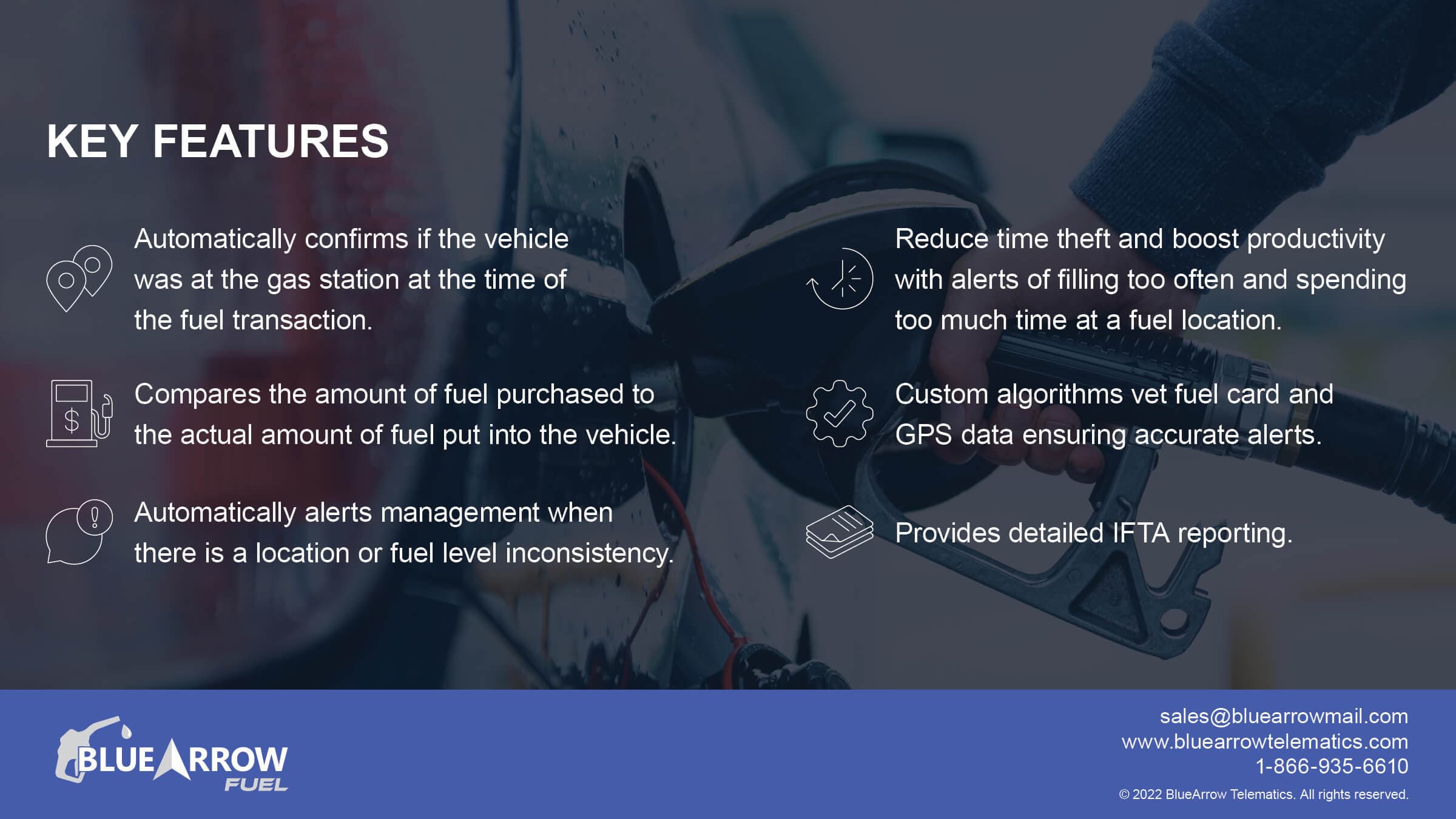
BlueArrow Fuel automates fuel card reconciliation against each truck's location, tank size and fuel level, so a 300 L fill into a 200 L tank gets flagged.
What Can't a Fuel Card Statement Show You?
BlueArrow Fuel automates fuel card reconciliation: it checks each transaction against what the vehicle was doing at the time. The card records only the purchase: card, station, time, litres, amount. It cannot tell where the truck was, how big its tank is or how full it was. A personal car filled on the card at the same station, a second fill at a station the truck never visited, a 300-litre purchase into a 200-litre tank: on the statement, each looks ordinary. Fleets catch these by hand, months later, if at all.
How Does BlueArrow Fuel Reconcile Fuel Card Transactions?
The add-in imports transactions from your fuel card providers (several providers at once) and matches each one to a vehicle in the High Point GPS platform. Then it checks every transaction. Was the vehicle at that station at that time? Does the volume fit the tank's capacity and the fuel-level reading before and after the fill? Does the logged-in driver match the card holder? A failed check gets flagged with its reason; a pass is marked reconciled. You get a short exception list, with evidence beside each item, and a fuel cost per vehicle you can trust.
What Else Does Fuel Card Reconciliation Catch?
The same reconciled data feeds IFTA. Each purchase gets its jurisdiction from the vehicle's GPS position, so the station address on the statement no longer decides it. You also see fuel economy per vehicle from real purchases, which flags the truck with a fuel problem before the shop does. Time theft shows up too: a forty-minute fuel stop stands out against the trip.
What Does the Exception List Look Like?
Most fleet managers read the output as a weekly list, each line showing the transaction, the check it failed and the evidence. A forty-truck fleet typically sees three to six lines a week, though the first month produces many more.
| Exception | Evidence shown | Usual explanation |
|---|---|---|
| Vehicle not at station | Vehicle position 40 km away at the transaction time | Card used for another vehicle, or a personal one |
| Volume exceeds tank capacity | 212 L purchased into a 200 L tank at 30 % full | Jerry cans, or a second vehicle filled on the same card |
| Fuel level did not rise | Tank reading unchanged after the purchase | Fuel did not go into this vehicle |
| Driver mismatch | Card holder differs from the driver logged in | Shared cards; fix the assignment |
| Duplicate transaction | Two fills 8 minutes apart at the same pump | Processing error to dispute with the provider |
How Is BlueArrow Fuel Set Up?
BlueArrow Fuel connects to your fuel card accounts and to the High Point GPS platform. You match vehicles to cards once, and tank capacities are entered or read from the vehicle profile. High Point GPS configures the integration for fleets across Canada and the United States, including the IFTA link for fleets that file.
Frequently asked questions
What is BlueArrow Fuel?
BlueArrow Fuel is a High Point GPS platform add-in that imports fuel card transactions and checks each one against the vehicle's location, tank capacity and fuel-level reading at the time. It flags the ones that cannot be right and says why.
Which fuel cards does it support?
BlueArrow Fuel imports from several fuel card providers at once, for fleets that run more than one. Confirm with High Point GPS that your card program is supported before setup. Each transaction is matched to a vehicle in the High Point GPS platform, whichever program it came from.
What does it flag?
BlueArrow Fuel flags purchases made when the vehicle was not at the station, volumes larger than the tank or the fuel-level change, and card use that does not match the logged-in driver. Duplicate fills at the same pump show up too.
Does it help with IFTA?
Yes. Every reconciled purchase carries a jurisdiction confirmed by the vehicle's GPS position, so your IFTA fuel figures no longer depend on the station address on the card statement. High Point GPS sets up the IFTA link for fleets that file.
How much fuel misuse does it find?
It varies by fleet, and there is no reliable published figure for fuel card misuse. Fleets that had not reconciled transactions before see the longest exception list in the first month, because problems such as shared cards surface and get fixed. After that, a typical week brings a short list to check.
Related solutions & products
Continue reading
- GPS Fleet Tracking & Management Software overview →
- IFTA Tax Rates by Jurisdiction: How the Rate Matrix Works →
- Fuel Card Integration With GPS Fleet Tracking: Fraud Prevention →
- Who Owns Your Fleet Telematics Data? →
- Data Connector: Fleet Data in Power BI, Excel and Tableau Without the API →
- More in GPS Fleet Tracking & Telematics →
Get a free quote
- Over 500 fleets
- Since 2013
- 4.9 on Google (19 reviews)
What are you looking for?
Prefer to talk?Call 1-800-613-6323[email protected]