
Dispatch & Routing
Trucking Dispatch Software for Freight: What to Look For
Trucking dispatch software for freight must handle load boards, brokers, detention and hours-of-service limits on top of truck location. What to look for.
How Is Freight Trucking Dispatch Different From Local Trades Dispatch?
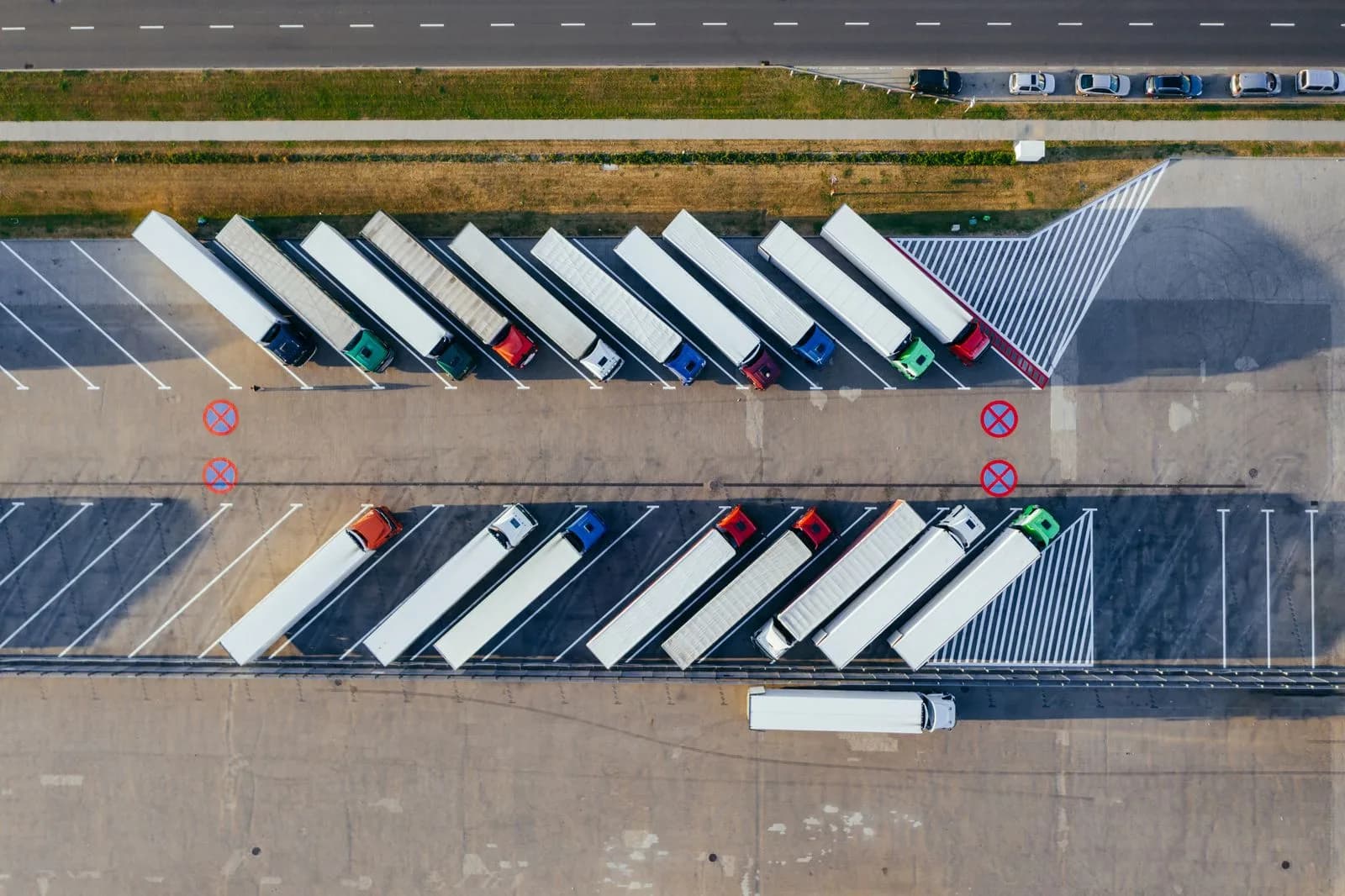
Good trucking dispatch software for freight matches trucks to loads, connects to load boards or brokers, tracks detention, and builds each driver's remaining hours of service into the assignment. Long-haul freight dispatch has little in common with sending the nearest driver to a nearby job. You match available trucks to loads (often from load boards or broker relationships), negotiate and confirm rates, and schedule around each driver's remaining hours of service. A load that looks assignable on paper can be illegal to run if the driver doesn't have enough HOS left to finish it.
The money at stake is different too. When a trades dispatcher sends the wrong technician, an appointment runs late. When a freight dispatcher puts the wrong truck on the wrong load, or misses that a driver can't legally complete a run, the result can be a missed delivery window, a detention charge, or in the worst case a driver pushed into an HOS violation to finish a load nobody should have given them.
Which Features Matter Most in Trucking Dispatch Software?
Look for load-to-truck matching that accounts for equipment type and location, and integration with load boards or broker communication tools. You also want detention time tracking, since waiting at a shipper or receiver past the free time often triggers a real charge, and driver settlement calculations tied to mileage and load data instead of manual paperwork. What separates freight-specific tools from general-purpose ones is hours-of-service awareness built into the scheduling decision itself, so nobody has to check it separately afterwards.
Give detention tracking extra attention, because detention is common and costly for carriers and drivers alike. Without an automatic, time-stamped record of when a truck arrived at and left a shipper or receiver, detention charges tend to get negotiated down or dropped, since nobody has a clean record to point to.
Where GPS and ELD Data Already Helps
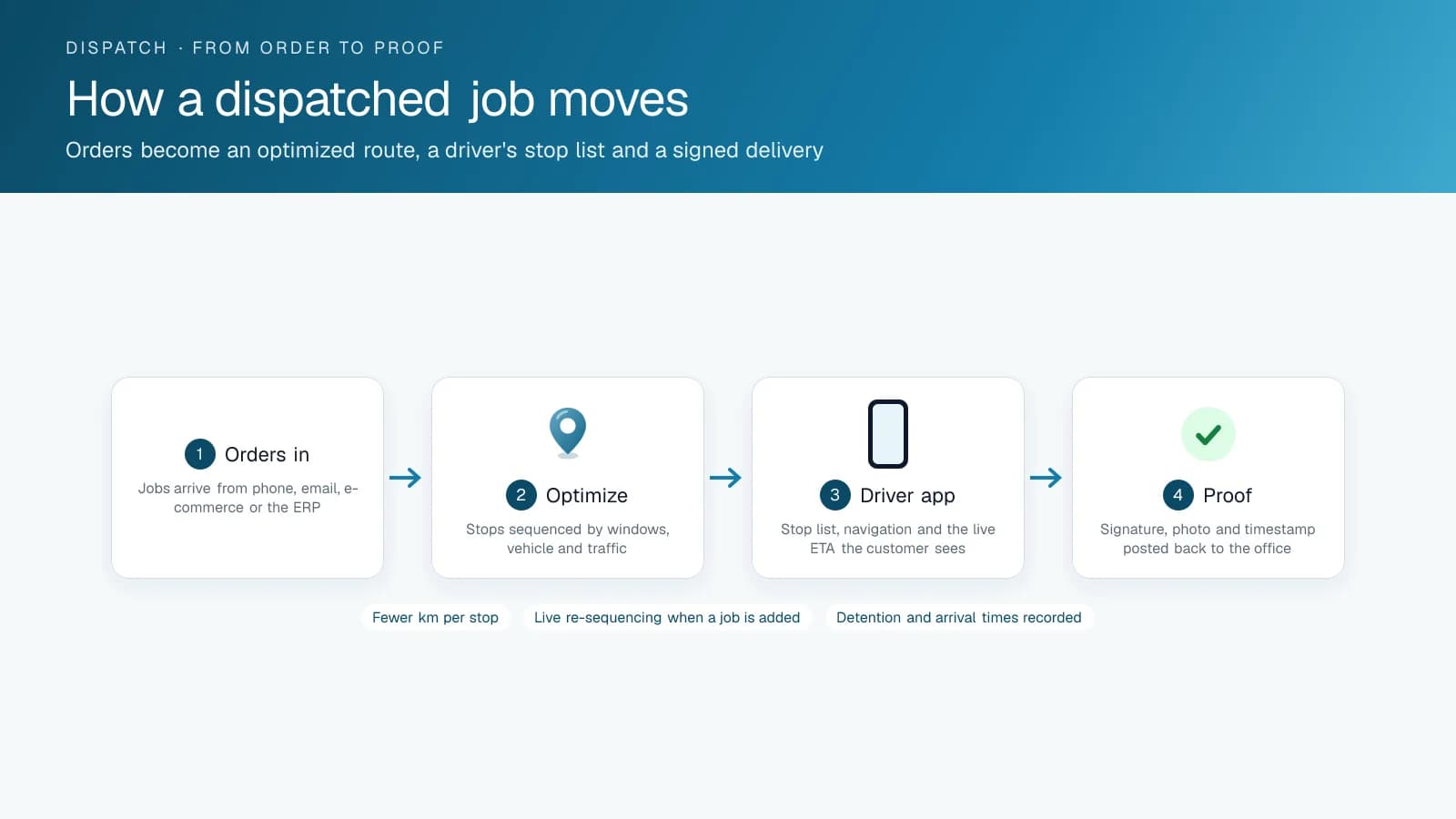
GPS and ELD data does useful work here even without a dedicated freight dispatch product. Live location lets dispatch give brokers and receivers accurate load status updates instead of guesses. Knowing each driver's remaining hours of service in real time is the exact input that stops you assigning a load that would push a driver into an Hours of Service violation.
The same location and timestamp data makes a detention claim defensible. A time-stamped arrival and departure record from a GPS platform gives you a much stronger basis for billing detention than a driver's estimate of how long they waited, especially when the shipper or receiver disputes the charge.
Build, Buy, or Bolt On?
Where High Point GPS stands: we don't have a finished, dedicated freight dispatch and load-matching product on the market today, and our in-house dispatch and routing software is still in development. Established freight dispatch and transportation management products already handle load boards, broker communication and settlement calculations well. What High Point GPS provides today (real-time tracking, ELD/HOS data and DVIR reporting) is built to feed whichever dispatch or TMS tool a carrier already runs, without replacing it.
For a carrier choosing today, that usually means picking an established freight dispatch or TMS product for load matching and broker communication, and confirming it integrates cleanly with the ELD and GPS data you already run. The alternative is holding out for one vendor to cover everything under a single login some day.
What Should You Ask a Trucking Dispatch Software Vendor?
The same questions apply to a dedicated freight dispatch product and to anything you plan to connect to your existing GPS platform. Does it integrate with the ELD and GPS data you already have? Does it pull remaining HOS into the load-assignment decision itself, or only display it on a separate screen? Which load board and broker connections does the trucking dispatch software support out of the box, and which need custom integration work?
Ask how settlement calculations work under the hood, too. A tool that ties driver pay to GPS-verified mileage and load data automatically removes a recurring source of payroll disputes: drivers second-guessing a paycheque because their own trip-log estimate differs from what the carrier calculated.
A Load Assignment, Checked Against Hours
This is how the decision looks when the platform's HOS data is in front of the dispatcher at assignment, instead of being checked afterwards. A 620 km load is tendered at 13:00 for delivery by 22:00. Driver A is 40 km away with 4 h 10 of driving left in the window. The load needs about 6 h 30, so A cannot legally finish it, and assigning it would end in a violation or a late delivery. Driver B is 90 km away, has 8 h 20 of driving and 9 h in the window, and reaches the shipper by 14:15; the platform's estimate, based on the fleet's own history, puts delivery at 21:20. The dispatcher assigns B, sends the shipper an arrival time, and moves A to a shorter load that ends near home. At the receiver, B waits 95 minutes past the free time, and the geofence record supports a detention line on the invoice. The whole decision took two minutes, using data that was already on the screen.
Frequently asked questions
Is GPS tracking enough to run freight dispatch without dedicated software?
Not for long. A small operation might manage temporarily, but most long-haul carriers eventually need dedicated dispatch or TMS software for load-to-truck matching, broker communication and settlement calculations. GPS and ELD data feeds that software. It does not replace the need for it.
Can hours-of-service data prevent assigning an illegal load?
Yes, if the data is built into the dispatch decision itself. With real-time remaining-HOS figures in front of them, dispatchers can see upfront whether a driver can legally complete a load, instead of finding out afterwards that the run would have caused a violation.
Does High Point GPS offer a dedicated freight dispatch product?
Not yet as a finished product. Our in-house dispatch and routing software is still in development. Real-time tracking, ELD/HOS data and DVIR reporting are available today, and they are built to integrate with whatever dispatch or TMS software a carrier already uses.
Can GPS data help collect on detention charges?
Yes. A time-stamped record of when a truck arrived at and left a shipper or receiver gives you a defensible basis for a detention charge. That record holds up far better than a driver's estimate when a shipper disputes the time.
Related solutions & products
Related terms
Continue reading
- Dispatch & Routing overview →
- How to Pass a DOT Inspection: Checklist and Inspection Levels →
- Alberta Safety Fitness Certificate Explained: Provincial and Federal Certificates, Ratings and Audits →
- Carrier Safety Programs in Every Canadian Province and Territory: CVOR, NSC Certificates and Safety Fitness Certificates →
- Motive Alternatives in Canada: ELD, Camera and Tracking Options Compared →
- More in Dispatch & Routing →
Get a free quote
- Over 500 fleets
- Since 2013
- 4.9 on Google (19 reviews)
What are you looking for?
Prefer to talk?Call 1-800-613-6323[email protected]