
Industry
GPS Fleet Tracking for Car Dealerships & Rental Fleets
GPS tracking for dealership loaner cars, courtesy vehicles, test drives and rental fleets that shows where every unit is on the lot or on the road, records mileage and fuel on return, recovers stolen vehicles and settles damage disputes with dash cam video.
Updated September 21, 2026
A dealership or rental branch hands the keys to a vehicle it does not control to people it barely knows, dozens of times a day. Loaner and courtesy cars go out with service customers, demonstrators leave with salespeople and prospects, rental units cross provincial and state lines, and the lot itself holds hundreds of units that someone has to find when a buyer asks to see one. GPS tracking from High Point GPS puts every one of those vehicles on a live map from the moment a Geotab GO device is plugged into the diagnostic port. The odometer and fuel level are read from the vehicle itself, which means the mileage and fuel on return are numbers the customer cannot argue with. A geofence around the lot records every departure and arrival, and a unit that leaves after hours or does not come back when the contract ends triggers an alert with its live position for recovery. Dash cams on loaners and rentals record the road ahead and, when the operator chooses, the cabin, which is what closes a damage claim that a customer disputes. The same records feed the service department's maintenance schedule, the used-vehicle appraisal, and the monthly report on how the loaner fleet is actually used. High Point GPS installs, configures and supports it for single stores and dealer groups alike.
Common challenges
- Loaner and courtesy cars returned with unexplained mileage, an empty tank and no way to prove either
- Demonstrators and lot units that nobody can find when a customer is standing at the desk waiting
- Rental units overdue with a customer who has stopped answering the phone, and no location to give the police
- Damage found at check-in that the customer swears was already there, with nothing but a walk-around sheet to settle it
- After-hours movement of vehicles on the lot with no record of who took what and when
- Speeding and hard driving in a vehicle the store still has to sell as new or lightly used
How High Point GPS helps
- Live location of every loaner, demo and rental unit on one map, with the last trip and the current fuel and odometer beside it
- Mileage and fuel level read from the vehicle at check-out and check-in, so return charges rest on the vehicle's own numbers
- A geofence around each lot and branch that records every departure and return, with alerts for movement outside business hours
- Overdue and unauthorized-use alerts with the unit's live position, and a recovery workflow for stolen or unreturned vehicles
- Road-facing and optional cabin dash cams with event-based clips, retrieved by trip when a damage claim is disputed
- Driver behaviour records for each loan or rental: speeding, hard braking and harsh cornering tied to the contract holder
- Lot inventory search that shows where a unit is parked, when it last moved and whether the battery is low
- Maintenance reminders and engine fault codes for the loaner fleet, with usage data that supports the used-vehicle appraisal
Check-Out and Check-In on the Vehicle's Own Numbers
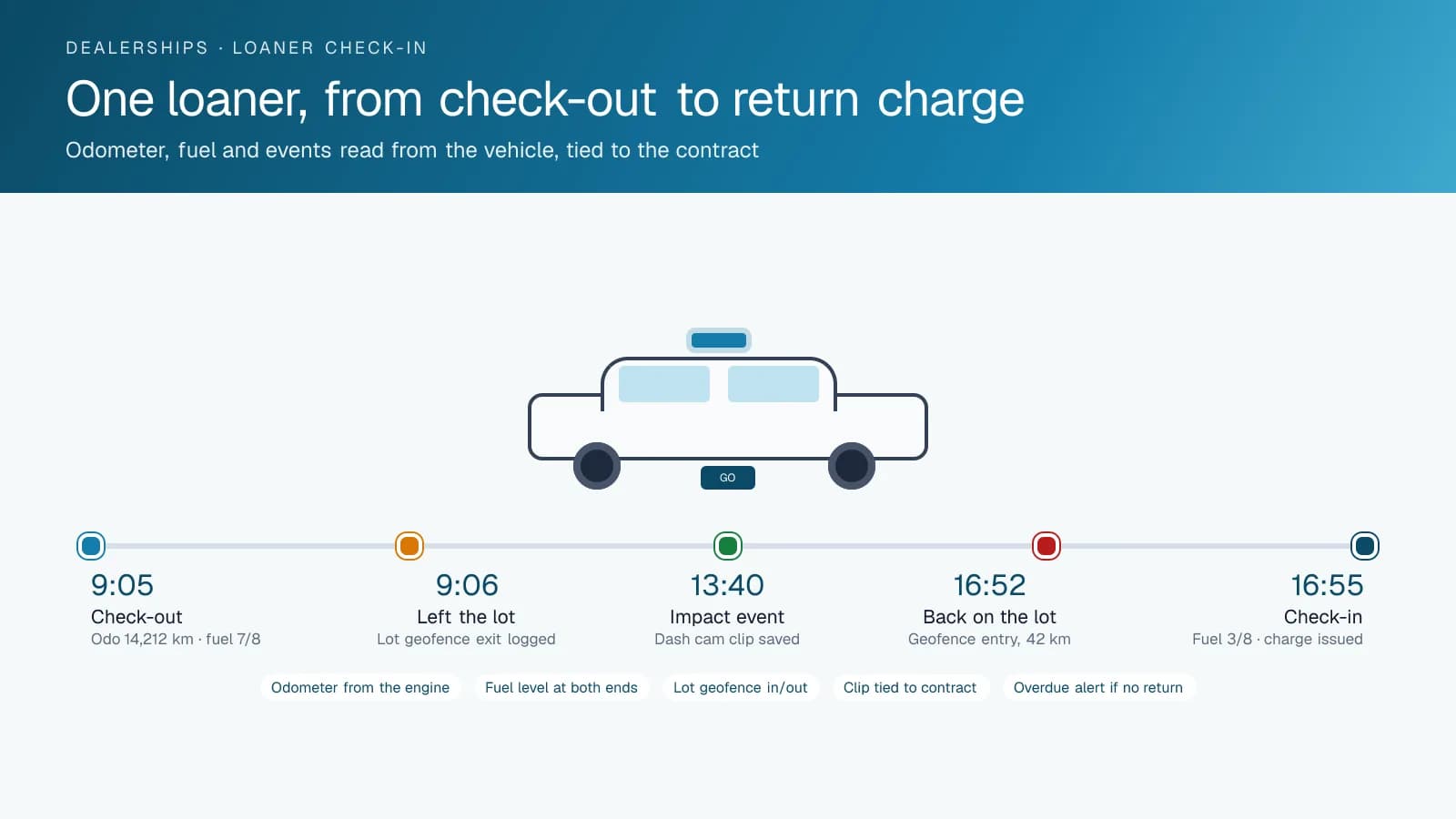
The dispute at the return counter is almost always about mileage or fuel. A customer says the loaner was nearly empty when they picked it up; the service advisor remembers otherwise; nobody wrote it down. With a GO device in the vehicle, the odometer and fuel level are read from the engine computer and stored with a time stamp on every trip. The check-out record shows the fuel at the moment the car left the lot, and the check-in record shows it at the moment it came back. The distance in between is the vehicle's own count, not a number copied from the dash by whoever had time.
High Point GPS builds the report so the advisor can pull a contract's mileage and fuel in a few seconds and print it or attach it to the invoice. For rental branches, the same data feeds the contract closing: the kilometres driven, the fuel to be charged and the trips taken, including any that crossed a boundary the agreement did not allow. When a customer challenges a charge later, the trip replay shows the route and the stops, and the conversation is short. A rental branch that has been absorbing disputed fuel and mileage charges for years usually recovers them within the first quarter.
Finding a Unit on the Lot and Getting It Back From the Road
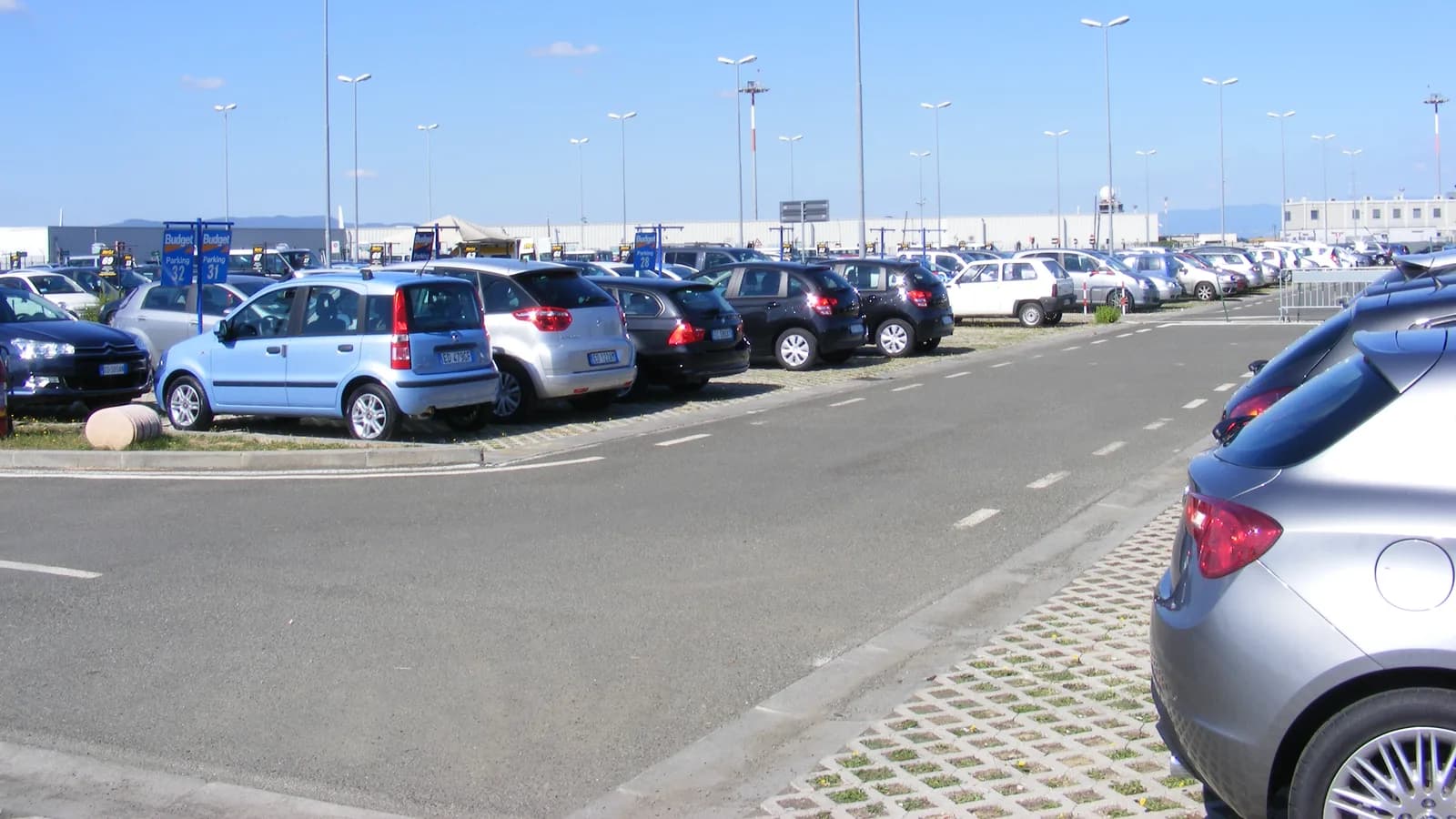
A dealership lot with three hundred units is a small city, and a salesperson walking it with a key fob is not a good use of a Saturday afternoon. With every unit reporting position, the lot map shows where each vehicle is parked, when it last moved and which ones have been sitting long enough that the battery needs attention. Units moved for a wash, a photo or a service appointment show up where they actually are, not where the last person left a note saying they were.
Off the lot, the same tracking becomes recovery. A rental unit that is overdue, or a demo that leaves the lot at 2 a.m. without a salesperson logged in, triggers an alert with its live position. The operator decides how to respond: a call to the customer, a visit, or a report to the police with a location they can act on. Trips are stored on the device when coverage drops and uploaded when it returns. A vehicle parked in an underground garage still shows where it went in and when it came out, and the recovery report lists every stop since the last time it was on the lot.
Damage Claims That End With a Video Clip
Damage disputes cost rental and loaner operations more than the repairs do, because the argument consumes staff time and goodwill. A road-facing AI dash cam records the moments that matter: the hard brake, the impact, the curb strike in a parking lot. Clips are tied to the trip and the contract holder. When a customer says the scrape was already there, the branch can look at the trip during which the impact event was recorded and see it. An optional cabin camera, where the operator's policy allows it, adds the view of who was driving.
The same records matter when the vehicle has to be sold. A demonstrator or a loaner that has been driven hard has a history, and the driver behaviour report shows it: speed by segment, hard braking counts, the trip where someone took it to 160 on the highway. Stores that see that pattern change who gets the keys. Stores that do not see it find out at trade-in time, in the price. The same report supports the conversation with a salesperson whose demonstrator keeps coming back with new curb rash, and it gives the used-car manager a documented history to put beside the appraisal.
Running a Loaner Fleet Like a Fleet
Most dealerships run the loaner fleet as an afterthought to the service department, and it shows in the utilization numbers. With every unit reporting, the store sees how many loaners went out this month, how long each was out, how far it went and how many sat unused. Maintenance reminders run on odometer and engine hours read from the vehicle, and fault codes reach the service manager as the vehicle logs them, which means the loaner with the coolant warning is pulled before a customer drives it. When the unit rotates into used inventory, its full usage history supports the appraisal.
For dealer groups and rental companies with several branches, High Point GPS sets up the MyGeotab database so each store sees its own units while head office sees the whole fleet. Fuel-card integration matches fuel purchases to the vehicle and the trip, and the open API connects the tracking data to the dealer management or rental system already in use. Contract check-out and check-in then pull the odometer and fuel automatically, and the loaner agreement carries the same numbers the platform recorded. A dealer group that adds a store adds it to the same database rather than starting a new one.
Frequently asked questions
Can I prove the mileage and fuel on a returned loaner?
Yes. The GO device reads the odometer and fuel level from the vehicle's engine computer and records them with a time stamp on every trip. The check-out and check-in values, and the distance in between, come from the vehicle itself, and the report can be printed or attached to the invoice.
What happens if a rental or loaner is not returned?
An overdue alert fires with the unit's live position. The branch can call the customer, send someone, or give the police a location they can act on. Trips are stored on the device when coverage drops and uploaded when it returns, so the history is complete even after a garage stay.
Can the dash cam help with a damage dispute?
Yes. A road-facing AI dash cam records event-based clips such as hard braking and impacts, tied to the trip and the contract. When a customer says the damage was already there, the branch reviews the trip on which the impact was recorded. A cabin camera is optional and depends on your policy and local rules.
Will tracking hurt the customer experience?
Most operators disclose it in the loan or rental agreement, as they already do for mileage limits. Customers rarely object to tracking that protects the vehicle and settles return charges on real numbers. High Point GPS can help you word the notice and set what staff can see.
Does the device need to be moved when the unit is sold?
Yes. The GO device plugs into the diagnostic port and unplugs in seconds, so it moves to the next loaner or demonstrator. High Point GPS sets up the swap process so the vehicle record in MyGeotab is updated and the history stays with the store.
Related solutions
Related guides
- How Geofencing Works for Fleet Tracking →
- Equipment Theft Recovery: How GPS Gets Stolen Machines and Trailers Back →
- Dash Cam Footage and Insurance Claims →
- Do Dash Cams Actually Lower Fleet Insurance Premiums? →
- Fuel Card Integration: How It Actually Works →
- Fleet Maintenance: Engine Hours vs. the Calendar →
Get a free quote
What are you looking for?