
Industry
GPS Fleet Tracking for Concrete & Ready-Mix
GPS tracking for ready-mix fleets that shows the batch plant where every mixer is, records load, travel, wait and pour time against the 90-minute clock, and gives the dispatcher and the customer the same answer to when the next truck arrives.
Updated September 21, 2026
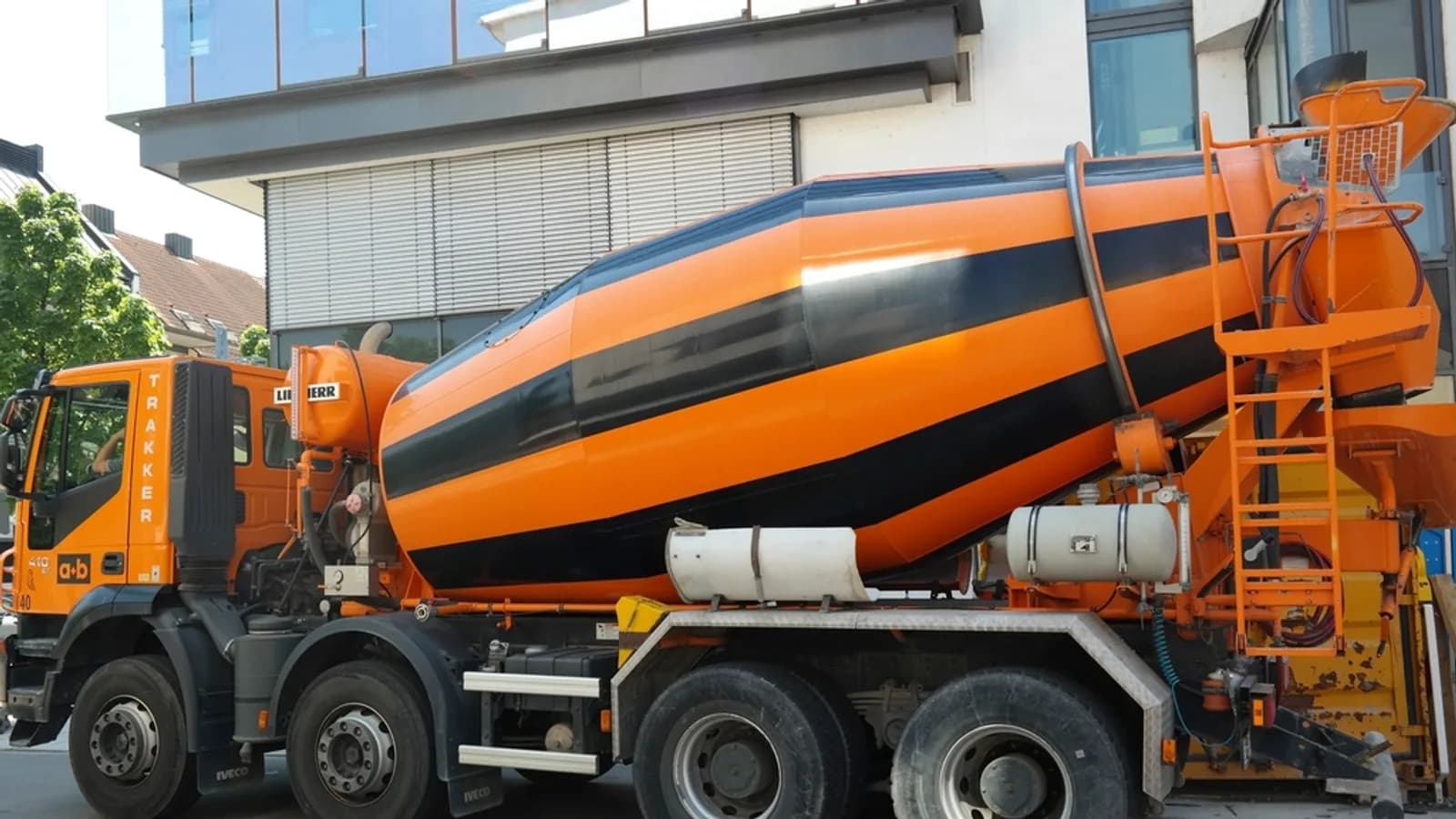
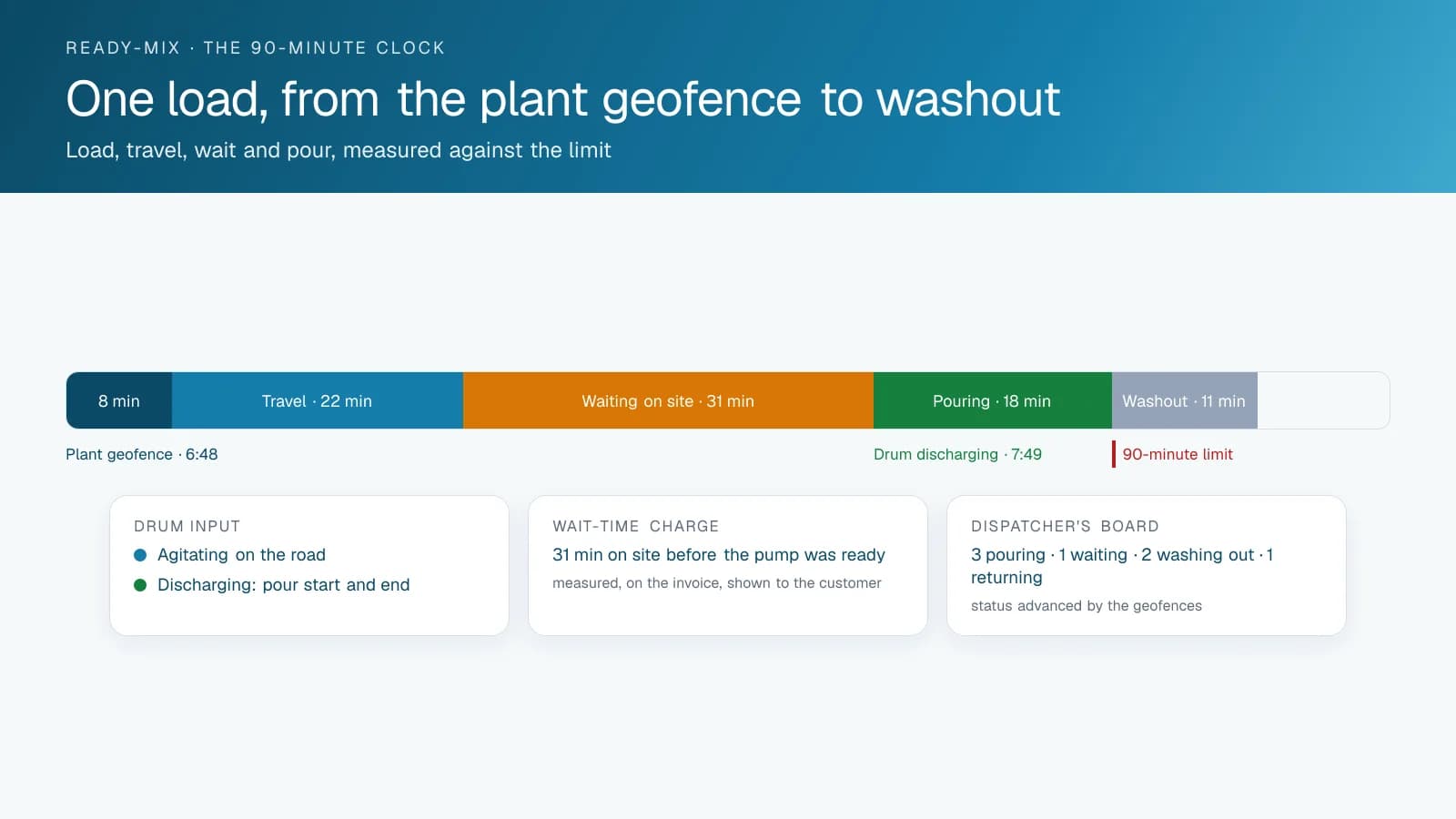
Ready-mix concrete is the only product that goes bad in the truck. From the moment water hits cement at the plant, the clock runs, and everything about a ready-mix fleet is organized around the ninety minutes that follow: the drive to the site, the wait at the site, the pour and the washout. GPS tracking for concrete fleets puts every mixer on one live map for the dispatcher, with the plant, the job sites and the washout pads drawn as geofences that time-stamp each stage of the load automatically. The Geotab GO device's auxiliary inputs read the drum rotation direction and speed where the mixer supports it, so the platform knows when the truck is agitating, when it is discharging and when the drum has stopped. Dispatch sees which trucks are on the road, which are waiting at a site that is not ready and which are washed out and available, and the customer gets an arrival time from the map rather than a guess. Load-by-load records feed the delivery ticket, the wait-time charge and the dispute over the load that arrived past its time. Maintenance runs on engine hours and drum hours, electronic DVIR covers the mixer-specific checklist, and driver scoring reflects the physics of a loaded drum on a corner.
Common challenges
- Dispatchers who cannot see which mixers are pouring, waiting or washed out, so the next load is sent on a guess
- Loads that pass the 90-minute limit on site with nothing to show whose delay it was
- Wait-time charges the customer disputes because the ticket shows arrival but not what happened after
- Drum hours and engine hours that accumulate at idle on a job site while maintenance runs on mileage
- Rollovers on corners and ramps with a loaded drum, and no driver-behaviour record before the incident
- Washout and yard time that eats the afternoon's capacity with nobody measuring it
How High Point GPS helps
- Live location of every mixer on one map for the dispatcher, with the load status and time since batching
- Plant, job-site and washout geofences that time-stamp loading, travel, arrival, wait, pour and washout for every load
- Drum rotation and discharge read through the GO device's auxiliary inputs on mixers that support it
- Time-since-batch on the map, with an alert when a load approaches its limit on site
- Customer arrival notifications and a job-site view for the contractor's foreman, sent from the platform or the dispatch software
- Wait-time and cycle-time reports per load, per site and per customer, feeding the ticket and the invoice
- Driver scoring set for a loaded mixer: cornering, ramp speed and hard braking weighted for a high centre of gravity
- Engine-hours and drum-hours maintenance, electronic DVIR with the mixer checklist, and fault codes sent to the shop
The Map Is the Batch Board
A ready-mix dispatcher spends the day deciding which truck gets the next load. With every mixer on the live map and its status beside it, the decision is made from what the trucks are doing rather than what they last reported on the radio: three trucks are pouring at the bridge deck, one is waiting at a site whose pump has not arrived, two are washing out and one is on its way back empty. Geofences around the plant, each job site and the washout pad advance the status automatically as the truck moves through the cycle. The board updates itself.
High Point GPS connects the tracking to the batching and dispatch software the plant already runs, so the batch ticket and the truck's live position share one record. The customer's foreman sees the next truck's arrival time on their phone or hears it from the dispatcher, and the pour is scheduled to the truck rather than to a hope.
Every Load Against the Clock
The record of a load starts when the truck leaves the plant geofence with the batch time attached. The map shows the time since batching for every loaded truck, and an alert reaches the dispatcher when a truck has been waiting at a site long enough to put the load at risk. When a load is rejected on site for being past its time, the record shows whether the truck arrived at 22 minutes and waited 70, or left the plant late, and the conversation with the customer starts from that.
Wait time is money on both sides of the ticket. The platform records the arrival at the job-site geofence, the start of discharge from the drum input, and the departure, so the wait-time charge on the invoice is a measured figure the customer can be shown. Cycle-time reports per site and per customer show which jobs consistently hold trucks and which contractors are ready when the mixer arrives.
Driving a Loaded Drum
A loaded mixer has the highest centre of gravity of any truck on the road, and its rollover risk on a corner or a ramp is a matter of physics. The platform's driver-scoring rules for a ready-mix fleet weight cornering and ramp speed accordingly, so a cornering event that would be minor in a straight truck is scored as what it is in a mixer. Supervisors coach from a specific event on a specific delivery, and the record shows the coaching happened.
AI dash cams add the road-facing view for the incident review and the driver-facing view for distraction on the long haul back to the plant. On job sites, the road-facing camera records the ground guide, the pump and the site conditions, which is the evidence that settles a claim about a damaged curb or a truck that backed into something.
Maintaining Drums, Engines and Trucks
A mixer's engine runs whether the truck is moving or not, because the drum has to turn. Engine hours accumulate at idle at every job site and every washout, and mileage-based maintenance misses most of them. The GO device reads engine hours, and through the drum input, drum hours. MyGeotab then schedules engine, hydraulic and drum-drive service on the hours the truck actually works. Engine fault codes reach the shop as they are logged, which is how a cooling fault is fixed at the plant rather than on a hill with a full drum.
Electronic DVIR in the Geotab Drive app walks the driver through the mixer-specific checklist, including the chutes, the water system and the drum drive, and a defect reaches the shop before the first batch. The same platform holds the fuel record per truck, with idling reported per site so the plant sees which jobs burn diesel waiting.
Frequently asked questions
Can it tell when the truck is pouring?
On mixers that expose drum rotation, yes. An IOX-AUXM module on the GO device reads the drum direction and speed, and the platform knows when the truck is agitating, discharging or stopped. On mixers without that signal, the job-site geofence and the driver's status in the app mark the pour.
Does it work with our batching and dispatch software?
In most cases yes. The platform has an open API and High Point GPS builds the connection to the batching and dispatch systems ready-mix plants run, so the batch ticket and the truck's live position share one record.
How does it help with wait-time disputes?
The job-site geofence records arrival and departure, and the drum input records when discharge started, so the wait time on the invoice is a measured figure. The record can be shown to the customer, and cycle-time reports show which sites consistently hold trucks.
Can the customer see when the truck will arrive?
Yes. Arrival notifications can be sent from the platform or the connected dispatch software, and a job-site view can be shared with the contractor's foreman so they see the next truck's position and arrival time.
How is maintenance scheduled for a mixer?
On engine hours and drum hours read from the truck, not only on mileage, because the engine runs to turn the drum whether the truck moves or not. Engine fault codes are sent to the shop as the truck logs them.
Related solutions
Related guides
- Dispatch Software for Construction and Concrete Fleets →
- Fleet Maintenance: Engine Hours vs. the Calendar →
- What Is a Geotab IOX and What Does It Do? →
- How Geofencing Works for Fleet Tracking →
- Geotab DVIR: How Digital Vehicle Inspection Reports Work →
- Construction Asset Tracking Software: Equipment, Attachments, Materials and Tools in One System →
Get a free quote
What are you looking for?