
Industry
GPS Fleet Tracking for Expedited Freight & Hotshot
GPS fleet tracking for expedited freight and hotshot carriers: live ETAs for shippers, ELD where needed, and IFTA and detention records from the truck.
Updated September 21, 2026
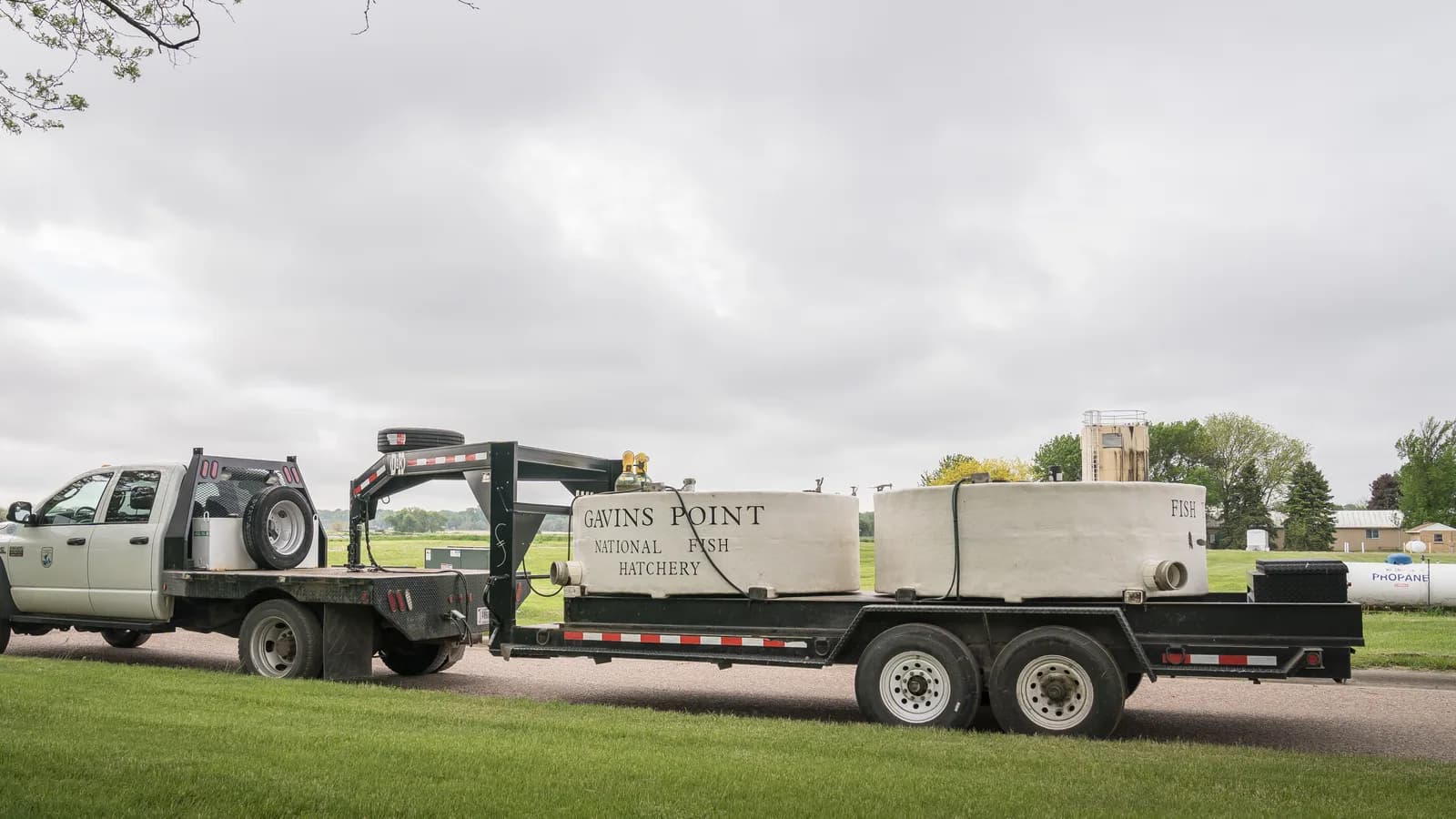
Expedited and hotshot freight is sold on time. A shipper pays a premium because the part, the pump or the pallet has to be there by a fixed hour, and the carrier's reputation rests on being able to say exactly where the truck is at any moment. GPS tracking for expedited freight and hotshot carriers puts every pickup, straight truck, cargo van and dually with a gooseneck on one live map, with an arrival estimate the dispatcher can pass to the shipper without calling the driver. The same GPS tracking device that reports position records the miles by state and province for IFTA, the stops at shipper and receiver through geofences, and the driving events a safety manager wants to see on a truck running through the night. For the hotshot operator, the hours-of-service question is real: a one-ton pulling a loaded trailer often crosses the weight threshold that makes the ELD mandate apply. The driver app answers it with a certified ELD that can be switched on for the trucks that need it. Dash cams protect a solo driver on unfamiliar roads, engine-hours maintenance keeps a high-mileage truck out of the shop, and the open API feeds tracking links and status updates to a broker's load board. High Point GPS sets it up for carriers of two trucks or two hundred.
Common challenges
- Shippers and brokers wanting a live ETA on a hot load while dispatch has only the driver's last text
- Not knowing which trucks in a hotshot fleet cross the weight threshold that makes the ELD mandate apply
- IFTA returns built from fuel receipts and odometer notes across a dozen states each quarter
- Detention at the shipper or receiver that was never billed because nobody recorded the arrival time
- Solo drivers running overnight on unfamiliar routes with no record of what happened when something goes wrong
- Owner-operator settlements argued over miles, stops and fuel every month
How High Point GPS helps
- Live location and ETA for every truck on one map, with a shareable tracking link the shipper or broker can watch
- Geofences on shippers, receivers and cross-docks that record arrival and departure to the minute for detention billing
- Certified ELD in the driver app for the trucks that need one, with US and Canadian rulesets and roadside inspection mode
- Automated IFTA mileage by jurisdiction from the GPS tracking device, with fuel-card transactions matched to each truck
- Road-facing and driver-facing AI dash cams with fatigue and distraction detection for long overnight runs
- Trip replay with speed, braking and cornering on any run, for a claim, a dispute or a coaching conversation
- Maintenance reminders on engine hours and mileage, with fault codes sent to the shop as the truck logs them
- Open API and add-on library integrations that push location and status to load boards, TMS and customer portals
Selling time means proving where the truck is
An expedited load is a promise about a clock. The shipper who pays for a dedicated truck expects to be told where it is, and the dispatcher who has to call the driver for that answer is already behind. With every truck on the live map, dispatch sees the position, the speed and an ETA to the delivery geofence, and answers the shipper's call in one sentence. A broker who wants to watch the load gets a tracking link that expires when the delivery is made, so there is no phone call at all.
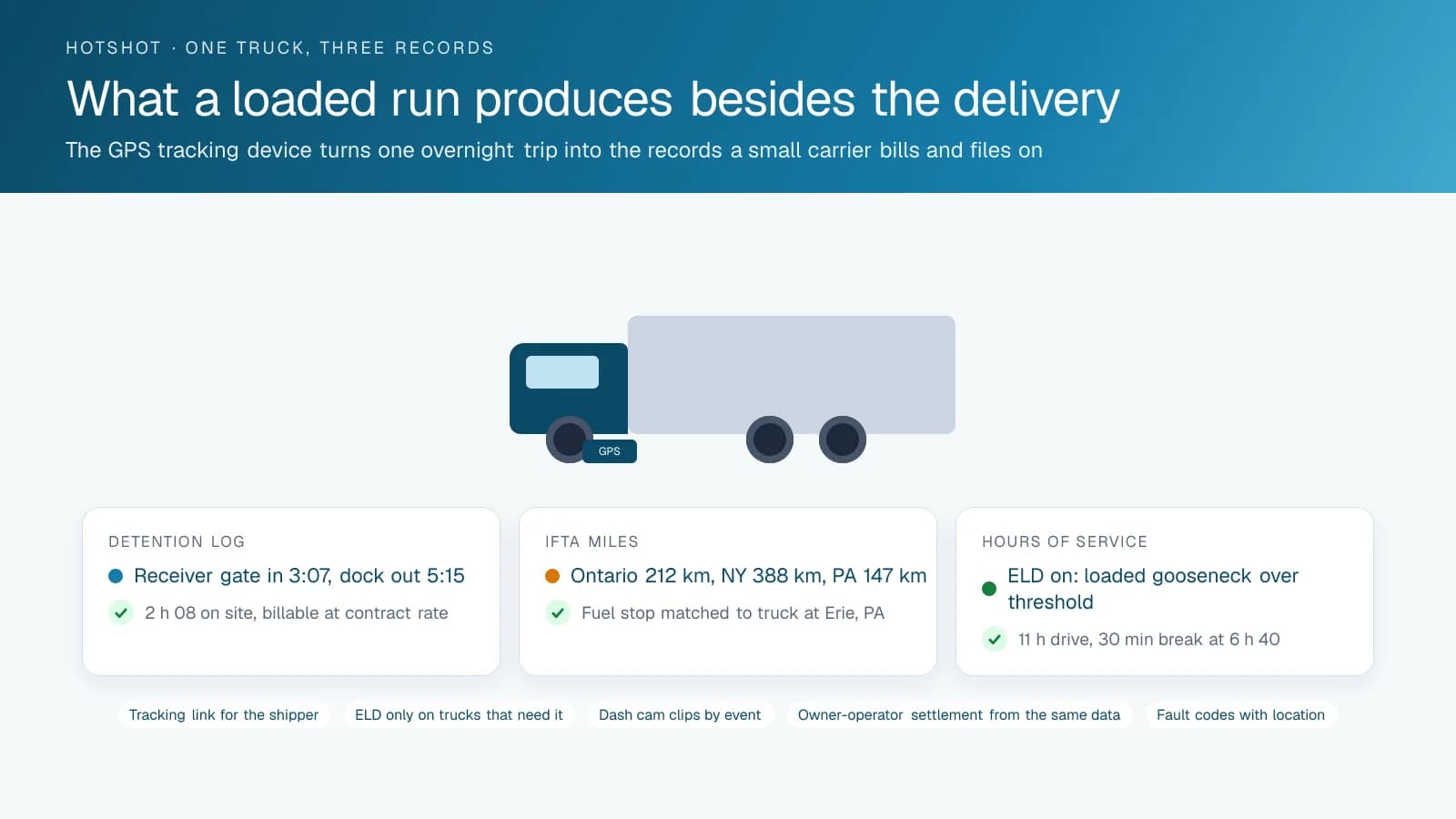
The record behind the map is what settles the dispute afterwards. A receiver says the truck arrived two hours late; the geofence log shows the truck at the gate at 3:07 and the trailer open at the dock at 5:15, which is a detention claim, not a late delivery. A shipper says the driver left without the second pallet; the replay shows the truck on the dock for forty minutes. High Point GPS sets these reports up during onboarding, and a dispatcher can pull one in the time it takes to keep the caller on the line.
The hotshot ELD question, answered per truck
A hotshot fleet is where the ELD rules get complicated. A one-ton pickup pulling an empty trailer may stay below the weight threshold. The same truck with a loaded 40-foot gooseneck usually does not, and once it operates as a commercial vehicle beyond the short-haul radius, hours of service and an ELD apply. Most hotshot carriers run trucks on both sides of that line, and the mistake is treating them all the same. High Point GPS reviews the fleet with the operator and turns the ELD on for the trucks and the runs that require it.
When it is on, the driver app on the driver's phone or tablet is a certified ELD for the US and Canadian mandates. It records duty status from the GPS tracking device, warns the driver before a violation and presents the logs to a roadside officer in inspection mode. The electronic DVIR carries a checklist for the truck and the trailer: brakes, lights, coupling, tie-downs. The driver who was writing paper logs in a truck stop is now tapping a screen, and the carrier has a record that survives an audit.
IFTA, fuel and the owner-operator settlement
A small expedited carrier can spend the first week of every quarter on IFTA. The GPS tracking device records the miles driven in each state and province as they happen, and the High Point GPS platform produces the mileage-by-jurisdiction report the return is built on. A fuel-card integration matches every purchase to a truck and a driver, and a purchase that does not line up with the truck's location is flagged. The quarterly return goes from a box of receipts to a report that is ready on the first day of the quarter.
The same mileage and stop data settle the owner-operator's pay. Loaded and empty miles, stops made and time on site come from the truck, not from a trip sheet, and the settlement statement uses the same numbers as the customer invoice. Driver ID through the IOX-NFCREADERA or the driver app login ties each run to a person, which matters when two operators share a truck. The argument at the end of the month gets shorter because both sides are reading the same record, and a dispute about a specific run is settled by opening that run's replay.
Protecting a solo driver and a hard-working truck
Expedited drivers run alone, at night, on roads they have never seen. A road-facing AI dash cam records what happened in front of the truck, and a driver-facing camera with fatigue and distraction detection flags the moments that precede a crash, with an in-cab alert the driver hears before the safety manager does. Video is saved by event and retrieved by trip, so an incident file is a few clips and the trip replay rather than a day of footage. Carriers that share the footage with their insurer often find the renewal conversation changes.
The truck itself runs harder than almost any other fleet vehicle. Maintenance reminders on engine hours and mileage schedule the service between runs, and engine fault codes reach the shop as the truck logs them, with the truck's location beside the code. A charging or cooling fault flagged at 2 a.m. in another state is a phone call to the driver and a shop found ahead, rather than a load missed. Driver scoring set for a loaded truck and trailer, with speed limits per zone, gives the safety manager a short weekly list and a specific trip to start from.
Frequently asked questions
Do my hotshot trucks need an ELD?
It depends on the truck, the trailer and the load. A one-ton pulling a loaded gooseneck often crosses the weight threshold that makes hours-of-service and ELD rules apply, and an empty run may not. High Point GPS reviews the fleet with you and enables the certified ELD on the trucks that need it.
Can the shipper or broker track the load?
Yes. Dispatch shares a tracking link for a specific truck or load, and the shipper sees the position and ETA until the delivery is made. The carrier controls what is shared, and integrations through the open API can push status to a load board or TMS automatically, which removes the check-in calls from the dispatcher's day.
How does it help me bill detention?
Geofences around shippers and receivers record the arrival and departure time of every truck. When a receiver holds the truck for three hours at the dock, the log shows it to the minute, and the detention invoice is backed by a record the customer can be shown.
Does it handle IFTA for a small carrier?
Yes. The GPS tracking device records miles by state and province as the truck drives, and fuel-card transactions are matched to each truck. The quarterly IFTA report is produced in the High Point GPS platform, ready to file, for a carrier of two trucks or two hundred, and High Point GPS sets up the report during onboarding.
Will it work in an owner-operator's own truck?
Yes. The GPS tracking device plugs into the diagnostic port of a pickup, cargo van or straight truck the same way as a company vehicle, and driver ID ties each run to the operator. Settlement, IFTA and hours records come from the same data as the rest of the fleet.
Related solutions
Related guides
- Do You Need an ELD for a Non-CDL, Hotshot, or Box Truck? →
- Detention Time: What It Is, What It Costs, and How to Bill It With GPS Evidence →
- How Geofencing Works for Fleet Tracking →
- High Point GPS IFTA Reporting: How Automated Fuel Tax Reports Save Fleets Hours →
- Hours of Service Rules Explained: The 11 and 14 Hour Limits →
- Fleet Dash Cams With Live View: What Live Streaming Shows and When It Is Actually Used →
Get a free quote
What are you looking for?