
Industry
GPS Fleet Tracking for Ports, Drayage & Intermodal
GPS tracking for drayage and intermodal carriers that records every container move between terminal, rail ramp and yard, measures turn time at the gate with geofences, keeps chassis in view, and produces the time-stamped evidence a detention or demurrage claim needs.
Updated September 21, 2026
A drayage operation lives on turn times. Every hour a tractor waits in a terminal queue is an hour it is not moving the next box, and every day a container sits past free time is a charge somebody has to pay. GPS tracking for ports, drayage and intermodal puts each tractor, chassis and container move on one map and records the moments that matter: the arrival at the terminal gate, the wait inside, the pull, the delivery to the customer's yard and the return of the empty. High Point GPS draws geofences around each terminal, rail ramp, container yard and customer dock, and the Geotab GO device records the entry and exit times without the driver touching anything. Those records become the turn-time report for each terminal, the evidence attached to a detention invoice and the proof that an empty went back before free time expired. Bluetooth tags and battery trackers keep unpowered chassis in view whether they are under a load or parked in a pool lot. The Geotab Drive app handles hours of service on the runs that need an ELD, and the same trip data feeds IFTA distance by jurisdiction for the carriers crossing state and provincial lines to reach an inland ramp. Dispatch sees which tractor is closest to the next available appointment, and the operations desk sees which containers are approaching a deadline before the charge lands.
Common challenges
- Terminal turn times that everyone complains about but nobody can document with arrival and departure times
- Detention and demurrage invoices disputed by the customer because the only record is the driver's word
- Chassis that vanish into pool lots and customer yards, with the carrier paying daily rental on equipment it cannot find
- Dispatchers assigning the next pull to the wrong tractor because they do not know who is still stuck in the queue
- Per diem and free-time deadlines missed because nobody sees which empties are still out
- ELD and IFTA requirements on the inland moves handled with a separate device and a separate paper trail
How High Point GPS helps
- Geofences around every terminal, rail ramp, container yard and customer dock that record arrival and departure automatically
- Turn-time reports by terminal and by hour of day, built from the gate-in and gate-out times of every tractor
- Time-stamped arrival, dwell and departure records at the customer's dock to support each detention invoice
- Bluetooth asset tags and battery-powered trackers that locate chassis and unpowered equipment in pool lots and yards
- A container status board tied to the trip data, showing which boxes are approaching a free-time deadline
- Live dispatch view that shows which tractor is cleared from the terminal and closest to the next appointment
- Hours of service in the Geotab Drive app for the moves that require an ELD, with short-haul exemptions applied where they fit
- IFTA distance by jurisdiction generated from the same trip records for carriers running to inland ramps across borders
Measuring Turn Time at the Gate
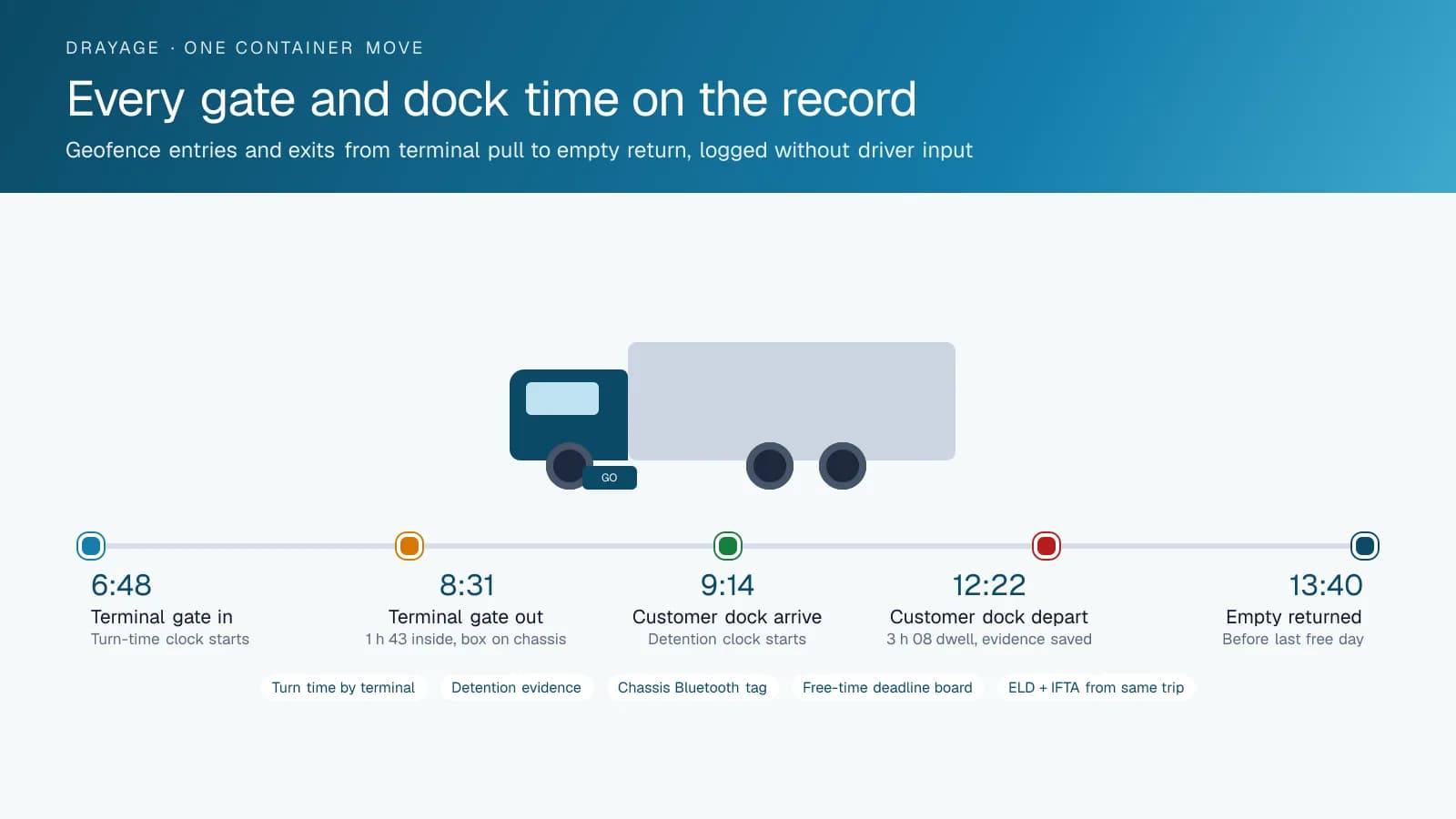
The argument with a terminal about turn times goes nowhere without numbers. High Point GPS sets a geofence at each terminal gate and another around the terminal grounds. Every tractor that crosses the outer line starts a clock, and the clock stops when it leaves. The result is a report of gate-in, gate-out and time inside for every move, by terminal, by day and by hour. When the operations manager brings a two-hour average at one terminal into a meeting, it is a record of hundreds of moves rather than a complaint. The same report shows which appointment windows move quickly and which ones bog down, and dispatch shifts the schedule accordingly.
Inside the terminal the driver is out of contact and often out of coverage. The GO device keeps recording position offline and uploads the trip when the tractor reaches the exit, so the dwell record is complete even where the signal was not. Dispatch sees the tractor come back onto the live map as it clears the gate, which is the moment the next pull can be assigned with confidence. Over a quarter, the turn-time data shows which terminals are worth the queue and which ones need a different appointment strategy.
Evidence for Detention and Demurrage
A detention invoice is only as good as the time stamps behind it. When a tractor waits three hours at a customer's warehouse for an unload, the geofence around that dock records the arrival at 9:14 and the departure at 12:22, and the trip replay shows the tractor sitting in the same spot the whole time. High Point GPS attaches those records to the invoice, so the conversation with the customer starts from the platform's data rather than a note on a bill of lading. Customers who see the replay pay, and the ones who set up their own geofence reports stop disputing the pattern.
Demurrage runs the other way: the charge lands on the carrier or the shipper when a box stays at the terminal past free time. The container status board built from the trip data shows every box that has been pulled, every empty that has been returned and every one still out against its last free day. The operations desk gets the list before the deadline, not after the invoice. When a charge does come in, the return record with the gate geofence time shows whether it was earned, and a wrongly billed day is contested with the time stamp in hand.
Keeping Chassis and Containers in View
A chassis has no engine and no power, and it spends most of its life unattended. Bluetooth asset tags read by any passing GO device report which tractor picked up which chassis and where it was left, and a battery-powered tracker on higher-value or owned chassis reports position on a schedule for months without a charge. When a chassis is on daily rental from a pool, the tracker shows the day it was picked up and the day it went back, which is the record that settles a pool invoice. When one goes missing from a customer yard, the last report says where to look.
The same approach reaches the box itself on moves where the carrier is responsible for it between the ramp and the customer. A tag on the container pairs it with the tractor and chassis that carried it, and the trip record shows the chain of custody from gate-out to delivery to empty return. That chain is what a shipper's claims department asks for when a seal is reported broken or a load arrives late, and it is ready in the platform rather than assembled from phone calls and terminal receipts after the fact.
Hours of Service, IFTA and Dispatch on the Same Data
Many drayage moves stay inside a short-haul radius, and some do not. The Geotab Drive app logs hours of service for the drivers and days that require an ELD, and the ruleset settings let a carrier apply the short-haul exemption where the operation qualifies while keeping full logs on the inland runs. Distance by jurisdiction for IFTA comes from the same GO device trip records for the tractors that cross a state or provincial line to reach an inland ramp. There is one device in the cab and one set of data behind the compliance reports, the turn-time reports and the detention evidence.
Dispatch works from the same map. The operations desk sees which tractors have cleared the terminal, which are at a customer dock and which are on the way back with an empty, and assigns the next appointment to the one that is actually free. Driver ID from the IOX-NFCREADERA ties each move to the driver, which matters when owner-operators share tractors. Engine-hours maintenance and fault codes reach the shop so a tractor in the queue with a charging problem is caught before it is stranded in the terminal with a box on the chassis and an appointment missed.
Frequently asked questions
Can the system prove how long my driver waited at a customer's dock?
Yes. A geofence around the dock records the arrival and departure times, and the trip replay shows the tractor stationary in between. High Point GPS sets these up per customer so the dwell record is ready to attach to a detention invoice without anyone reconstructing the day from the driver's notes.
Does the tracking work inside the terminal where there is no signal?
The GO device keeps recording position and time offline and uploads the trip when it reaches coverage again, usually at the gate. The turn-time record inside the terminal is complete, and dispatch sees the tractor reappear on the live map the moment it clears the exit, ready for the next assignment.
How do I track chassis that have no power?
A Bluetooth asset tag on the chassis is read by any GO device that passes it, which records which tractor picked it up and where it was left. For chassis that sit unattended for long periods, a battery-powered tracker reports on a schedule for months and shows where the equipment is in a pool lot or a customer yard.
Do drayage drivers need an ELD?
It depends on the move. Drivers who stay inside the short-haul radius and return to the same location may qualify for an exemption, while inland runs generally require full logs. The Geotab Drive app supports both, and High Point GPS configures the ruleset so each driver's day is logged the way the regulation requires.
Can I see which containers are close to a free-time deadline?
Yes. The container status board is built from the geofence records at the terminal and the customer, so it shows which boxes have been pulled, which empties have gone back and which are still out against their last free day. The operations desk gets that list before the demurrage charge arrives.
Related solutions
Related guides
- Detention Time: What It Is, What It Costs, and How to Bill It With GPS Evidence →
- How Geofencing Works for Fleet Tracking →
- Trailer GPS Tracking: How to Track Trailers With and Without a Truck Attached →
- GPS Asset Tags vs. Powered Trackers: Which to Use →
- What Is an ELD? A Plain-English Guide for Fleets →
- Geotab IFTA Reporting: How Automated Fuel Tax Reports Save Fleets Hours →
Get a free quote
What are you looking for?