
Industry
GPS Fleet Tracking for Ski Resorts & Mountain Operations
GPS tracking for ski resorts and mountain operations: grooming passes by run, lots cleared by plow, engine hours and last position behind the ridge.
Updated September 21, 2026
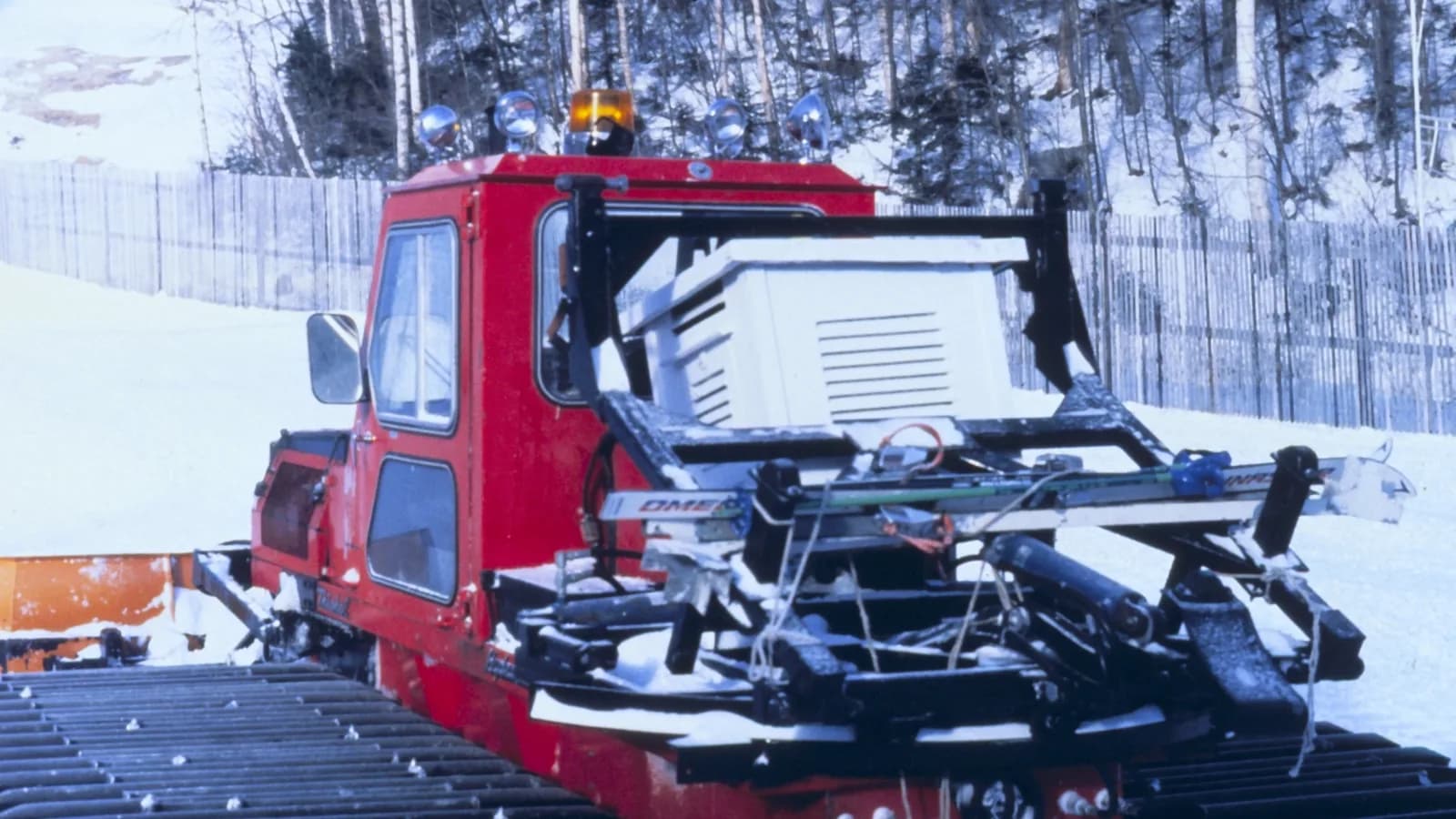
A ski resort runs a fleet that no highway fleet resembles. Snowcats groom all night on terrain with no roads, snowmobiles serve patrol and lift maintenance, plow trucks and loaders clear parking lots before the first guests arrive, and shuttle buses loop between the lots, the village and the base. A summer season of mowers, side-by-sides and trail machines uses the same map. High Point GPS puts all of it on one live map in the High Point GPS platform, with the resort's runs, lots, lift stations and roads drawn as geofences. A groomer's night becomes a record of which runs it groomed, how many passes it made and how long each took, with the tiller and the blade read through IOX-AUXM inputs from the cat's own circuits. A plow truck's morning becomes a record of which lots were cleared and when. Engine hours drive maintenance for machines that have no odometer worth reading, and fault codes reach the shop before a cat is stuck on the upper mountain at three in the morning. rugged GPS tracking devices and battery trackers handle the cold and the vibration. Driver ID assigns the shared machines to the operators, and driver scoring keeps the shuttles to a standard on the access road. When coverage drops behind the ridge, the GPS tracking device stores the shift and uploads it when the machine returns.
Common challenges
- No record of which runs were groomed overnight beyond the operator's word at the morning meeting
- Snowcats and snowmobiles that go out of radio and cell coverage behind the ridge, with no way to find one that is stuck
- Plow trucks and loaders clearing lots before opening, with no proof of which lots were done when a guest complains
- Maintenance on machines with no odometer, scheduled by guesswork instead of hours worked
- Shared groomers, sleds and shuttles with no record of who was operating when a machine came back damaged
- Shuttle buses on a loop the guests time their morning by, with no live position to give the base
How High Point GPS helps
- Live location of every groomer, snowmobile, plow truck, loader and shuttle on one map with the runs, lots and roads drawn as geofences
- Grooming records by run: passes, time per run and tiller and blade status read through IOX-AUXM inputs from the cat
- Plow and loader records by lot and by road, with the time each was cleared and the plow-down status
- Engine-hours maintenance for machines with no odometer, with fault codes sent to the shop as they appear
- rugged GPS tracking devices for the cats and plows, battery trackers for the snowmobiles and summer trail machines
- Driver ID with an IOX-NFCREADERA reader that assigns every shared machine's shift to the operator
- Shuttle bus position and loop timing for the base and for a guest-facing screen if the resort wants one
- Shifts stored on the device behind the ridge and uploaded when the machine returns to coverage
What the groomers did last night
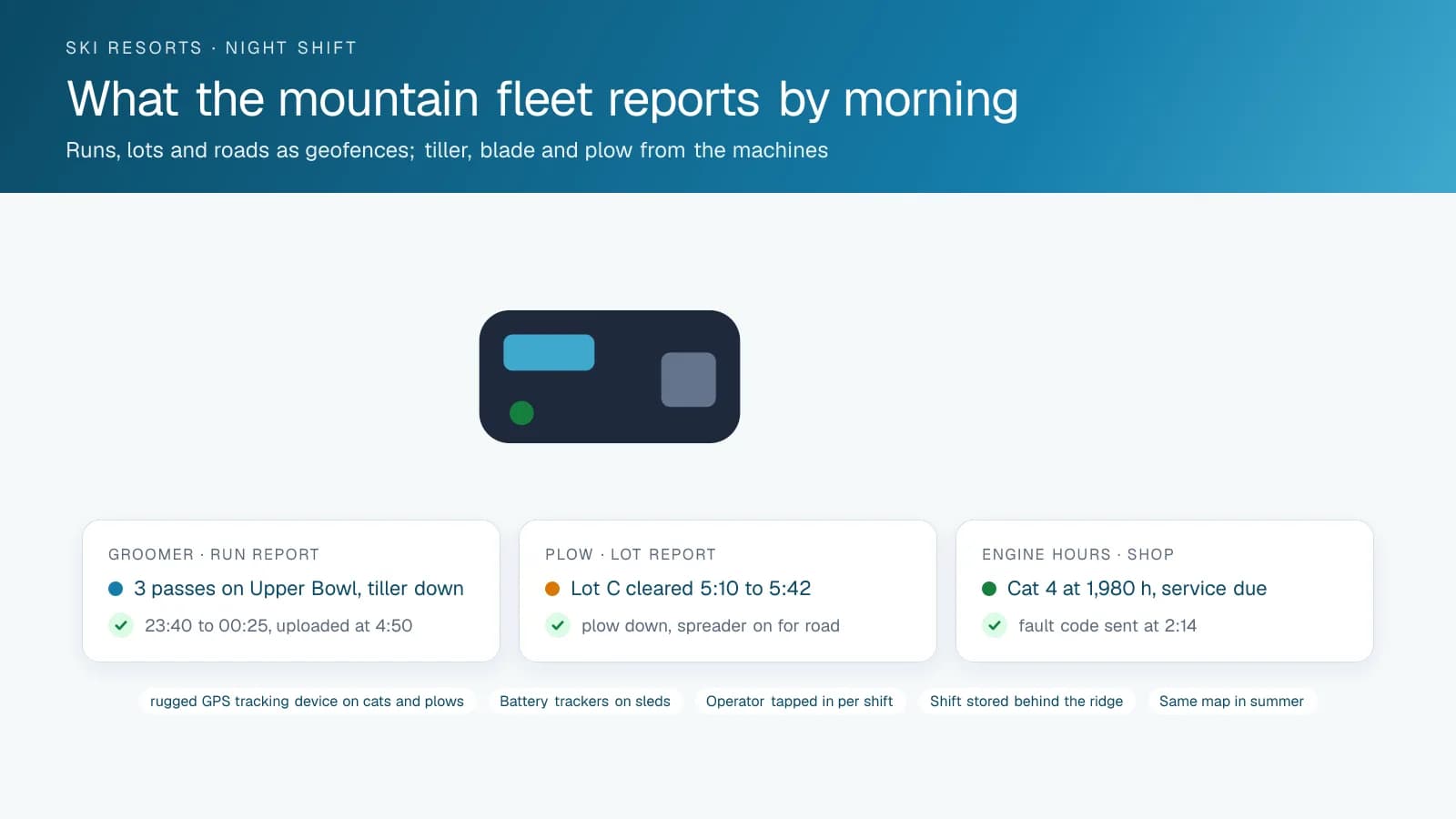
The morning meeting at a resort starts with one question: what got groomed? High Point GPS draws each run as a geofence in the High Point GPS platform, and a snowcat's night becomes a report by run. The cat entered the run at 23:40, made three passes, and left at 00:25 with the tiller down for all three. An IOX-AUXM module reads the tiller and the blade from the cat's own circuits, so a pass with the tiller up is recorded as travel rather than grooming. The report lists every run the fleet touched, the passes and the time, and the mountain manager reads it over coffee instead of asking each operator.
The same record answers guests and the marketing team. A run listed as groomed on the morning report has a record behind it, and a complaint about an ungroomed run is checked against the cat's actual passes. When the snow report goes out at 6:00, it reflects what the groomers did, not what was planned at 22:00. The trip replay shows each cat's route on the terrain for the night, which is also how the shop learns which cat spent an hour winching on the steep pitch.
Finding a machine behind the ridge
Mountain terrain swallows radio and cell coverage. A snowcat that is stuck or an operator who is hurt behind the ridge at three in the morning is the scenario every mountain manager plans for. The last known position from the GPS tracking device is the starting point for the response. The device reports position whenever it has coverage, and stores everything when it does not. Battery trackers on snowmobiles and summer trail machines report on a schedule and give a last known position for a sled that did not come back. High Point GPS fits rugged GPS tracking devices to the cats and plows, sealed against the cold and the vibration, and sets up the alert for a machine that has not moved in a set time during a shift.
When the machine comes back into coverage, the whole shift uploads: the runs, the passes, the tiller and blade times, the operator and the engine hours. Nothing is lost to the ridge. The record of a night's grooming is complete whether or not dispatch could see the cat while it was working.
Lots, roads and the shuttle loop
Guests judge a resort by the parking lot before they see the snow. The plow trucks and loaders start before dawn, and the record of which lots were cleared and when is what answers the complaint at 9:00 about a lot that was not. Each lot and each access road is a geofence, an IOX-AUXM input reads the plow-down status, and the report shows the truck cleared lot C from 5:10 to 5:42 with the plow down. A road that was salted has a record too, if the spreader circuit is read. The morning's plow report goes to the operations manager the way the grooming report does.
The shuttle buses run a loop between the lots, the village and the base, and the guests time their morning by it. The base sees every bus on the live map with its loop time, and a resort that wants to can put the bus positions on a screen at the lodge or in its app through the API. Driver scoring keeps the shuttles to a standard on the access road, with a speed limit per zone set through geofences on the switchbacks.
Engine hours, operators and summer
A snowcat has no odometer worth reading, and a maintenance program built on the calendar treats the cat that groomed every night the same as the one that sat. The GPS tracking device reads engine hours and fault codes from the cat's diagnostic port, and the maintenance reminder for a service comes from hours worked. A fault code reaches the shop as the cat logs it, which is how a hydraulic or charging problem gets fixed in the shop rather than on the upper mountain. Tiller and blade hours from the auxiliary inputs accumulate on their own counters for the components that wear fastest.
The machines are shared across shifts, and an IOX-NFCREADERA reader assigns each shift to the operator who tapped in. A cat that comes back with a damaged blade has a record of who ran it and where. In summer the same platform follows the mowers, the side-by-sides and the trail machines on the same map, with the bike trails and the work sites drawn as geofences for the season. High Point GPS sets up both seasons in one High Point GPS platform database, and the resort's fleet record runs all year.
Frequently asked questions
Can it record which runs were groomed?
Yes. Each run is a geofence in the High Point GPS platform, and the cat's shift produces a report by run with the number of passes and the time on each. An IOX-AUXM module reads the tiller and blade from the cat's circuits, so a pass with the tiller up is recorded as travel rather than grooming.
What happens when a cat is out of coverage behind the ridge?
The GPS tracking device stores the shift on the device and uploads it when the cat returns to coverage, which keeps the grooming record complete. Its last reported position is the starting point if a machine is stuck, and an alert can be set for a machine that has not moved in a set time during a shift.
Will the devices survive a snowcat?
High Point GPS fits rugged GPS tracking devices to the cats and plow trucks. They are sealed and rated for the cold and vibration of mountain work. Snowmobiles and summer trail machines get battery trackers that report on a schedule and give a last known position for a machine that did not come back.
Does it work for the plow trucks and the parking lots?
Yes. Each lot and access road is a geofence, and the plow-down and spreader circuits are read through IOX-AUXM inputs. The morning report shows which lots and roads were cleared, when, and by which truck, which answers a guest complaint about a lot that was not done.
Can we use it in the summer season too?
Yes. The same High Point GPS platform database follows the mowers, side-by-sides and trail machines on the same map, with the bike trails and work sites drawn as geofences for the season. Engine-hours maintenance, driver ID and the shuttle tracking carry over without a second setup.
Related solutions
Related guides
- What Is an IOX Port and What Does It Do? →
- Fleet Maintenance: Engine Hours vs. the Calendar →
- GPS Asset Tags vs. Powered Trackers: Which to Use →
- How Geofencing Works for Fleet Tracking →
- Equipment Theft Recovery: How GPS Gets Stolen Machines and Trailers Back →
- IOX-NFCREADERA: Driver ID by NFC Tap, So Every Trip Has a Name on It →
Get a free quote
What are you looking for?