
Industry
GPS Fleet Tracking for Tanker & Liquid Bulk
GPS fleet tracking for tanker and liquid bulk carriers: pump-event delivery records, hazmat route alerts and driver scoring built for a liquid load.
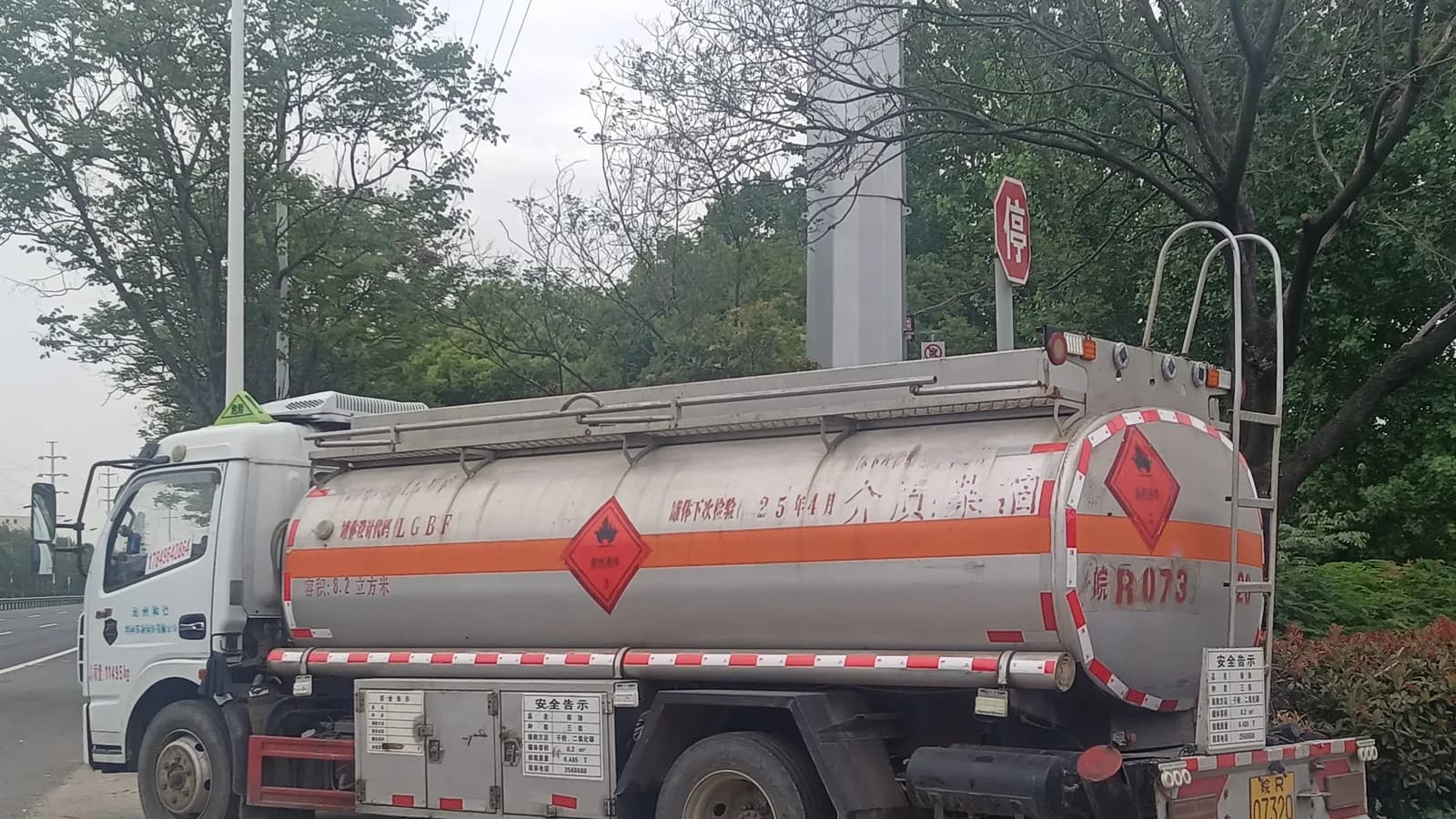
Updated September 21, 2026
GPS fleet tracking for tanker and liquid bulk carriers from High Point GPS turns each pump event into a delivery record, keeps hazmat loads on their approved routes and scores drivers for a moving liquid load. It is set up for fleets hauling fuel, chemicals, milk, water and waste, where every load carries a delivery record, a route restriction and a safety obligation the rest of trucking does not. On the High Point GPS platform, the truck itself produces those records. The GPS tracking device reports position, engine data and hours of service through the driver app. An IOX-AUXM module reads the pump, the PTO and the valve or hose-reel circuits, and the trip record shows where each delivery happened, when the pump ran and for how long. Geofences around terminals, customer tanks and restricted areas log arrival and departure times, hold a hazmat load to its approved route and raise an alert when a truck leaves it. Driver scoring gives hard braking, cornering speed and rollover-risk events the weight they deserve on a tanker, and AI dash cams capture the road and the cab when an event happens. Electronic DVIR carries the tanker inspection items, engine-hours maintenance covers the pump as well as the engine, and IFTA mileage comes from the trip history. When a customer disputes a delivery, a regulator asks for a route or an insurer wants to know how the fleet drives, you answer with a report the truck wrote.
Common challenges
- Delivery disputes where the customer says the tank was not filled and the driver's ticket is the only record
- Hazmat and fuel loads that must stay on approved routes, with no way to know a driver deviated until a complaint arrives
- Rollover-risk driving on a truck with a sloshing load, scored like a dry van by generic safety tools
- Pump and PTO hours that wear the equipment and never appear in the maintenance schedule
- Terminal loading and customer unloading times that nobody records, so detention and turn times go unmanaged
- Compliance audits that ask for routes, hours of service and inspection records kept in three different places
How High Point GPS helps
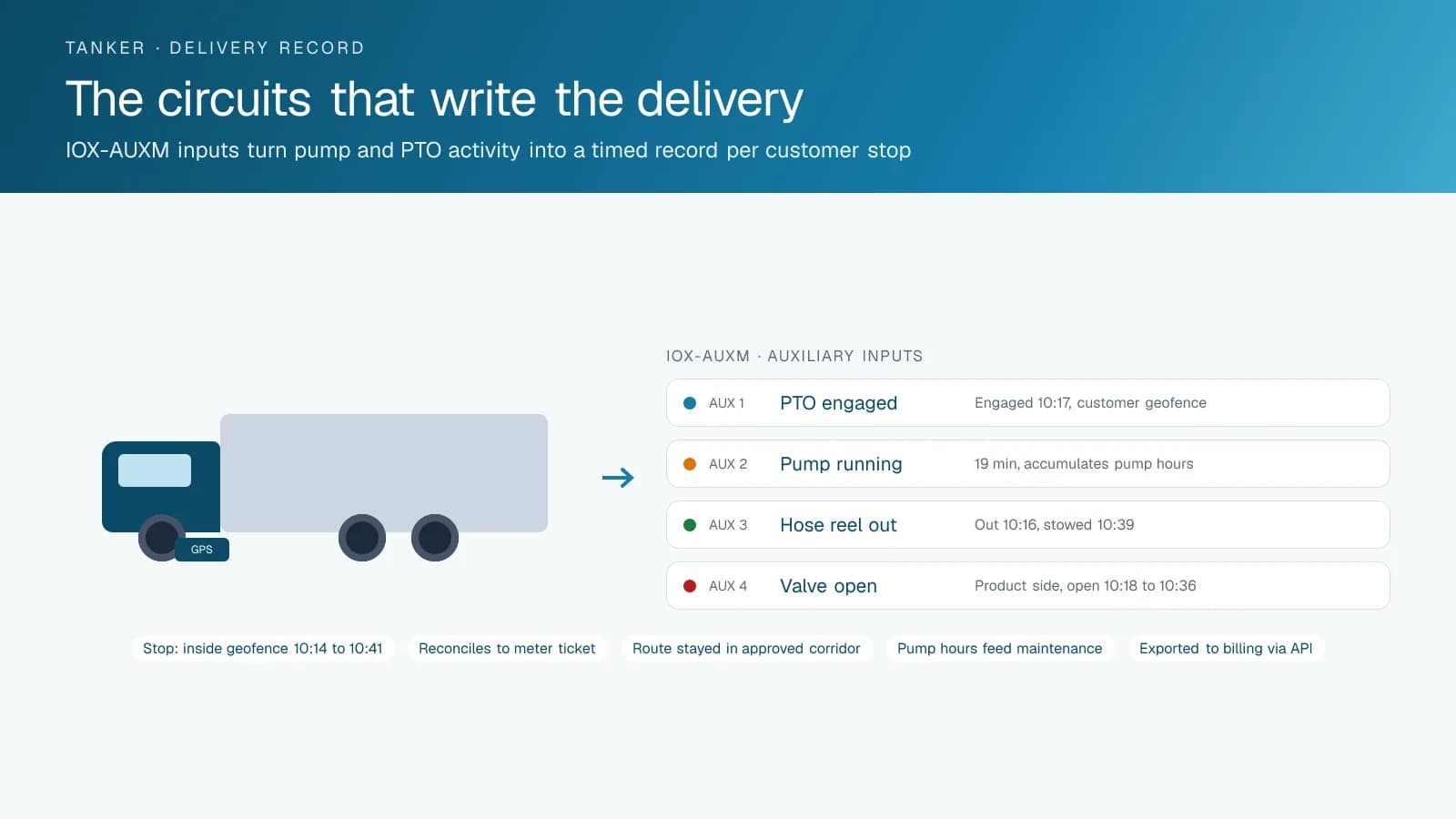
- Pump, PTO, valve and hose-reel status read from the truck's own circuits through IOX-AUXM inputs
- Delivery records with the location, start, stop and duration of every pump event, tied to the customer geofence
- Approved-route geofences and restricted-area rules for hazmat and fuel loads, with alerts on any deviation
- Driver scoring weighted for a moving liquid load: cornering, hard braking and rollover-risk events
- AI dash cams with road-facing and driver-facing video for the events that matter on a tanker
- ELD hours of service and electronic DVIR with tanker inspection items in the driver app
- Terminal and customer-site dwell records from geofences, for managing turn times and detention
- Maintenance reminders on engine hours and pump hours, with fault codes sent to the shop
How does GPS tracking prove a tanker delivery?
High Point GPS wires the pump, the PTO and the hose-reel or valve circuits into the GPS tracking device through an IOX-AUXM module, so the truck records where each delivery happened, when the pump ran and for how long. Take a dispute: the customer says the tank was short, and the driver's ticket says it was filled. The trip record then shows the truck inside the customer's geofence at 10:14, the PTO engaged at 10:17, the pump running for nineteen minutes and the truck leaving at 10:41. The truck wrote that record, and nobody with a reason to argue touched it.
The same inputs cover the rest of the day. A milk hauler sees each farm pickup with its pump time, a fuel distributor sees every drop on a route with the duration at each, and a water or septic hauler sees the fill and the discharge as separate events. You reconcile the pump-event report by customer and by day against the meter tickets and the invoice, and a missed or doubled delivery shows up before the customer calls. Pump run time also adds up on an hour meter for maintenance.
Keeping hazmat loads on the route they are allowed to take
Fuel and chemical loads come with route restrictions: tunnels, bridges, downtown cores and residential streets the truck is not permitted to use. High Point GPS builds the approved corridor as a geofence and the restricted areas as exclusion zones, and a truck that leaves the corridor or enters an exclusion raises an alert to dispatch as it happens. The trip record shows the truck's route for every hazmat load, which is what a regulator or a customer's safety department asks for after an incident or a complaint. Dispatch sees the alert on the map and in the driver's app at the same time.
Speed rules per zone add the second layer. A tanker's speed limit on a ramp or in a terminal yard is lower than the posted limit, and the platform reports it against the fleet's own threshold for that zone. Terminal geofences record the loading time for each truck, which is how a fleet manager sees that trucks are waiting forty minutes at one rack and ten at another, and takes it to the terminal operator. Loading and unloading times by site feed the turn-time report the fleet manager reviews each week.
Driving a liquid load, scored like one
A half-full tanker behaves like no other truck. Surge on braking and slosh in a corner push the vehicle in ways a generic safety score never accounts for. High Point GPS configures driver scoring for tankers: cornering events at lower speeds, hard-braking thresholds set for a moving load and a rollover-risk indicator built from the vehicle's lateral acceleration. The driver's score reflects the driving that puts a tanker on its side, and coaching starts from a specific event on a specific ramp.
AI dash cams add the evidence. A road-facing camera captures the traffic that cut the truck off, and a driver-facing camera with distraction and fatigue detection flags the moments a safety manager should see. When a tanker is involved in a collision, the footage, the speed, the braking and the position at the moment of impact are in one record, retrieved in minutes. An insurer may ask for that record, and a year of tanker-specific scoring and video is something the carrier can put in front of it at renewal. Footage retention and access are set by the carrier.
Inspections, hours, maintenance and the audit file
A tanker's pre-trip covers items a van's does not: valves, hoses, placards, the emergency shutoff, the grounding cable. Electronic DVIR in the driver app walks the driver through the tanker checklist, records each item with a timestamp and routes a defect to the shop before the truck reaches the loading rack. Hours of service run in the same app under US or Canadian rules, and the roadside inspection view is ready when an officer asks. Engine fault codes reach the shop as they appear, and maintenance reminders run on engine hours and pump hours, because the pump wears whether the truck moves or not.
When an audit comes, the records are in one place. The route of every hazmat load, the hours of service of every driver, the DVIR of every truck, the IFTA mileage by jurisdiction and the delivery record of every pump event are all in the High Point GPS platform, exportable by date range. High Point GPS sets up the reports a tanker fleet needs and, through the open API, feeds delivery events into the billing or dispatch system the fleet already uses. Retention periods differ by rule (hours of service, inspection reports, dangerous goods papers), so confirm that the fleet's records and exports cover each one.
Frequently asked questions
How does it record a delivery?
An IOX-AUXM module reads the pump, the PTO and the valve or hose-reel circuits. The trip record shows the truck inside the customer's geofence with the pump start time, stop time and duration, so the truck writes its own delivery record. You reconcile it against meter tickets and invoices, and pull the report by customer and by day.
Can it enforce approved routes for hazmat loads?
Yes. High Point GPS builds the approved corridor as a geofence and the restricted areas as exclusion zones. A truck that leaves the corridor or enters an exclusion raises an alert as it happens, on the dispatch map and in the driver's app at once. The trip history keeps the full route of every hazmat load for regulators and customers.
Is driver scoring different for tankers?
Yes. High Point GPS sets cornering, hard-braking and rollover-risk thresholds for a vehicle with a moving liquid load instead of using generic settings. Events are reported by driver with the location and speed, AI dash cams capture road and cab video for the ones that matter, and a safety manager can review the scores by driver each week.
Does the DVIR cover tanker-specific items?
Yes. The electronic inspection in the driver app carries the fleet's tanker checklist, including valves, hoses, placards, the emergency shutoff and grounding. Each item gets a timestamp, defects reach the shop before departure, and the inspection history stays in the platform for export. Roadside inspection mode shows the current DVIR to an officer who asks for it.
Can pump hours drive maintenance?
Yes. Pump run time from the auxiliary input adds up on a separate hour meter, and you can set maintenance reminders on it alongside engine hours and mileage. The shop sees pump service due once the pump has done the work, whatever the truck's odometer reads. Engine fault codes also reach the shop as soon as they appear.
Related solutions
Related guides
- IOX Meaning: What Is an IOX Port and What Does It Do? →
- PTO Tracker: The PTO On/Off Reader for Tow Billing and Hydraulic Maintenance →
- What Is Geofencing? How It Works in Fleet Tracking →
- How Does a Digital DVIR Work? Inspections, Defects and Repairs →
- FMCSA Hours of Service Rules (US): 11-Hour and 14-Hour Limits →
- Driver Safety Scorecard: How Driver Scoring Works for Fleets →
- IFTA and IRP in Canada: The Base Jurisdiction Office for Every Province and Territory →
Get a free quote
- Over 500 fleets
- Since 2013
- 4.9 on Google (19 reviews)
What are you looking for?
Prefer to talk?Call 1-800-613-6323[email protected]