
Industries
GPS Fleet Tracking for Food and Beverage Distributors: Routes, Temperature and Delivery Windows
A food and beverage distributor delivers to the same hundred customers every week, inside windows the customers set, at a temperature the product demands. Here's how fleet tracking runs that operation — route sequencing, live ETAs, reefer and cooler temperature, proof of delivery and the short-haul hours rules most DSD drivers work under.
The Same Customers, Every Week
Direct-store-delivery and foodservice distribution is a route business: a driver runs a fixed set of restaurants, grocers and institutions on a repeating schedule, with each customer's receiving hours as the constraint. A route that arrives at a restaurant during lunch service gets turned away; a route that arrives at a school after the kitchen closes comes back with the order. Fleet tracking with route sequencing builds the day around those windows, and the live map shows dispatch where each truck is against its plan, so a customer who calls asking for an ETA gets one from the screen rather than from a driver's phone.
Temperature Is Part of the Delivery
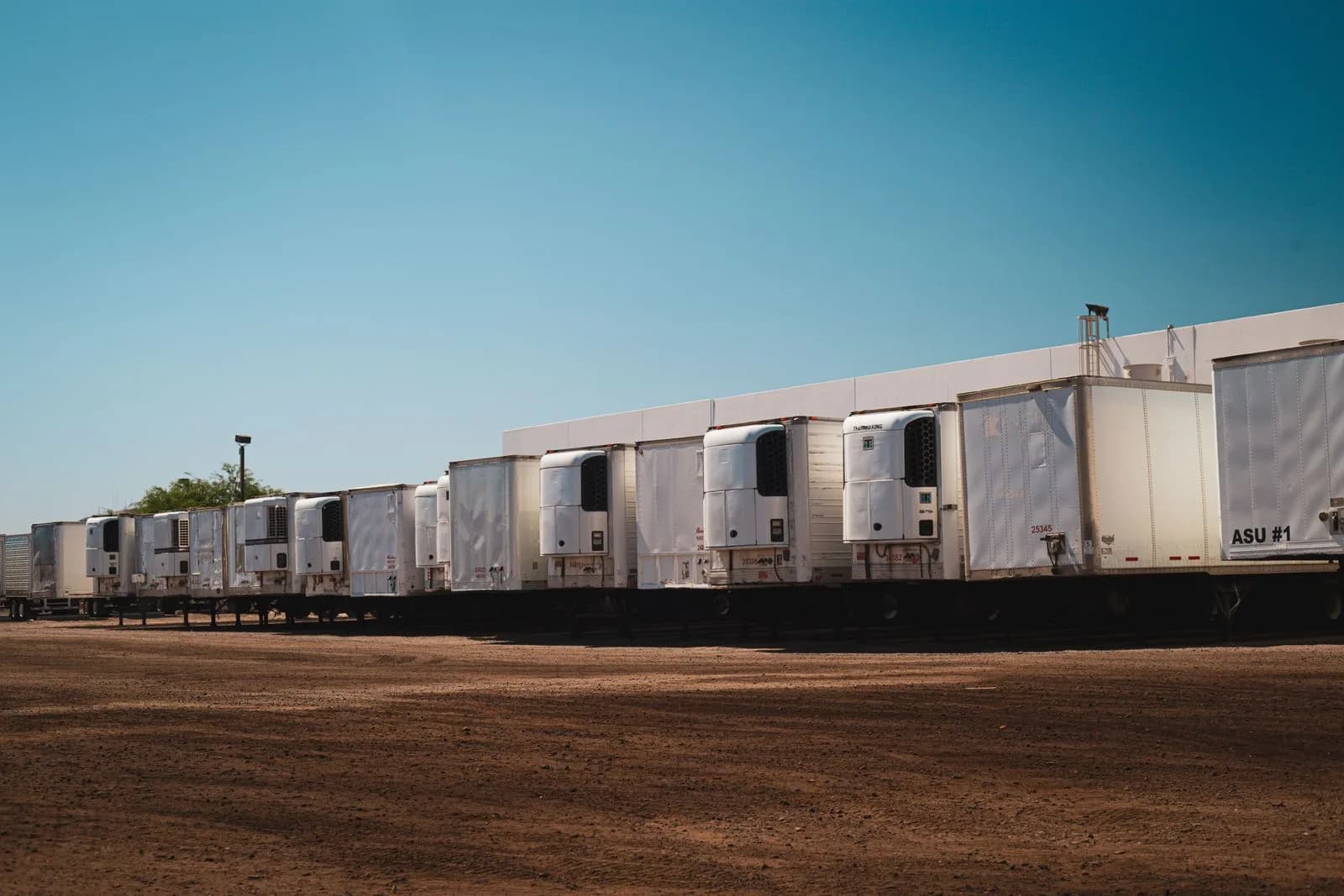
For chilled and frozen product, the delivery is not complete until the temperature record is. A reefer's own controller reports setpoint and return-air temperature to the platform through the IOX port; Bluetooth temperature pucks in a multi-zone body or in the coolers on a van report through the same GO device. The platform holds the continuous record per trip, alerts on an excursion while the driver can still act on it, and produces the report a customer, an inspector or a claims adjuster asks for. The distributor that has the record wins the rejected-load argument; the one without it pays for the pallet.
Proof of Delivery and Dwell
A geofence at each customer records arrival and departure, which is proof of delivery on one side and dwell time on the other. Dwell is where the route's hours go: a driver held at a loading dock for forty minutes behind another distributor's truck is forty minutes the last three customers do not get. Dwell reports by customer show which accounts are chronically slow to receive, which is a conversation with the account manager rather than with the driver, and the same timestamps support a detention charge where the contract allows one.
Hours of Service on a Local Route
Most DSD drivers operate within the short-haul radius and use the exemption from ELD logging in both Canada and the US, but the exemption has conditions — a return to the same terminal within the day, a distance limit, a duty-day limit — and the fleet has to show them. Telematics does that from the trip data without the driver logging anything, and it flags the day a route ran long enough to fall outside the exemption. For the drivers who do run beyond the radius, the same device is the ELD.
Frequently asked questions
How does GPS tracking help a food distributor's routes?
It sequences stops around each customer's receiving hours, shows dispatch every truck against its plan, and gives customers a live ETA.
Can fleet tracking monitor reefer temperature?
Yes. The reefer controller or Bluetooth temperature sensors report through the vehicle's GO device, giving a continuous record per trip with excursion alerts.
What is proof of delivery in fleet tracking?
Geofenced arrival and departure times at the customer, often combined with a signature or photo from the driver's app.
Do DSD drivers need an ELD?
Usually not, under the short-haul exemption, but the fleet must be able to show the exemption's conditions were met. Telematics documents that from the trip data.
How does tracking reduce dwell time at customers?
Dwell reports by customer identify chronically slow receiving, which the account manager can address, and support detention charges where allowed.
Related solutions & products
Get a free quote
What are you looking for?