
Industry
GPS Fleet Tracking for Food & Beverage
GPS fleet tracking for food and beverage distributors: live reefer temperature, alerts before a load spoils, and a cold chain record for audits.
Updated August 11, 2026
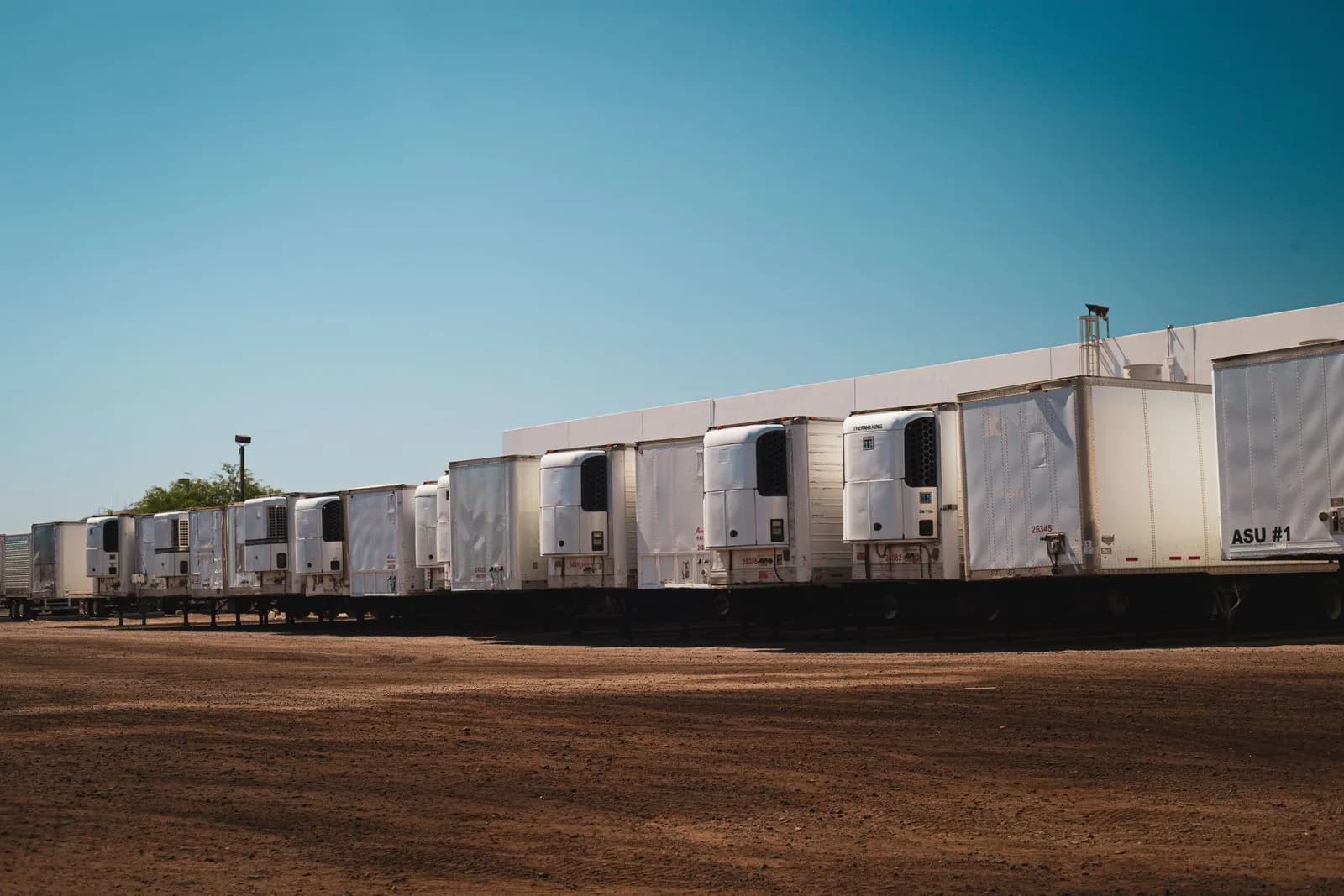
High Point GPS gives food and beverage distribution fleets GPS tracking paired with temperature sensors, so dispatch sees the live temperature of every reefer trailer and truck. You get an alert before a load is at risk instead of after a customer rejects it, which matters in a business where a compressor failure or a door left open too long can spoil an entire load. The same system builds the time-stamped cold chain record that buyers, auditors and food safety programs ask for.
Common challenges
- Reefer temperature excursions found only after a customer rejects a spoiled load
- No documented cold chain record to show buyers or food safety auditors
- Drivers checking trailer temperature by hand instead of getting an alert when it drifts
- Refrigerated and dry vehicles managed with no single view across both
How High Point GPS helps
- Live and historical temperature monitoring on refrigerated trailers and trucks
- Alerts when temperature drifts outside a set range, before the load is compromised
- Time-stamped temperature and location records for cold chain compliance and audits
- Refrigerated and dry vehicles on the same High Point GPS platform
How is reefer monitoring different from GPS tracking?
GPS tracking tells you where a vehicle is, and reefer monitoring tells you whether the product inside is still safe to sell. A truck can be on route and on schedule while its reefer unit is failing, and location data alone will not show that until the load is already compromised.
Temperature monitoring therefore adds a layer on top of location tracking and does not replace it. The High Point GPS platform pairs temperature sensors inside the trailer or cargo area with the GPS and trip data it already collects, so dispatch sees where a load is and whether it is still within a safe range on one screen, without a second system.
What an Audit-Ready Cold Chain Record Actually Contains
A buyer, auditor, or food safety program asking to see cold chain documentation wants a time-stamped record: what was the temperature, at what point in the route, at what time, for this specific load. That level of detail is hard to reconstruct after the fact from a driver's memory or a paper log, which is exactly the gap this kind of record closes.
Because the temperature and location data are captured automatically and continuously rather than spot-checked manually, the record exists whether or not anything ever goes wrong. That matters most in the case where something does go wrong, since a documented near-miss, a brief excursion that stayed within tolerance, is very different from a shipper's unverifiable claim after a customer rejects a load.
Mixed Reefer and Dry Fleets on One Platform
Very few food and beverage distribution fleets run refrigerated trailers exclusively. Most operate a mix of reefer units and standard dry vehicles, and managing them on two separate systems, one for temperature-sensitive loads and one for everything else, doubles the operational overhead for no real benefit.
Running both vehicle types on the same High Point GPS platform means dispatch gets one fleet-wide view instead of toggling between tools, and temperature monitoring hardware only needs to go on the vehicles that actually carry product that requires it. A dry delivery truck doesn't need a sensor it will never use, and it shouldn't need a separate dashboard either.
Frequently asked questions
Can GPS tracking monitor trailer or truck temperature, not just location?
Yes. Temperature sensors paired with the High Point GPS platform report reefer and cargo-area temperature alongside location. You set the acceptable range, and the platform sends an alert when a reading moves outside it, so dispatch can call the driver while there is still time to save the product.
Does this help with food safety audits or buyer requirements?
Yes. A time-stamped record of temperature and location for every trip gives you documented proof of cold chain handling. Under the US FDA sanitary transportation rule, a shipper or receiver can ask the carrier to show that temperature conditions were maintained. The sensors capture the readings automatically, so the record exists for every load, including the ones where nothing went wrong.
Can dry (non-refrigerated) vehicles run on the same platform as our reefer trucks?
Yes. Dry vehicles run standard GPS tracking on the same High Point GPS platform as your reefer trucks, so dispatch works from one fleet-wide view. Temperature monitoring hardware goes only on the vehicles that carry temperature-sensitive product, and a dry delivery truck does not need a sensor it will never use.
Related guides
- Cold Chain Monitoring and Compliance for Food Fleets →
- GPS Fleet Tracking for Food and Beverage Distributors: Routes, Temperature and Delivery Windows →
- One Bluetooth Gateway for Thirty Sensors on a Truck or Trailer →
- Bluetooth Temperature Sensor Puck: A Ten-Year Wireless Thermometer for Reefers and Coolers →
- Wired Reefer Temperature Monitoring for Multi-Compartment Refrigerated Trucks →
- Detention Time in Trucking: What It Costs and How to Bill Detention Pay With GPS →
Get a free quote
What are you looking for?