
Asset & Equipment Tracking
One Bluetooth Gateway for Thirty Sensors on a Truck or Trailer
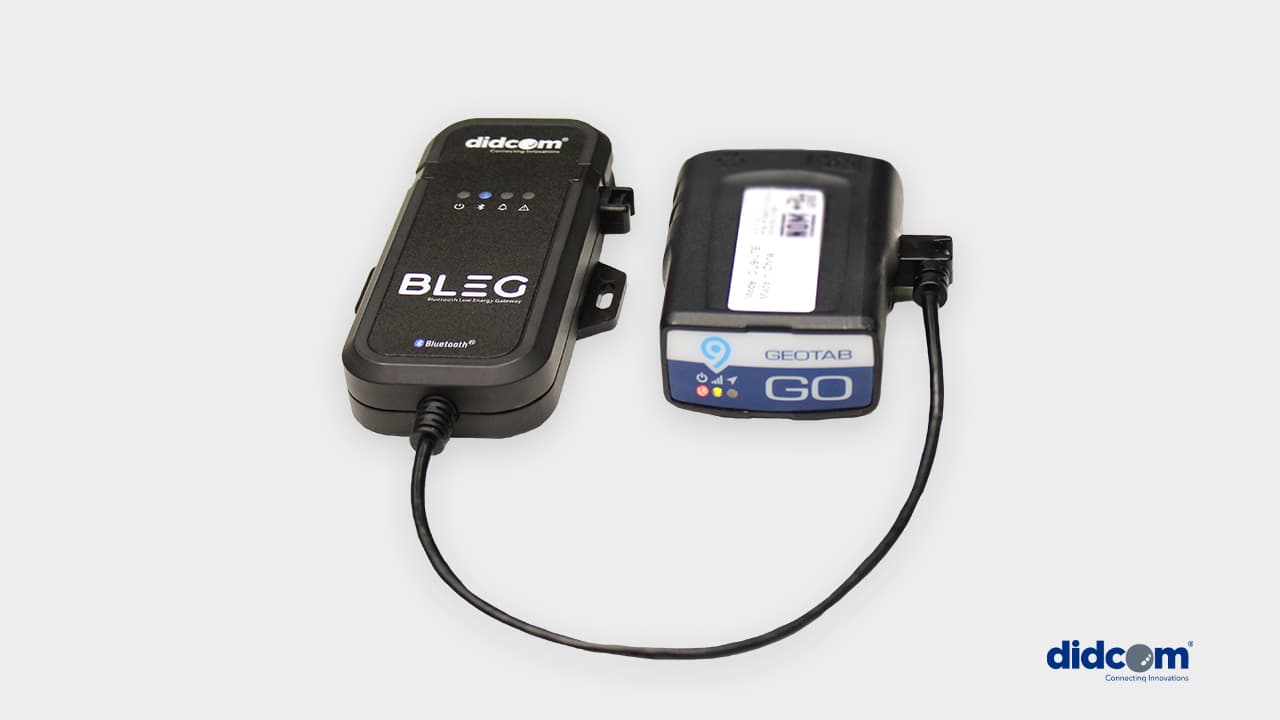
A Bluetooth gateway pairs with up to thirty trailer sensors and sends their readings to the GPS tracking device as one feed for cold-chain tracking.
What Does a Bluetooth Gateway Do?
A Bluetooth sensor gateway, or Bluetooth gateway, is a Bluetooth Low Energy device that pairs with up to thirty sensors on a truck or trailer and passes their readings to the GPS tracking device over the IOX port as one managed feed. A GO10, through its built-in Bluetooth, or a GO9 with the IOX-BT module can hear Bluetooth beacons on its own, and for a handful of tags that works. A monitored reefer is a heavier load: a temperature puck per compartment, a sensor on each door, sometimes humidity or shock sensors, each broadcasting on its own schedule, plus the truck's cab sensors. The gateway sits between those sensors and the tracker and takes over the radio management.
Which Sensors Can the Gateway Handle?
Temperature pucks and probes, door and hatch sensors, humidity sensors and other compatible Bluetooth sensors, within the gateway's Bluetooth range. Out of coverage, the gateway buffers readings and sends them when the connection returns, so a dead zone leaves no hole in the cold-chain record. The High Point GPS platform shows each sensor as its own data stream on the vehicle, ready for rules and reports: an alert when compartment two drifts above setpoint, a door-open-too-long event at a stop, a per-trip temperature log for the customer.
Who Uses a Bluetooth Gateway?
Food and beverage distributors with multi-temperature trailers, pharmaceutical and medical couriers with validated cold-chain requirements, and any carrier whose customer contract calls for continuous temperature monitoring per compartment. It also suits fleets that have outgrown the tag limit of one GPS tracking device.
How Many Sensors Does a Trailer Need?
Thirty is more than most trailers need, but the count climbs faster than fleets expect once you monitor doors as well as compartments. Typical setups:
| Trailer or body | Sensors | Count |
|---|---|---|
| Single-zone reefer | 2 temperature pucks, 1 rear door sensor | 3 |
| Two-compartment reefer | 4 temperature pucks, 2 door sensors | 6 |
| Three-compartment multi-temp | 6 pucks, 3 door sensors, 1 humidity | 10 |
| Pharmaceutical straight truck | 4 pucks, 2 door sensors, 2 shock sensors | 8 |
| Dry van with tote deliveries | 1 door sensor plus a puck per tote in transit | 5 to 20 |
Installing the Gateway
The gateway mounts in the trailer or body and connects to the tracker's IOX port. You pair each sensor once, then place it. High Point GPS installs the gateway with the sensors and sets up High Point GPS platform rules and reports for cold-chain fleets across Canada and the United States.
Frequently asked questions
What is the Bluetooth sensor gateway?
It is a Bluetooth Low Energy gateway that manages up to thirty wireless sensors and delivers their readings to the GPS tracking device through the IOX port as one feed. Temperature pucks, door sensors and humidity probes all report through it, and each shows up as its own data stream.
Why not connect sensors to the GPS tracking device directly?
A few tags can connect directly, and for a small setup that is enough. A multi-compartment trailer with pucks and door sensors on every zone creates much more radio traffic. The gateway manages those sensors and buffers their readings, which keeps the temperature record reliable.
Does it keep recording out of coverage?
Yes. The gateway buffers readings while the truck is out of coverage and releases them when the GPS tracking device reconnects. A dead zone on the route leaves no gap in the temperature record, so the per-trip log you send a customer stays complete.
Which sensors work with it?
Bluetooth temperature pucks and probes, door and hatch sensors, humidity sensors and other compatible Bluetooth sensors all work with the gateway. A typical reefer setup pairs a puck in each compartment with a sensor on each door, and High Point GPS places them during installation.
How do readings appear in the High Point GPS platform?
Each sensor appears as its own data stream on the vehicle. You can use those streams in rules, alerts and per-trip reports, for example an alert when a compartment drifts above setpoint or a door stays open too long at a stop.
Related solutions & products
Free tools for this topic
Related terms
Continue reading
- Asset Tracking overview →
- Wired Reefer Temperature Monitoring for Multi-Compartment Refrigerated Trucks →
- Bluetooth Temperature Sensor Puck: A Ten-Year Wireless Thermometer for Reefers and Coolers →
- GPS Fleet Tracking for Food and Beverage Distributors: Routes, Temperature and Delivery Windows →
- Cold Chain Monitoring and Compliance for Food Fleets →
- More in Asset & Equipment Tracking →
Get a free quote
- Over 500 fleets
- Since 2013
- 4.9 on Google (19 reviews)
What are you looking for?
Prefer to talk?Call 1-800-613-6323[email protected]